
1444
King Henry VI 1444
1444
Henry VI
ANNO XXII-XXIII

King Henry VI (1422-1461) was the third and last Lancastrian king of England. His regnal year dates from 1 September to 31 August.
Four of the primary sources covering King Henry’s reign, the Proceedings of the Privy Council, the Foedera, selected texts from the fifteenth century chronicles, and Letters and Papers Illustrative of the Wars of the English in France, arranged chronologically by year, are brought together in the text with references to other authorities, primary and secondary. A bibliography is appended at the end of each year.
See Introduction
See list of Years above:
The Minority Years 1422-1437.
King Henry’s Personal Rule 1437-
֍ Key Events
William De la Pole, Earl of Suffolk was named as ambassador to King Charles VII.
The Truce of Tours.
The marriage of King Henry with Margaret of Anjou.
֍ King Charles’s offer to receive ambassadors from England came as a welcome relief to King Henry and to most of the Council. The appointment of the Earl of Suffolk as England’s representative did not receive unanimous approval, but the Council did not oppose it.
At Tours Suffolk negotiated a truce between England and France, the first since King Henry V had invaded France in 1415. He accepted King Charles’s niece Margaret of Anjou as a bride for King Henry and stood proxy for the king at the marriage at the end of May.
Suffolk returned to England in June amid general rejoicing at ‘an end to war’ and returned to France in late 1444 to bring Margaret of Anjou to England.
Contents
 The King’s Council
Council Attendance
King Henry and the Council
Council Proceedings
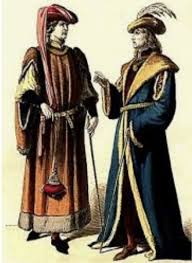 The Magnates
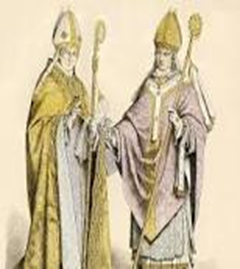 The Bishops
 The Church
 London
The Chronicles
 The Duchy of Gascony
 Scotland
King Eric and Iceland

 Ireland
The Netherlands
Louis IV Elector Palatine
 King Charles VII and an offer of peace
 William de la Pole, Earl of Suffolk
The Earl of Suffolk and King Charles
The Dauphin Louis
The Truce of Tours
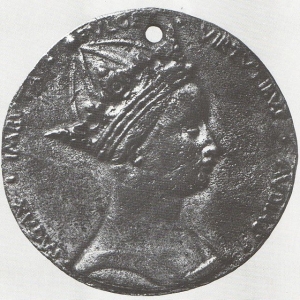 The Marriage of King Henry and Margaret of Anjou
The Chronicles
King Henry and Queen Margaret
Financial Preparations for Queen Margaret’s arrival
The Queen’s Household
Suffolk’s Return to France
The Chronicles
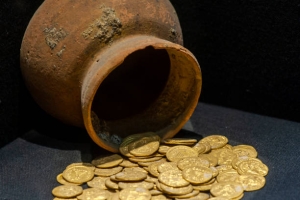
A Note on Money
There were two types of money in the fifteenth century, money of account and actual coinage.
Money of Account
The English pound [£] or livre was divided into 20s (shillings) the shilling into 12d (pence).
The English mark was worth 13s 4d – two thirds of a pound
In France the livres tournois was the standard money of account. Divided into 20 spouis and 12 Deniers. Nine livres tournois equalled one English pound.
Coinage
There were no pound, mark, or shilling coins.
The English noble was a gold coin worth 6s 8d, half a mark.
The English silver penny was also a money of account and worth 1/240th of one pound sterling.
Silver minted coins: Groat = 4 pence; half groat; penny; halfpenny; farthing
In France the franc was a silver coin worth one livre.
The ecu was a gold coin worth 3s 4d sterling.
The salut was a gold coin minted in in Lancastrian France worth one and one half livres or 30 shillings. The French also minted the salut.
Incomes
A rough estimate of incomes: a parish priest received between £5 and £10 a year depending on the wealth of his parish., An archer might expect to earn £9 a year. The average income of a knight was £60. A lord’s income from land and crown annuities amounted on average to £865 from which he would pay his retinue and domestic servants. Richard, Duke of York the richest magnate in England claimed to be worth £3,230 a year.
Taken from J. Sumption, The Hundred Years War vol V, Triumph and Illusion, pp. 822-823
The King’s Council
The record of meetings in the Proceedings for 1443 is extensive, sixty-nine meetings are recorded from February to July.
Five in February. Fifteen in March. Five in April. Nineteen in May. Ten in June and fifteen in July, some have no day. Volume V ends with the July meetings:
Volume VI of the Proceedings opens in August with an exchange of letters concerning Gilles of Brittany’s visit to England. The only certain council meetings recorded for August to December are three in December.
A Great Council
Letters of privy seal on 7 March 1443 summoned a Great Council to meet at Westminster in the quinzaine of Easter. Easter Sunday fell on 21 April in 1443, the quinzaine was a week later (1). The meeting on 11 May was attended by eighteen councillors, ten of whom did not attend meetings in any other month.
Ralph, Earl of Westmorland and Marmaduke Lumley Bishop of Carlisle were summoned on 27 March (2). Lord Dacre and one of his sons were summoned on 3 April with a penalty of £2,000 for Dacre and £1,000 for his son if they failed to attend (3).
It was not unusual for some of the northern lords who were not politically minded to avoid attending Council. They preferred to remain in the north to guard the Scottish border while Parliament or Great Councils were in session.
***************************************
(1) PPC V, p. 237 (Great Council)
(2) PPC V, p. 250 (Westmorland and Lumley)
(3) PPC V, p. 258 (Dacre)
*****************************************
Council Attendance
Attendances vary from a few councillors present to fully attended meetings. A ‘meeting’ on 25 February at Sheen in King Henry’s presence was attended only by the Earl of Suffolk and William Lyndwood the Privy Seal. Two meetings on 2 March, one at Sheen and one at Westminster record William Lyndwood, Privy Seal and Adam Moleyns as present at both.
King Henry February. March. May
Chancellor John Stafford February. March. April. May. June. July. December.
Treasurer, Ralph, Lord Cromwell (to July) February. March. May. June. July
Treasurer, (from July) Ralph Butler, Lord Sudeley March. July, July. December
Privy Seal, William Lyndwood. Bishop of Lincoln February. March. April. May. June. July
Adam Moleyns March, April. May. June. July. December
Cardinal Henry Beaufort February. April. May. June
The Duke of Gloucester February. March. April. May. June. July. December.
John Kemp, Cardinal, Archbishop of York: February. March. May. June. July
William Aiscough, Bishop of Salisbury February. March. May. June. July
Marmaduke Lumley, Bishop of Carlisle May. June. July
Thomas Bourchier, Bishop of Worcester May. June
Thomas Brouns, Bishop of Norwich May. July
Robert Gilbert, Bishop of London May
Nicholas Ashby, Bishop of Landaff May
John Holand, Earl of Huntingdon March June. July. December.
Henry Percy, Earl of Northumberland February. March. May. June. July
Richard Neville, Earl of Salisbury May. June. July
William de la Pole, Earl of Suffolk February. March. April. May. June July
Humphrey, Earl of Stafford February. May. June. July. December.
Henry Beauchamp, Earl of Warwick July
John Beaufort, Earl of Somerset May. June
John Talbot Earl of Shrewsbury July
Edmund Beaufort, Earl of Dorset May. July
Viscount Beaumont February. April. May.
Louis of Luxembourg July
John Cornwall, Lord Fanhope February. May. June
Sir John Stourton May. June
Robert, Lord Willoughby May
Walter, Lord Hungerford May
William Neville, Lord Fauconberg May
Lord Grey of Ruthin May
Thomas, Lord Dacre May
John, Lord Dudley May
Robert, Lord Poynings May
Henry, Lord Bourchier May
Robert Rolleston, Wardrober March. July. December
Chief Baron March. April
Sir John Fortescue, chief judge March. April. May. July
John Westbury, Judge March. May
Richard Newton, Judge March. May
John and William Beauchamp April
King Henry and the Council
In the autumn of 1444, the Council drew up a memorandum comprising ten articles aimed at regulating the granting of bills and petitions submitted to King Henry (1). They suggested, subject to the king’s prerogative, that petitions should be scrutinized and weeded out by the Council or other designated officials before being passed to the king: “it is thought to my lords of the Kyngs Counsail if it please the Kyng under his noble correccon ϸat the reule and ordre in grauntyng and spedyng of billes directed to his highnesse myght be such as followen:’
All bills submitted to the king must be signed by the suppliant to make it clear in whose interest the bill was presented. If the petitioner could not write, the bill must be signed on his behalf. King Henry would designate to whom the bill should be referred.
King Henry to be advised that if a bill contained matters of common law, it should be referred to the Council, who in turn will refer it to the judges, should the petitioner be unable to do this himself.
If the petition is for grace (the king’s mercy or gift) exactly what is being asked for and by whom must be stated clearly so that the king may decide if he should grant his grace or refer the petition to the Council for their opinion and advice.
If the king grants the petition or any part of it, a record of what has been granted must be recorded, the date and place of the grant, and the names of those present when the grant was made. The record may not then be altered in any way and must be signed either by the king himself, his chamberlain, or his secretary.
A clause must be inserted into all grants, that they were only valid provided the king had not previously granted them to any other person.
The execution of a grant passed through many hands. To avoid tampering and provide confirmation, the king’s consent must go to the king’s secretary for letters addressed by the Keeper of the Signet to the Keeper of the Privy Seal and then to the Chancellor.
If the Keeper of the Privy Seal considered the grant to be ‘of great charge’ i.e. important or costly, he should advise the Council of it so that they could advise the king on the desirability of reconsidering his decision.
If the king agreed that further consideration was advisable the officials who were progressing the bill must swear that no bribery, interference, or pressure had influenced them in presenting the bill to the king.
The tenth article differs from the others in that it does not apply directly to King Henry. It concerns another perceived perversion of the king’s justice, the widespread and accepted practice of livery and maintenance. No lord or landowner should maintain in his service (wearing his livery) or protect from prosecution any man guilty of disturbing the king’s peace, of felony, theft, or rape, or of threatening judges or royal officials going about their lawful business.
If any member of the Council was found guilty of such practices he should be expelled from Council. Local lords known to exercise livery and maintenance should not be named as justices of the peace.
The memorandum was intended to curb King Henry’s practice of endorsing bills and petitions indiscriminately without fully understanding what he was granting. As a Chrisian king Henry saw it as his duty to be merciful and charitable, and it was far easier for him to agree to, rather than refuse, requests. The Council was aware of Henry’s propensity to make the same grant twice to different people; this was not the first time they had reprimanded him gently. In 1438, only a year into his personal rule, they had reminded him three times to use more discretion and refer requests them (2).
Henry endorsed the memorandum as he usually did when confronted by his Council. It was not a clash of wills between him and them. Griffiths suggests that Henry accepted his council’s advice as a relief from administrative details which bored him (3). It meant that the onus for refusing requests fell on others while he maintained his image of himself as a gracious and merciful king.
Nevertheless, in November King Henry informed Chancellor Stafford that his concurrence in the Council’s recommendations did not extend to any earlier grants made by him after 1432, when Stafford became Chancellor, provided they had been endorsed by his chamberlain and letters had been issued under the Privy Seal. This caveat was probably suggested by members of his household who would be reluctant to part with any grants made to them.
Unusually, the Foedera entry is in English:
“Henry . . . . to our Chaunceller of England. All such Grauntes, as that, sith the tenth Yere of our Reigne unto this tyme, ye by force and vertue of billes with our own Hond, and by Lettres undre our Signetes of the Eagle and Armes. and also by Billes Endoced by our Chamberleyn’s Hands and Clerk of our Counsail, have made our Lettres Patentes under our Grete Seel, We hold theym Ferme and Stable and of as grete strength and valewe, and to yowe as sufficeant Warrant, as though ye had for theime our Letters of Prive Seel; any Statute Charge, Restraint, Act, Commaundement to yowe made in to the contrarie notwithstondyng”
Yeven undre our Prive Seel at our Manoir within our Park of Wyndsore, the vii Day of Novembre, the Yere of our Regne xxiij” (4, 5).
*****************************************
(1) PPC VI, pp. 316-320 (The memorandum is undated. Nicolas placed in it March, but it probably belongs in October as it precedes King Henry’s instructions on 7 November concerning previous grants).
(2) PPC VI, pp. 87-89 (1438. Reprimand to King Henry).
(3) Griffiths, Henry VI, pp. 282-284.
(4) Foedera XI p. 75 (King Henry’s grants after 1432).
(5) CPR 1441-46 pp. 312-13 (King Henry’s grants).
*******************************************
King’s College, Cambridge
King Henry founded Eton College in 1440. His interest in religious education inspired him to endow a college at the University of Cambridge in 1441 to commemorate his birthday, St Nicholas’s Day, 6 December. It was to be called the Royal College of St Nicholas.
The statutes for the new college were prepared by William Alnwick, Bishop of Lincoln, William Aiscough, Bishop of Salisbury, the king’s confessor, John Somerset, the king’s physician and tutor, and John Langton, chancellor of the university (1).
The foundation was increased from the original twelve scholars to seventy fellows and scholars and renamed the Royal College of the Blessed Mary and Saint Nicholas, now known as King’s College (2).
William Millington was appointed as its first Provost in 1443 and the land in the centre of Cambridge acquired by the king was granted to him and the fellows (3).
See Year 1443: King’s College Cambridge
Millington petitioned in 1444 for letters of privy seal to instruct Robert Mouter, clerk of the Hanaper, to deliver to the college copies of all the grants (patents and warrants) made to the college without paying any fee to the Hanaper (4).
**********************************************
(1) English Historical Documents IV, ed. A R, Myers, pp. 895-901 (Statutes in modern English).
(2) Wolffe, Henry VI, pp. 137-140 (foundation of King’s and sources given there).
(3) Foedera XI, pp. 36-41 (The document appointing William Millington as the college’s first proctor dated 10 July 1443 is a recapitulation of its foundation, beginning with the foundation date).
(4) PPC VI, pp. 29-30 (Millington’s petition).
************************************************
The Philosopher’s Stone
A widespread belief in the philosopher’s stone that could transmute base metal into gold was shared by King Henry and the Council. But the practice approached dangerously close to witchcraft. John Cobb petitioned the king for a licence to pursue his study of the possibilities, ‘the king wishing to know the conclusion of the work,’ granted him a licence ‘to experiment therein . . . provided always that to do so was not contrary to law;’ with a mandate to ‘all persons to hinder him not.’ Permission issued by the king offered encouragement and ensured protection (1, 2).
************************************
(1) Foedera XI, p. 68 (licence to transmute metals).
(2) CPR 1441-46, p. 275 (licence to experiment).
***********************************
Windsor Herald
King Henry issued a warrant in 1444 to pay Windsor Herald £40, his arrears of wages (1). The Herald had been sent to France in 1440 to carry the Order of the Garter to John Beaufort, Duke of Somerset and William Neville, Lord Fauconberg who were engaged at the siege of Harfleur.
See Year 1440: Harfleur
He was injured in a fall from his horse resulting in a broken arm and broken ribs. He had not been paid his wage of £10 p.a. for the past four years and he petitioned for £40. A note on the dorso of the petition states that he received £10.
Robert Ashwell may have been Windsor Herald. He was the son of John Ashwell who was Lancaster herald (2).
*********************************
(1) L&P I, p. 442 (payment to Windsor Herald).
(2) Walter H Godfrey, Anthony Wagner, ‘Windsor Herald’, in Survey of London Monograph 16, College of Arms, Queen Victoria Street (London, 1963), British History Online https://www.british-history.ac.uk/survey-london/bk16/ pp167-182
************************************
John Faceby
John Faceby of Southwark became a royal physician, probably in 1443.
Faceby was granted £100 annually in April 1444 to date from Michaelmas 1443 but he surrendered the letters patent in July in favour of an enlarged grant to include £20 a year for life for his wife Alice should he predecease her (1, 2).
He had petitioned for the Great Wardrobe to supply his livery, the same as the king’s chaplains received annually at Christmas: five ells of green cloth lined with fur, and a hood lined with miniver (3).
*************************************
(1) Foedera XI, p. 69 (annuity).
(2) CPR 1441-46 dated 11 July 1444, p. 271 (annuity).
(3) Foedera XI, p. 54 and pp. 56-56 (Facey’s petition for livery is recorded twice in the Foedera in February and in March 1444).
********************************
Henry Conyngham
Henry Conyngham of Scotland received £10 in March 1444 as a reward for a service he was about to perform for King Henry (1). The service is not specified.
*************************************
(1) PPC VI, pp. 29 (payment to Conyngham).
(2) Documents Relating to Scotland IV, p. 238 (20 February) and again p. 239 (18 August)
************************************
Council Proceedings
Nicholas Hussey
Gilles of Brittany had come to England in August 1443 as an envoy from his brother Duke Francis of Brittany. Gilles received parting gifts from King Henry in December 1443, but he was in no hurry to return home. He was still in England at the end of January 1444.
See Year 1443 Gilles of Brittany.
Nicholas Hussey received 25 marks to accompany Gilles back to Brittany and ‘return with a message’ (1), presumably from the Duke of Brittany who had been instrumental in arranging a meeting between French and English ambassadors.
See Year 1443 Francis, Duke of Brittany.
(1) PPC VI, p 24 (Hussey to go to Brittany).
Thomas Beckington
Thomas Beckington, Bishop of Bath and Wales, the king’s secretary, came home from the Duchy of Gascony at beginning of 1443 after a six month long unsuccessful mission to the Count of Armagnac. Beckington had been appointed Keeper of the Privy Seal in 1443 to enhance his status as the king’s ambassador.
See Year 1442 An Armagnac Marriage
A year later, on 1 February 1444 he requested letters of Privy Seal to be sent to the chamberlain of North Wales to pay him his overdue wages of £189 out of the issues of North Wales (1).
In May a warrant was issued to pay him wages of 20 shillings [£1] a day from 18 July 1443 to 11 February 1444 when he surrendered the Privy Seal to Adam Moleyns.
************************************
(1) PPC VI, pp. 24-25 (Beckington’s request for payment)
(2) Foedera XI, p. 58 (Beckington’s wages, 20 shillings a day).
************************************
William Outcamp
Letters of denization (naturalization) were issued in November to a Dutch citizen, William Outcamp and his heirs. He is described as a broiderer, an embroider on cloth (1, 2). The Council made a practice of encouraging skilled workmen (and women) to settle in England.
************************
(1) Foedera XI, p. 74
(2) CPR 1441-1446 p. 316
******************
The Sheriff of Lincolnshire
Sir Thomas Comberworth, a former sheriff, a member of Parliament, and a justice of the peace for Lincolnshire, was authorised to administer the oath of fealty to Roger Faukenberg, appointed as sheriff of Lincolnshire. This entry is dated 3 March 1444 in the Proceedings (1, 2).
Nicolas transcribed the name as Falconbridge. There is no record of a Falconbridge as sheriff of Lincolnshire. Thomas Moigne was sheriff in May 1444, and Richard Waterton was nominated in November 1444; Moigne remained sheriff until 1445 (3).
********************************
(1) PPC VI, p. 29 (Roger Faukenberg).
(2) historyofparliamentonline (cumberworth)
(3) Jonathan S. Mackman, ‘The Lincolnshire Gentry and the Wars of the Roses,’ D.Phil. Thesis, University of York, (August 1999), pp. 239-240.
*****************************************
Thomas Kever
Thomas Kerver (or Carver) was found guilty by a jury at Reading of being a rabble-rouser who had voiced criticisms of King Henry. He had declared that he wished the king dead and the kingdom destroyed. On another occasion he had referred to a sermon preached before the court at Abingdon on Palm Sunday with the text ‘Woe to thee O land when thy king is a child,’ and said that the kingdom would be better off if the king had died at birth or had never been born. He alleged that the ‘French Dauphin’ was the better man because he fought for his lands as a king should, whereas King Henry did not (1).
On 3 August a commission of royal officers and justices held an inquisition at Reading. Thomas Codington was accused of having concealed for twelve days that Thomas Kerver had spoken treasonous words in his hearing. King Henry pardoned him because Codington had been ignorant that he was committing a crime (2).
Kerver was convicted of treason, but on 5 August Henry pardoned him, ‘out of reverence for the approaching feast of the Assumption, and Pope Eugenius having granted full remission of sins to all the king’s subjects visiting the college of St Mary, Eton’ (Did Kerver visit the college, or was Eton just on the king’s mind?) (3). King Henry’s piety saved Kerver’s life, but he was ordered to return to prison (4). He remained in prison at Wallingford for two years until Henry again ordered his release (5).
The Chronicles
Item the ffriday the iijth day of august oon Thomas Kerver of Redyng gentilmanwas jugged to be drawen hanged and quartered for a traytor for seyeng of thees wordes Ve regno ubi puer est rex and þe same day he was drawe þurgh þe citee of london ffrom the tour unto the Tybourn and as the roop was on his nek his chartre cam from the Kyng and he was saved and cam agen on horsbak þurgh the citee with glad chier. Bale’s Chronicle, p.118
And in this yere, the xxijth day of August, John (sic) Kerver of Redyng, gentleman, vntruely and vngoodly, and ayenst faith and lawe, depraued the Kyng; wherefore he was take and brought before the Kynges Consayle and þere examined of his vngodly speech and words. And he ansuered, and knowleched hym gilty; wherefore the Kynges Consayle Juged hym to deth as a traytour.
And this was his full dome: þat he shud be ledde ageyn to the towne of Redyng, and drawen and hanged, and let downe ageyn all quyk, and then brought ageyn to þe Cite of London, to þe Toure, and from thens drawen to Tyborn galowes, and hanged, and let down agyen all quyk, and then bowwayled and quartered, and his bowayls brent, and þen his hede smyt of, and set on London Brigge; and oon quartere to be set vp at Redyng, and the oþer in dyuers townes in þe Reame.
And then the kyng, of his grete grace and mercy, sent in all haste his Charter of pardon of his offence and trespasse þat he had doon ayenst his persone, and so delyuered hym quyte, and sent hym to Redyng in sauf garde.” Brut Continuation F, p. 485
****************************
(1) J.G. Bellamy, The Law of Treason, (1970) p. 118 (Thomas Kerver).
(2) CPR 1441-46, pp. 295 (Codington).
(3) Exerpta Historica, p. 281(King Henry letter of pardon) and p. 390 (Henry’s order for his release).
(4) CPR 1441-46, pp. 278. (Kerver returned to prison).
(5) A.F. Meekings ‘Thomas Kerver’s Case,’ EHR XC, (1975), pp. 331-345.
*****************************************
The Magnates
The chronicles record the elevation of five magnates by King Henry in 1444.
Waltham Annals in English Historical Literature omitted Henry Beauchamp, Duke of Warwick but included John, Lord Talbot who was created Earl of Shrewsbury in 1442, and John Beaufort, created Duke of Somerset in 1443 and died in May 1444.
See below John Beaufort, Duke of Somerset died
John Holand, Earl of Huntingdon became Duke of Exeter in January 1444.
Humphrey Stafford, Earl of Stafford, became Duke of Buckingham in September 1444.
Henry Beauchamp, Earl of Warwick, became Duke of Warwick April 1445.
Edmund Beaufort had been created Marquess of Dorset in 1443.
William de la Pole became Marquess of Suffolk in June 1444
“In This mayers tyme alsoo the kyng held a sumptuous ffest at his Castell of Wyndyssore, Duryng which ffest he creatid Therle of Stafford duke of Bokyngham, Therle of warwyk duke of warwyk, therle of dorsett marquys of dorest, and Therle of Suffolk marquys of Suffolk.” Great Chronicle, p. 177
“And in this same yere, on the Wednesday in the Whitson weke, the Kyng made the Erle of Huntyngdon, Duke of Excestre, in the Castell of Wyndesore; and in the fest of the Exaltacion of the Holy Crosse next folowyng, the Kyng made the Erle of Stafford, Duke of Bokyngham, and the Erle of Suffolk, Markeys of Suffolk and of Norffolk.” Brut Continuation F, p. 485
“Item this yer wer made iij dukes þt is to wit þe erle huntingdon was made duke of Excester the Erle Stafford Duk of Bukingham and þe erle of Warrewyk was made Dukof Warrewyk.” Bale’s Chronicle, p. 118
“And this yere the Earle of Stafford was made Duke of Bokynham þe Erle of Dorsett was made Markes of Dorsett, the Erle of Southefolke Markes of Southefolke, the Earle of Warwyke made Duke of Warwyke.” Short English Chronicle, p. 64 and Chronicle of London (J B I) p. 134
“In this yere was the Erle of Stafford creat Duke of Boykngham, the Earle of Warwik Duke of Warwik, the Earle of Dorset marquys of Dorset, and the Erle of Suffolk marquys of Suffolk.” Chronicles of London (Vitellius A XVI) p. 156
“This yere was þerle of Stafford made & create Duke of Bokynham; þerle of Warewik, Duke of Warwike; þerle of Dorsett Marques of Dorsett; & þerle of Suthfolk was made Marquys of Southfolk.” Brut Continuation G, p. 510
“And this same yeer, at Witsuntid Humphrey erl of Stafford was maad duke of Bukynghame.” English Chronicle, p. 61
“This same year on the 14th of September, King Henry made the earl of Stafford Duke of Buckingham, the earl of Huntingdon duke of Exeter, the earl of Somerset Duke of Somerset and earl of Dorset the Marquis of Dorset the earl of Suffolk the marquis of Suffolk and the Lord Talbot earl of Shrewsbury.” EHL Waltham Annals, p. 353
 John Holand, Earl of Huntingdon, Duke of Exeter
John Holand, Earl of Huntingdon’s father had been Duke of Exeter until he committed treason at the beginning of King Henry IV’s reign. John’s mother, Elizabeth of Lancaster, was King Henry IV’s sister, and Henry VI’s great aunt. Except for Humphrey, Duke of Gloucester, John was the king’s closest relative in the Lancastrian line.
King Henry created him Duke of Exeter in 1444 specifically ‘because of his proximity of blood to the king.’ He took precedence over every magnate except the Humphrey, Duke of Gloucester and Richard, Duke of York (1, 2).
***********************************
(1) Foedera XI, p. 49 (Huntingdon made Duke of Exeter).
(2) Griffiths, ‘The Sense of Dynasty in the reign of Henry VI,’ in King and Country, p. 90.
*****************************************
 Humphrey Stafford, Duke of Buckingham
Humphrey Stafford was Earl of Stafford, although he was sometimes referred to as Earl of Buckingham. King Henry created him Duke of Buckingham in September 1444, because he was a great grandson of King Edward III, and therefore royal. But he gave precedence to the Duke of Warwick over the Duke of Buckingham.
Henry Beauchamp, Duke of Warwick
Henry Beauchamp was not related to King Henry; he was the son of Richard Beauchamp, Earl of Warwick, King Henry’s governor; he had been a childhood companion to the king. He became Duke of Warwick in April 1445.
 Edmund Beaufort, Marquess of Dorset
Edmund was Earl of Mortain from 1427. He was the younger brother of John Beaufort, Earl then Duke of Somerset. Edmund was created Marquess of Dorset in 1443. Edmund’s uncle Thomas Beaufort had been Earl of Dorset. Edmund was a favourite with King Henry.
William de la Pole, Marquess of Suffolk
King Henry elevated William de la Pole from Earl to Marquess of Suffolk as a reward for negotiating the Truce of Tours with King Charles VII.
See below William de la Pole, Earl of Suffolk
 John Beaufort, Duke of Somerset died
The Duke of Somerset returned to England from France at the end of 1443 to a cold reception. He retired to his estates and died at Wimborne in Dorset on 27 May 1444.
See Year 1443 passim
“Item þis yer dyed in þe end of may the seid duke of Somerset which was a full worthy werreour.” Bale’s Chronicle, p. 117
“And in that yere died the Duke of Somersett.” Short English Chronicle, p. 64
“And this yere deide the duke of Somerset on whose soule God have mercy.” Chronicle of London (J B I) p. 134
“And in this same yere, and the yere of grace MCCCC xliiij anon after Ester, the Duke of Somerset come out of Fraunce and Normandy into England, and deyed at a Maner of his owne in the west cuntre vpon whos soule, God haue mercy! amen!” Brut Continuation F, p. 485
 The Duke of Gloucester and Dover Castle
The Duke of Gloucester was instructed in 1425 to make a survey of the repairs needed to Dover castle and its church. This is not recorded in the Proceedings for 1425 but the commission to Gloucester and the repairs, under the supervision of Geoffrey Lowther and Simon Spencer, are detailed in the Calendar of Patent Rolls (1). ‘Allowance will be made for money so expended in the duke’s account at the Exchequer.’
Gloucester had been appointed Constable of Dover and Warden of the Cinque Ports for life by King Henry V in 1416. He was confirmed in post in December 1422 before the Minority Council was formed (2).
Geoffrey Lowther was the lieutenant constable, and Simon Spencer was ‘parson of the parish church within Dover Castle.’ Lowther and Spencer’s posts had been confirmed in January 1423 (3)
Gloucester petitioned in February 1444 to recover his expenses for the repairs to Dover Castle and its church (4).
The damages listed in Gloucester’s petition for payment in 1444 are much the same as the list of 1425 and were probably copied from the 1425 commission. It is not clear how many repairs were made at Gloucester’s expense over a period of nearly twenty years.
Dover Castle is included in a list of royal castles and palaces to be repaired at the king’s expense in December 1439. Gloucester is not mentioned (5).
************************************
(1) CPR 1422-29, p. 283 (Commission to Gloucester, 1425).
(2) CPR 1422-29, p. 83 (Gloucester appointed to Dover Castle).
(3) CPR 1422-29, p. 49 (Lowther and Spenser).
(4) PPC VI, pp. 25-27 (Gloucester’s petition, 1444).
(5) CPR 1436-41, p. 362 (Dover to be repaired at king’s cost).
**************************************
 John Talbot Earl of Shrewsbury
John Talbot, Earl of Shrewsbury made his return to France in 1443 conditional on receiving 2,000 marks in cash as arrears of the wages due to him for his services in France.
See Year 1443 John Talbot, Earl of Shrewsbury
King Henry ordered a payment of 2,000 marks to him in February 1444, “to do service of war in France and Normandy for half a year” (1).
The money was borrowed from Cardinal Beaufort. The Cardinal received two thirds of ‘the rich collar’ as security for repayment (2, 3, 4). The first ‘third’ was already in his possession for a previous loan (5). The loan was repaid 1445 (6).
*****************************************
(1) PPC VI pp. 27-28 (payment to Talbot).
(2) PPC VI, pp 28-29 (pledge of two thirds of rich collar).
(3) Foedera XI, p 55-56 (pledge of two thirds of rich collar).
(4) CPR 1441-46, p. 240 (pledge of two thirds).
(5) Foedera XI, p. 42 (pledge of one third of rich collar 1443).
(6) Harriss, Beaufort, p. 351 (loan and repayment).
*******************************************
The Bishops
John Carpenter, Bishop of Worcester
John Carpenter was King Henry’s chaplain. He accompanied the king to France in 1430 and witnessed the burning of Joan of Arc in 1431. King Henry nominated him, as Bishop of Worcester and he was provided by Pope Eugenius at the end of 1443. The temporalities were restored to him on 27 February 1444 (1). He was consecrated at Eton College on 22 March by William Aiscough, Bishop of Salisbury, King Henry’s confessor. A worldly man, Carpenter outlived most of his contemporaries, dying at the age of eighty-one in 1476 (2).
*******************************
(1) Foedera XI, p. 54
(2) ODNB ‘John Carpenter, Bishop of Worcester’
*******************************
John Lowe
John Lowe, an Augustinian friar, had been King Henry’s confessor (1). He became Bishop of St Asaph by papal provision in 1433 (2). He was an ambassador to the Emperor Frederick at Frankfurt in 1442.
See Year 1442: The Emperor Frederick
Lowe became Bishop of Rochester by papal provision in 1444 (3).
He was succeeded by Reginald Pecock who became Bishop of St Asaph by papal provision in April 1444. The temporalities were restored to him in June (4).
**************************************
(1) CPR 1429-1436, p. 196 (Lowe, king’s confessor).
(2) Papal Letters VIII, p. 458 (St Asaph).
(3) Papal Letters IX, p. 433 (Rochester).
(4) Foedera XI p. 59 (Lowe and Pecock).
***************************************
The Church
John Fulbourne
John Fulbourne, a priest, formerly Abbot of the Cistercian Abbey of St Mary in Cambridgeshire, received a papal bull in June 1443 permitting him to hold a benefice in commendam with any other incompatible benefice (1). The permission was confirmed by the English Council in March 1444 as it did not contravene the Statute of Provisors (2).
*************************
(1) Papal Letters VIII, p 247 (papal bull).
(2) Foedera XI, pp. 54-55 (permit to hold two benefices).
********************
William Facy
William Facy was licenced to enter the church (take ecclesiastical orders) although his father, Roger Facey was a king’s bondsman (villein) tied to the manor of Calstock in the Duchy of Cornwall (1, 2).
*******************
(1) Foedera XI, p. 56 (William Facy).
(2) CPR 1441-46, p. 235 (Roger Facy).
************************
London
The Chronicles
A Doubtful Charter
Bale is the only chronicle to record the grant of a charter to the City of London in 1444.
“Item the same yere was a comyssion sued for the citee of london whiche was clept a newe chartre and the comones wer greetly agreved þerwith. Bale’s Chronicle, p. 117
Flenley’s footnote: ‘A Charter was granted on October 26, 1444, confirming the mayor and sundry aldermen as Justices of the Peace, and granting to the city the land on the banks of the Thames within the city liberties; the resentment to its language is not recorded elsewhere’ (1).
R.R. Sharpe claimed in a footnote to his edition of Letter Book K that the charter was still extant, held in the City of London archives. He printed an undated petition of the City to King Henry which he believed related to the charter, and the contemporary comment in Letter Book K that it caused controversy.
Sharpe’s footnote: ‘The petition probably refers to a charter granted by the king to the City on 26 October 1444 touching rights to the soil of the Thames to which the county of Surrey may have had some claim. The charter . . . . gave rise to much controversy both as it its validity and effect” (2).
The Mayor and Common Council of London jealously protected the City’s ancient privileges and resented royal interference. Some citizens of London may have objected to an infringement of their property rights. No reason is given for the king’s grant, but in October 1444 King Henry was soliciting loans from anyone and everyone for his forthcoming marriage.
See Preparations for Queen Margaret’s arrival below.
************************************
(1) Flenley cites R.R. Sharpe, London and the Kingdom I, p. 281.
(2) Sharpe, Calendar of Letter Book K p. 298.
*************************************
Sunday Trading
Regulation of trade in London was under the jurisdiction of the mayor and aldermen of the City. The Grocers had renewed an old company ordinance against Sunday trading in 1429.
In 1444 the mayor, Thomas Catworth, who held strict views on this, issued a proclamation on 3 May forbidding the sale of any food on Sundays. Bakehouses and cookshops were to be kept closed. Women flower sellers and bird sellers were forbidden to offer their wares on Sundays. (1). According to The Great Chronicle his edict was more honoured in the breach than the practice.
(1) Sharpe Calendar of Letter Book K, p. 293 (ordinance of 3 May 1444).
“In thys mayers tyme was an ordynaunce made by auctoryte of the mayer aldyrman & men of the Comon counsayll, That the Soneday shuld be so Reverently kepid, That noo vytall shuld be sold nouthyr by ffreman nor forayn, Nor noon browgth upon that day to the Cite, Nor noo Taylour nor Cordyner shuld on that day sett upon any Garment or shoys, brydis oonly exceptid, Nor noon othyr Artycicer shuld on that day use or occupy any of theyr crafftys upon a grete peyn, The which /Ordenaunce was holdyn but a short while afftir.” The Great Chronicle, p. 177
“Item this yer atte begynnyng of may was ordeined that the open marcates on the Sonday were for doon.” Bale’s Chronicle, p. 117
“And in that yere was ordeyned that no markett sholde be holde on the Sonday.” Short English Chronicle, p. 64
“And that yere was ordeyned thurgh England that no market should be open upon the Sonday.” Chronicle of London (J B I) p. 134
“In this year it was ordained that there was to be no Sunday trading, neither food nor merchandise was to be sold.” Rawlinson B 355, p. 103
“And this yere it was ordeyned that the Sonday shold be hold high and holy, and that nomaner of vitaill shuld be brought to the Towne and sold, nother by Citizenis nor by foreyns.” Chronicles of London (Vitellius A XVI) p. 156
Prostitutes
In 1439 the outgoing Mayor of London, Stephen Brown, had decreed that prostitutes (strumpets) in the City should be paraded through the streets wearing a distinctive hood made of striped cloth and carrying a white rod in their hands.
1439: “And the mayre ordaynyd that yere that comyn wemmen shulde were raye hoodys, and bawdys to the pelory. And thys was cryde the v day of Auguste the same yere, and so hyt was done at dyvers tymys.” Gregory’s Chronicle, p. 182
Gregory recorded this again in 1444.
“And in that yere were streppettys (strumpets) i-dreve a-boute the Cytte of London whythe raye hodys.” Gregory’s Chronicle, p. 185
See Year 1439: Prostitutes
The Grace Dieu
An entry in the Proceedings for late May 1443 records that the Grace Dieu of Holderness was discharged from joining the Duke of Somerset’s fleet because she drew so much water ‘that she could not approach by ten miles the place where he intended to land’ (1)
Was she the same as the Grace Dieu mentioned in Gregory’s Chronicle in 1444?
“And yn the same yere a schipe y-namyde Grace de Dyeu, whyche was chargyd of Goode of Sprusse, sche was loste a lyttyle whythe yn Temys.” Gregory’s Chronicle, p. 185
(1) PPC V, p. 282 (Grace Dieu).
The Pillory
A unique entry in Gregory’s Chronicle records that a man was set in the pillory because he was, or had been, possessed by a wicked sprite named Oberon. His misdeeds while under the sprite’s influence were inscribed and hanged round his neck while he was in the pillory
“And in that same yere one on the pelerry, the whyche wrought by a wycckyd spyryte, the whyche was callyd Oberycom, and the maner of hys process and wekkyng was wretyn and hanggyd a bowte hys necke whenne he was in the pellery.” Gregory’s Chronicle, p. 185
Sheriffs of London
“This year the riding of the sheriffs, which had been customary from time out of mind, was destroyed.” Rawlinson B 355, p. 103
The compiler of the chronicle confused the dates. John Norman was sheriff of London in 1444. He became mayor in 1453, and it was in that year that he changed the custom of the two newly elected sheriffs riding to Westminster to take their oath of office to making their journey by barge.
Plays as Entertainments
The performance of ‘plays’ as entertainments at the abbeys of St Albans and Bermondsey in June and August respectively in 1444 is unique to Bale’s Chronicle (1). Was the author of the chronicle present at these performances? (2)
“Item this yer was at seint albons the last of Juyn a play of Eglemour and Degrebelle. Item the moneth of August was a play at Bermonsey of a knight cleped fflorence.” Bale’s Chronicle, p. 117.
**********************************************
(1) Flenley’s footnote. “These ‘plays’ would seem to be medieval romances. The first is that of ‘Sir Eglamour of Artois,’ a knight with a son bearing the name of Degrabell . . . a fifteenth century version in English in the British Museum may possibly represent the romance as recorded by Bale. . . . it has also been edited by T.O. Halliwell in the Thornton Romances (Camden Soc. 1884, 121-176).
The second ‘play’ mentioned is most probably the similar romance ‘Floice et Blanchfleur’. ‘Florice’ is rendered as ‘Florian’ on occasion and from that – or Florice – to Florence is not a far cry for a fifteenth century writer. The story has been printed in England by J.R. Lumley with King Horn (Early English text Soc., 1866; reedited 1901). There is no record of the ‘playing’ of these romances in any of the other chronicles of the period.
(2) A. F. Sutton, ‘Robert Bale, scrivener and chronicler of London’, in Regional Manuscripts, 1200–1700, ed. A. S. G. Edwards (English Manuscript Studies, 1100–1700, xiv, 2008), pp. 180–206.
***************************************************
The Duchy of Gascony
King Charles VII’s successful campaign in Gascony in 1442 resulted in the defection of some of the lesser Gascon noblity who had formerly acknowledged King Henry as Duke of Gascony. Those who remained loyal were rewarded, not with money or lands which the English Council could not afford, but with titles and grants of nobility.
See Year 1442 King Charles’s Campaign, Tartas
Arnold and Grimon of Bordeaux
Arnold [Arnaut] de Bordeaux and his son Grimon de Bordeaux, burgesses of the city were granted a patent of nobility and a coat of arms for themselves and their heirs (1).
The coat of arms is described in the Gascon Rolls “‘Party per fess, I azur a lion passant guardant or, II natural wavy a crescent or’ (in French: ‘Coupé au 1 d’azur au léopard d’or et au 2 ondé au naturel au croissant d’or brochant’).”
“Because of their family name, these arms used the crescent which symbolised the port of Bordeaux, nicknamed the port of the moon, and the leopard or lion used as well in the coat of arms of the community of Bordeaux and of the kings of England” (2).
**********************************
(1) Foedera XI, p. 57 (grant of nobility).
(2) https://gasconrolls.org/edition/calendars/C61_132/document.html
*********************************
Louis de Beaumont
Louis de Beaumont the son of Charles de Beaumont, was the hereditary alferez (standard bearer), commanding the army of the Kingdom of Navarre. Louis held lands in Gascony inherited from his mother Anne of Curten and Guiche [Guissen]. He petitioned in 1444 for his lordship of Guiche to be elevated to a barony. To retain his loyalty and ‘for his services past and in the future’ in October the English Council ‘created’ Louis as Baron of Guiche (1, 2).
See Year 1433: Charles de Beaumont.
*********************************
(1) Foedera XI, p 73 (Beaumont created Baron of Guiche)
(2) https://www.gasconrolls.org/edition/calendars/C61_133/document.html
******************************
Gatson de Foix and Gaillard de Durfort
A dispute between two of King Henry’s loyal supporters, Gaston de Foix, Count of Longueville, and Gaillard de Durfort, Lord of Duras, over possession of the manor of Jalles (1) presented the Council with a tricky decision, politically and diplomatically. The Council could ill afford to alienate of either of them. In October they passed the responsibility for judgement to Council in Bordeaux to summon both parties and ‘do full justice according to the local forms and customs (2).’
See Years 1423, 1426, 1428, 1433, 1440, 1442, 1443 Gaston de Foix
Gaillard III de Durfort had died, probably in 1444, and his brother Médard de Durfort claimed Jalles on behalf of his nephew, Gaillard IV. Unfortunately, Gaston de Foix, England’s most important ally in Gascony, claimed that Jalles was the inheritance of his son John, Vicomte de Castillon. Gaston had taken possession of it on the death of John de Jalles with the full knowledge of Gaillard III.
After Gaillard III’s death Médard had expelled Gaston’s retainers by force and taken possession of Jalles in Gaillard IV’s name. He had refused to obey an order from the justices in Bordeaux to return Jalles to Gaston. Gaillard IV and Médard had treated Gaston’s servants harshly, demanding money from them and even ‘leaving them to starve to death’ (which was probably an exaggeration).
Both claimants appealed to King Henry. The king issued letters of protection for Gaston de Foix and his son ‘to protect their right.’
At the same time Gaillard IV received a protection to come to England with his servants and his valuable goods, presumably to petition the king in person. There was an impediment to Gaillard’s visit, he was afraid to set foot in England because his late father had run up debts on his visits to England. The protection specifically ensured that Gaillard IV could not be prosecuted for the debt while he was in England, although he must pay his own expenses while he was there.
*****************************************
(1) Jalles. The town of Saint-Médard-en-Jalles is located south of the Médoc region in the valley of the Gironde.
(2) Foedera XI, p, 71 (Council in Bordeaux to pronounce judgement).
(3) https://www.gasconrolls.org/edition/calendars/C61_133/document.html
**************************************
Scotland
A nine-year truce between England and Scotland from 1 May 1438 was still in effect in 1444 when it was extended to 1 May 1454 (1).
See Year 1438 Scotland, a nine-year truce
In February 1444 safe conducts for three months from 1 May 1444 were issued to Alexander Lord of Montgomery, Alexander of Hume, and three other Scots with 30 servants to meet English commissioners at Durham to prorogue the truce and treat for the delivery of Scottish hostages (2)
The same commissioners who had negotiated with the Scots in 1438, the Earl of Northumberland and William Lyndwood, now Bishop of St Davd’s, were appointed, along with Lords Fitzhugh and Scrope and four others, to reopen negotiations. The Foedera does not record the reason for the decision, but the commission issued in February coincides with preparations to send the Earl of Suffolk to France to treat for peace. The approach to the Scots may have been a diplomatic effort, encouraged by King Henry, to promote peace with both of England’s enemies.
See William de la Pole, Earl of Suffolk below
The prorogation of the truce was proclaimed on 18 May in York and fifteen other counties, excepting the area north of the river Forne between Moray and Ross and south of St Michael in Cornwell.
Scottish hostages
Most of the hostages held in England as surety that King James would pay his ransom, had been released for had died before 1444. King James was dead, but some hostages were still being held.
See Years 1424, 1425, 1427, 1429, 1431, 432, 1435, 1438 Scottish Hostages
A reconstruction of those remaining in England from the lists printed by Balfour Melville is uncertain.
William Jardine of Applegarth in the Tower in 1435
Duncan Wemyss of Reras in the Tower in 1438
Alan of Cathcart exchanged for his son in 1446
William Baillie of Hoprig released between 1444 and 1451
Alexander Erskine of Dun released between 1444 and 1450
Alexander Stratton of Lauriston at Pontefract in 1444
Michael Scott of Balwaerie at Pontefract in 1444 (3)
****************************************
(1) Foedera XI, p. 58 (proclamation of the truce with Scotland).
(2) Documents Relating to Scotland IV, p. 238 (Commissioners).
(3) Balfour-Melville, James I, pp. 294-295 (Scottish Hostages).
*****************************************
King Eric and Iceland
Eric King of Denmark had prohibited trade with his Scandinavian kingdoms except through his staple at Bergen in Norway where he could impose taxes on foreign traders. English merchants traded illegally in Icelandic ports in contravention of Eric’s trade treaty with England.
Eric had complained to the Minority Council of this practice in 1429. The illegal trade was prohibited by an act of Parliament and the Council issued edits forbidding it 1429, 1432, and 1434. They all proved ineffectual.
See Years 1429, 1432, 1434 The Kingdom of Denmark
King Eric complained again in 1444, and in May the Council ordered the sheriffs of London, Norfolk, Suffolk, Lincoln, York, and towns of Kingston upon Hull, Newcastle on Tyne and Bristol to forbid ‘all persons going to Iceland and other ports’ in King Eric’s domains to trade there (1).
(1) Foedera XI, p. 57 (trade in Scandinavia).
The Netherlands

Holland and Zeeland
English and Dutch envoys met every year from 1440 to 1444 to negotiate a formal trade agreement between England and Holland, Zeeland, and Friesland. They were hampered by the political posturing on both sides, the Duke of Burgundy, with his ban on English imports, and the English Council with their bullion ordinance which restricted the flow of trade, being equally obstructive.
Adam Moleyns and William Lyndwood, Keeper of the Privy, had reject the Dutch commissioners’ complaints of illegal practices by English merchants in 1443 on the grounds that their evidence was too flimsy. The Council had ordered them to find what evidence they could!
See Year 1443 The Netherlands
Negotiations resumed a year later, in July 1444. The Earl of Stafford as lieutenant of Calais, William Pirton, as lieutenant of Guines, Thomas Kent, the clerk of the council, and William Cotesbroke, a London merchant who had taken part in the trade talks of 1441, received powers ‘to treat for mercantile intercourse with Holland, Zealand and Friesland.’ The regulation of trade by recognition of a formal treaty would benefit both parties and hopefully reduce the claims for restitution by illegal practices which had hampered the earlier discussions (1).
A case in point was that of the Dutch wool merchants of Leiden. They complained to King Henry in January 1445 of fraudulent practices in Calais but the offences occurred in 1444.
Richard Whetecroft was the factor for Thomas and William Thurlande and John Lowes who sold wool through the Staple at Calais. Thomas Thurlande vouched for the trustworthiness of Whetecroft and the merchants of Leiden paid him £3,000 to purchase wool and wool fells. He issued them with letters of credit for the money and these letters were duly honoured.
At Easter and again at Whitsuntide in 1444 the Dutch merchants again emplayed Whetecroft and entrusted ‘a large sum of money’ to him and received letters of credit. When the merchants from Leiden came to Calais in August to buy wool they were advised by Whetecroft to delay. He told them that King Henry needed to borrow money from the merchants of the Calais Staple because he was to be married, and as a consequence he would agree to rescind the requirement that wool be purchased for cash (bullion) in Calais, set by the Staplers, and the price of wool would be lowered. The Dutch merchants heeded this advice, but without wool the cloth workers in Leiden became unemployed.
This caused widespread hardship, and in September the Dutch merchants returned to Calais. Richard Whethecroft gave them letters of credit for £2,000 drawn on the mint at Calais, and Thomas Thurlande agreed to accept them as payment for purchasing wool.
But when they offered the bills drawn on the mint in payment, the Staple refused to accept them, claiming they were forged. What appeared to be a bill for £300 was actually for only £30, the ‘c’ had been added later. At this point two new names occur in the deposition: William Whetecroft an attorney for John Reveling who refused to accept the bills.
The Dutch merchants were appalled. Thomas Thurlande had vouched for Richard Whetecroft. It was ‘the greatest hurt that ever any merchant stranger [had suffered] since the staple at Calais was set up.’ They lodged a complaint of fraud and mal practice with the Merchants of the Staple, citing the Thurlandes and John Reveling (not John Lowes). They expected their complaint to be taken seriously and dealt with promptly as in the past they had always received fair treatment and redress in the Staplers’s court. This time it was different, the case was delayed by the Staplers from before Christmas 1444 until Candelmass 1445, (1 February) which meant it had not yet been dealt with when the Dutch merchants petitioned King Henry.
Thoams Thurlande had requested that the case be transferred from the Staplers’s Court in Calais to the Chancellor’s court in England. The delay would disadvantage the Dutch merchants and the town of Leiden; unemployed cloth workers were leaving the town to find work elsewhere
The petition to King Henry requested him to command the chancellor not to summon the merchants to England but to order the case before the Staplers’s Court to proceed. Such disputes had never before been referred to an English court. The proofs were all in Calais it would be far easier to present them at Calais rather than risk sending them to England.
The merchants requested the king to issue privy seal letters to the mayor and officers of the Staple ordering them to hear the case and offer redress as the laws of the Staple required, ‘and not otherwise.’ King Henry, in the presence of his secretary Richard Andrew, Sir John Hampton and the cleric Thomas Bridde (Bird?), members of his household, granted the petition.
Although the bullion and partition ordnance had been repealed by Parliament in 1442 it had been only suspended by the King’s Council.
See Year 1430 The Bullion and Partition Ordinance
See Year 1442 Repeal of the Bullion and Partition Ordinance
Obviously there was rumours circulating in Calais in 1444 that King Henry’s efforts to raise loans for the arrival of Margaret of Anjou would mean a quid pro quo and a drop in the price of wool set by the Staple. It as in this wider context that the scam of the forged bills and the breaking of commercial trust occurred.
See Preparations for Queen Margaret’s arrival below
****************************************************
(1) Foedera XI, pp. 67-68 (negotiations for a treaty with Holland).
(2) L&P I, pp. 464-470 (petition from merchants of Leiden; fraud at Calais).
(3) J.H. Munro, Wool, Cloth, and Gold pp. 127-130
(4) T.H. Lloyd, English Wood Trade in the Middle Ages, pp. 270-271
*****************************************************
Louis IV, Elector Palatine of the Rhine
Envoys from Louis IV, Elector Palatine, came to England in 1444 to claim a long outstanding debt. Louis’s father, Louis III, died in 1436, but Louis IV continued claimed the annuity of 1,000 marks originally granted to Louis III by King Henry V in 1419.
See Year 1436 Louis III, Elector Palatine of the Rhine
King Henry corresponded with Louis IV on the arrears of the annuity, which had been increased to 1,200 marks in 1436, but had not been paid after Louis III’s death. The Elector complaining, King Henry apologising.
Henry acknowledged that he had received Louis’s envoy, Herman of Rubeto, in 1439, but he had been unable to meet his commitment. The revenues from customs duties had not come up to expectations and the costs of England’s war with France had escalated. Henry thanked Louis for his forbearance and promised that payment would be made as soon as possible (1).
Louis IV wrote again in September 1440 to remind King Henry that 5,000 nobles, the arrears of Blanche of Lancaster’s dowry, were still outstanding. Henry replied in December that he hoped it would not be long now before payment would be made (2).
Louis III had married King Henry V’s sister, Blanche in 1402. Her dowry was set at 40,000 nobles, of which only 16,000 had been paid. The rest to be paid in instalments over two years. King Henry IV did not make any further payments, and Blanche died in 1409. Henry V turned the claim into an annuity of 1,000 marks a year, which the Councill continued to honour after Henry V’s death.
See Year 1423 King Henry V’s Debts, Louis III, Elector Palatine of the Rhine.
In February 1440 King Henry requested Louis to continue to be patient. Parliament was in session and the question would be raised with them (3). Presumably Parliament or the Council decided to settle the matter. According to Ferguson the Exchequer allocated the ‘staggering sum’ of £3,200 to be paid in 1441 (4).
Louis’ agents Herman of Rubeto and Nicholas of Waehenham came to England again in 1444 and the Council issued an order to pay Louis IV the annuity of 1,200 marks (5).
The agents “received 100 marks in July 1444 and in the same month the council issued the order for the final payment although it was another nine months before the money was actually delivered. The note on the issue rolls dated 9 April 1445 records a payment of £2,200 to Master Nicholas de Wachenheim. This is the last payment.” (6).
The annuity to the Electors Palatine was more expensive than any other paid by England to the princes of Germany. Why was it not allowed to lapse or at least renegotiated after Henry V’s death? Louis IV was not Blanche of Lancaster’s son. He was the eldest surviving son of Louis III’s second marriage.
King Henry V’s agreement with Louis is no longer extant. Allowing that it was intended in part to clear the debt of Blanche of Lancaster’s dowry, it seems probable that Henry V had a long-term defensive alliance with Louis and his heirs against France in mind, an alliance that included military aid. Henry V expected a return on his investment, but apparently the Council and Henry VI did not. They honoured Henry V’s commitment long after his death and it cost England nearly £10,000 between 1423 and 1445 with nothing to show for it but the Elector Palatine’s dubious neutrality.
**********************************
(1) Beckington, Correspondence I, 183
(2) Beckington, Correspondence I, p. 180-182
(3) Beckington, Correspondence I, p. 184
(4) Ferguson, Diplomacy, p. 74 citing NA, E 403/740/m.41 (payment of £3,200).
(5) Foedera XI p 70 (1444)
(6) Ferguson, Diplomacy, p. 74 and fn 5, citing NA, E 403/753/m. 91 E 28/73/74
*************************************************
King Charles VII and an offer of Peace
The disasters in France of 1443 had shocked the English Council. The port of Dieppe had fallen to the French despite John Talbot Earl of Shrewsbury and the Council’s best efforts to defend it. The Duke of Somerset’s vaunted expedition to France to defeat King Charles in battle had ended in a failure that bordered on farce. No reinforcement had been sent to the Duke of York to defend the Duchy of Normandy. Gascony and Normandy were both under threat of invasion by King Charles.
See Year 1443 passim
Previous attempts at mediation between French officials and English representatives to end a war that had continued throughout Henry VI’s reign had broken down, mainly because King Charles was not interested in negotiating. In 1444, for the first time in Henry VI’s reign, Charles offered to receive English ambassadors and treat with them directly. As canny as ever, Charles chose to send the Duke of Orleans’s herald, Valois, with his invitation. The English would believe that Orleans had kept his promise to work for peace.
See Year 1440 The Release of the Duke of Orleans
King Henry accepted Charles’s overture with alacrity. He had listened to those who urged a military solution to the war, and they had been proved wrong.
Henry issued a blanket safe conduct for Dunois, Bastard of Orleans, the Count of Vendôme, Jean du Chastel the Archbishop of Vienne, and eighteen other French representatives to travel freely through Lancastrian France (1).
The Council met at Sheen on 1 February with King Henry and the Duke of Gloucester but not Cardinal Beaufort present. Although the Council did not trust the French, they knew there was no money to finance the war, and that peace, or at least a truce, was imperative. They agreed that a high-level English delegation should be sent to France to arrange an honourable peace to be sealed by a marriage for King Henry with a French princess. Henry was now twenty-three it was time for him to marry and produce an heir. They had a daughter of King Charles in mind.
Charles had requested that the Duke of Orleans’s friend, William de la Pole Earl of Suffolk should lead the embassy. The Council agreed to the advisability of acceding to the French king’s request and debated who should be sent to support him (2).
***********************************
(1) Foedera XI, pp 49-51 (safe conducts).
(2) PPC VI, pp. 32-35 (Council’s deliberations).
**************************************
William de la Pole, Earl of Suffolk
William de la Pole Earl of Suffolk, had been steward of the royal household since 1431; King Henry liked and came to trust him. Suffolk had been active, or at least complicit, in efforts to obtain the Duke of Orleans release in 1440. His whole-hearted espousal of peace may have been due to King Henry’s commitment, but it may also have been his own conviction, born of his experience of captivity and its expensive consequences.
Suffolk had served as a war captain in France under the Duke of Bedford. He was perhaps unfortunate to be in left in command at the siege of Orleans in 1429 following the death of the Earl of Salisbury when Joan of Arc raised the siege. He was captured shortly afterwards at the Battle of Jargeau by Dunois, Bastard of Orleans with whom he made friends. His captivity plus the cost of his ransom convinced Suffolk of the futility and financial waste of war.
See Year 1429 The Battle of Jargeau
Suffolk tried to refuse the commission imposed on him by King Henry and the Council. He argued that he had made friends with his captors while he had been a prisoner in France and that there were those who suspected him of favouring the king’s adversaries. He reminded the Council that men far more powerful than he had tried and failed to come to terms with French king and had been blamed for it. He would prefer not to go, but he was overruled. He requested to be accompanied by only a small number of well qualified negotiators and given sufficient powers to treat from a position of strength (1).
William Bruges, Garter King of Arms, well versed in diplomacy, was to escort the embassy (2). Adam Moleyns, Sir Robert Roos, Richard Andrew, and John Wenlock would accompany Suffolk (3). Moleyns was a far more experienced diplomat than Suffolk. King Henry promoted him to Keeper of the Privy Seal to enhance his status. Sir Robert Roos had led the abortive Armagnac marriage negations; he knew King Henry’s requirements in a bride. John Wenlock was a frequent royal messenger to those French magnates believed to be sympathetic to England; he had first hand knowledge of the men with whom Suffolk would have to deal. Richard Andrew, the king’s sectary, would keep a record of the proceedings (2, 3).
Chancellor Stafford, on behalf of King Henry promised Suffolk that if the mission failed, he would not be held in responsible.
“The xxiij [xxij] yeer of kyng Harri, aboute the beginngng of Lente, were sent ambassiatours in to Fraunce; that is to say, the erl of Suffolk, maister Adam Moyeyns dean of Salisbury and keper of the kyngis pryve seal, and ser Robert Roos, and other, to trete of the mariage betuene kyng Harri and dame Margarete the kyngis dou3tir of Cecile.” English Chronicle, p. 61
“And then the Kyng sent his ambassiatours ouer the see, which was the Markes of Suffolk, with other lordes, Clerkys, knyghtes and Squiers, out of England, to knowe of this worthy mariage, and for to make a finall peas betwene the Reames of England and Fraunce.” Brut Continuation F, p. 485
*************************************
(1) PPC VI, pp. 32-35 (Suffolk’s speech).
(2) Foedera XI, p. 52 (Garter King of Arms. A reward of £20 on 4 February for attendance on ambassadors going to France).
(3) Foedera XI, p. 53 (Warrant for the wages of Adam Moleyns, keeper of the Privy Seal and Dean of Salisbury, Sir Robert Roos, Richard Andrew, the king’s secretary and John Wenlock, sent as ambassadors to France).
(4) PPC VI, pp. 315-16 (£40 to John Wenlock)
*****************************************************
The Earl of Suffolk and King Charles
Suffolk and the English delegation left England in March. They were expected to land at Calais, but they landed at Harfleur and proceeded to Rouen to consult the Duke of York. This took the French by surprise, much to King Charles’s displeasure.
Charles issued a long memorandum, as was his custom, setting out instructions to his councillors, Raoul de Gaucourt and Guichart de Cisse, and his secretary, Jacques Aude, whom he sent to meet Suffolk
They were to point out to Suffolk that King Charles had only learned in mid-March from Suffolk’s letters to the Duke of Orleans and to Pierre de Brezé, the courtier Seneschal of Poitou, that they would land at Harfleur, proceed to Rouen, and then to Le Mans in Maine. This had significantly altered King Charles’s original intentions.
Charles sent word to the Duke of Burgundy so that Burgundy arrange to conduct the English through Burgundian territory if they wished.
He summoned the French princes, René Duke of Anjou, Charles, Duke of Orleans, Charles of Anjou, Count of Maine, Charles d’Artois, Count of Eu, Lord de Deu (Dunois?), Louis de Bourbon, Count of Vendôme and others to a Great Council in preparation for the arrival of the English.
Suffolk informed Pierre de Brezé that he and his delegation had arrived at Le Mans. He asked what King Charles wish them to do and when would it be possible to come into his presence? Charles instructed his envoys to say that he welcomed them, and he hoped an agreement for peace on honourable terms could be reached.
The Chancellor, Regnault de Chartres was awaiting news of the English in Paris. Charles ordered him to proceed as planned. Brezé sent a message to Jehan de Bressay and Jacques de Clermont to escort the English from Le Mans. The chancellor, members of the royal council, and some courtiers would meet them and make whatever preliminary arrangements seemed best to them.
Hue de Saint Mars, the Governor of Blois as spokesman for the Duke of Orleans, suggested to Suffolk that their arrival in Tours should be postponed until after Easter: King Charles had been ill; the change in the English itinerary meant that the Burgundian representatives and other lords had not yet arrived, they were probably still in the marches of Calais. The chancellor who was still in Paris should be present at any meeting. For all these reasons, he invited Suffolk to break his journey at the town of Vendôme for preliminary discussions. King Charles would send the chancellor and other councillors to meet them at Vendôme.
If Suffolk agreed to come to Vendôme a local truce would be proclaimed to remain in force for fifteen days or an agreed date after he and the delegates had left Vendôme. It would comprise the County of Vendôme and Duchy of Touraine for the French, and the territory south of Le Mans as far as Vendôme for the English. The truce to be proclaimed publicly by both sides. Louis Count of Vendôme and Dunois, Bastard of Orleans, were to be conservators of the truce
If the English agreed to delay the meeting with King Charles until after Easter, his three envoys were to return to Tours. If the English did not agree but wanted an earlier meeting, the envoys were to remain with them in Vendôme where the Duke of Orleans and the Count of Vendôme would meet them to await the arrival of the chancellor (1).
(1) L&P I, pp. 67-76.
The Dauphin Louis
King Charles had sent the Dauphin Louis to bring the south of France under royal obedience at the end of 1443, and Louis proceeded to do so.
Charles had not forgotten the Count of Armagnac’s flirtation with the English which amounted to treason in his eyes.
See Year 1442: An Armagnac Marriage
Louis led his army into Languedoc to dispose of Armagnac once and for all. He captured Armagnac at L’Isle Jourdain and imprisoned him with his wife and younger children in the Chateau at Lavour in Carcassonne. The Viscount of Lomagne Armagnac’s eldest son, despite having been sent to join the French army during King Charles’s invasion of Gascony in 1442, fled to Navarre (1).
Arriving at Baga in Toulouse at the end of March Louis imposed a local tax to secure the borders of Languedoc against marauding soldiers, probably a reference to the English in Gascony.
The Estates of Carcassonne and Beziers granted him a tax of 9,000 livres tournois. Louis’s letter to the officials in the county of Agde and the town of Pezanas ordered them to collect their share of the tax, 504 livres tournois, fifteen shillings and four deniers. Louis appointed Stephen Bandinel as his tax collection. Bandinel was to send the money, to be collected by September 1444, to Orto Castellain the treasurer in Toulouse whom he appointed receiver general for the tax. All means were to be employed to collect the money, including seizure and sale of goods, and imprisonment for default if necessary. All royal officials were to assist the collectors (2).
*************************************
(1) Beaucourt, Charles VII, vol. III, p. 30 (the Dauphin captured the Count of Armagnac).
(2) L&P II, pp. 350-353 (The Dauphin imposed a tax in Languedoc)
************************************
Louis at Tours
Louis returned to Tours after his campaign in the south. He was in residence at the Château de Plessis du Parc, a royal manor just west of Tours, from where he informed his chamberlain the Lord of Bouchage and one of his councillors that he had just learned of the Earl of Suffolk’s arrival in France. Louis refused point blank to meet him.
He declared that Suffolk should be denied access to King Charles until the Grand Seneschal and the Lord of Précigny arrived. As for himself, Suffolk was an Englishman and therefore his enemy. How could he be expected to welcome the English? He had nothing to say to them or they to him. Transactions with the enemy should conducted by proxy, never by the king or prince in person (1).
Stevenson questioned the date of 1 April 1444 for this letter: ‘Although there is abundant evidence that the Earl of Suffolk was engaged in a mission into France at this time yet I hesitate as to the date as the document may possibly have reference to a much later period.’
Stevenson may be correct in identifying ‘the Grand Seneschal’ as Pierre de Brezé, but Brezé was not as seneschal of Normandy in 1444. Bertrand de Beauvau was Lord of Precigny, one of the negotiators at Tours. The context fits 1444; it must date to before 1461 since Louis refers to ‘the king.’ Suffolk did not visit France again after 1444.
(1) L&P I, p. 77
The Truce of Tours
The Earl of Suffolk was received in Tours on 16 April 1444 amid great rejoicing. King Charles had summoned his entire nobility and the French magnates vied with one another in displays of opulence.
Negotiations revolved around the Duchy of Normandy, the Duchy of Gascony. and Calais. Suffolk claimed them for King Henry in full sovereignty, the French agreed to Gascony and Calais, to be held as fiefs of the King of France, but not Normandy. Accepting these terms would tacitly acknowledge that King Henry was not King France, but Normandy was the emotive issue. The conquest of Normandy had been King Henry V’s personal triumph; Suffolk could not cede Normandy without betraying Henry V’s memory and delivering an unacceptable blow to English pride, not to mention the financial loss to the many Englishmen of all degrees who held lands in Normandy.
King Charles would not make peace which English armies remained on French soil; he offered a truce, which had been his intention all along. But his offer came at a price. He suggested his niece Margaret of Anjou the younger daughter of Duke René of Anjou as a suitable bride for the King of England, not one of his own daughters, a Valois princess of France. Suffolk dared not go home empty handed, he had no option but to accept.
King Henry was married to Margaret of Anjou on 24 May 1444, with Suffolk standing proxy for the king (1).
Suffolk signed the Truce of Tours on 28 May and left for England on the following day. The truce was formally signed at Westminster on 27 June after Suffolk’s return (2) Chester Herald delivered a copy of King Charles’s confirmation to the parlement of Paris on 14 August 1444 (3).
The truce was to run from June 1444 to April 1446. It was endorsed by all the princes of France and the magnates of England, and by the rulers of all the major powers of Europe, even those who were not at Tours. King Charles undertook to send an embassy to London to treat for a final peace (4, 5).
**********************************************
(1) L&P II, Preface p. xxxvii : (Stevenson: “A contemporaneous and unpublished account of this ceremony, drawn up by one of the English retinue, is preserved in one of the manuscripts at Oxford [Bodley MS Digby 196, f. 151].
(2) Foedera XI pp. 59-67 (truce signed 27 June)
(3) Foedera XI, p. 70 (copy delivered in Paris 14 August)
(4) L.E. James, ‘The Career and Poltical Influence of William de la Pole lst Duke of Suffolk 1437-1450,’ University of Oxford thesis (1979) pp 68-71
(5) B. M. Cron, Margaret of Anjou and the Men Around Her, pp. 22 -26
********************************************
The Chronicles

“And in this same yere, the ambassiatours come out of Fraunce, and oper partyes byyonde the see, vnto the Kyng, for a mariage for hym, which was a worthy Kynges doughter, pat is called Kyng of Cisile and of Ierusalem.” Brut Continuation F, p. 485
“And that yere the Erle of Southefolk and the Prevey Sealle, and Sir Robert Roose, the kynges secretory, went on enbassetory in to Fraunce to trete for pees, and to make a maryage for the Kynge with the Dukys doughter of Angios, And so they came a yene in to Engelond, presentyng the kynge this tythinges, for the whiche was made bothe in Inglonde and Fraunce grete solemnyte. The whiche pees was made for xviij monthes, and seuerte hadde of the maide for maryage a for recorde of all the riales of Fraunce in presens of oure enbassetours.” Short English Chronicle, p. 64
“And that yere the erle of Suffolk, the privy seal, Sir Robert Rose and the kyngs secretarie went in ambassade into Fraunce to trete for peas’ an peas was made for xviij months; and the suerte hadde of the maiden for marriage afore record of alle the rial of Fraunce in presence of our ambassadors: And so comen ageyne into England presenting unto the kyng the tithings, for the which in alle England and Fraunce was made grete solempuite and joie.” Chronicle of London ( J B I) p. 133
“And after þis, þe said Erle of Southfolk went ouer þe See vnto Fraunce, & þer he treted þe mariage bitwen þe King of Englond & þe Kinges doughter of Cecil & of Ierusalem. & þe next yere it was concluded fully, pis mariage; by which mariage þe kyng shold delyuer to hir fader þe Duchie of Angeo & þerldome of Mayn, which was þe key of Normandy.” Brut Continuation G, pp. 509-510
“In the Begynnyng of thys mayers tyme by meanys of the fforenamyd Erle of Suffolk A mariage was concludid atwene the kyng & dame margaret the kyngys dwogthyr of Cecyle a woman of excellent byrth and chargeable to this land, ffor ovyr & above many othir Chargys Susteynyd by the kyng ffor this maryage, It was condyscendid & agreed by the kyng & the more part of his counsayll, That he shuld gyve ovyr all his Rygth & tytle that he hadd In the duchy of Angeow & erledam of mayn, The which ij lordshyppis were the keye of Normandy. The which conclusion of maryage was begnnyng of the losse of Fraunce and of much hevynesse & sorwe In this land, as by the sequell of this matyer wyll appere.” The Great Chronicle, pp. 176-177
The Marriage of King Henry and Margaret of Anjou
“And the Sunday next befor Witsuntide the xxiij day of May, in saint Martynes chirche in the toun of Touris in Tureyene, assurance of marriage was maad betuene the said erlle, as in name of the kyngis persone, and the said dame Margarete, before the popis legat Petrus de Monte, that tyme beyng there. And thanne were grauntid trewes and abstinence of warre betuene Englond and Fraunce for terme of xvij monethes – but what treson grew vnder the trewes, it was sone know aftirward, be alienacion of Anges and Mayne, and wilful lesyng of al Normandy; and aftir this, our ambassiatours came hoom agayne.” English Chronicle, p. 61
And then the xxv day of Maye next suyng, ϸe King of Cisyll and of Ierusalem, with the Quene his wife, brought with theym Dame Margaret theire doughter, to the Cite of Toures in Turyn, in Fraunce, and þere met the Kyng of Fraunce and the Quene his wife. And the Kyng of Franuce toke the Kyng of Cisill and of Ierusalem by the hande; and so they yede forth togeder; and the Quene of Fraunce toke the Quene of Cisill and of Ierusalem by the hande, and so they yede forth togeder thurgh the Cite till they come to the chief Chirch of the Cite of Tours in Tureyn.
And then come this Dame Margarete as for Quene of England, and ledde betwene the Dolphyn of Fraunce and an-oþer grete Prince of Fraunce; and they ledde Dame Margaret to þe chief Chirche, which is of Seynt Martyn, with vij dukes and xiiij Erles, with oþer grete lordes and ladyes folowing theym, into the same Chirche.
And þen come þe Markeys of Suffolk, and all the oþer ambassatours of England. And þere Dame Margaet made suraunce to þe Markeis of Suffolk, and principally to the Kyng of England, and to all these ambassatours; and she was made þere Quene of England. And the Markeis of Suffolk and þe oþer ambassiatours made surance to Dame Margaret, in the presence of þe kynges and quenes, dukes, Erles, lordes and ladyes, and also in presence of a legate of Rome there beyng at þat tyme.” Brut Continuation F, pp. 485-486
“In this yere the mariage beforsaid was concluded, for conclusion wherof the kyng shuld delyuer to hir fadir the duchy of Angoo and the Erldom of Mayn, whiche was the key of Normandy.” Chronicles of London, (Vitellius A XVI) p. 155
Wedding feast
And then the Dolphyn and the oþer prince[s] ledde Dame Margerete, as Quene of England, to þe place þat was ordeyned for hyr worship at that tyme and these kynges, and þese ij quenes folowyng theym, with all the dukes Erles, lordes and ladyes, with þe ambassiatours of England. And þere Quene Margarete was set in þe myddes of the halle, as principall of this fest, and ryally by hir oone, as Quene of England. And these ij oþer quenes were at a table togedir vpon the right side of Quene Margarete. And lordes and ladyes were worthely served thurgh all the Court;
and all þe peple of comons þat folowed theym had grete chere of mete and drynke; and they made ioye and myrth, and song (all with high voyce) Nowell! Nowell! Nowell! and peas, peas, peas be to vs! Amen!” Brut Continuation F, p. 486
Margaret of Anjou was the daughter of Duke René of Anjou and Isabelle of Lorraine (referred to in the chronicles as the Queen of Sicily). René was King Charles’s brother-in law, Queen Marie was his sister. The choice of Margaret as a bride for King Henry was made at Tours by King Charles, not by Suffolk.
Suffolk has been blamed for accepting Margaret without a dowery, but this ignores an important point, possibly as important as the quest for peace. King Henry was twenty-three; it was vital to all members of his council and most Englishmen, that he should marry and produce an heir as soon possible. Very few men in England wanted to see the throne inherited by his heir presumptive, the ageing Humphrey, Duke of Gloucester.
Where else except in France could King Henry or the council find a suitable bride who would match the King of England in status? The council hoped for, and Suffolk requested, a daughter of the King of France, but Charles refused.
The chronicle accounts of the Truce of Tours and Suffolk’s responsibility for it were written much later, after his death. The cession of the County of Maine to the French is prefigured and assessed with hindsight. It did not include the Duchy of Anjou which was never held by the English.
It is traditional for modern historians, also with hindsight, to accuse Suffolk of selling England short for his own advantage. The accusation that he agreed at Tours to surrender Maine still lingers, although there is no contemporary source to back this up.
The Truce of Tours put an end to thirty years of war encompassing the whole of King Henry VI’s reign thus far, something which Cardinal Beaufort, usually lauded mistakenly for his peace policy, was unable to achieve at the Congress of Arras in 1435 or the Conference at Oye in 1439.
King Henry and Queen Margaret
Suffolk returned to England to a rapturous but short lived welcome. A delighted King Henry created him Marques of Suffolk.
Henry wrote to Margaret in August, to express his joy at their marriage and to hope that she would soon arrive in England.
He sent Garter King at Arms, Sir Robert Roos, and Sir Thomas Hoo to carry letters to her and to King Charles. Louis de Meredith, marshal of Mantes, was also sent to her with a message (1).
Henry acknowledged the letters King Charles had sent to him through Suffolk. He thanked Charles for receiving Suffolk’s embassy and for agreeing to the truce and the marriage, and his willingness to send ambassadors to England to further the cause of peace (2).
The Duke of York as the king’s lieutenant in France sent a letter to Margaret at Angers, ‘our sovereign lady,’ probably to tell her that he looked forward to welcoming her at Pontoise.’ He sent letters to Queen Marie at Amboise, and to the Duke of Orleans and the Bastard of Orleans. The pursuivant Gassac carried the letters and reported verbally to Orleans on news recently received from England relating the projected peace talks, and ‘other matters, and secret affairs touching the good’ (well being) of King Henry (3).
*******************************************
(1) L&P I, pp. 460-61 (£26 13s 4d to Henry’s envoys for ‘going into France to Queen Margaret. Louis ap Meredith received 50 marks.
(2) L&P II, pp. 356-360 (Henry to Charles VII)
(3) L&P II, pp. 468-469 (Jehan le Moine, vicomte of Rouen received 15 livres tournois from Pierre Baille, receiver general of Normandy to pay Gassac and a servant for carrying letters from the Duke of York).
*******************************************
Preparations for Queen Margaret’s arrival
King Henry set about borrowing money to bring his bride to England.
Commissioners were appointed to spread the news of the Suffolk’s negotiations ‘gretely touching ϸe prospitee worship and welfare of [the king] his landes and subgettes’ and especially in ‘providing him with a queen of a high and noble birth.’ His subjects should all give thanks for Suffolk’s success – and loan the king money to bring her to England for her coronation.
Henry wanted this to be as soon as possible. He believed that his marriage would lead to a final peace with France now that the Truce of Tours had been signed. But it would cost a great deal of money which the king did not have; maintaining the war with France and defending the realm ‘have gretely bared him of treasour and redy good [cash].’ Henry was sure that his subjects would come to his aid, for which he will give them thanks and show them favour in the future.
Their loans should be sent to the Exchequer by a trusted messenger no later than 15 August. Assignments for repayment would be issued on all the crown’s sources of income. The commissioners are to note each individual’s loan, and its amount. Their list should be submitted to the Treasurer by no later than 2 February 1445 (1).
(1) PPC VI 322-325 (Addenda).
The Queen’s Household
An account was opened at the Exchequer on 17 July 1444. It was not closed until over a year later, on 16 October 1445. John Breknok and John Everdon clerks of the accounts in the king’s household, debited themselves with £5,129 2s and showed expenditure of £5,573 17s 5d (1)
King Henry issued a mandate to the Exchequer in August to supply money to Breknok and Everdon to meet the estimates of the cost of establishing a household for Queen Margaret and bringing her from France to England (2, 3).
First schedule
For the queen’s household for 45 days £880.0s.7¼d plus £200 for small necessities to be bought for the household
For 56 ships for two months wages for the passage and repassage of the queen and her household £1,230. 14s. 8d
Total £2,310 15s 3½d
Second schedule
The original estimate of costs was for three months.
Wages for the household for 91 days.
5 barons and baronesses at 4/6 per day
3 esquires at 23 p. per day
2 valets at 6d. per day
A Comptroller at 2/6 per day with one esquire at 1 8p per day, two valets each at 6 p a day
13 Knights at 2/6 each a day with 6 valets each at 6d a day (17 knights in Issues)
47 esquires, each at 18d a day and one valet, each at 6d a day (65 in Issues)
82 valets each at 6d a day (174 in Issues
20 sumptermen and others each at 4 p. a day (4 charemen and 2 sumpermen)
Horses
William Wake and three other men were ordered to provide horses for the queen’s journey. Robert Lokwode the king’s saddler was to provide saddlers and other workers to equip the horses (4).
King Henry requested the Abbot of Bury St Edmonds to send ( sumpter?) horses and palfreys, which the royal stables were unable to supply, for the queen’s use. Henry hoped the abbot would furnish the horses as cheaply as possible, with a strong hint that a gift of them would be acceptable: ‘that ye shew us your good wille and benevolence in this partie as ye wol desire us to show unto you the favour of our good grace in tyme to come’ (5)
King Henry issued safe conducts for representatives of foreign rulers to come to England to witness the queen’s coronation. The diplomat Sir William Moneypenny, Master Donald Motmulon, with sixteen servants, as envoys from King James of Scotland, were issued safe conducts in December 1444 (6)
**********************************************
(1) L&P I, p. 443 (Stevenson’s note: The calculations are inaccurate here and in some other places).
(2) L&P I, pp. 462-64 (Exchequer account for two schedules)
(3) Issues of the Exchequer, p. 449 (The Exchequer record for 26 August 1444 of the sums paid to Breknok and Everdon at different times (as the loans came in) differ from the estimates: £2,946 3s 9½d (Issues); £2,310 15s 3½d (L&P).
(4) Foedera XI, p. 71 (horses)
(5) L&P II ii, p. 467 (Henry’s letter re horses).
(6) Foedera XI, p. 75. (safe conducts to attend coronation).
**********************************************
Suffolk’s Return to France
King Henry commissioned Suffolk to bring his bride home (1). Suffolk left England for France in November 1444 with an extensive and expensive retinue. Benet’s Chronicle estimates that it numbered one thousand men on horseback.
(1) Foedera XI, p. 74 (commission to Suffolk to conduct Margaret to England)
The Chronicles
“And in this same yere, and the yere of grace MCCCC. xlv, þe vjth day of Novembre, whan all maner stuff of ordynaunce was made and doon for the Quenes comyng into England, that is to sey, mete, hors, harnesse, chares, with all stuff that belonged to theym, – and þen þe Markeis of Suffolk and þe lady his wife, with oþer ladyes and gentelwomen, lordes, knyghtes and squyeres, and all oþer seruitours þat bylonged to theym, and to þe ordynaunce for oure Kynges honure and worship, went out of London to þe see-costes, forto shippe theym and all theire ordynaunces, forto mete with Quene Margaret and with hir company, beyng in Fraunce, and condite hir into England in sauf gard to hir lord, Kyng Henry of England and Fraunce, by the gift and grace of our Lord Iheau Crist. Amen! Brut Continuation F, pp. 486-487
“On St Leonard’s Day next following [6 November] the Earl of Suffolk crossed into France; in his company were Lord Greystoke, Lord Clifford, Lord James Ormond, Master Adam Moleyns, keeper of the king’s privy seal, and many others, about one thousand gentlemen in all, to escort the Lady Margaret, daughter of [Réné] King of Jerusalem and Sicily, and Count of Anjou, to England to be married to King Henry. Benet’s Chronicle p. 190
“This yer the vj day of Novembr the Erle of Suffolk rode þurgh Chepe wt other diverse enbassiatores for mariage to be hadde for the king wt a notable power wt hors trapped and chares wt ladyes and gentiles in þe moost joyull and costeous divyse þat ever was seyn in such caas.” Bale’s Chronicle, p. 118
“The xxiij [xxiij] yeer of kyng Harri in the moneth of Nouembir, the said erl of Suffolk with othir wente ayenne in to Fraunce, forto brynge and condue the said dame Margarete into England: the whiche erl was made befor his goyng markeys of Suffolk; and sone aftir he was maad duke.” English Chronicle, p. 61
King Henry created Suffolk Marquess of Suffolk in 1444, he did not become a duke until 1448.
“Then departed þe Duke of Suthfolk, with his wife & diuerse lordes & knightes, in þe moste rial astate þat might be, out of Englond, with new charez & palfreys, which went thrugh Chepe, & so went ouer þe See & reseyved hir, & sith brought hir in Lent after to Hampton, wher she landed, & was ryally receyved.” Brut Continuation G, p. 510
“Than In alle haast was the said lord or as yit therle of Suffolk, sent wyth othyr noble men and ladyis of grete estate ffor this noble woman, at the kyngys cost, The which sped theym soo well that they brougth hyr to Sowth hamton In lent next ensuyng. And ffrom thens conveyed Into othyr partis of this land accordyng to the kyngys pleasure where she passid hyr tyme duryng this mayers offyce.” The Great Chronicle, p. 177
“Thenne departed the Erle of Suffolk wt his wif and dyuers lordes and knyghtes, in most Roiall Aray and astate that myght be, owte of England with newe charis and palfreys, which went through chepe and so through the Cite, over the See and Receyued the said dame Margaret.” Chronicles of London (Vitellius A XVI ) p. 155
Suffolk expected to receive Margret and return to England in the shortest time possible. The cost of maintain his large retinue was crippling. But Charles VII was in no hurry to hand her over. He kept Suffolk waiting for five months. It was not until March 1445 that Margert crossed the border into Lancastrian France at Pontoise where the Duke of York had also been waiting to welcome her.
Bibliography, 1444
Primary
Bale’s Chronicle. Robert Bale’s Chronicle in Six Town Chronicles of England ed. R. Flenley (1911)
Bekyngton, T., Official correspondence of Thomas Bekyngton / 2 vols ed. G. Williams, (Rolls Series, 1872)
Benet’s Chronicle. John Benet’s Chronicle for the years 1400-1460, ed. G. L. Harriss, & M. A. Harriss, Camden Miscellany XXIV, Camden Society 4th Series IX (Royal Historical Society, 1972)
The Brut, or the Chronicles of England II, ed. F.W.D. Brie, (Early English Text Society, 1908)
Calendar of the Letter-Books of the City of London: Letter Book K, ed. R.R. Sharpe, (1911)
Calendar of the Patent Rolls 1436-1441, 1441-1446
A Chronicle of London from 1089 to 1483, ed. N.H. Nicolas, & E. Tyrell, (1827)
Chronicles of London, ed. C.L. Kingsford (1905)
Documents Relating to Scotland 1357-1509, vol. IV ed. J. Bain, (1888)
An English Chronicle of the reigns of Richard II, Henry IV, Henry V and Henry VI, ed. J.S. Davies, Camden Society Old ser. LXIV, (1856)
An English Chronicle, 1377-1461, ed. W. Marx (2003)
English Historical Documents, vol. IV, 1387-1485, ed. Myers, A. R., (1969)
Excerpta Historica, or Illustrations of English History, ed. S. Bentley (1833)
Foedera, conventiones, literae…… vols X-XI, ed. T. Rymer, (1704-35)
The Great Chronicle of London, ed. A.H. Thomas, & I. D. Thornley, (1938)
Gregory’s Chronicle. The Historical Collections of a Citizen of London in the Fifteenth Century, ed. J. Gairdner, (Camden Society XVII, 1876)
Handbook of British Chronology, ed. F.M. Powicke and E.B. Fryde (1961)
Issues of the Exchequer, ed. F. Devon (1837)
L&P. Letters and Papers Illustrative of the Wars of the English in France during the reign of Henry VI, , 2 vols in 3 ed. J. Stevenson (1861-1864)
Letter Book K. Calendar of the Letter-Books of the City of London: ed. R. R. Sharpe, (1911)
Papal Letters. Calendar of Entries in the Papal Registers Relating to Great Britain and Ireland, vols VII, VIII and IX ed. J.A. Twemlow (1906 1909 1912).
PPC. Proceedings and Ordinances of the Privy Council of England, vols III – VI, ed. N.H. Nicolas (1834-37)
Short English Chronicle in Three Fifteenth Century Chronicles. ed. J. Gairdner (1880)
Secondary
Balfour-Melville, E.W.M., James I, King of Scots 1406-1437, (1936)
Bellamy, J.G. The Law of Treason in England in the Late Middle Ages, Cambridge, (1970)
Cron, B.M., Margaret of Anjou and the Men Around Her (2021)
Ferguson, J., English Diplomacy 1422-1461 (1972)
Godfrey, W. H., Wagner, A., ‘Windsor Herald’, in Survey of London Monograph 16, College of Arms, (1963), British History Online https://www.british-history.ac.uk/survey-london/bk16/
Griffiths, R.A., The reign of King Henry VI, (1981)
Griffiths, R.A., King and Country: England and Wales in the fifteenth century, (1991)
Harriss, G.L., Cardinal Beaufort, (1988)
A.F. Meekings, A. F., ‘Thomas Kerver’s Case,’ EHR XC, (1975)
Sharpe, R.R., London and the Kingdom I (1895)
Theses
James, L.E., ‘The Career and Poltical Influence of William de la Pole lst Duke of Suffolk 1437-1450,’ B. Litt. Thesis in Modern History, University of Oxford (1979)
Mackman, J.S., ‘The Lincolnshire Gentry and the Wars of the Roses,’ D.Phil. Thesis, University of York, (August 1999)
On Line
Gascon Rolls: https://www.gasconrolls.org/edition/calendars/C61_133/document.html
historyofparliamentonline