
1429
King Henry VI 1429
1429
Henry VI
ANNO VII-VIII

King Henry VI (1422-1461) was the third and last Lancastrian king of England. King Henry’s regnal year dates from 1 September to 31 August.
Four of the primary sources covering King Henry’s reign, the Proceedings of the Privy Council, the Foedera, selected texts from the fifteenth century chronicles, and Letters and Papers Illustrative of the Wars of the English in France, arranged chronologically by year, are brought together in the text with references to other authorities, primary and secondary. A bibliography is appended at the end of each year.
See Introduction.
See list of Years above:
The Minority Years 1422-1437.
King Henry’s Personal Rule 1437-
֍ Key Events
1429 was the Year of the Maid. Joan of Arc raised the siege of Orleans and French armies inspired by Joan defeated the English at the battles of Jargeau and Patay. This caused Cardinal Beaufort to redirect the army he had raised for a crusade against the heretics in Bohemia to the defence of Lancastrian France.
The Dauphin Charles was crowned King Charles VII of France at Rheims in July. King Henry VI, aged eight, was crowned King of England in November. The Duke of Gloucester resigned as Protector of England.
Contents
 The Minority Council
Council Attendance
Council Proceedings
Food Shortages
 London
 The Magnates
 The Papacy
 The Kingdom of Aragon
 The Kingdom of Castile
King Eric and Iceland
The City State of Mantua
 Scotland
 Cardinal Beaufort
Cardinal Beaufort and King James.
Cardinal Beaufort and the Council.
Cardinal Beaufort’s Crusade.
The War in France
 Mont Saint Michel
 The Battle of the Herrings
 The City of Orleans
 La Pucelle
 The Battle of Jargeau
 The Battle of Patay
Cardinal Beaufort’s Army
The Duke of Bedford’s Army
 The Attack on Paris
 The Defence of Normandy
 The Duke of Burgundy
 Parliament
Taxation
 King Henry’s Coronation at Westminster
The Duke of Gloucetser
Isabelle, Princess of Portugal
Burgundian Ambassadors
Bibliography, 1429
A list of primary and secondary sources referred to in the text.
A Note on Money
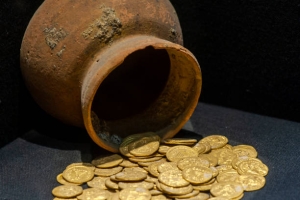
There were two types of money in the fifteenth century, money of account and actual coinage.
Money of Account
The English pound [£] or livre was divided into 20s (shillings) the shilling into 12d (pence).
The English mark was worth 13s 4d – two thirds of a pound
In France the livres tournois was the standard money of account. Divided into 20 sous and 12 deniers. Nine livres tournois equalled one English pound.
Coinage
There were no pound, mark, or shilling coins.
The English noble was a gold coin worth 6s 8d, half a mark.
The English silver penny was also a money of account and worth 1/240th of one pound sterling.
Silver minted coins: Groat = 4 pence; half groat; penny; halfpenny; farthing
In France the franc was a silver coin worth one livre.
The ecu was a gold coin worth 3s 4d sterling.
The salut was a gold coin minted in in Lancastrian France worth one and one half livres or 30 shillings. The French also minted the salut.
Incomes
A rough estimate of incomes: a parish priest received between £5 and £10 a year depending on the wealth of his parish., An archer might expect to earn £9 a year. The average income of a knight was £60. A lord’s income from land and crown annuities amounted on average to £865 from which he would pay his retinue and domestic servants. Richard, Duke of York the richest magnate in England claimed to be worth £3,230 a year.
Taken from J. Sumption, The Hundred Years War vol V, Triumph and Illusion, pp. 822-823.
The Minority Council

The Proceedings of the Privy Council vol. III record thirty-four meetings in 1429, three in February, two in April (one was a Great Council), four in May, eight in June, five in July, four in October, three in November and five in December while Parliament was in session.
Council Attendance
The record for 15 June contains lacunae, and some names may have been omitted or are incorrect. They do not follow the usual order of precedence.
Duke of Gloucester April May June Oct Nov Dec
Archbishop Kemp, Chancellor April May June July Oct Nov Dec
Lord Hungerford, Treasurer April May June Dec
William Alnwick,
Bishop of Norwich; Privy Seal April May June Oct Dec
Archbishop Chichele May June July Oct Dec
William Grey, Bishop of London April May June Oct Nov Dec
Benedict Nicolls, St David April
Edmund Lacy, Bishop of Exeter April
Philip Morgan, Bishop of Ely April May July Oct Dec
Richard Fleming, Bishop of Lincoln April May
Thomas Poulton, Bishop of Worcester April
William Heyworth, Bishop of Coventry April
John Landgon, Bishop of Rochester April
John Stafford, Bishop of Bath April May June July Oct Nov Dec
Thomas Langley, Bishop of Durham April May Oct Nov
William Barrow, Bishop of Carlisle April May
Duke of Norfolk May July Oct Dec
Richard Beauchamp, Earl of Warwick April Oct Dec
Humphrey, Earl of Stafford April Oct Dec
Henry Percy, Earl of Northumberland April
John Holand, Earl of Huntingdon May June Oct Dec
Thomas Lord Roos, April May
Robert Lord Willoughby April May
Lord Audley April May
Ralph Lord Cromwell, April May June July Oct Dec
Robert, Lord Poynings April
John Lord Tiptoft April May June July Oct Dec
Reginald, Lord de la Warr April
William, Lord Zouche May
Louis Robessart, Lord Bourchier April July
John, Lord Scrope July Oct Nov Dec
William (?) Lord Harington May
Henry Bourchier (?) Count of Eu May July Dec
William, Lord Lovell May
Richard Harweden, Abbot of Westminster April
Abbot of Glastonbury April
Ralph Hamme, Abbot of Abingdon April
William, Abbot of Waltham April
Justices
John Cheyne May
John Juyn May
John Hals May
John Cokayne May
William Westbury May
James Strangeways May
‘and others’ April May
Council Proceedings
 Judicial Appointments
William Paston and John Cottesmore two sergeants at law, were appointed justices of the Court of Common Pleas; Thomas Rolf and Richard Newton became sergeants at law; John Wampage became a king’s attorney; and William Babthorp, a king’s attorney in the Court of Common Pleas, became a Baron of the Exchequer (1).
Sergeants at law were qualified lawyers who had served a sixteen-year apprenticeship at the Inns of Court. They had a monopoly of appearing in the Court of Common Pleas where they pleaded special cases. A sergeant at law ranked as a knight. Justices were selected from their ranks and promotion was on royal authority by command of the Chancellor (2).
**********************************************
(1) PPC IV, pp. 4-5 (judicial appointments)
(2) J.A.F. Thomson, The Transformation of Medieval England 1370-1529, (1983), pp. 292-293 (sergeants at law).
***************************************************
Smuggling bullion
The export of bullion from England was prohibited by statute.
The Council ordered William Fitz Harry and John Ardern to enquire into the illicit smuggling of jewels, gold, and silver, to unnamed fortresses in Picardy. i.e. the Pale of Calais (1). Richard Woodville, lieutenant of Calais, the mayor of Calais, and the mayor of the Calais Staple were commanded to assist them (1).
William Fitz Harry, a king’s esquire, was captain of Marck Castle in the Pale of Calais. John Ardern may have been the clerk of the king’s works but is more likely to have been the John Ardern who was clerk to Lord Hungerford, the Treasurer of England.
(1) PPC III, p 329 (appointment of Fitz Harry and Ardern to investigate bullion).
Lancashire and Cheshire
Local feuds, especially in areas remote from London, were the norm rather than the exception. Maintaining order and ‘keeping the peace’ in the shires was the responsibility of local lords, but Lancashire and Chester as counties palatine, came under the direct authority of the King of England as Duke of Lancaster.
Itinerant justices could order disturbers of the king’s peace to appear before the Council.
See Year 1427 Lawlessness
Lancashire
Sir William Ashton and Richard Shirburn of Lancashire had appeared before William Babington, the Chief Justice of the Court of Common Pleas, on a charge of disorderly behaviour and failure to keep the king’s peace. They were bound over to appear before the Council and accept arbitration to settle their dispute, which they did and were discharged (1). On 4 June in Chancery, they each gave a mainprise that they ‘shall do or procure no hurt or harm to any of the people’ on pain of a fine of £100’ (2).
The men of Cheshire were a turbulent lot. Offenders from gentry families in Cheshire, Laurence Fitton, John and Thomas Stanley, Peter Dutton and John Savage appeared before William Troutbeck, the chamberlain of Chester at the end of 1428 and were ordered to appear before the Council by the end of March 1429.
A second group, Laurence Warren, Thomas Grosvenor, Ralph Mainwaring, Hugo Venables, Robert and John Davenport also appeared and each group gave a recognizance of £1,000 for their appearance and good behaviour. the Council discharged them of their recognizances on 6 July 1429 (3).
*****************************************
(1) PPC III, p. 327 (Ashton and Shirburne).
(2) CClR 1422-1430, pp. 456-457 (Ashton and Shirburne).
(3) PPC III, pp. 346-347 (men of Chester.
********************************************
Marmaduke Lumley
William Barrow, Bishop of Carlisle, died in September and the prior and canons of the cathedral elected Marmaduke Lumley to replace him. The royal assent was given, the pope was informed, and the election was confirmed by Parliament (1).
Marmaduke Lumley was a younger son. His father Ralph, Lord Lumley was a northern lord, a landowner in county Durham. Lumley was Chancellor of the University of Cambridge in 1427 and Master of Trinity Hall in 1429.
The Council agreed at the beginning of December that letters patent confirming Lumley’s election should be issued, with the Duke of Gloucester and Lord Scrope dissenting (2).
Gloucester opposition has been assumed to be because Lumley, whose mother was a Neville, was promoted by Cardinal Beaufort and so roused Gloucester’s ire. Lumley naturally became Beaufort’s adherent in Council after 1430 because of Gloucester’s objection to his appointment, but before that the connection is tenuous; it is equally possible that Gloucester simply disliked Lumley, there is no way of knowing. All Gloucester got was Lumley’s life-long enmity.
*******************************************
(1) PROME X, p. 385 (Lumley confirmed).
(2) PPC IV, p. 8 (Lumley confirmed).
******************************************
Food Scarcity
The chronicles record a scarcity of food that would escalate throughout the 1430s was noted in the chronicles as beginning in 1429. The price of wheat rose to 20 pence a bushel.
“And in the same yere was Henry Barton, Meyre of London. And tho was thoroughoute Engelond grete scarste of corne and all othir vitaill for oxen and shipe deiden stronglyche and a busshell whete was at xxdo longe tyme; blessid be God in alle his yeftis of amendement!” Brut Continuation D, p. 436
“In the vijte yere of his regne þer was a great derth of corne for a busshell of whete was at iij sterling; and all oþer cornes were dere þat yere.” Brut Continuation H, p. 568.
“And that yere was a dyre yere of corne and pryncypally of whete and of alle maner of vytayle, for a buschelle of wheat was worthe xx d.” Gregory’s Chronicle, p. 164
London
London merchants in Bayonne
In February 1429, a letter in King Henry’s name reminded the mayor and officials of Bayonne in the Duchy of Gascony of the charter issued by King John and confirmed by King Henry III that exempted London merchants trading in Bayonne from paying export duties and local tolls of quayage (docking), murage (wall repair), pontage (bridge maintenance) and paviage (road repairs. The letter confirmed the London merchants’ privileges (1, 2).
************************
(1) Foedera X. pp. 411-412
(2) gasconrolls.org C61/123 #35
************************
A Breton Murderer
Joan Wynkefeld, a wealthy London widow, was murdered in Whitechapel. Testimony from various witnesses, and in the chronicles, is somewhat contradictory. In one version Joan took a man from Brittany into her house as a servant out of Christian charity, giving him easy access to her possessions. He murdered her while she was asleep and escaped with her valuables.
In another version Joan caught Ivo Caret, a Breton and a brewer by trade, in the act of entering her house and stealing from her. Caret first bludgeoned her to death and then dismembered her body. He fled across the river and found sanctuary at St George’s Church in Southwark.
The chronicles’ statement that he took the cross is misleading. It does not mean that he vowed to go on crusade. A man who had taken sanctuary was legally entitled to go abroad ‘abjure the realm’ within forty days. His journey from the place of sanctuary was monitored and his person protected; as a penitent he walked barefoot wearing white sackcloth with a red cross printed on it and a crucifix in his hand for ease of identification (1). It was, of course, how his attackers identified Caret.
Caret left sanctuary in the company of two constables, making for the coast. They crossed the Thames and passed through Whitechapel where he was set upon by a group of women, friends and possibly relations of the dead woman, led by one Margaret Conys. The women threw dung at him and then stoned him to death.
The enquiries instituted in the wake of the murder and the stoning ‘established’ that Caret was a spy who had been in England since 1425, passing information back to his native Brittany, as well as to the French and the Scots (2). It was an easy accusation to make; any Breton resident in London between 1425 and 1429, when England was at war with Brittany, would have been suspected of being a spy by the xenophobic Londoners. An accusation of spying weighed more heavily with the authorities than that of murder.
“ this same yere betwen Estren and Witsontyd a fals Breton modred a wydewe in here bed the whiche fond hym for almasse withoughte Algate in the subbarbes of London and bar awey alle that sche hadde, and afterward he toke socour of Holy Chirche at seynt Georges in Suthwerk; but at the laste he tok the crosse and forswore the kynges land; and as he wente hys way it happyd hym to come be the same place where he had don that cursed dede, and women of the same paryssh comen out with stones and canell dong, and there maden an ende of hym in the hyghe strete, so that he wente no ferthere notwithstondynge the constables and othere men also, whiche hadde hym undir governaunce to conduyt hym forward for there was a gret companye of them and hadde no mercy, no pyte.”
A Chronicle of London (Harley 565) p. 117 and Chronicles of London (Cleopatra C IV) p. 132
“Also þis same yere a Breton murthered A gode widow without Al-gate, which wedow fond him for almesse; & he bare away al þat she had; And after þis he toke girth of holy church at Seynt Georges in Suthwerk, & þer toke þe crosse & forswore þis land. And as he went it happened þat he came bi þe place where he did þis cursed dede in þe subbarbis of London; & þe women of þe same parissh come out with stones and Canell dunge & slew & made an ende of him, nat-withstonding þe constable & many other men beyng present to kepe him; for þer wer many women, & had no pite.” Brut Continuation G, p. 500
“And in þe same yere a fals Breton betwen Ester and Witsontyde, mordrede a good wedowe in hir bedde, the which hadde found hym, for Almesse, withoute Algate, In the suburbes of London; & he bar a-way all that sche hadde, And after toke girth of holy churche at Saint Georges in Suthwerk; but at þe last he toke the Crosse & for-suore þe Kyng land. And as he went his way it happid hym to come by the same place wher he did that cursede dede; And women of þe same parish come oute to hym with stones & with canell dong & þere made an ende of hym in þe high streit, so þat he went no ferþere not-with-stondyng þe Constablis & oþer men also, which had hym in gourernaunce to convey hym forth in his way; for þere was a grete companye of them; & on hym thei had neither mercie nor pite; & thus this fals thefe endede his life in þis worlde, for his falsnesse.” Brut D Appendix, pp. 442-443
“And that same yere there was a ryche wedowe i-slayne at Whyte Chapylle; and the same theffe that kylde hyr fledde to Syn Gorgys yn Sowtheworke; and the Fryday nexte folowynge he for-swore the londe; and he was a-syngyd the same way that he slowe the woman, and there wemmen mette with hym and slowe hym in the waye by twyne the Whyte Chapylle and Algate.” Gregory’s Chronicle, p. 164
*******************************************
(1) Bellamy, Crime and Public Order, p. 112.
(2) Griffiths, King and Country, ‘A Breton spy in London,’ pp. 221-25.
******************************************
A Thief
Gregory’s Chronicle also records that in June a thief named Bolton was hanged and that a friar and the ‘parson’ of the Tower were killed there. I have found no other reference to these incidents.
“And the same yere there was a stronge thefe that was namyd Bolton was drawe hanggyd and i-quarteryde. Ande the same yere, the v day of June, there was a fryer i-slayne in the Towre of London, and the person of the same Towre with hym also.” Gregory’s Chronicle, p. 164
The Magnates
The Duke of Bourbon

John, Duke of Bourbon had been a prisoner in England since his capture at the Battle of Agincourt in 1415. Negotiations for his release of fell through in 1427.
See Year 1427 The Duke of Bourbon
The possibility of Bourbon’s release revived in 1429. He was nearly fifty and in poor health; he wanted to go home. He was so infirm that he was unable to bear arms.
In desperation he agreed to recognise King Henry as his sovereign and the true king of France, a sine qua non under Henry V’s terms for his freedom. Bourbon signed a document on 8 February 1429 in which he addressed Henry as his sovereign, and he undertook to fulfil Henry V’s other requirements during the course of the year, and to pay his ransom of 40,000 écus (£3,333 6s 8d or 5,000 marks) (1).
It appears that initially the Council intended to allow Bourbon to return to France. Ships were requisitioned in March to transport him and his household to Calais (2). The Council optimistically assigned the ransom of 5,000 marks to pay the wages of the garrison at Calais in July, with £400 to be paid immediately. (3, 4).
The Commons in Parliament were as anxious as the Council to secure the money; they opined out that it would cause ‘great inconvenience’ to the king if Bourbon died before his ransom was paid! (5, 6). They urged the Council to expedite further negotiations.
Bourbon had acknowledged Henry VI as King of France, the most important of Henry V’s conditions. If he had been able to raise or borrow the money to pay his ransom,which was all the Council and Parliament really wanted, he might have bargained to be exempted from the other conditions, as indeed he was in 1430, when the price went up. The Council did not need any more hostages, the ones they already had cost too much to keep. Realistically there was little likelihood that the six fortresses would be surrendered unless Bourbon was allowed to return to France, the requirement fitted Henry V’s agenda in 1421 but was out of date by 1429.
Bourbon was unlucky in his wife and his son. Marie de Berry, Duchess of Bourbon was John’s second wife. She had custody of the Earl of Somerset but her interest, and that of the Dauphin Charles, was in obtaining the freedom of her son by her first marriage, Charles d’Artois Count of Eu, also a prisoner since Agincourt by exchanging Somerset for the much younger Artois.
Bourbon’s son by his first wife, the Count of Clermont, was committed to the Dauphin, but more importantly, the administration of Bourbon’s estates was in Clermont’s hands while his father was in captivity. He showed no interest relinquishing them. The Duke of Bourbon was yesterday’s man, of no use the Dauphin and of little importance to his wife or his son.
Bourbon was removed from the nominal custody of the Duke of Bedford on 1 December, on the authority of Parliament, and transferred to the custody of Sir Thomas Comberworth (7).
He may have sworn fealty to King Henry in person during the Christmas festivities at Eltham.
“And that same yere the Duke of Burbone was sworne Englysche in the kyngys manyr of Eltam besyde Grenewyche.” Gregory’s Chronicle, p. 163
See Year 1430 The Duke of Bourbon.
************************************************************
(1) Ransoms were usually reckoned in écus or nobles, because they were paid in actual coins or jewels. 40,000 écus = 20,000 English nobles = £3,333 6s 8d or 5,000 marks (money of account).
(2) Foedera X, p. 413 (ships for Bourbon).
(3) PPC III, pp. 344–345 (£400 from Bourbon’s ransom assigned to Calais).
(4) Foedera X, pp. 426–427 (£400 from Bourbon’s ransom assigned to Calais).
(5) PROME X, p. 379 (Council to negotiate with Bourbon).
(6) Foedera X, p. 434 (Council to negotiate with Bourbon).
(7) PROME X pp. 384–385 (custody of Bourbon assigned to Comberworth).
************************************************************
Richard Neville, Earl of Salisbury
 After the death of Thomas Montagu, Earl of Salisbury at the siege of Orleans in 1428, Richard Neville the eldest son of Ralph, Earl of Westmorland by his second wife Joan Beaufort, claimed the title of Earl of Salisbury in right of his wife Alice Montagu, Salisbury’s only daughter and heiress.
A panel of judges pronounced that Neville was entitled to so style himself since Alice “ought to be named and reputed as a countess, so ought he to enjoy the name of an earl.” On 3 May 1429 the Council confirmed Neville’s right to a seat in parliament and in council (1).
“And the xxj day of Feverer Syr Rycharde Nevyle was made Erle of Saulysbury.” Gregory’s Chronicle, p. 163
********************************************************
(1) PPC III, pp. 324-326 (Richard Neville became Earl of Salisbury)
(2) M. Hicks, ‘The Neville Earldom of Salisbury, 1429-71’ in Richard III and His Rivals, pp. 353-63.
*******************************************************
John, Bastard of Clarence
The Bastard of Clarence had been granted £100 from manors in Ireland in July 1428.
See Year 1428 Council Proceedings.
In July 1429 he surrendered his patent and received the same amount from the same estates: Esker, Newcastle-on-Lyons, Croelyn, and Tassagard, and the keepership of Dublin Castle.
The estates would revert to him outright when the grant of them to their current holders, Richard Fitz Eustace and John Cornwalsh, expired (1, 2), but this would not be until 1435.
********************************************
(1) Foedera X, p 427–428 (grant to Clarence).
(2) CPR 1422-29, 6 July 1429, p. 543 (grant to Clarence).
**********************************************
William Bruges, Garter King of Arms
 William Bruges, Garter King of Arms was granted an annuity of £20 out of the fee farm of the city of Winchester after the Feast of the Garter in 1429 (1, 2).
King Henry V created the position of Garter King of Arms, named for the Order of the Garter, as the senior King of Arms. William Bruges was the first Garter King of Arms.
Born in 1375/76 Bruges was the son of Richard Bruges, Lancaster Herald. He was Guyenne or Aquitaine Herald before becoming Garter. As Chester Herald he had served Henry V as Prince of Wales and Earl of Chester and was employed by the prince on diplomatic missions (3).
Bruges’s status as Garter King of Arms gave him protection to travel freely as the King of England’s representative and he carried secret and confidential letters and messages to the courts of Europe during Henry VI’s reign.
***********************************************
(1) Foedera X, p, 415 (Garter King of Arms annuity).
(2) CPR 1422-1429, p. 537 (Garter King of Arms annuity).
(3) Hugh Stanford London, The Life of William Bruges, the first Garter King of Arms, ed. A. Wagner (1970).
*************************************************
The Papacy

John Obizis [Opizzis]
The papal envoy John Obizis, a papal envoy to England, had been imprisoned briefly in 1427 on the Duke of Gloucester’s orders. To placate Pope Martin, and put a stop to his complaints about the treatment of his envoy, the Council agreed at the end of April that Obizis should be allowed to hold benefices in England up to the value of 200 marks (1).
See Year 1427 Pope Martin V
(1) Foedera X, p. 415 (Obizis to hold benefices in England).
Herman Dwerg
Herman Dwerg was a doctor of canon law and a papal notary. Harvey describes him as the most influential German in the curia and ‘a famous member of the German community in Rome who had considerable diplomatic dealings with England.’
In 1429 he settled a dispute between the Prior of St Oswald’s, Nostell, in West Yorkshire, and the prioress of St Sixtus in Rome in favour of the prioress in 1429 (1).
Although a resident in Rome, Dwerg was to be allowed to accept benefices in England in the same form as that given to John Obizis, to the value of £100 for his ‘notable services’ to the king. (2).
************************************
(1) Harvey, England and Papacy, pp. 54 and 87 (Dwerg).
(2) Papal Letters VIII, pp. 170-171 (Dwerg settled dispute).
************************************
‘Sir Milo’ and Hardesino
On 29 June the Council agreed that ‘Sir Milo’ (?) should become the king’s advocate at the curia and that an annuity of 50 marks should be awarded to the ‘Cardinal of Navarre.’
But Ardicino or Hardesino della Porta, Cardinal of Ss. Cosmas and Damian of Novara in Italy was not Cardinal of Navarre as in Proceedings (1).
See Year 1431 The Papacy
(1) PPC III, p. 339 (Sir Milo, ‘Cardinal of Navarre’ and Dwerg).
Thomas Brouns and Simon Sydenham
John Rickingale, Bishop of Chichester, died in July 1429 and Thomas Brouns was elected to replace him. The Council gave its consent and notified Pope Martin in August (1). Martin refused to confirm the election (2).
Martin appointed Simon Sydenham, Dean of Salisbury Cathedral as Bishop of Chichester. Confusingly Brouns succeeded Sydenham as Dean of Salisbury.
***********************************
(1) Foedera X, p 433 (Brouns as bishop elect).
(2) Papal Letters VIII, pp. 215 and 217 (Brouns rejected by the Pope).
(3) Papal Letters VIII, p. 114 (Sydenham).
************************************
Pierre Cauchon, Bishop of Beauvais
It was unusual for the Minority Council to interfere with or advise on appointments to ecclesiastical benefices in Normandy; this was the Regent Bedford’s prerogative.
Yet in December the Council agreed to request Pope Martin to promote Piette Cauchon, Bishop of Beauvais, to become Archbishop of Rouen in place of Jean de la Rochetaillé, Cardinal of San Lorenzo in Lucina (Rome) who was to be translated to become Archbishop of Besançon (1, 2).
Cauchon had accompanied Cardinal Beaufort from France to attend King Henry’s coronation in November; he was seated with Beaufort at the high table for the coronation banquet. Beaufort probably promoted the idea of his becoming Archbishop of Rouen to make him an ally in the Cardinal’s plans to dominate the Council in Rouen when King Henry arrived there (2). Pope Martin would have considered this to be unacceptable meddling and Cauchon remained Biship of Beauvais.
***********************
(1) PPC IV, p. 10 (Cauchon).
(2) Foedera X, p 438 (Cauchon)
(3) Sumption, Triumph and Disaster, pp. 300-31 (the presence of the Bishop of Beauvais at the coronation is not recorded in the chronicles)
***********************
The Kingdom of Aragon
The Council sent an embassy to Rome in 1429 to meet with representatives of King Alfonso of Aragon (1, 2). Why the Council continued to approach Alfonso is unclear. Attempts by English envoys in 1424 and 1428 to meet Alfonso’s representatives in Rome had either been aborted or had ended without result.
See Years 1424 and 1428 The Kingdom of Aragon
The Council may have hoped for an Anglo Aragonese alliance against France, or the invitation may have come from Alfonso to avert an Anglo-Castilian alliance. Aragon was on the brink of war with Castile, and the Council had issued safe conducts for a Castilian embassy to come to England.
See The Kingdom of Castile below
See Year 1430 The Kingdoms of Aragon and Navarre
Robert Fitzhugh, Warden of King’s Hall at Cambridge University was named in June as the king’s proctor to the curia (3). He received £100 to proceed to Rome for ‘urgent negotiations’ (4). Letters of protection for one year for Fitzhugh and his retinue (who are named) were issued on 15 July 1429 (5).
He was to be accompanied by Thomas Spofford, Bishop of Hereford who had requested permission to go on pilgrimage to Rome to fulfil a long-standing vow (6), Andrew Holes, a lawyer, and Henry Herburg (unidentified). They were given full powers to treat with King Alfonso’s representatives in Rome on the same terms as those given to the ambassadors who had left Rome before Alfonso’s representatives arrived in 1424.
As in 1428 the outcome of the 1429 negotiations, if they took place, is not known. Robert Fitzhugh and Andrew Holes remained in Rome. Fitzhugh as the king’s proctor to the curia which was probably the real reason for sending him to Rome (7).
***********************************************
(1) Foedera X, p. 433 (commission to treat with Aragon).
(2) PPC III, p 348 (commission to treat with Aragon).
(3) PPC III, p. 339 (Fitzhugh named royal proctor).
(4) PPC III, p. 330 (£100 payment to Fitzhugh).
(5) PPC III, p. 347 (letters of protection).
(6) CPR 1422-1429, p. 541 (Spofford pilgrimage).
(7) Harvey, England, Rome and the Papacy, p. 13.
***************************************
The Kingdom of Castile
The Castilian council sent Sancho Esquerra [Sampson Esquier] described as ‘keeper and guardian’ of King Juan II of Castile in the Proceedings, to request safe conducts for a Castilian embassy to come to England to discuss renewing an alliance between England and Castile. He received a gift of £20.
The Council had no idea of who these Castilians might be or that King Juan, the son of Catherine of Lancaster, daughter of John of Gaunt. although a minor when he came to the throne in 1406, had come of age in 1419 and no longer required ‘a keeper and guardian.’ The letter in King Henry’s name to King Juan announcing that safe conducts had been issued is a draft, with numerous sentences crossed through and some repetitions (1).
The Council granted safe conducts for a bishop, a knight, a Doctor of Laws and a secretary to come to London with a retinue of forty persons, to remain England until the beginning of November. A similar safe conduct was issued for Sancho Esquerra to be accompanied by eight people (2, 3).
Safe conducts were issued again in October, valid until June 1430, for one count, one baron, two knights, two Doctors of Law and clerks of the Castilian council to come to England with their retinues (4). Were these invitations for them to witness King Henry’s coronation?
*******************************************
(1) PPC III, pp. 320-321 (Henry VI letter to King Juan).
(2) Foedera X, p. 411 (Castilian safe conducts).
(3) PPC III, pp. 319-320 (Castilian safe conducts).
(4) Foedera X, p. 434 (Castilian safe conducts).
****************************************
King Eric and Iceland

King Eric of Denmark and Norway had decreed that all trade with his Scandinavian territories must pass through the staple at Norbarn (Bergen) in Norway where he could impose import and export taxes.
Iceland was a dependency of Norway and King Eric controlled Icelandic trade through the staple at Bergen. Fish caught in Icelandic waters had to be sold through Bergen. Only ships licenced by Eric were permitted to sail to and from Iceland and he owed a quarter of every ship.
The Hanseatic League encroached on Norwegian maritime trade and by the fifteenth century they had established a virtual monopoly of trade through Bergen. Enterprising Englishmen, fishers and traders, began to trade with Iceland despite King Eric’s edicts. Eric complained to King Henry.
He reminded the Minority Council in 1429 that English merchants had the same privileges and protection as merchants of the Hanseatic League, on condition that they traded only through Bergen. English merchants complained that Eric’s taxes were too heavy.
The Council ordered the sheriffs of thirteen English counties to issue a proclamation that the staple at Bergen was the only port through which fish and other merchandise could be traded (1). The Parliament of 1429/30 promulgated a decree against unlicensed entry into Eric’s domains by “any of our lieges or subjects . . . to presume of his own foolishness to enter or go into the realms . . .of our said uncle.” (Eric had married Philippa of Lancaster, Henry VI’s aunt) Forfeiture or fines would be imposed on any merchants who evaded the regulations (2).
The prohibition on trading elsewhere than Bergen was difficult, if not impossible, to enforce; it was ignored with impunity by the men who risked their lives and their ships sailing in the dangerous waters of the Baltic. Trade with Iceland continued unabated and so did piracy (3).
*******************************************
(1) Foedera X, p 416 (Council’s proclamation). .
(2) PROME X, pp 400-401 (King Eric’s protest, Parliament’s prohibition).
(3) Power and Postan, English Trade, pp. 166-167 (‘The Iceland Trade’).
******************************************
The City State of Mantua
Simon de Crema, an envoy from Gianfrancesco Gonzaga, Lord of Mantua, came to England in October 1429, but the purpose of his visit is unknown. The House of Gonzaga had ruled Mantua, a small city state bordering Milan and Venice, since the end of the twelfth century. Simon was awarded £40 and a silver cup ‘for his own use’ and given three gold collars, two of them enamelled, as gifts to the Lord of Mantua from the King of England, (1, 2).
************************
(1) PPC IV, p. 3 (Mantua).
(2) Foedera X, p. 433 (Mantua).
**************************
Scotland
The perennial question of King James’s unpaid ransom and the presence of Scottish hostages in England continued to aggravate the Council.
See Year 1427 Scotland
Henry Percy, Earl of Northumberland, Richard Neville, now Earl of Salisbury, the Wardens of the March, and William Barrow, Bishop of Carlisle were ordered to proceed to the Marches in late May (2). They were joined by Sir Robert Umfraville, who had been an emissary to King James in 1426, and the experienced diplomat Master John Stokes a Doctor of Laws. It was Bishop Barrow’s last service to the Council; he died in September 1429.
See Year 1426 Scotland, Truce violations.
Negotiations were scheduled for June. The Council had authorised Thomas Langley, Bishop of Durham, William Barrow, Northumberland, Sir Robert Umfraville and Master Richard Arnold, a canon of York, to negotiate. They were to complain of violations of the truce and at the same time to suggest an extension of the truce which was due to expire in 1431 (1).
See Year 1430 Scotland.
Robert Stewart of Lorne, Sir Thomas Hay of Yester, and Andrew Ketly of Inverurie had been in custody at York since August 1425 (3). On 8 June, possibly to exert pressure on the Scots, Sir John Langton was instructed to send them to the Tower of London, for safe keeping.
Safe conducts for Scottish representatives to come to Haddenstank, a customary meeting place for March Days were issued on 15 June to John Cameron, Bishop of Glasgow and Chancellor of Scotland, Alexander Vaus Bishop of Galloway, Archibald, Earl of Douglas, James Douglas, Lord of Dalkeith, George, the Scottish Earl of March and his brother Patrick of Dunbar, Sir John Forrester Lord of Liberton, Sir Thomas Kirkpatrick, Master William Fowlis, and Master John of Scheves. (4, 5).
********************************************************
(1) Foedera X, pp. 410-411 (English commissioners to Scotland).
(2) PPC III, p. 324 (English commissioners to treat with Scots. The earls were to receive £50 each for their expenses, the bishop £20).
(3) Foedera X, p. 416 (Scottish hostages).
(4) Foedera X, p. 417 (Scots safe conducts).
(5) PPC III, pp. 329–329 (Scots safe conducts).
*******************************************************
Border Law
The conference opened on at Haddenstank 12 July 1429. Agreement was reached in principle: violations of the truce had gone on long enough and strict guidelines, to be given the force of law, should outlaw border raiding. [with] Punishments for violations should be severe enough to deter marauders.
Indentures for March Law (Border Law), setting out the penalties and procedures to be practiced by both sides were drawn up in the names of King Henry VI and King James I. The English Wardens of the March, and the Chancellor of Scotland had overall responsibility for implementing the agreement.
Forfeiture, in one form or another, and fines were the usual punishments, but penalties for violations of the truce of 1424 by land and sea were outlined for specific offences ranging from treason and murder through acts of mayhem, assault, and breaches of safe conducts, theft of animals or goods, and the unlawful pasturing of animals (1).
See Year 1424 Scotland, a Seven Year Truce.
See Year 1425 Scotland.
Piracy
A separate indenture in English to cover acts of piracy was drawn up by a different set of commissioners. Ships and their cargoes taken unlawfully at sea were to be restored to their rightful owners. Men unlawfully captured at sea were to be set free, but if lawfully captured they must pay their ransom.
The indenture was signed by Sir John Bertram, Sir Christopher Curwen, Master Thomas Vuldale, and William Lamberton for the English; Sir Thomas Kirkpatrick, Sir Patrick Dunbar, Master Thomas Roulle, and David Home signed for the Scots.
On 15 October four commissioners from each side were authorised to meet by 12 November at Loghmabenstane and Reddenburn for the redress of injuries, but there is no record that the meeting took place (2).
March Days to settle disputes would continue, but a written record of all discussions and decisions must be kept. Juries made up of lawyers and local men of good standing could be empanelled to advise on cases in dispute, but the English jurors would be selected by the Scots and the Scots jurors by the English, which can only have complicated proceedings.
The 1429 agreements were a valiant attempt to establish a code of conduct that could be accepted by both sides in theory if not always in practice, to modify and redress acts of violence. But border raiding was too engrained for the indentures to be effective.
To establish laws and penalties was one thing, to enforce them was quite another. Complaints of truce violations and periodic treks north by English commissioners to treat with the Scots would continue throughout Henry VI’s reign and long after it.
*****************************************************
(1) Foedera X, pp. 428–431 (Border law agreement).
(2) Foedera X, p. 435 (October meeting).
***************************************************
James ‘Mor’ Stewart
 Murdoch Stewart, Duke of Albany, had a claim to the Scottish throne. King James had arrested and executed Murdoch and his eldest son Alexander on charges of treason in 1425.
Murdoch’s youngest son James (known as James Mor, the Fat) raised a rebellion against the king but he was unable to sustain it, and he fled to Ireland (1).
Alexander, Lord of the Isles, hatched a plan to bring James Mor back to Scotland to challenge for the Scottish throne. A fleet set out from the Isles early in 1429 to find James Mor and ‘convey him home that he might be made king’ (2). It was too late. James Mor was dead by the end of April 1429 (3).
The Minority Council did not know of Mor’s death. In May they commissioned William Troutbeck, Chamberlain of Chester, to go to Ireland to find Mor and offer him a safe conduct to come to England (4, 5).
Why? What use did the Council hope to make of James Mor? King James, had not kept his oath to pay his ransom, but did they consider backing a rival claimant to the Scottish throne? Or was it just a hare-brained scheme discussed in Council and then discarded?
William Troutbeck
John Sutton had replaced John, Lord Grey of Codnor, as the king’s lieutenant in Ireland in 1428 for a term of two years (6). William Troutbeck had taken the muster of Sir John Sutton’s small army, 24 men-at-arms and 500 archers, gathered at Chester in March 1428 (7). The Council instructed Troutbeck to take the muster of Sutton’s forces again while in Ireland searching for Mor.
**********************************************
(1) Balfour-Melville, James I, pp. 121-122 (James Mor’s rebellion).
(2) Annals of Ulster in A. Cosgrave (ed), Medieval Ireland, p. 576
(3) M. Brown, James I, pp. 101–102 (Mor’s death).
(4) PPC III, p. 327 (commission to Troutbeck to go to Ireland).
(5) Foedera X, p. 415 (commission to Troutbeck to go to Ireland).
(6) Otway-Ruthven, Medieval Ireland, p. 366 (Sutton).
(7) CPR 1422-1429, pp. 469 and 546 (Troutbeck to take musters).
**************************************************
Cardinal Beaufort

Cardinal Beaufort and King James
The Minority Council had insisted at the end of 1428 that Cardinal Beaufort must meet with King James of Scotland and remind him of his treaty obligations.
Beaufort’s mission was to persuade James to repudiate the treaty he had signed with the Dauphin Charles in 1428 for the marriage of his daughter Margaret with Charles’s son Louis, and to deter James from sending a Scottish army to fight for the French. The accommodation with the French violated James’s treaty for his release from captivity in England when he had sworn to remain neutral in the war in France.
See Year 1428 The Council and Cardinal Beaufort.
The Council could not prevent James sending Scottish troops to France, except by applying psychological pressure. Beaufort could threaten that the Council would view the departure of a Scottish army for France as act of war.
The Chancellor was instructed to issue an authorisation for Cardinal Beaufort to proceed to the Marches of Scotland, or into Scotland, if need be, to discuss ‘the faith of the church’ and the welfare and honour of both of King Henry ’s kingdoms (1, 2), a reference Henry as king of France. ‘The faith of the church’ gave Beaufort a special licence to recruit Scots for an army to fight the heretics in Bohemia, which would divert Scottish soldiers away from fighting for France.
 Beaufort met King James at Coldingham Priory, just over the Scottish border (3). He was there in mid-March when William Tryst was authorized to purchase horses to carry messages to him (4).
There is no record of the discussions between the king and the cardinal, but but James was unresponsive. Cardinal Beaufort returned to England in April empty handed.
The Council ordered ships to be put to sea to intercept the French navy which they believed would convey Princess Margaret and an army from Scotland to France but the crossing did not take place (5). John Stewart of Darnley who was expected to take command of the Scots, had been killed at the Battle of the Herrings in February, and this may have helped James to decide to hold his hand.
See The Battle of the Herrings below.
Or James may have heeded Beaufort’s warning that sending an army to France could lead to war with England, something James could not afford. It is probable that James had promised the Dauphin what he could not perform, he was good at it! To raise a Scottish army of 6,000 men only four years after the last Scots army under Archibald Douglas had been decimated at the Battle of Verneuil was more than James could accomplish, and the careful Dauphin would not accept Margaret without the army.
*************************************************
(1) PPC III, pp. 318-319 (Beaufort’s terms of reference).
(2) Foedera X, p. 410 (Beaufort’s authorization. He was allowed 500 marks for his expenses).
(3) Balfour-Melville, James I, p. 168 (Coldingham).
(4) Foedera X, p. 413 (messenger to Beaufort).
(5) PPC III, p. 324 (ships to intercept passage to France).
************************************************
Cardinal Beaufort and the Council
On 17 April, with King Henry present, an enlarged Council discussed a question, probably though not certainly raised by the Duke of Gloucester: traditionally Henry Beaufort as Bishop of Winchester officiated at the ceremony of the Feast of the Garter at Windsor on 23 April, but should he be allowed to now that he was a cardinal? Pope Martin had permitted him to retain his bishopric in commendam. This was against precedent in England; did it contravene the Statue of Praemunire?
The councillors side-stepped the question and offered a compromise: Beaufort should not attend the Garter Feast that year. This decision was delivered to Beaufort by the seven-year-old King Henry, the first record in the Proceedings of Henry taking an active part in Council. On the following day Beaufort sought an audience with the king and challenged the Council’s refusal to permit him to officiate. He pointed out that he was Bishop of Winchester and as such he had presided at the Garter Feast for the past twenty-four years.
It did him no good. Thirteen bishops and eleven lords reminded him that there was no precedent in England allowing a cardinal to retain his bishopric. They could not endorse his position without prejudicing the future rights of the king in church appointments when he came of age. (1, 2).
Beaufort backed down. He realised he had been too precipitate; his wealth depended on his remaining Bishop of Winchester, and he knew how to wait. He turned his energies to organising his crusade. Success in a holy war would enhance his reputation and silence his critics at home and abroad.
****************************************
(1) PPC III, pp. 323-342 (Beaufort denied the right to officiate).
(2) Foedera X, p. 414 (Beaufort denied the right to officiate).
*******************************************
Cardinal Beaufort’s Crusade
In June John Yerde and Stephen Lillebourne were commissioned to arrange lodging for the Cardinal and his retinue in Kent. On the same day, 15 June, the Council ordered three sergeants at arms to arrest shipping to take him overseas (1).
Beaufort signed an agreement with the crown on 18 June. As a preamble to his indenture he recapitulated his request to the Council and the Council’s replies:
“Remembrance of the things that I, H. Cardinal and Legate etc., ask and desire of the king my souverain lord and of his noble council on the behalf of our holy father for the well sustaining [of the] defence and exaltation of our Christian faith” (2) .
Beaufort reminded the Council that a year earlier, in May 1428, they had assured Pope Martin’s ambassador, Kunes of Zvolen (Cuntzo in PPC, Conzo in Foedera) that they would support a crusade against the heretics in Bohemia (3). Beaufort had undertaken to raise and lead an army at Pope Martin’s behest, and the Council had permitted Beaufort to preach the crusade after he returned from Scotland and his meeting with King James.
Beaufort wanted an army of 500 men-at-arms and 5,000 archers. The Council replied that the state of the war in France this made impossible. He could raise 250 men-at-arms and 2,000 archers, and set his own rates of pay, provided he did not recruit men currently serving with the Duke of Bedford in France; the king’s commissioners would check these numbers, and musters must be submitted to them in writing. In return the king would not claim the crown’s traditional share of the spoils of war.
Donations of money must be collected by responsible men of good standing who would account to the Council for every penny they received. Donations could be used to purchase the necessities of war; the soldiers’ wages must be paid in England as no gold or silver was to be taken out of the country. The money raised could not be used for any purpose other than the crusade without Council permission. No papal tax was to be levied.
Beaufort’s ‘admirals’ could press ships to transport the army and set the date and times of their assembly. The crews would be paid the same wage as those in the king’s ships and Beaufort must prove to the Council that he could maintain them for the outward voyage and their return passage.
Volunteers going without pay for the redemption of their souls were acceptable, but not members of religious orders who might be tempted to join a crusade, but who would prove unsuitable in battle. The crusading army was not to shelter unbelievers. Beaufort’s constables and marshals could impose military discipline. Volunteers would be under the same martial law as waged recruits, and both would be expected to contribute financially.
The king would sanction the expedition and offer protection of property to everyone who signed up, just as if they were going to fight in France. The army was not to be diverted to any other country, although Beaufort could take two hundred soldiers with him as an escort if he had occasion to visit Rome. Beaufort accepted these terms gratefully but asked that if any unforeseen contingency, not covered in the Council’s permission, should arise, the Council would agree to include it (4, 5).
Beaufort was licensed to go abroad as the captain of an army, and he designated his nephew Edmund Beaufort, Earl of Mortain whose career he was promoting, to take command. A note that letters patent were also issued to Robert, Lord Willoughby, is tacked on to the end of the document (6). Presumably he was to watch over the inexperienced Edmund. Willoughby had fought at the battles of Agincourt, Cravant and Verneuil and with the Earl of Salisbury in Maine in 1425.
Brut E is the only chronicle to name him: “And þe Lord Wylloghby was made Capten of hys werris.” Brut Continuation E Appendix, p. 454
Pope Martin’s contribution was held in a special account in London. Beaufort received 14,000 florins from this source, about £2,750, enough for shipping and the first quarters wages (7).
Beaufort had stressed throughout his negotiations with the Council that he was acting as the Pope’s instrument, possibly not the best way to win the Council’s consent. Why did they permit Beaufort to raise a second army when the Duke of Bedford desperately needed reinforcements for France? To get him out of England once again?
This may have been the Duke of Gloucester’s motive, but the Council collectively had a more pragmatic reason. They were mindful of Beaufort’s past loans to finance the war in France. His financial support would be needed again, sooner rather than later. Perhaps a small force, for which they did not have to foot the bill, was a small price to pay for Beaufort’s future good will.
*****************************************************
(1) Foedera X, p. 417–418 (accommodation and shipping for Beaufort).
(2) PPC III, pp. 330-338 (Beaufort’s petition and indenture for Bohemia).
(3) Foedera X, p. 423 (Papal envoy’s visit in 1428 misdated to 1429).
(4) Foedera X, pp. 419–420 jumps to page 424 (Beaufort’s petition for Bohemia).
(5) Foedera X, pp. 422-423 (Beaufort’s indenture for Bohemia).
(6) Foedera X pp. 423 and 421 (Edmund Beaufort and Lord Willoughby).
(7) Harriss, Beaufort, pp. 185-186 (papal contribution).
********************************************
֍The pagination after pp. 419-420 in the Foedera is printed out of order.
Page 424 follows page 420, then 422, then 423 followed by 421 then 425 and 426.
Cardinal Beaufort’s Army
Ironically the day of Beaufort’s indenture, 18 June, was the day on which the Battle of Patay was fought and lost.
See The Battle of Patay below.
Patay doomed Beaufort’s enterprise from the start. The road to Reims lay open, enabling the Dauphin Charles to be crowned King Charles VII there on 17 July.
Every available man was now urgently needed in France. Beaufort had to choose between abandoning Pope Martin and the crusade or turning his back on the House of Lancaster and the dual monarchy. The choice was never in doubt. The advantages, personal and political, of remaining loyal to his family and his country far outweighed the lure of service to Rome.
Beaufort’s ‘sacrifice’ was minimal. More important than his loyalty, his compliance would obtain what he wanted most, a return to his rightful place on the Council and the chance to re-establish his pre-eminence in governing England. The threat of prosecution under the Statute of Praemunire and the loss of his bishopric would vanish.
Brut H noted that Beaufort’s contingent of archers, was the best that could be found anywhere in England; they were waged at 9d. a day (when the going rate was 6d a day) and that his decision to aid the Duke of Bedford had saved Normandy which would otherwise have been lost.
[He] “changet his purpose for þe wele and þe worshipe of al the Reame of Englond, and went into Normaundy with a notable meyny of Archers, the best þat couth be geton in eury place of Englond for ixd on þe day, euery archer ij or iij bawes in a cace. And so, by his comyng theder, was savid all that lande; and ells þat tyme it shuld haue ben lost.”
Brut Continuation H p. 568
The Council issued orders on 26 June for the musters of Beaufort’s army to be taken (1).
Beaufort signed ‘articles of appointment’ on 1 July to take an army into France to serve under the Duke of Bedford for six months at a cost of £2,431 for the army’s second quarters wages. Beaufort’s personal reward was 1,000 marks. Even in this crisis Beaufort could still charge the crown for his services (2, 3).
******************************************
(1) Foedera X, p. 421 (musters to be taken).
(2) Foedera X, p. 421 (jumps to page 425 (Beaufort’s indenture for France).
(3) PPC III, pp. 339-345 (Beaufort’s indenture for France and payment to him).
(4) PPC III, pp. 345-346 (Council’s repayment obligations).
(5) PPC III, p. 348 (freeze on the Exchequer).
*************************************************
Sir John Radcliffe

Sir John Radcliffe, the ex-seneschal of Gascony, was installed as a Knight of the Garter in April. On 8 May he indented for six months service in France with 100 men at arms and seven hundred archers which the Council had agreed to fund in response to the Duke of Bedford’s request for additional troops (1). He would accompany Cardinal Beaufort’s army. On 26 June, the day the army mustered, the Council assigned Radcliffe £1,000 a year on the customs from the port of Melcombe to help clear the enormous sum of £6,620 owed to him for his past services in Gascony (2). The debt was never cleared.
The chroniclers were as interested in Sir John Radcliffe as they were in Cardinal Beaufort:
“Ande the xxij day of June the Caryndalle of Wynchester toke hys jornay and was purposyd into the londe of Beame; but he cam not there, but bode stylle yn Fraunce whythe the Regaunte that tyme. And on Synte Petrys day aftyr Syr John Radeclyffe wentte unto Fraunce unto the Regaunte with a nothyr mayny.” Gregory’s Chronicle, p. 164
“ And in the same yere, at the ffeste of Mydsomyr, Sir Henry Beauford, Cardynall, and Bisshop of Wynchestir went ouyr the see into Fraunce for the Kyngis nedis; and Sir John Radclif, knyght, went ouyr the se that same tyme with a grete compeny of men of armis and archeris, to helpe and to strengthe John the Duke of Bedford and Regent of Fraunce and of Normandie and the Englisshe pepull that weren lefte there in the right of the Kynge of Engelond.” Brut Continuation D, p. 436
“And a-none in all þe hast þe Cardinall with hys meyne and Ser Iohn Ratclyff with hys meyne þat was purposed for to haue gone in-to Gyene went ouer in-to Fraunce to help and strengthe þe Regente, The Duke of Bedford, in þe Kynges rygt of Englond.” Brut E Appendix, p. 454
********************************************************
(1) PPC III, p. 326 (Radcliffe’s indenture for Gascony).
(2) PPC III, p. 339 (payment to Radcliffe to clear the debt).
*******************************************************
The Army to France
The Council accepted responsibility for funding the army and repaying the money expended on it by Beaufort and Pope Martin. Their guarantee of repayment, one half by the end of February 1430 and the second half at the beginning of May would be put into Beaufort’s keeping (1). Where this money and the second quarters wages was to come from was uncertain. The Treasurer, Lord Hungerford, was ordered to put a freeze on the English Exchequer and make no payments or assignments, other than meeting the costs of the king’s household, until after the end of September (2).
Cardinal Beaufort was to represent to the Duke of Bedford that the Council had already borrowed to fund Sir John Radcliffe’s force, and to suggest that the second quarters wages should be paid from the Exchequer in Rouen as a charge on the Estates of Rouen
The change of destination was kept secret until the troops were safely in France. Men who had signed up for a crusade might be reluctant to become embroiled in the war in France. Letters of protection issued to Edmund Beaufort on 16 July specified the expedition to Bohemia (3). The Duke of Bedford would issue an edict to retain them, after the army arrived no man was to leave France during a six-month period, and any deserters could face death.
The Council undertook to explain to Pope Martin and the German princes that Cardinal Beaufort had not betrayed them. He had agreed to divert his army extremely reluctantly and only ‘the great and grievous adversities and fortune of were’ that the English had lately suffered in France had made him change his plans and accede to the king’s and council’s wishes. The Cardinal put his own spin on it: he excused himself to Pope Martin by explaining that the men would not have followed him to Bohemia because they would not disobey King Henry’s order to go to France.
Predictably Pope Martin V was outraged. The Dauphin protested to the pope against a ‘holy’ army being sent to fight in France. Martin V stripped Beaufort of his legatine powers and ordered him to stop using the insignia of his legation as leader of an army fighting against the French (4).
***************************************************
(1) PPC III, pp. 345-346 (Council’s repayment obligations).
(2) PPC III, p. 348 (freeze on the Exchequer).
(3) Foedera X, p. 432 (protection for Edmund Beaufort).
(4) Papal Letters VII, p. 38 and 39 (letters from Pope Martin).
*****************************************************
The War in France
The City of Orleans
The Earl of Suffolk maintained the siege of Orleans after the Earl of Salisbury’s death. 1428. Many of the men whose indentures expired in December returned home and the besiegers suffered privations. Wintry conditions took their toll.
See Year 1428 The Death of the Earl of Salisbury.
The Duke of Bedford informed the Minority Council that he needed at least 200 men-at-arms and 1200 archers to replace the men in Salisbury’s army who had returned home. Without replacements he could not guarantee to continue to siege (1, 2).
The Treasurer, Lord Hungerford, reported that the crown’s debts were rising, and that current expenditure exceeded income by about 20,000 marks a year. The Council voted to send 100 men-at-arms and 700 archers, about half the force that Bedford had requested, but there was no money in the Exchequer, and the only solution was to raise more loans. Repayment would be guaranteed against the tax of a tenth voted by Convocation at Canterbury and the treasurer was ordered to issued assignment for payment in June drawn on the Convocation tax and on subsidies from the customs (3).
*****************************************
(1) PPC III, pp. 322-323 (Bedford’s requests).
(2) Foedera X, pp. 413-414 (Bedford’s requests).
(3) PPC III pp. 326–328 (loans for the army).
***************************************
A Unique Proposal
The Grand Conseil convened in Paris to discuss the siege of Orleans and other military and political questions (1). The Duke of Burgundy arrived in February 1429 and was received joyfully by its citizens. A delegation from beleaguered Orleans, led by the French war captain Poton de Xaintrailles, requested safe conducts from the Regent Bedford to visit the Duke of Burgundy with a novel suggestion to end the stalemate of the siege.
This extraordinary proposition probably originated with Dunois, Bastard of Orleans who had worked tirelessly since 1415, with no help from the Dauphin Charles, to obtain the release of his half-brother, the Duke of Orleans, a captive in England since the battle of Agincourt.
The terms are outlined in a letter from a merchant in Bruges dated 10 May 1429 (2, 3). The city would surrender to the Duke of Burgundy who would become its custodian, appoint a governor, and hold it as neutral territory until there was a resolution to the war. The English would be free to enter it; half of the city’s taxes would be paid to the English king, but the other half must be reserved to pay the Duke of Orleans’s ransom; in effect the whole would go to the English crown. Bedford was to receive 10,000 ecus d’or ‘each year’ for war expenditure, so the war would go on. This was not an offer of peace.
Burgundy was willing, in fact he was delighted. To become the overlord of Orleans even temporarily would increase his prestige and give him a foothold in both camps. He put the proposition to the Grand Conseil using the same argument that had persuaded the Regent Bedford to sign a limited truce, an abstinence de guerre, with Dunois Bastard of Orleans in 1428: the city of Orleans should not have been besieged, because the Duke of Orleans was a prisoner of war, and an attack on his principal city contravened the laws of war and chivalry.
See Year 1428 The Siege of Orleans
This high moral ground had not prevented Burgundy from contributing some 1500 auxiliaries to the English army immediately after the Earl of Salisbury’s death (to be paid for by the Duke of Bedford).
Bedford was outraged. Orleans was subject to Henry VI as King of France: it could not be disposed of arbitrarily. Raoul Le Sage, speaking for the Norman members of Grand Conseil repudiated the idea and hotly supported Bedford: too much money had been spent, and too much blood had been spilt for them to hand the city over to Burgundy whose contribution to the siege had been minimal. On 22 April, after three weeks of wrangling, Burgundy ordered the withdrawal of Burgundian troops from Orleans and left Paris in a huff (4, 5).
Michael Jones’s argument that had Bedford accepted the offer the English “might have engineering a settlement for the whole of France based on the Treaty of Troyes” is modern thinking, not the thinking on war and peace by the protagonists (6). Both sides understood and practiced abstinence de guerre but only for specified areas in France and only for limited periods as a breathing space before the conflict was renewed.
The Treaty of Troyes (referred to as the Final Peace by the English) required the French nobility to abandon the Dauphin Charles and acknowledge Henry VI as king of France, something they would not do. Peace, a total abstinence de guerre was impossible until and unless the English abandoned Henry VI’s claim or until one side or the other won the war. Jones omits the crucial wording in his quotation from Brut Continuation G): It was not the siege of Orleans that the chronicler lamented, it was the death of the Earl of Salisbury.
“And sith forth þat he was slayn [the Earl of Salisbury] English men neuer gat ne preuailed in Fraunce bot euer after began to lefe bi litel and lytel til al was lost.” Brut Continuation G, p. 500
**********************************************************
(1) L&P II, 92-94 (Robert Jolivet, Abbot of Mont St Michel was paid for attending the Grand Conseil, from mid-February to mid-April. He was paid 450 livres tournois for a period of seventy-five days travelling from Rouen to Paris and back to Rouen in the company of Raoul Le Sage, 10 February t 25 April).
(2) H. Castor, Joan of Arc, p. 102 citing Morosini III, pp. 16–23 (Xaintrailles offer).
(3) M.K. Jones, ‘Gardez mon corps, sauvez ma terre, p. p. 24 citing Morosini III, p. 19 (Xaintrailles offer).
(4) Plancher, Histoire de Bourgogne IV, pp. 127-128 (offer to Burgundy and rejection).
(5) Monstrelet I, pp. 551-552 (offer to Burgundy and rejection).
(6) Jones, Gardez mon corps,’ pp. 24–26 (his argument for a missed opportunity).
*********************************************
La Pucelle
 Joan of Arc made her triumphal entry into Orleans on 29 April, followed on 3 May by reinforcements.
The story of Joan of Arc has been told countless times in countless guises, but not by the English chroniclers. The contrast between their detailed accounts of the Battle of the Herrings and the paucity of their coverage of the relief of Orleans by Joan is instructive. As with modern media, they were selective in what they chose to record.
 Gregory’s Chronicle (p. 163) confuses the Bastard of Orleans with the Bastard of Bourbon. He mentions ‘The Maid’ only in passing: “in the monythe of May was the sege of Orlyaunce i-broke with the Pusylle, Bastarde of Burbon and othyr Armynackys.”
Chronicles of London (Julius B II, p. 96) and Cleopatra C IV (p. 132), A Chronicle of London (Harley 565, p. 118), and Brut Continuation D (p. 435) ascribe the French victory to the Duke of Alençon and dismiss it in one sentence: the “siege y-broke up by the duk of Launson and his power.”
Chronicles of London (Julius B I, A Short English Chronicle. and The Great Chronicle record erroneously that Suffolk, Talbot, and Scales were captured at Orleans.
“the Erle of Southefolke, the Lord Talbott, the Lorde Scalys, and many oþer lordys, knyghtis and squiers were taken, and many slayne at the sege of Orlyaunce, and the sege broken.”
Short English Chronicle, p. 60. A Chronicle of London (Julius B I) p. 68. Great Chronicle, p. 152.
The Battle of the Herrings [Rouvray]
Sir John Fastolf left Paris in February 1429 with several hundred carts carrying relief supplies to the besieging army. The Bourgeois of Paris was at pains to point out that the cost fell heavily on the Parisians (1).
Fastolf reached Rouvray, where he learned that a French army was approaching (2, 3). He ordered the wagons to form a defensive circle with two openings, one covered by the longbow men and the other by the cross bowmen.
Charles, Count of Clermont, the son of John Duke of Bourbon who was a prisoner in England, led a mixed force of French and Scots to intercept Fastolf. One of the conditions for Bourbon’s’ release was that Clermont should renounce his allegiance to the Dauphin. Clermont had no intention of doing so.
The Scots were commanded by John Stewart of Darnley, a professional soldier in the service of the Dauphin. He had been with the victorious Scots at the Battle of Baugé in 1421. As the highest-ranking Scottish officer in France, he is sometimes referred to as Constable of the Scots.
See Year 1428: The Battle of Baugé.
There was disagreement in the French ranks as to how best to engage the small English force protected by its wagon circle. Clermont favoured bombarding them with light artillery, but Stewart and the Scots considered this a cowardly way to fight. They dismounted, charged on foot, and were easily picked off by the English archers. Stewart and his half-brother, William, were killed. (The French chroniclers say it was one of his sons).
The Count of Clermont charged the wagons. His horses ran onto the stakes driven into the ground by the crossbow men and his force came under heavy arrow fire. He and what was left of the Scots retreated allowing Fastolf and his wagons to reach Orleans in safety. Many of the barrels containing foodstuffs, especially fish, since the men could not eat meat during the holy days of Lent, were broken open during the fight and their contents strewn around the field, giving the battle of Rouvray its nick name, the Battle of the Herrings.
Monstrelet, Wavrin, and the English chronicles, but not Chartier, claim that Dunois, Bastard of Orleans, was at the battle (4, 5, 6).
Dunois was by far the most skilful of the French war captains, and he outranked Clermont. Had he been present he would have assumed overall command and possibly claimed a victory. Fastolf’s biographer hedged his bets: “Dunois did contrive to lead a contingent from inside the beleaguered city [Orleans] including some Scots” but he gives no source. . Perhaps Dunois arrived too late to retrieve the situation.
The English chronicles include Sir Thomas Rempston in Fastolf’s company, but this is uncertain. Rempston was with John Talbot at the recovery of Le Mans in 1428 and he may have accompanied Talbot rather than Fastolf to Orleans. He was certainly there in May 1429. Gregory’s Chronicle names Sir John Salvain, bailli of Rouen, as being present. The similarity of the chronicle accounts indicates that they derive from a common source.
“att the begynneng of Lenten next folowyng, vii m1 of frensshmen and mo, with many Scottes, ffell vpon owre men as they went thederward with vetayle besides a tovne that is called Yamvyle where sir John Steward and his brother, with mo than vijc Scottes that they were governorys of, lyten a foot and were slayn every modyr sonne by Sir John ffastolf, sir Thomas Rampston, and other capteyns of oure side the wich hadde not passyng vc fytyng men with hem at all withoute carteys; but Charlys of Borbon and the bastard of Orlyaunce with all the ffrensshemen sittyng on horsse bak seyng this governaunce, trusshed her pakkes and went her way.”
Chronicles of London (Cleopatra C IV) p. 132. Chronicle of London (Harley 565) pp. 116-117. Brut Continuation D, p. 435.
“Ande the same yere the xij day of Feverer Syr John Fastolfe, Syr Thomas Ramston and Syr John Salveyne toke and slowe the nombyr of viij schore Schottys of cote armyvorys, and toke iiij C Dolfynnys mayne that were towarde Orlyaunce for to have brokyn the sege &c.” Gregory’s Chronicle, p. 163
*************************************************
(1) Bourgeois, pp. 227–229 (Fastolf’s army).
(2) S. Cooper, The Real Fastolf, pp. 53–55, makes a case that the site of the battle was Rouvray Sainte-Croix not Rouvray-Sainte-Denis.
(3) Sumption, Triumph and Illusion, pp. 246-247 for a different version of the battle. He accepts Rouvray-Sainte-Denis.
(4) Wavrin III, pp. 161-163.
(5) Monstrelet I, pp. 549=550.
(6) Chartier, Chronique I, p. 62 (for the battle).
**********************************************
The Battles of Jargeau and Patay
The French overran the English garrisons at Saint Laurent and Saint Loup. William, Lord Moleyns and Sir William Glasdale were killed during the fight to recover Les Tourelles. Accounts differ as to whether they were drowned when the bridge over the Loire broke or whether they died in the fighting (1).
After the loss of his outposts, the Earl of Suffolk raised the siege on 8 May (2, 3) . His forces were inferior in numbers to the French. According to some accounts Suffolk was prepared to give battle, but the French declined to engage (4). Instead of keeping his army together to stem a French advance Suffolk elected to hold the other fortified bridgeheads at Beaugency and Jargeau, but this meant dividing his forces (5).
*************************************************************
(1) Giles, Chronicon, p. 10 records that Moleyns and Glasdale were drowned, ‘with many others;’ it also records mistakenly that Suffolk was captured by Alençon, that his two brothers were killed, and that Lord Talbot was captured.
(2) Wavrin III, pp. 171-174 (Suffolk raised the siege).
(3) Monstrelet I, pp. 532-533 (Suffolk raised the siege).
(4) Devries Joan of Arc, pp. 72-92 (prints extracts from French sources).
(5) Burne, Agincourt War, pp. 237-244 (military reconstruction).
**********************************
The Battle of Jargeau
Suffolk retreated to Jargeau. Lord Talbot and Lord Scales were at Meung and Beaugency. Joan of Arc, accompanied by Dunois, La Hire and Poton de Xaintrailles (the three captains principally responsible for the recovery of Orleans) and the Duke of Alençon who due to his rank was in nominal command of the army, marched on the luckless Suffolk. Despite his extensive experience of campaigning in Normandy Suffolk was no solider; he was routed and captured at Jargeau on 12 June, along with his brother, John de la Pole. Alexander de la Pole, and Sir Richard Poynings were killed. Suffolk became Dunois’s prisoner (1. 2, 3).
**************************************
(1) Chartier, Chronique I, p. 82 (Battle of Jargeau).
(2) Barker, Conquest, pp. 120-121. (Battle of Jargeau).
(3) Sumption, Triumph and Illusion, p. 288 (Battle of Jargeau).
*****************************************
The Battle of Patay
The victorious French marched on Beaugency. Lords Talbot and Scales, learning of Suffolk’s defeat, withdrew north to link up with Sir John Fastolf who was in command of a relieving force on its way from Paris. Against Fastolf’s advice Talbot insisted that their combined armies should return to Beaugency and face the French. There may already have been bad blood between them; both had fiery and unpredictable tempers and a strong sense of personal honour, and in 1427 Bedford had replaced Fastolf with Talbot as governor of Maine. Wavrin was with Fastolf’s relief column and claims to have witnessed the acrimonious altercation between them, but his account is selective (1).
The French army drew up in battle array and Talbot was forced to concede that in the face of such superior numbers retreat was the best policy. It was a mistake. The French pursued and surprised the English army while it was resting at Patay some fifteen miles northwest of Orleans. On 18 June 1429 the English suffered their heaviest defeat since the Battle of Baugé in 1421, and this time there was no of Earl of Salisbury to come to the rescue (2, 3, 4). Talbot, Scales, Sir Thomas Rempston, and Sir Walter Hungerford, son of the Treasurer of England were taken prisoner (5). Only Sir John Fastolf and a remnant of his command escaped (6, 7, 8).
“ . . . . the Earl of Suffolk, Lord Talbot and Lord Scales still maintained the siege [of Orleans] but about the Feast of John the Baptist [24 June] they were all either captured or killed and the siege was abandoned.” Benet’s Chronicle, p. 182.
“And the x day of June the Erle of Sowthefolke brothyr and the Lorde of Ponyngys sone hys ayre, were slayne at a jornaye be-syde Orlyaunce and the Lorde Talbot, and the Lorde Schalys, and Syr Thomas Ramston were takyn and the erlys brother of Sowthefolke was slayne and many mo othyr &c.” Gregory’s Chronicle, p. 164.
“Also a lytell before Witsontyde next folowyng whas the forsayde sege y-brokyn vp be the duke of Launson and his power; and alle owre lordis and capiteyns of the same sege disparboyled, (‘were dyspersed’ in Julius B II) that is to say the erll of Southfolk and his brother, the lorde Talbot, and the lorde Scalys with many mo, the wich sone after were takyn everych on at myschef.”
Chronicles of London (Cleopatra C IV) p. 132 and (J B II) p. 96. Brut Continuation D, p. 435.
***************************************8
(1) Wavrin III, pp. 179-182 (Fastolf and Talbot).
(2) Burne, pp. 256-260 (Battle of Patay).
(3) Chartier I, pp. 85-87 (Battle of Patay).
(4) Wavrin III, pp. 184-187 (Battle of Patay).
(5) Bolton, ‘How Sir Thomas Rempston paid his ransom,’ in Clark (ed.) Conflicts, pp. 101-118.
(6) Cooper, S., Fastolf, pp. 63-66. His account of the battle of Patay, based on Wavrin, is far from clear, but offers details of other accounts.
(7) Collins, H., ‘Sir John Fastolf, John, Lord Talbot and the Dispute over Patay: Ambition and Chivalry in the Fifteenth Century,’ in War and Society in Medieval and Modern Britain, ed. D. Dunn (2000), pp 114-139.
(8) Sumption, Triumph and Illusion, pp. 290-292.
***************************************************
Mont Saint Michel
Mont Saint Michel on the Norman/Breton border was impregnable. It had been under intermittent siege by the English since Henry V’s invasion in 1417 but successive attempts to capture it always ended in failure.
The Abbey of Mont Saint Michel sat high above the sea on an outcrop of granite rock accessible only at low tide by a narrow causeway through quick sands. It was guarded by a small garrison of about 100 men, but, try as they might, it was one of the few places that the English never managed to conquer.
In March 1429 Pope Martin V authorised Pierre Cauchon, Bishop of Beauvais, a member of the Grand Conseil in Paris, to levy a tax of two tenths on the clergy of Normandy to raise men-at-arms and archers for the siege of Mont Saint Michel (1). Pope Martin expected the Duke of Bedford to endorse Cardinal Beaufort’s efforts to raise an army to continue the papal crusade against the heretics in Bohemia.
See Cardinal Beaufort’s Army above.
The tax was resented and resisted and very little had been collected by the beginning of 1430 (2).
******************************************
(1) L&P II, pp. 89–92 (tax imposed by the Pope).
(2) Luce, Chronique de Mont Saint Michel, pp. 278–280 and note 1 (tax for Mont Saint Michel).
******************************************
The Defence of Paris
 The Duke of Bedford expected a French attack on Paris. Even before the defeat at Patay, he had issued a general order in the king’s name to assemble men- at-arms and archers to join him at Pontoise or Mantes by 4 June, leaving only sufficient troops in garrisons to defend the towns. Guillaume Breton, bailli of Caen circulated Bedford’s instruction to take musters and inform him immediately of their size. The order was reissued at Bayeux on 30 May (1).
To defend Paris and safeguard Normandy would stretch Bedford’s military resources to the limit. He would need reinforcements from the Duke of Burgundy as well as from England. He invited Burgundy to come to Paris in July . Burgundy was popular with the Parisians who tolerated but had never entirely accepted Bedford as Regent of France, while the child he insisted was their king was totally unknown to them.
 Philip of Burgundy had taken little active part in the war in France during the past four years. He had consistently negotiated local truces with the Dauphin Charles to protect Burgundian territory while his attention was focused on the Low Countries. His commitment to the Anglo Burgundian alliance was at best tepid. As early as 1424, he had even referred to the Dauphin as ‘King of France’ (2).
Bedford invited Burgundy to come to Paris in July (3, 4). Burgundy came, but he stayed for less than a week. He agreed to contribute troops to defend Paris, provided he was paid. As Philip’s biographer put it: “It must not be imagined that the Duke of Burgundy paid for his own military expenses in France . . . . when, in 1429, Bedford desperately needed Burgundian help, Philip insisted on full payment for all his services” (5).
Bedford and the Grand Conseil promised to furnish Burgundy with 40,000 livres tournois to raise troops to defend Paris. Pierre Surreau, Receiver General of Normandy, was instructed to carry 20,000 livres tournois and an assortment of jewels (which Burgundy could pledge to borrow the other 20,000) to Burgundy in Arras.
Jehan Abonnel called Le Gros, a Burgundian councillor, issued a receipt for the money on 28 July and Surreau returned to Rouen. He had been unable to take the musters of the Burgundian army which was recruited throughout the widespread Burgundian domains and so verify that the money had been spent as agreed.
Letters in Henry VI’s name were issued in August to cover Surreau’s accounting and quit him of any claim of irregularity. Sir Thomas Blount, the treasurer of Normandy and the clerks at the Exchequer in Rouen refused to sign off on Surreau’s account. Bedford had to issue a direct order specifically to Sir Thomas Blount, to make a further payment for Burgundian troops (6).
***********************************
(1) L&P II, pp. 95-100 (Bedford raised troops).
(2) Wavrin III, p. 189 (Burgundy invited to Paris).
(3) Vaughan, Philip, p. 20 (Burgundy truces with French).
(4) Bourgeois, p. 237 (Burgundy in Paris).
(5) Vaughan, Philip, pp. 16–17 (Burgundy paid by Bedford).
(6) L&P II, pp. 101-111 (payment to Burgundy).
**************************************
Reinforcements from England
The Duke of Burgundy left Paris on 16 July. The Duke of Bedford sent Garter King of Arms to the Minority Council to assure them that Burgundy was totally loyal to England, which was far from the truth as Bedford must have known.
Garter was to urge the Council to send Cardinal Beaufort’s army as soon as possible. ‘The Dauphin’s armies were enjoying some success, towns were opening their gates to him, and he was about to be crowned in Reims. Bedford wanted King Henry sent to France to be crowned as he had requested on two previous occasions (1).
Bedford acknowledged the arrival of Cardinal Beaufort’s army in Calais on 21 July, but he sent Jehan Corbuissier to impress on the Council the urgent need to send King Henry to France with more reinforcements ‘over and above the army which has already come hither’ (2).
The Council was concerned that the financial commitments to the war in France would lead to trouble elsewhere. In July they assigned the 5,000 marks they expected to receive from the Duke of Bourbon’s ransom to pay the wages of the Calais garrison because King James of Scotland had defaulted on the 10,000 marks of his ransom, but only £400 from Bourbon reached the Exchequer (3, 4).
***********************************************
(1) Foedera X, 432–433 (instructions to Garter).
(2) L&P II, pp. 120–121 (Corbuissier. Corbuissier was paid seventy-four livres tournois for a journey of just over a month: crossing the channel alone cost nine saluts of gold ).
(3) PPC III, pp. 344–345 (£400 from Bourbon’s ransom assigned to Calais).
(4) Foedera X, pp. 426–427 (£400 from Bourbon’s ransom assigned to Calais).
(3) L&P II, ii, Chron Abstracts, p. 536 (Surreau and Beaufort to Vernon).
(4) L&P II, pp. 141-142 (Beaufort’s loan to Bedford).
***********************************************
The Duke of Bedford’s Preparations
Bedford established his temporary headquarter at Vernon, halfway between Rouen and Paris and set about raising more troops. Pierre Surreau escorted the Cardinal from Rouen to Vernon on 25 August for a meeting with Bedford. He returned to Rouen on 28 August (1). Bedford borrowed 9,888 livres tournois from him to defended Paris (2).
The Council in England issued a proclamation to all men of whatever rank who held land in France or Normandy granted to them by Henry V or Henry VI, to go to France in person or by deputy to perform the military services required of them to defend their holdings. It was a forlorn hope. The penalty for failing to comply would be the forfeit their revenues, an outcome which might not have been wholly unwelcome to the impecunious Council! (3).
On 27 August Bedford ordered Michel Durant, the sheriff of Rouen to issue a public proclamation ‘by sound of trumpets’ in King Henry’s name to summon men from all over Normandy and the pays de conquête, English and Norman, to assemble and prepare to defend Paris (2). He instructed Richard Cordon, a councillor, Raoul Partrer, a royal secretary, and Pierre Baille, Bedford’s treasurer, to take the musters and reject those unfit to serve. They were to send the muster list to the Receiver General of Normandy for the soldiers’ wages to be paid (3).
Bedford sent a personal summons to Thomas Gower, the lieutenant of Falaise to join him with as many well arrayed men as he could muster, telling Gower that he planned to be in Paris to give battle to the French by the end of the first week in September. He reassured Gower that the bailli of Caen would take the musters so that wages for a full month could be paid in advance, and that the men would be suitably rewarded. Gower himself was to stay put to defend Falaise and Bedford warned him to beware of treason. Gower received this letter on 7 September which gave him little enough time for him to respond (4).
*********************************************************
(1) L&P II, ii, Chron Abstracts, p. 536 (Surreau and Beaufort to Vernon).
(2) L&P II, pp. 141-142 (Beaufort’s loan to Bedford).
(3) PPC III, pp. 349-351 (order to grant holders to mobilise).
(4) L&P II, pp, 111-114 (call up of troops from Bedford at Vernon).
(5) L&P II, pp. 115-117 (musters of troops at Vernon).
(6) L&P II, pp. 118-119 (summons to Gower at Falaise).
**************************************************
The Duke of Burgundy
The Duke of Burgundy was playing his usual game of running with the hare and hunting with the hounds. At the same time as he promised military support to Bedford in July, he negotiated a four-month truce with Charles VII to safeguard his lands north of the Seine, which incidentally did offer a measure of protection to Paris (1).
If Paris was to remain secure Bedford had to devise a way to counter Charles VII’s attempts to lure Burgundy from the Anglo-Burgundian alliance. Bedford invited Burgundy to return to Paris in October to discuss the governance of the capital of France.
Duke Philip entered Paris on 30 September with an escort of 2,000 men. He had just met with Charles VII’s chancellor, Regnault de Chartres, at Montdidier and agreed to attend a Franco-Burgundian peace conference at Auxerre on 1 April 1430.
Cardinal Beaufort was in Rouen. Robert Jolivet him to Paris to attend the meeting with Burgundy (2). Military and political expediency forced the Duke of Bedford made a concession that he had previously refused to contemplate. With the blessing of the university of Paris and the parlement of Paris, and probably to the relief of both, Bedford conferred the authority to govern Paris and the Isle de France on the Duke of Burgundy as King Henry’s lieutenant, with the title ‘the king’s royal lieutenant in France.
Bedford and Beaufort could reasonably expect that this honour would keep Burgundy in Paris. It did not; he accepted it, but for six months only until Easter 1430 when the peace conference at Auxerre was due to convene. Burgundy appointed L’Isle Adam as Captain of Paris and left the city almost immediately (3). “His visit to Paris on that occasion was brief enough to show that he had no intention of taking his duties seriously” (4).
********************************************
(1) Vaughan, Philip, pp. 21-22 (offers to Burgundy from Charles VII).
(2) L&P II, p. 126 (Paris meeting, Beaufort present).
(3) Sumption, Triumph and Illusion, pp. 327-239 (offer to Burgundy).
(4) Vaughan, Philip, p. 22 (Burgundy as king’s lieutenant).
****************************************
The Attack on Paris
The Duke of Bedford did everything he could to defend Paris, short of giving battle. He had sent for reinforcements, he had ordered heavy artillery to be mounted on the city’s gates, and he had appealed to the Duke of Burgundy for aid, but when the attack came Bedford was not there. Paris was defended by its citizens and a mixed English and Norman force under the captaincy of the Burgundian L’Isle Adam.
The French army, led by the Duke of Alençon and Joan of Arc, launched their attack on Paris on 8 September. Thanks to Bedford’s preparations the city was well defended, and the French were beaten back. Although wounded, Joan wanted to continue the attack, but King Charles either lost his nerve or preferred to not antagonise the Parisians by inflicting damage and heavy losses on the capital. On 9 September he ordered a retreat (1).
Some historians have argued that Charles VII called off the assault for fear of antagonising the Duke of Burgundy whom he hoped would change sides. Other historians argue that it was Charles VII’s failure to take Paris that caused Burgundy to move back closer to Bedford. But surely it was more important for Charles VII to win the good will of his people and overcome the Parisians’ fear of ‘Armagnac’ reprisals than it was to placate the self-interested Duke of Burgundy.
(1) Bourgeois, pp. 240-242 (French attack on Paris).
The Defence of Normandy
The successful defence of Paris halted the French advance, but for how long? Not only Paris, but Normandy itself was far from secure. Bedford had stripped the garrisons of all but a handful of men to defend Paris and he took steps to reassure the captains (and the men) in garrison towns along Normandy’s frontiers. who were suspected of dissatisfaction and wavering loyalty. that their wages would be paid regularly.
In October the council in Rouen sent instructions to Master Jehan Dorelle and the lieutenant of Arques for the payment of the garrisons at Eu, Gamaches, Monceaux, and Neufchatal. These were assigned on local taxes, but with limitations; if they proved insufficient the Receiver General of Normandy would make up the deficit, and a receipt would be issued by the sheriff of Arques (1).
(1) L&P II, pp. 122-123 (payment of garrisons)
֍ L&P II, pp. 124-125: The letter to Pontoise
The letter from the council in Rouen dated 4 November was misdated by Stevenson to 1429. If the dorso inscription ‘a notre tres chier . . . ami, messier Richard [….] is correct it must date to between 1433 and 1435 when Richard Merbury (not Norbury as in Stevenson) was captain of Pontoise. The order to keep the garrison of forty men-at- arms and archers up to strength probably dates to the end of 1435 when French forces were again closing in on Paris. Pontoise opened its gates to King Charles on 2 February 1436.
֍ L&P I, pp. 421-422. The undated petition of Thomas Hostell a soldier wounded in Henry V’s wars, to Henry VI for a grant to relieve his poverty was included by Stevenson for no good reason in 1429. It belongs in 1423.
See Year 1423: Henry V, War debts for Thomas Hostell.
King Henry VI’s Coronation at Westminster
Exactly when the Council decided to put the child king through the arduous ordeal of the coronation ceremony is not known, although his age had nothing to do with it; the decision was based on political expediency amounting to political necessity.
An enlarged Council met at Westminster in April 1429. Obviously, Henry had to be crowned in England before venturing into France. The risks and the expense would be considerable and in the Council’s opinion it could not be contemplated at that time (1, 2).
The Duke of Bedford had informed the Council that the Grand Conseil in Paris and Henry’s French subjects wished Henry to be crowned King of France as soon as possible. He requested the Council to prepare for Henry to cross to France.
By October the events in France, the loss of Orleans, the defeat at the battle of Patay, the crowing of ‘the Dauphin’ as King Charles VII and the threat to Paris changed the Council’s mind. King Henry would be crowned in London immediately as the preliminary to his coronation as king of France. The decision was widely disseminated, probably on Bedford’s orders.
A letter to the citizens of Ghent informed them that Henry would come to France to be crowned and take possession of his French kingdom as soon as he had been crowned in England. Similar letters were sent to Paris, Rouen and other towns throughout Normandy and France to reassure the inhabitants that the king was aware of the piteous conditions in his realm of France due to the oppressions of ‘Charles de Valois, our adversary.’ The king thanked them for the loyalty (as he had the Ghenters); his coming would right their wrongs (3).
*************************************************
(1) PPC III, pp. 322-23 (Discussion of crowning in April)
(2) Foedera X, pp. 413-414 (Discussion of crowning in April).
(3) PPC IV pp 5-6 (Ghent) and pp. 10-11 (towns in France).
******************************************************
Knights of the Bath
On 5 November King Henry rode into the City across London Bridge and was escorted to the Tower by the mayor and aldermen in their scarlet robes. That evening, continuing the custom inaugurated by his grandfather, Henry IV on the eve of his coronation, Henry VI created thirty-three (or thirty-six) new Knights of the Bath.
“In the viij yere of the regn of the said Kyng Henry the vjte he was crownet at Westemynster in Nouembre, on Saynt Lethenardes day; and on þe nyghte before, he made xxiiijti Knyghtes of the Bath in þe Toure of London, which rode before hym on the morowe, al in blewe, toward his coronacion, to his paleis att Westemynster. Att which coronacion was gret rialte seyn; for al þe condites in Chepe ranne both of rede wyn and white; and the condite Also in þe palice of Westemynster rann with rede wyn; take therof who-so wolde.” Brut Continuation H, p. 569.
“The Friday, the iijde day of Nouember, the King with his lordes Rialli rode fro Kingeston ouer London Brige. And so forth to Fanchirch strete even to the Toure to his mete. And the Maire and the Aldermen all in scarlet hodes Rode to mete the King and rode forth with him to the Toure. The Saturday next after the King made xxxiij knightes of the Bath in the Toure of London; wherof were the Erle of Deuenyssh-shire, the Lorde Spencers sonne [of] the Erle of Warrewike, the Lorde Beaumond.” Brut Continuation E Appendix, p. 454.
Thomas Courtenay Earl of Devon, John, Lord Beaumont, and ‘Lord Spencer’ (Henry Beauchamp the Earl of Warwick’s son, whose title was Lord Despenser, but he was only four years old). Devon and Beaumont were supposed to be knighted at Leicester in 1426, but their names do not appear in the chronicle lists at that time, so they may have been knighted in 1429.
“And in þe vj. yer aftyr, on þe vj day of A Nouembre, Herry þe vjte was crownyd at Westmenster, of Herry Chychile, Archebisshop of Cauntirbury, at whois Coronacioun þe sone of þe Duke of Hostryche, with many oþer, were made knyhtis.” Brut Continuation K. p. 599,
“In 1429, on 6 November, the feast of St Leonard, the Dominical Letter B, Henry VI, the son of Henry V, was crowned at Westminster by Henry Chichele, Archbishop of Canterbury, in the eighth year of his reign, which began on the preceding 31 August. He being eight years old on the following feast of St Nicholas. At this coronation the son of the duke of Austria, with many others, was made a knight.”
EHL (Waltham Annals) p. 351
The son of the Duke of Austria who was knighted is difficult to verify. The Archduke Albert V of Austria, who would become Holy Roman Emperor as Albert II in 1438, had no son in 1429. Frederick IV of the Tirol was also styled duke of Austria; his only surviving son was born in 1427.
Gregory’s Chronicle (p. 165). names Prince Pedro of Portugal as being knighted “on the morne aftyr in the Whyte Halle at Westemyster.” But Pedro, who appears to have arrived unexpectedly for the coronation, had been installed as a Knight of the Garter in April 1428.
The Council awarded fifty marks to Philibert Molanc ‘an esquire of France’ who had served Henry V and Henry VI and ‘had also come to England to attend the coronation’ (1).
(1) PPC IV, p. 8 (Philip Molanc).
Coronation Ceremony
Henry of Windsor, the third Lancastrian King of England and Lord of Ireland, was crowned on Saint Leonard’s day, 6 November 1429 in Westminster Abbey, a month short of his eighth birthday while Parliament was in session.
“And on St Lethenardis day byforn Cristmesse, and that was on the Sonday (and Sonday went by lettur A that yere) the Kynge was crownyd at Westminster with honoure of Henry Chichele Erchebisshop of Caunturbury, and with moo other Bisshoppis with alle the solempnite that myght be made and doon.
“And in the same day, come fro byyonde the see to his coronacion and feste, Sir Henry Beauford, Cardynall, and Bisshop of Winchestre, and the Prynce of Portyngale with a feyre meyne of pepull in reuerence and worship of the Kynge; and byforne that weren come and abedyn at London a bisshop of Fraunce and serteyn knyghtis and squyeris with her meyne to se that rialte and the Coronacions of the kynge.
And the even bifore þe coronacion þe kyng lete make xxxvj Knyghtis of the Bathe withynne the Toure of London.” Brut Continuation D, pp. 436 -437.
“And after none the King in riall aray with all his lordes rialli arayed in clothes of golde for the moste partie, with the saide xxxiij knightes all in blewe like prestes, rode a-fore the King ij and ij fro the Toure to Westminster. And the Maire & þe Aldermen all in scarlet rode also and brought the King to Westminster.
And on the Morue, the Sonday the vi day of Nouembre the King was crowned at Westminster rialli; and Henry of Winchestre, Cardinall, as a Cardinall sate in the sete by on the right honde of the King. And there was Quene Katerin, moder of the King and a grete nombre of ladies and gentilwemen rially arayed.
And ther come soddenly at þe Coronacion one of the Kinges sonnes of Portingale; and he was worshipfully resceyued. And that daye was a fayre day & a clere, blessid be God!” Brut Continuation E Appendix, p. 454.
Gregory’s Chronicle has the most detailed account of the coronation and is followed here (1).
Henry progressed through the City to Westminster escorted, as custom demanded, by the newly made Knights of the Bath, and the mayor and aldermen. There were pageants at London Bridge, and at Cheapside, and the city’s conduits ran with wine. Brut E recorded triumphantly that it did not rain!
The clergy entered the abbey carrying the sacred relics. The Prior of Westminster held the rod and the Abbot of Westminster the sceptre. The Earl of Warwick, escorted by the new Knights of the Bath led the solemn child into the abbey. He was conducted to a high dais and seated on a throne while Henry Chichele the archbishop of Canterbury called for the traditional acceptance and acclamation of the new king. The expected response of ‘Ye! Ye!’ echoed throughout the abbey.
Henry behaved stoically throughout. He was accustomed to attending Parliament and religious observances in St Paul’s cathedral, but he had never before been exposed to ceremonial on this scale. He may have been overawed and perhaps intimidated by the solemnity (and the length) of the proceedings. It is fair to assume that his innate piety was strengthened by his anointing.
Henry prostrated himself no less than five time before the high altar, sometimes for long periods, while the archbishop and other bishops prayed over him, and anthems were sung. The litany was read by William Heyworth Bishop of Coventry and Lichfield and John Langdon, Bishop of Rochester. Henry was undressed and reclothed four times, before and after his anointing, as a bishop in reverence for Holy Church, and finally as a crowned king in cloth of gold.
Archbishop Chichele anointed him with the holy oil of Saint Thomas Becket, believed to have been given to the saint by the Virgin Mary which had been used at Henry IV’s coronation. The golden eagle ampulla was taken from the Exchequer and delivered to John Merston, the keeper of the king’s jewels, on the morning of the coronation (2, 3).
Archbishop Chichele divested Henry of his scarlet robe and unlaced the taffeta undershirt, loosely tied in four places so that he could smear the sacred oil over the child’s head, breast, back, and palms. Linen was twisted round Henry’s upper body to keep the oil in place and a linen coif was wrapped round his head. The oil had to be left on for eight days before being ceremoniously washed off with wine, which would have caused him some discomfort.
Henry was dressed again in his scarlet robe and seated on a throne before the high altar. Chichele lifted the crown of St Edward the Confessor high above Henry’s head and he was handed the spectre with its cross and the rod (verge) with its dove. The bishops then swore homage and fealty to him on a sanctified sword at the high altar ‘in toyken that the vertu and power sholde come fyrste fro Hooly Chyrche.” Henry was then dressed as a bishop with cope and stole, even down to the sandals! And the crown was held over his head by two bishops as it was ‘over heavy’ for him to wear.
King Henry VI, crowned, sat on his throne while the archbishop sang a mass and ‘a nothyr byschop’ read from the Epistles; Thomas Poulton, Bishop of Worcester read from the Gospels.
Henry left his throne to make his oblation with bread and wine. His thanksgiving offering to God (via the abbey) was a pound weight of gold coins. He mounted the dais for the Angus Dei and descended again to take the sacrament on his knees. Archbishop Chichele administered the sacrament and William Gray, Bishop of London, offered him wine from St Edward’s chalice. Henry remained kneeling until the end of the mass.
The Brief Latin Chronicle mistakenly records that Cardinal Beaufort presided:
“And on Sunday, the feast of St Leonard the abbot, in the year 1429, the eighth year of his reign, his coronation at Westminster was presided over by Henry, bishop of Winchester, cardinal of St Eusebius.” Three Fifteenth Century Chronicles (Brief Latin), p. 164
*******************************************
(1) Gregory’s Chronicle, pp. 164–168 (coronation).
(2) PPC IV, p. 7 (holy oil).
(3) Foedera X, p. 436 (holy oil).
*******************************************
Coronation Banquet
The crown designed for Richard II, also a child king, which was somewhat lighter than King Edward’s crown. It was set on Henry’s head for the procession from the abbey to Westminster Hall for the coronation banquet. Four swords were carried before the king as he entered the Hall, just as they had been carried at the coronation of Henry IV. The two swords of justice were sheaved. The two naked sords were Curtana the blunt sword of mercy and Henry’s own sword, Lancaster sword. Unfortunately, Gregory’s Chronicle did not name the sword bearers; they were probably the Earls of Northumberland, Stafford, and Huntingdon, and possibly Lord Scrope, as members of the Minority Council.
The Knights of the Bath, the Chancellor John Kemp in his robes as Archbishop of York, and Cardinal Beaufort in a red robe furred with white miniver, preceded King Henry as he entered the Hall escorted by Thomas Langley, Bishop of Durham and John Stafford, Bishop of Bath and Wells. The Earl of Warwick carried Henry’s train.
The Duke of Gloucester as Steward of England oversaw the banquet at his own request. The writ appointing him, signed by seven members of the Council on 10 October 1429, was originally dated 10 April (1, 2). His duties as Great Chamberlain were performed by deputy (3). Richard Neville, Earl of Salisbury as Constable of England in the absence of the Duke of Bedford, and John Mowbray, Duke of Norfolk, the Earl Marshal of England patrolled the Hall on horseback.
King Henry sat at the high table with Cardinal Beaufort seated to his right, but on a lower chair, and Chancellor Kemp and ‘a byschoppe of Fraunce’ to his left.
Brut Continuation E records the presence of Queen Catherine at the banquet:
“And þer was Quene Kateryne, moder of the Kyng, And a grete nombre of ladis and gentill-wemmen rially arrayed.” Brut Continuation E and Appendix pp. 451 and 454.
Gregory’s Chronicle notes Cardinal Beaufort’s only participation in the coronation ceremony: ‘the Cardenalle of Wynchester and a nothyr byschoppe helde to hym the towelle of sylke.’
A large cloth was traditionally held up to shield the king from watching eyes while he took a well-deserved rest, or possibly for his final disrobing when the bishop’s dress was removed and he was arrayed ‘lyke a kynge in ryche clothe of golde.’
The Barons of the Cinque Ports and the Chancery clerks were seated to the right of the Hall, the Mayor of London, the aldermen and other ‘worthy’ citizens to the left. The bishops and the judges with knights and squires of appropriate rank were seated in the middle of the Hall.
John Merston, keeper of the king’s jewels, distributed sixty-one gold collars (of SS?) to the knights and gave an envoy of the Duke of Savoy the gift of a gold cup and a gold collar to a total value of £100. The Earl of Warwick, as governor of the household authorized payment of 200 marks on ‘other expenses’ for the coronation (4).
Robert Rolleston keeper of the great wardrobe accounted in March 1430 for lengths of velvet cloth worth £30 given to the knight of Savoy, another piece of cloth worth £16 16s to an envoy from the Duke of Burgundy and two cloaks of red cloth to two footmen (5). All in all, it was a meagre outlay for the coronation of a king of England, no matter how hastily prepared.
The heralds and kings of arms in full regalia occupied a high dais. Before the first course of the banquet was served the heralds came down into the centre of the Hall to announce the arrival of Sir Philip Dymock, the king’s champion whose hereditary right it was to enter the Hall wearing full armour and mounted on a war hose like St Geroge. He faced the four corners of the Hall in turn proclaiming King Henry’s right to the throne and defying anyone to question it. Robert Rolleston, Keeper of the Great Wardrobe had delivered the traditional accoutrements to Dymock, and his horse was supplied by the king’s master of horse, and his armour by the sergeant of the armoury at the Tower of London (6).
The Great Chronicle (pp. 152-154) adds details of the coronation banquet.
This that filoweth was the first cours atte
the feste of the kynges coronacion
The edible tableaux served at the three-course banquet were made of pastries called ‘subtleties’ and were deliberately political (7, 8). The first affirmed the righteousness of Henry’s inheritance as the legitimate descendant of the saint kings of England and France, St Edward the Confessor and St Louis. The second depicted Henry V and the Holy Roman Emperor Sigismund as Knights of the Garter, signifying their martial prowess in defence of the true religion; they had suppressed the heretic Hussites in Germany and the Lollards in England. Heavenly approval of the heir to these great kings was shown in the final tableau: the Virgin, with the Christ Child in her lap, extended a gold crown towards the young king, who was flanked by St George and St Denis, the patron saints of England and France. Henry VI would be a champion of Christendom as his father had been. The explanatory verses have been attributed to the poet John Lydgate, the monk of Bury St Edmunds (9).
***********************************************
(1) PPC IV pp. 3-4 (Gloucester as Steward of England).
(2) Foedera X, p. 434 (Gloucester as Steward of England).
(3) Foedera X, p. 435 (Great Chamberlain).
(4) Foedera X, pp. 436–7) (gifts from keeper of jewels).
(5) Foedera X, p. 437 (gifts from great wardrobe).
(6) PPC IV, pp. 6-7 (Dymock).
(7) The Great Chronicle, pp. 152–154 (banquet).
(8) Gregory’s Chronicle, pp.169–170 (banquet).
(9) McCracken, Minor Poems of John Lydgate, pp. 622–24.
***************************************************
King Henry’s coronation is recorded in the other chronicles with few details, deriving from the same source:
“This same year vpon seynt lenardys day king Herry the vi not ffully viij yere olde, whas crownyd at Westmynster; att whos coronation was i-made xxxv knyghtis;” A Chronicle of London (Harley 565 p. 118).
Chronicles of London (Julius B II p. 96 and Cleopatra C IV p. 133). Brut Continuation G, p. 500
“This yere on Seint Lenardes daye in Dessembre the kynge was crowned at Westmestre” Short English Chronicle, p. 60
The ‘Corrector’ of the Short English Chroncile changed “St Lauernce” to “St Lenardes” and did not notice that that “Dessembre” should read November. The same error occurs in An English Chronicle.
“The viij yer off Kynge Henry, he wasse crowned atte Westmynstre on þe Sonday in Seynt Laurence day.” An English Chronicle ed. Marx, p. 54
“Thys yere the kynge was crownyd.” The Chronicle of the Grey Friars
“Henry VI was crowned at Westminster. Three 15th Century Chronicles (Brief Notes) p. 148
“And on St Leonard’s Day King Henry VI, aged seven, was crowned at Westminster, in the eighth year of his reign.” Benet’s Chronicle, p. 182
“And on Sunday, the feast of Saint Leonard in the year 1429 and the eighth year of his reign, the king was crowned at Westminster.” EHL (Latin Brut) p.320
“And in the eighth year of his reign, Henry VI was crowned in London on St Leonard’s day.” EHL (A Northern Chronicle) p. 291
“This year on 6 November Henry VI was crowned at Westminster when not yet eight years old.” Annales (pseudo Worcester) p. 760
Parliament
 Parliament met on 22 September 1429; it was prorogued on 20 December to 16 January and sat until 23 February 1430. It had been scheduled to meet in October but in view of the decision to crown King Henry in November writs were re-issued for it to convene a month earlier.
“And in the viij yere of Kynge Henryis regne the vje was hold a grete parlement at Westminster; and that beganne the morow aftur Michelmess day and it endured tille Shroftid.” Brut Continuation D, p. 436
“Ande that yere there was a Parlyment at Westemyster and that be gan the xxij day of Septembyr and hyt duryd unto the xxiij day of Feverer nexte folowynge. And in that Parlyment was grauntyde ij fyftenys to brynge thys yonge kynge in to Fraunce.” Gregory’s Chronicle, p. 171
Taxation
The Commons made their first grant of direct taxation in eight years (1). It is not certain if the coronation or Henry’s projected visit to France was the primary motivation. The need for money certainly was. The Duke of Bedford was demanding reinforcements and the cost of the coronation would have to be met.
(1) PROME X, p. 378-379 (first 10th and 15th); pp. 390-392 (second 10th and 15th).
The Duke of Gloucester and the Council
On 15 November, a week after King Henry’s coronation the Duke of Gloucester resigned the office of Protector, stating that he did so without prejudice to his brother of Bedford’s claims (2). A ‘diligent and full deliberation’ had taken place in the Lords to decide if Gloucester should continue as Protector now that the king had been crowned and had taken the coronation oath to protect and defend the realm (1).
The Council and the Lords in Parliament had consistently refused to recognise Gloucester’s claim to special powers as Protector and for once Gloucester had the sense to grasp the substance and not the show of power. He had never liked the title, he thought it demeaning, and its loss would not diminish his influence since he was to remain the king’s chief councillor.
An eight-year-old king was no more able to defend the realm in 1429 than he had been in 1422.On 23 December, after Parliament was prorogued, the Council agreed that from 6 November 1429, the date of the coronation, to the day (not yet established) that King Henry embarked for France, the Duke of Gloucester as chief councillor should be paid 2,000 marks. Gloucester would become custos of the realm as the king’s lieutenant in England, a title far more to his liking, from the time King Henry left for France and he would be paid 4,000 marks per annum for long as he continued in that role (3).
“And the Kynge by his good and wise councseill ordeyned and made his vncle Sir Vmfrey, the Duke of Gloucestre Leftenaunte of Engelond aftur his passage ouyr the see, for to gouerne and kepe the londe ayen his enymes of all partis and so see that right and lawe be mayntenyd in alle degreis in sauacion of his pepull and good kepynge of his Rewme.” Brut Continuation D, p. 438
Cardinal Beaufort and the Council
Cardinal Beaufort had come to the rescue when the Duke of Bedford faced defeat in France, and he had intimated that he and his money were at the Council’s disposal, provided of course, that he was reinstated to full membership.
Parliament excused Beaufort for being a cardinal and holding a bishopric simultaneously because of his close relationship to King Henry. On 18 December the members thanked him for ‘his many labours and advantageous services, especially ‘on his late crossing to the regions of France . . . so he will be encouraged to expend such beneficial services . . . more fervently in future’ (4). Beaufort had waited, and he had won.
***********************************************
(1) PROME X, pp. 379-80 (Protector debate).
(3) Foedera X, p. 436 (Gloucester’s resignation).
(3) PPC IV, p. 12 (Gloucester as king’s lieutenant).
(4) PROME X, pp. 382-383 (Beaufort reinstated).
**********************************************
Isabelle, Princess of Portugal

The court received an unexpected royal visitor at the end of November. Isabelle, Princess of Portugal was on her way to Flanders for her marriage with Duke Philp of Burgundy when her ship was forced to seek shelter from a storm (1). She would have been received by Queen Catherine, and visited by her uncle Cardinal Beaufort who would not have missed the opportunity to make the acquaintance of his niece.
William Aleyn a clerk of the king’s household was paid £100 for the expenses of her visit (2, 3).
Bad weather delayed her arrival in the Low Countries, where Duke Philip was anxiously awaiting her. Isabelle landed at Sluis on Christmas day and the marriage took place on 7 January 1430 (4).
************************************************
(1) Monique Sommé, Isabelle de Portugal, Duchesse de Bourgogne, (1998), pp. 31-34.
(2) PPC IV, p. 9 (Isabelle’s expenses).
(3) Foedera X, p. 436 (Isabelles expenses).
(4) Vaughan, Philip, pp. 55-56 (Isabelle and Philip marry).
******************************************************
Burgundian Ambassadors
Hugh de Lannoy and Master Quintin Menart the Duke of Burgundy’s ambassadors arrived in London in December, to discuss Burgundy’s future relationship with England. What might Duke Philip expect to get out of it? (1, 2). Pace Harriss, who mistakenly calls Hugh de Lannoy ‘Jehan,’ it is unlikely that they came to discuss King Henry’s French coronation. Duke Philip wanted nothing to do with it (3). They may have been sent to locate Isabelle.
Burgundy had been disappointed with the four-month truce he had signed with King Charles VII. Charles had not kept his promise to cede certain towns to Burgundy and Burgundy was worried that the arrival in France of King Henry and a large army would tip the balance of the war back in favour of the English. Burgundy meant to be on the winning side.
Lannoy reminded the Council that without the continued assistance of the Duke of Burgundy, the war against Charles VII could not be won. Burgundy’s truce with Charles would expire on 31 December and Duke Philip intended to take the field in January.
A successful military campaign would put Burgundy in a strong bargaining position at the Franco-Burgundian peace conference, due to begin at Auxerre on 1 April 1430. Duke Philip expected of course that the English would pay the costs of the Burgundian army or grant him territories commensurate with his contribution.
Lannoy suggested that Cardinal Beaufort should be sent to visit Burgundy at Auxerre with full powers to treat. This may have been a put-up job; Cardinal Beaufort was deliberately building his influence in the government of Lancastrian France. Although it may be doubted that Beaufort had the kind of influence with Duke Philip suggested by Harriss, Duke Philip would negotiate with Beaufort, whom he had welcomed to his court in 1428, more easily than with the Duke of Bedford, whom he disliked.
Burgundy’s commitment to the Anglo Burgundian alliance was important to the Council as well as to the Duke of Bedford. They agreed with Lannoy’s optimistic proposals.
Lannoy received a gift of a gold cup worth £40 containing 100 marks; Menart received a gold cup worth £38 1s 8d (4, 5).
Beaufort was allocated £1,000 to return with the ambassadors to Burgundy to reinforce the Anglo-Burgundian alliance and persuade Duke Philip to honour his commitment to the Regent Bedford. Beaufort was expected to be away for some time as the grant stipulated that the payment would be reduced if he returned in less than three months. In the event he did not leave England until February 1430 (6).
See Year 1430: Cardinal Beaufort and the Duke of Burgundy
**********************************************************
(1) Sumption, Triumph and Illusion, pp. 330-332 (Lannoy in England).
(2) Beaucourt, Charles VII, vol II, p. 418-419 (Lannoy in England).
(3) Harriss, Beaufort, p. 196 (reason for Burgundian visit).
(4) PPC IV, p. 9 (Burgundian ambassadors’ gifts and payment to Beaufort).
(5) Foedera X, p. 438 (Burgundian ambassadors’ gifts and payment to Beaufort).
(6) PPC IV, p 9 (Beaufort to return to Burgundy).
*************************************
Bibliography 1429
Primary Sources
Benet’s Chronicle. John Benet’s Chronicle for the years 1400-1460, ed. G.L.& M.A. Harriss, Camden Miscellany XXIV, (Camden Soc., 4th ser. IX, 1972)
Bourgeois of Paris, A Parisian Journal, trans. J. Shirley (1968)
The Brut, or the Chronicles of England II, ed. F.W.D. Brie, (Early English Text Society, 1908)
CClR. Calendar of the Close Rolls 1422-1429
CPR. Calendar of the Patent Rolls 1422-1429
Chartier, J., Chronique de Charles VII, roi de France, 3 vols, ed. A. Vallet de Viriville, (Paris, 1858)
A Chronicle of London ed. N.H. Nicolas & E. Tyrell (1827)
Chronicles of London ed. C. L. Kingsford (1905)
Chronique de Mont St Michel, 1383-1468, vol I. ed. S. Luce, (1879)
An English Chronicle, ed. W. Marx (2003)
Foedera, conventiones, literae…… 20 vols., ed. T. Rymer, (1704-35)
The Great Chronicle of London, ed. A.H. Thomas, & I.D. Thornley, (1938)
Gregory’s Chronicle in The Historical Collections of a Citizen of London
in the Fifteenth Century, ed. J. Gairdner, (Camden Society XVII, 1876)
Issues of the Exchequer, ed. F. Devon (1837)
L&P: Letters and Papers Illustrative of the Wars of the English in France during the reign of Henry VI, ed. J. Stevenson, Rolls Series, 2 vols in 3 (1861-1864)
Morosini, A., Chronique: Extraits relatifs à l’histoire de France, 4 vols, trans. L. Dorez, Paris, (1898-1902)
Papal Letters. Calendar of Entries in the Papal Registers Relating to Great Britain and Ireland, vols VII and VIII, (1906 and 1909).
PROME. The Parliament Rolls of Medieval England, vol. X, ed. A. Curry (2005)
PPC. Proceedings and Ordinances of the Privy Council of England, 6 vols., (Record Commission, (1834-37)
Short English Chronicle in Three Fifteenth Century Chronicles, ed. J. Gairdner, (1880)
Wavrin, J de, Recueil des croniques et anchiennes istories de la Grant Bretaigne, a present nomme Engleterre, eds., W. & E.L.C.P. Hardy, 5 vols., (1864-91).
Secondary Sources
Balfour-Melville, E.W.M., James I, King of Scots 1406-1437 (1936)
Barker, J., Conquest (2009)
Beaucourt, G. du Fresne de, Histoire de Charles VII, 6 vols (Parris 1881-1891)
Bellamy, J.G., Crime and Public Order in England in the Later Middle Ages (1973)
Bolton, J.L., ‘How Sir Thomas Rempston paid his ransom,’ in Conflict consequences and the crown in the later Middle Ages, ed L. Clark (2007)
Brown, M, James I (2015)
Burne, A, H., The Agincourt War (1956)
Castor, H., Joan of Arc (2014)
Collins, H., ‘Sir John Fastolf, John, Lord Talbot and the Dispute over Patay: Ambition and Chivalry in the Fifteenth Century,’ in War and Society in Medieval and Modern Britain, ed. D. Dunn (2000), pp 114-139.
Cooper, S., The Real Fastolf (2010)
De Vries, K., Joan of Arc: a military leader (1999)
Griffiths, R.A., King and Country: England and Wales in the fifteenth century, (1991)
Harriss, G.L., Cardinal Beaufort, (1988)
Harvey, M., England, Rome and the Papacy (1993)
Hicks, M., ‘The Neville Earldom of Salisbury, 1429-71’ in Richard III and his rivals (1991)
Jones, M.K., ‘Gardez mon corps, sauvez ma terre – Immunity from War and the Lands of a Captive Knight: The Siege of Orleans (1428-29) Revisited,’ in M-J Arn, Charles d’Orléans in England (1415-1440), (2000)
London, Hugh Stanford, The Life of William Bruges, the first Garter King of Arms, ed. A. Wagner (1970).
Power, E. & Poston, M.M., Studies in English Trade in the Fifteenth Century (1933)
Sommé, Monique, Isabelle de Portugal, Duchesse de Bourgogne, (1998)
Sumption, J., The Hundred Years War V, Triumph and Illusion (2023)
Thomson, J.A.F. The Transformation of Medieval England 1370-1529, (1983)
Vaughan, R., Philip the Good, (1970)