
1427
King Henry VI 1427
1427
Henry VI
ANNO V-VI

King Henry VI (1422-1461) was the third and last Lancastrian king of England.
King Henry’s regnal year dates from 1 September to 31 August.
Four of the primary sources covering King Henry’s reign, the Proceedings of the Privy Council, the Foedera, selected texts from the fifteenth century chronicles, and Letters and Papers Illustrative of the Wars of the English in France, arranged chronologically by year, are brought together in the text with references to other authorities, primary and secondary. A bibliography is appended at the end of each year.
See Introduction.
See list of Years above:
The Minority Years 1422-1437.
King Henry’s Personal Rule 1437-
*****************************************
֍Key Events:
The Duke of Bedford recognised the Minority Council’s supreme authority.
Henry Beaufort became a cardinal and left England.
The War in France: Arthur de Richemont attacked St James de Beuvron.
Thomas Montagu, Earl of Salisbury came to England to raise an army.
**************************************************
Contents
The Minority Council
Thirty-six council meetings are recorded for 1427.
Councillors’ wages.
Council Proceedings
Duchy of Lancaster.
John Derham.
Paul, Count of Valache.
Charles, Duke of Orleans.
King Henry V’s Debts
Household servants.
Katherine Noone.
Sir William Clifford.
Louis III, Elector Palatine of the Rhine.
The Magnates
The Duke of Gloucester appointed justiciar of North Wales.
The Duke of Bedford’s Books.
The Earl of Huntingdon’s marriage.
Ralph, second Earl of Westmorland.
The Church
Crokeholme.
St Mary Graces Abbey.
Pope Martin V
Pope Martin and the Statutes of Provisors an Praemuniere .
Henry Chichele, Archbishop of Canterbury.
John Obizis.
John Hawkhurst.
Robert Neville.
London
The Tower of London.
London Bridge.
Italian merchants were accused of selling bad wine.
The Abbey of St Mary Graces was put under commissioners.
Aliens in the Realm
Foreign merchants and customs duties.
A ship of Catalonia.
Lawlessness
Disturbances of the peace.
George Hethe.
Hugh Hasilden.
Outlaws.
William Wawe.
Scotland
King James I.
James’s Ransom.
Scottish Hostages.
Truce Violations.
Sir Hugh Lutterel.
Calais
The wages of the Calais garrison were in arrears.
A mint was reestablished at Calais.
The Duke of Bedford and the Council
The Duke of Bedford endorsed the Minority Council supreme authority in governing England.
A debate on the direction of the war in France.
Grants to Bedford.
Bedford and Berwick Castle.
The Duke of Bourbon
A proposal to for the release of the Duke of Bourbon was unsuccessful.
Cardinal Beaufort
Henry Beaufort became Cardinal of St Eusebius.
Cardinal Beaufort and Bohemia
Cardinal Beaufort travelled to Germany to promote Pope Martin’s crusade against the Hussites in Bohemia.
Jacqueline of Hainault
Jacqueline of Hainault and her war against the Duke of Burgundy.
The Duke of Gloucester and Jacqueline.
The Duke of Bedford and Jacqueline.
King Eric of Denmark
The King of Denmark recruited English soldiers for his was against the Counts of Holstein.
The War in France
Pontorson.
Anglo–Breton alliance. Duke John of Brittany returned to his English allegiance.
Montargis.
The Earl of Salisbury
Thomas Montagu, Earl of Salisbury came to England to raise an army for the war in France.
The story of Jehan de Bonval
The plight of an ordinary Frenchman under English rule.
Bibliography 1427
A list of the primary and secondary sources referred to in the text.
****************************************
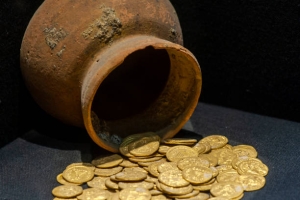
A Note on Money
There were two types of money in the fifteenth century, money of account and actual coinage.
Money of Account
The English pound [£] or livre was divided into 20s (shillings) the shilling into 12d (pence).
The English mark was worth 13s 4d – two thirds of a pound
In France the livres tournois was the standard money of account. Divided into 20 sous and 12 deniers. Nine livres tournois equalled one English pound.
Coinage
There were no pound, mark, or shilling coins.
The English noble was a gold coin worth 6s 8d, half a mark.
The English silver penny was also a money of account and worth 1/240th of one pound sterling.
Silver minted coins: Groat = 4 pence; half groat; penny; halfpenny; farthing.
In France the franc was a silver coin worth one livre.
The ecu was a gold coin worth 3s 4d sterling.
The salut was a gold coin minted in in Lancastrian France worth one and one half livres or 30 shillings. The French also minted the salut.
Incomes
A rough estimate of incomes: a parish priest received between £5 and £10 a year depending on the wealth of his parish., An archer might expect to earn £9 a year. The average income of a knight was £60. A lord’s income from land and crown annuities amounted on average to £865 from which he would pay his retinue and domestic servants. Richard, Duke of York the richest magnate in England claimed to be worth £3,230 a year.
Taken from J. Sumption, The Hundred Years War vol V, Triumph and Illusion, pp. 822-823.
The Minority Council

Thirty-six council meetings are recorded for 1427. Three in January, seven in February and seven in March before the Duke of Bedford left England. Seven in May, seven in July, one in November, and four in December.
The Councillors’ Wages
Remuneration for their services continued to occupy the councillors’ minds. In March 1427, they issued and confirmed a lengthy recapitulation of the 1424 agreement that established their pay scale by rank.
See Year 1424: Councillors’ Wages
John Kemp as Chancellor, was to receive 200 marks annually backdated to 20 December 1425 (1).
In December the Council agreed that John Mowbray, Duke of Norfolk should receive 300 marks annually, that the bishops should receive 200 marks (as previously established) and that Thomas Montague Earl of Salisbury, should receive 200 marks dating from July 1427 when he joined the Council. Another newcomer, William Gray, Bishop of London, would also receive 200 marks (2).
************************************************
(1) PPC III, pp. 265-267 (the order in the king’s name is given under the privy seal a Leycestre le xv jor de Marcs lan de nre regne quint making it 1427. This is possibly an error for 1426 when King Henry was at Leicester and Kemp was appointed as Chancellor).
(2) PPC III, p. 278-280 (Mowbray, Salisbury, and Gray, wages).
****************************************************
Council Proceedings
Duchy of Lancaster
John Stafford, the outgoing Treasurer, turned over to the Council the ‘great book containing the records of the Duchy of Lancaster.’ It was committed to the new Treasurer, Lord Hungerford.
Income from the Duchy was the private possession of the Lancastrian kings, and its accounts were kept separate from other sources of royal income although all three Lancastrian kings relied heavily on duchy resources to meet their ever-increasing debts (1).
(1) PPC III, p. 290 (Duchy of Lancaster records).
Chester
Chester was a county palatine under the direct authority of the King of England as Duke of Lancaster and Earl of Chester.
John Hope, the Mayor of Chester, and the town’s council, were ordered to send an attorney to the Council at Westminster in May, to state their case for defying royal letters and claiming some special privileges or exemptions. They were required to produce proof of such privileges if they existed (1).
(1) PPC III, p. 269 (Mayor of Chester).
John Derham
After Thomas Beaufort, Duke of Exeter died at the end of 1426 John Derham, now a clerk, sought the Council’s ratification of his manumission by Exeter (1).
Derham (and presumably his father Richard before him) had been a serf on Exeter’s estate at Wyrmegeye [Wormegay, co. Norfolk]. In May 1414, as Earl of Dorset, Exeter had made Derham a free man. Confirmation of his freedom after Exeter’s death was important enough for Derham to pay a half mark (6s 8d) to the Hanaper for its enrolment (2).
*******************************
(1) Foedera X, p. 371 (Derham manumission).
(2) CPR 1422-1429, p. 391 (Derham manumission).
********************************
Paul, Count of Valache
In July the Council granted 40 marks annually in King Henry’s name to Paul, Count of Valache, to maintain his estate because he was of noble blood. Valache came to England from Greece, claiming to be destitute, having lost everything to‘the enemies of God,’ when the Turks attacked his homeland. He relied on the charity of ‘good Christians’ in order to survive. He received £6 1s 4d in October for the period 8 July to 29 September 1427 (1, 2).
******************************************
(1) Foedera X, p. 374 (Valache).
(2) Issues of the Exchequer, pp 401-402 (Valache).
*******************************************
The Duke of Orleans
Charles, Duke of Orleans requested permission to give a bond for 4,000 crowns [crown = 3s 4d] to Thomas Beaufort Duke of Exeter’s executors (1).
The bond related to an old debt. Thomas Beaufort, then Earl of Dorset, had been second in command of the expedition to France in 1412 led by Thomas, Duke of Clarence to aid the Duke of Orleans against John the Fearless, Duke of Burgundy. Clarence’s appearance proved embarrassing, and Orleans bribed him to take his army out of France. Clarence’s war captains were entitled to a share of the bribe and Exeter’s executors claimed the 4,000 crowns still owing to him.
See Year 1434: Ransoms.
(1) PPC III, p. 250 (Orleans’s bond to Exeter’s executives).
King Eric of Denmark
Eric, King of Denmark, Norway and Sweden, known as Eric of Pomerania, was an ally of England. He had married King Henry V’s sister, Philippa.
Eric was at war with the Counts of Holstein over possession of the Duchy of Schleswig and it is not surprising that he looked to England for mercenaries, trained in Henry V’s wars. But it is surprising that the Council granted permission and issued letters patent to ships captains to convey men to Denmark at a time when the Duke Bedford needed men in Normandy, and the Earl of Salisbury would shortly come to England to raise a large army for the war in France (1).
(1) PPC III, p. 270.
King Henry V’s Debts

Household servants
King Henry V had customarily pardoned the sergeants (heads of department) of his household, at the end of each year for all irregularities in their accounts and allowed them to begin a new year with a clean slate.
The names of the servants listed in the Foedera, and the Calendar of Patent Rolls are the same, the first name being Thomas Rothwell of the scullery.
The list in PROME differs, Thomas Wesenham of the pantry (third in the Foedera list) is the first name in the parliamentary pardon (1, 2, 3).
As he lay dying, Henry requested the Duke of Exeter to see that this practice was continued. But the sergeants had not received their pardons, despite submitting their account. Owing to an administrative muddle occasioned by the king’s death, three treasurers of the household, John Rothedale, (who had died in France), Walter Beauchamp and William Phelip had lost or retained only incomplete accounts, and the pardons had not been issued.
The sergeants of the scullery, poultry, caterer, spicery, pantry, larder, confectioner, saucery, bakery, and avenary (stables) and one ‘above stairs’ servant, Thomas Scarlet, sergeant of the hall and chamber, submitted a petition to Parliament in October 1427 and Parliament granted the petition and issued a pardon.
Four women, executrixes of household servants who had died, were also pardoned: Elizabeth Tame, executrix of John Hardgrove, Catherine and Alice Burcester, widows of Thomas and Nicholas Burcester, and Alice Lacy, widow of Nicholas Lacy.
**********************************************
(1) Foedera X, pp. 379-380 (Henry V’s household).
(2) CPR 1422-1429, pp 463- 464 (Henry V household).
(3) PROME X, pp. 344-346 (Henry V’s household petition).
**************************************************
Katherine Noone
Sir Henry Noone had been Henry V’s Master of Horse. His widow and executrix, Katherine Noone, petitioned that ‘the treasurer might be instructed to account with her’ for the horses’ harness and other materials, including cloth of gold for repairing and adorning the late king’s saddles, supplied to her husband by Robert Rolleston, Keeper of the Great Wardrobe. These had been captured at sea off the coast at Le Crotoy, presumably in 1418 when Henry V was attempting to run the French blockade.
It is not clear from the wording whether Katherine was requesting that the Noone estate should not be held liable for this loss, or if she was requesting reimbursement of the money expended by Noone on these articles (1).
(1) PPC III, pp. 249-250 (Noone).
NB: Wylie & Waugh in their exhaustive study of King Henry V’s reign do not mention Noone or the loss of a valuable cargo off Le Crotoy.
Sir William Clifford
Clifford had been Constable of Bordeaux and Captain of Fronsac in Gascony under Henry V. His allowance for Fronsac was 1,000 marks per annum for eight years (1). He died in office in March 1418 (2). His widow and executrix Anne Clifford married Sir Reginald Cobham of Sterburgh, and at the end of 1427 the Council authorised payment or assignment to him of the £1,322 10s 10d still owing to Clifford, as Constable of Fronsac (3).
*************************************************
(1) Vale, Gascony, p 247 (Clifford, Constable of Fronsac).
(2) Wylie & Waugh I, pp. 123-124 (Clifford under Henry V).
(3) PPC III, p. 281 (payment to Cobham).
**************************************************
Louis III, Elector Palatine of the Rhine
 The Council continued to honour Henry V’s debt to Louis, Elector Palatine of the Rhine. They authorised a payment of 2,000 marks as arrears in 1425 (1)
See Year 1423: King Henry V’s debts: Louis, Count Palatine of the Rhine
In October Louis commissioned his attorneys, Otto de Lapide and Valdius Frederic de Mirta, to receive his annuity. They issued a receipt for 2,000 marks (two years annuity) to the Treasurer Lord Hungerford in November (2. 3).
*****************************************
(1) PPC III. P. 178 (payment to Louis).
(2) Foedera X, pp. 379 and 383 (Louis’s annuity).
(3) PPC III, p. 253 (Louis’s annuity).
*****************************************
The Magnates
The Duke of Bourbon
 John, Duke of Bourbon was captured at Agincourt in 1415. He was a cousin of the Dauphin Charles and the second most valuable French prisoner after the Duke of Orleans.
King Henry V had set Bourbon’s ransom and the conditions for his release in 1420. The terms were political as well as financial: Bourbon must accept the Treaty of Troyes (euphemistically called the Final Peace) making Henry V heir to the throne of France. He must persuade his eldest son, the Count of Clermont, to leave the service of the Dauphin. He must surrender six principal fortresses in the County of Clermont, and give hostages, including his younger son Louis, as security.
Bourbon’s ransom was set at 100,000 écus (50,000 nobles). He was to pay 60,000 écus by August 1421; Bourbon would then be set free. The balance of 40,000 écus was to be paid within six months after that (1, 2).
Bourbon authorised his wife, Marie de Berry, Duchess of Bourbon, to raise loans and sell lands. She managed to raise 25,000 écus by April 1421 but the balance of 35,000 was not paid until November, past the August deadline. Henry V insisted on the exact terms of the agreement: the deadline had not been met and Bourbon was not released (3).
At a Council meeting in Canterbury on 10 March 1427, the Duke of Bedford requested that for urgent reasons and the good of the realm consideration should be given to allowing John, Duke of Bourbon to return to France. Bourbon as an ally, if Bourbon’s son the Count of Clermont could be detached from his allegiance to the Dauphin, or even as a neutral, would be advantageous.
The Council agreed to release Bourbon provided he recognised Henry VI as King of France, and persuaded the Count of Clermont, to do likewise. They added a new clause, probably at the instigation of Henry Beaufort: in addition to his ransom of 40,000 écus (£3,333 6s 8d or 5,000 marks) Bourbon must arrange for the release of John Beaufort, Earl of Somerset and Thomas Beaufort or guarantee their ransoms. The Beauforts would repay it, but not until 1437 when King Henry VI came of age, and only if it was demanded of them (4).
The Beaufort brothers had been captured at the Battle of Baugé in 1421. John Beaufort was in the custody of the Duchess of Bourbon and Henry Beaufort hoped that a deal to exchange John Beaufort for the Duke of Bourbon could be worked out (5). The deal, whatever it may have been, fell through and Bourbon remained in England.
See Years 1429, 1430 and 1434: The Duke of Bourbon
************************************************
(1) Wylie & Waugh III, p. 287-88 (Henry V’s terms).
(2) Foedera, X, pp. 439-41 (Bourbon’s ransom)
(3) Jones, ‘Beaufort Family’ thesis, pp. 31-35 (Bourbon’s ransom).
(4) PPC III, pp. 255-256 (Council’s terms).
(5) Harriss, Beaufort, p. 161.
*************************************************
The Duke of Gloucester
 On 10 May, at the first recorded council meeting following the Duke of Bedford’s departure for France, the Duke of Gloucester was appointed Justiciar of Chester and North Wales. The office would be performed by deputies, but Gloucester would be responsible to the king for their actions as well as his own in the office (1, 2).
***************************************
(1) PPC III, pp. 267-268 (Gloucester appointed).
(2) CPR 1422-1429, p. 414.
*************************************
The Duke of Bedford
 The Duke of Bedford was a book collector. He celebrated his return to France in his own way. In August one John Thomas, a clerk ‘dwelling in Paris’ claimed payment for having copied two books at Bedford’s command. One, in Latin prose copied onto parchment, was entitled “La Pelerinage de Lame,” costing 12 livres tournois. Another book in French verse entitled “Le vif de Confession” costing 10 livres tournois. Thomas acknowledged receipt of the 22 livres tourois from the sheriff of Beaumont le Rogier (1).
(1) L&P II, ii, pp. 415-416 (Bedford’s books).
The Earl of Huntingdon
 John Holand, Earl of Huntingdon married Anne Stafford, the widow of Edmund Mortimer Earl of March, without royal licence, probably for the same reason as Mortimer, to strengthen his ties to the Lancastrian line.
Huntingdon was Henry V’s nephew and first cousin to Henry VI. Anne was the granddaughter of Thomas of Woodstock, Duke of Gloucester, the youngest son of King Edward III.
Huntingdon got of lightly. He was ‘pardoned’ in March 1427 and fined 1200 marks for his illicit marriage. Mortimer had had to pay 10,000 marks to King Henry V for the same privilege.
(1) PPC III, p. 252–253 (Huntingdon marriage).
Ralph, second Earls of Westmorland

Ralph Neville, first Earl of Westmorland married Margaret Stafford as his first wife. Their son, John, Lord Neville, died before his father. Margaret died in 1423 and Ralph died in 1425. He was succeeded in the title by his grandson, Ralph II, who would not come of age until 1429.
Ralph II’s share of the Westmorland estates passed into the hands of the crown, and in December 1427 the Council agreed to let the farm (lease) of Ralph II’s inheritance to him during the remaining years of his minority for £200 annually (1).
(1) PPC III, p. 281 (Westmorland lands).
The Church

Crokeholme
William Dyolet, clerk, was granted a third of the parish church of Crokeholme [Crewkerne] in the diocese of Bath and Wells on 24 January 1427 (1).
On the following day Chancellor Kemp declared that although the presentation was in his gift, he had not intended to present it to John Dyolet (almost certainly a mistake for William) without council approval (2). William Dyolet’s name appears in the Calendars of the Close Rolls and in the Calendars of Ancient Deeds, John Dyolet’s does not.
To add to the confusion, in November 1427 Walter Colles, parson of Crokeholme, was authorized to make an exchange of Crokeholme with Thomas Hendyman to the prebend of Heiges (Hays, also a Courtenay inheritance) in the diocese of Exeter (3).
Crokeholme, was an inheritance of the Courtenay Earls of Devon, in the king’s hands because Thomas Courteney was a minor.
******************************************
(1) CPR 1422-1429 p. 386 (grant to William Dyolet).
(2) PPC III, pp. 229-330 (Kemp’s statement).
(3) CPR 1422-1429, p. 452 (William Colles).
****************************************
St Mary Graces Abbey
 The Cistercian Abbey of St Mary Graces, founded in the fourteenth century by King Edward III, was situated east of the Tower of London. It was found to be impoverished and dissolute. In February 1427 the Council committed its care and restoration to the Duke of Gloucester, Henry Beaufort Bishop of Winchester, Philip Morgan, Bishop of Ely, the Earl of Stafford, Lewis Robessart (all council members), to William Salbury, Abbot of Beaulieu, and Richard, Abbot of Boxlee in Kent (1). Probably only the last two named were required to act.
An investigation was carried out, and Abbot William (no known surname) admitted that owing to the mismanagement of his predecessor Abbot Paschal, who had become abbot by dubious means, the abbey’s jewels were no longer in the abbey’s possession. They had been pawned and were in the hands of the mother of one Roger Monne who lived in a house near St Botolf’s Wharf. Furthermore, a house belonging to the abbey had been made over by Paschal to an esquire named Kighley, presumably for his own profit (2, 3).
****************************************************
(1) CPR 1422-1429, p. 394 (St Mary Graces committal).
(2) PPC III, p. 269 (abbey’s jewels).
(3) http://www.british-history.ac.uk/vch/london/vol1/pp461-464 (St Mary Graces)
******************************************************
Pope Martin V
 Pope Martin V was determined to have the 1351 Statute of Provisors that denied the pope’s right to appoint to benefices in England and Wales and the Statute of Praemunire prohibiting the clergy from seeking papal provision without royal consent, repealed.
See Year 1423: Pope Martin V.
Frustrated at his lack of progress Martin accused Henry Chichele, the Archbishop of Canterbury of disloyalty for not supporting papal authority and pronounced him unfit for office. He issued papal bulls depriving Chichele of the status of legatus natus which Chichele held as primate of England (1).
Martin’s bulls were never published in England. The Duke of Gloucester as Protector acted precisely as King Henry V would have done to negate papal pretentions and protect Chichele. John Obizis, the papal nuncio and collector, was arrested by the Constable of Dover on Gloucester’s orders as soon as he set foot in England.
The Commons rallied to the defence of the archbishop. They petitioned King Henry to send an embassy to Rome to refute the unjust and untrue accusations made against Chichele, or at least to write to the Pope in his defence (2).
Martin was right in believing that Chichele opposed the nomination of foreign clerics to English benefices, but Chichele was in no position to secure the repeal of the offending statute, even if he had wanted to.
See Year 1428: Henry Chichele, Archbishop of Canterbury.
***********************************************
(1) Harvey, England and Papacy, p. 144. (Pope Martin and Chichele).
(2) PROME XI, p. 339 (defence of Chichele in Parliament).
***********************************************
John Obizis
Gloucester had John Obizis imprisoned in the Tower of London. Pope Martin complained to Gloucester of this treatment of his envoy, but paradoxically he declared that he did not hold Gloucester responsible for the arrest (1). Mistakenly, Martin expected Gloucester to support his campaign; Gloucester had professed to be a ‘good son’ of Holy Church and Pope Martin had yet to pass judgement on the validity of Gloucester’s marriage to Jaqueline of Hainault.
The Council reconsidered. Even Chichele thought it unwise to antagonise the pope unnecessarily. The bishops were uneasy; they petitioned for the unfortunate Obizis’s release on bail, but the magnates on the Council were still incensed: Lords Cromwell, Tiptoft, Bourchier, and Hungerford insisted that Obizis must find Englishmen willing to put up sufficient security that he would not abscond or break the law.
Obizis was brought before the Council in the Star Chamber. He undertook not to do anything contrary to the statues of the realm (i.e. try to publish the papal bulls) before 24 June, the Feast of St John the Baptist, when he would again appear before the Council. On these conditions Gloucester, Huntingdon, Stafford, and Lord Scrope sanctioned his release (2).
******************************************
(1) Papal Letters VII, p. 36 (Martin V to Gloucester).
(2) PPC III, p. 268 (Obizis or Opizzis both spelling occur).
******************************************
John Hawkhurst
In January 1427 the Council endorsed the election of John Hawkhurst, a brother of the order, as Abbot of St Augustine’s, Canterbury. The hasty appointment of Hawkhurst may have been necessary. The previous incumbent Marcellus Daudelyon, had been found guilty and fined for receiving casks of pirated wine.
But St Augustine’s was subject to the court at Rome, it did not fall under the jurisdiction of any diocese in England (1, 2).
Pope Martin denied King Henry’s right to nominate Hawkhurst and issued his own papal bull confirming Hawkhurst as abbot. ‘The king’ accepted Hawkhurst on these terms. Hawkhurst’s fealty was taken, and the temporalities of the abbey were restored to him in July 1427 (3). Neither side lost face. It is a typical example of the kind of comprise practiced by the Council and the papacy in ecclesiastical provisions.
***********************************
(1) Foedera X, p. 369 (Hawkhurst elected).
(2) CPR 1422-1429, p. 386 (Hawkhurst elected).
(3) CPR 1422-1429, p. 411 (Hawkhurst confirmed).
***************************************
Robert Neville
John Chandler, Bishop of Salisbury died in July 1426. The Council nominated Robert Neville, Henry Beaufort’s nephew as his successor, a promotion described by Gerald Harriss as one of the Duke of Bedford’s doucers to conciliate Beaufort after his forced resignation as Chancellor.
See Year 1426: The Duke of Bedford and Cardinal Beaufort.
Robert Neville was not acceptable to the chapter of Salisbury. He was only twenty-two and still at Oxford. In September the chapter elected their dean, Simon Sydenham. Pope Martin refused to endorse either provision since neither was his chosen candidate.
In May 1427, the Council gave their consent to Sydenham’s request to pursue his claim to the bishopric at the court of Rome (1).
Henry Beaufort was not in England at the time, but he kept in touch with Council proceedings. He wrote to Pope Martin in June urging him to accept Robert Neville, and since Martin had just made Beaufort a cardinal he could hardly refuse (2, 3).
Martin provided Neville, and the Council caved in. Robert became Bishop of Salisbury and Sydenham remained Dean of Salisbury until 1429 when he became Bishop of Chichester
See Year 1429: Robert Neville
This was the first but by no means the last time in Henry VI’s reign, that Beaufort/Neville influence would decide appointments to the episcopate.
*************************************************
(1) PPC III, p. 269 (permission to Sydenham to contest).
(2) Harriss, Beaufort, p. 173. (Beaufort’s letter to the pope).
(3) Papal Letters VII, pp. 32–33 (Pope’s letter to Beaufort).
*************************************************
London
 Tower of London
John Arderne, clerk of the king’s works, was granted £200 in February to undertake much needed repairs at the Tower of London and the palace at Westminster (1).
(1) PPC III, p. 243 (repairs to the Tower).
London Bridge

The first stone for the tower on London Bridge was laid by the Mayor, John Reynwell and the City’s aldermen.
“And that yere the towre on the draught brygge of London was be-gonne. And the Mayre layde the fyrste stone, and mo othyr aldyrmen with hym.” Gregory’s Chronicle, p. 162
“The Tower on London Bridge at the north end of the drawbridge . . . . was begun to be builded in the [mayoral] yeare 1426.” Stow, Survey of London I, p. 25
The Wine Trade

‘Sweet’ wines were imported from Spain and Italy; the most highly prized being the sweet wines of Cyprus (1). Duties on sweet wines was set at a higher rate than on French wines: 6s. the tun against 3s. the tun, which made them more expensive: 12d. a gallon against 6d. a gallon for Rochelle or Gascon wine (2).
Complaints of malpractice by ‘alien’ merchants trading in London were common throughout Henry VI’s reign. The City authorities set rigid standards for all merchandise offered for sale, and were quick to take action against anyone, especially foreigners, who violated their regulations.
In 1427 the ‘Lombards’ (Italian merchants) were accused of selling bad wine. The mayor, John Reynwell, ordered the offending casks to be broken open, allowing the wine to spill out into the gutters. Wines were stored in casks or pipes and were apt to turn sour, ‘go bad,’ if the casks were not filled properly and a layer of air was left at the top.
“And in the same yere were founde many false vessels of Romeney, the whiche were made by gadered Galgenet, into the nombre of vj buttes, which the hedes were smyt oute of in diuerse places of the Cite; the falsest gode that euyr any man see.” Brut Appendix E p 453
“And that yere was smytte owte many buttys of Romnaye of Lumbardys makyng in dyvers placys of the Cytte, for they were corrupte and also they very pyson, &c.” Gregory’s Chronicle, p 161
“The Lombards corrupting their sweete wines, when knowledge thereof came to John Rainwell, Maior of London, he in diuerse places of the Citie commanded the heads of the buts and other vessels in the open streetes to be broken, to the number of 150, so that the liquour running forth, passed through the Cittie like a streame of raine water, in the sight of all the people, from whence there issued a most loathsome sauour.” Stow, Survey of London I, pp. 240-41
*********************************************
(1) Postan, Medieval Trade, p. 96 (wines).
(2) Power and Postan, English Trade, p. 328 (wine tax).
**********************************************
Aliens in the Realm
Foreign merchants trading in England, known as ‘aliens,’ were required to pay customs duties imposed by Parliament.
See Year 1422: Taxation.
 In July 1427 the Treasurer Lord Hungerford, was instructed to appoint a time and place for the payment of customs duties by ‘certain foreigners,’ but at the same time he was authorized to negotiate a respite for ‘certain foreign merchants’ for the customs due on wool and ‘other merchandise’ (1). The wording in the Proceedings is vague, and it is impossible to be certain to whom they refer, but the Council periodically permitted German merchants of the Hanseatic League, extensions of time to pay what they owed.
A ship from Catalonia had just been arrested off the port of Sandwich on the orders of Sir Henry Inglose, the Duke of Bedford’s lieutenant as Admiral of England, presumably for attempting to land its cargo illegally. The master of the vessel was required to put up a bond of £2,000, a considerable sum. The Council issued a licence to him to dispose of his merchandise and ‘proceed wheresoever he pleased’ i.e., leave England as soon as possible (2).
********************************************
(1) PPC III, pp. 270 and 275 (payment of customs duties).
(2) PPC III, p. 275 (ship of Catalonia).
********************************************
Lawlessness
Complaints of lawlessness and the Council’s failure to bring lawbreakers to justice for ‘the better keeping of the peace’ occur frequently on the parliamentary rolls and in the Calendars of the Patent Rolls. Lawlessness was inevitable during Henry VI’s minority. The Council and the crown did not have the resources or the personnel for effective policing.
Disturbances of the Peace
Itinerant royal justices could incite disturbers of the king’s peace to appear before the Council. Two cases were referred to the Council by the justices of assize in July 1427.
 George Hethe had appeared before William Babington and William Westbury, justices of assize at Bury St Edmunds in Suffolk. He gave a bond of 1,000 marks to keep the peace towards Robert Mordaunt and to present himself before the Council at Westminster after the quinzaine of St Michael (13 October). Four men of Suffolk stood surety for Hethe and he duly appeared and was discharged on 25 November 1427 (1).
Hugh Hasilden appeared before the same justices in Bedfordshire on 30 July. Hasildon gave a bond of £100 to present himself before the Council at Westminster also on 13 October and in the meantime to keep the peace towards the mayor and town council of Bedford, i.e. not to cause any further disturbances in the town. He appeared before the Council and was discharged on 2 December (2).
*******************************
(1) PPC III, p. 277 (Hethe).
(2) PPC III, pp. 280-281 (Hasilden).
********************************
William Wawe
Men could be outlawed for failing to appear before the courts to answer a claim for debt or a charge of trespass, but outlawry was not the same as conviction for a serious crime. Outlaws who laid low and kept out of further trouble could purchase a pardon from the impecunious government for a small fee. Others went into hiding or formed themselves into gangs and supported themselves by further criminal activity.
William Wawe was a major malefactor with a long history of theft, extortion, and highway robbery; even his name was probably not his own. He had been outlawed as a felon and a thief under Henry V. He escaped from the Marshalsea and gathered a sizeable gang of followers, initially in Hertfordshire but spreading to other counties. His name became a by-word for ruthlessness. He and his gang preyed on travellers and rich merchants, and even ransacked church property (1).
As Griffiths put it, “next to Oldcastle and ‘Jack Sharp’ the most notorious lawbreaker to whom contemporaries attributed heretical proclivities was William Wawe [although he] displayed greater zeal in robbing ecclesiastics, nunneries, travellers, and merchants than in embracing eccentric religious beliefs. His followers resembled the retinue of a lawless layman” (2).
In March 1427, following numerous complaints, the Council put a bounty of £100 on Wawe’s head to induce for his fellow marauders to inform against him. The offer is worth quoting in full:
“a certain son of iniquity named William Wawe convicted of many treasons and felonies, having escaped from the Marshalsea prison and joined other felons had robbed many churches and nunneries and had committed and still continued to commit, various depredations on the king’s highways.”
The sheriff of Bedfordshire and Buckinghamshire was ordered to arrest him on sight. He was commanded “to make proclamation in all the fairs and markets within his bailiwick that if anyone should arrest the said William or produce his body or his head alive or dead before the Council he should receive a reward of £100; that if he should be taken by any person guilty of any crime excepting treason the taker should receive a free pardon and 100 marks; that if taken by the commonality of any city, borough, town, or hamlet the inhabitants thereof should be discharged from the payment of toll, and if they were already free there from, should receive some privilege of equal value; and that no one should give him food or lodging under pain of incurring the penalty in such case provided” (3).
The Council commissioned Sir John Radcliffe to apprehend Wawe, possibly because one of Radcliffe’s servants had joined Wawe’s gang and could provide insider information.
Wawe took sanctuary in Beaulieu Abbey in Hampshire where Radcliffe ran him to earth and forcibly removed him. Wawe was imprisoned in the Tower of London to await trial. In April heresy was added to the other charges and he was indicted in the Bishop of Winchester’s diocesan court (4). Wawe pleaded that Radcliffe had violated sanctuary and therefore his arrest was illegal, but a convicted criminal was not protected under the laws of sanctuary and nor was a heretic (5).
The court of King’s Bench found Wawe guilty on all counts. He was hanged, drawn, and quartered at Tyburn in July 1427 and his head was set on London Bridge. Members of his gang were hunted down and arrested, both before and after Wawe’s execution.
“And in this same yere was Will Wawe take for an [a]rannt þeef, and was brought to London to þe Kynges Bench, & so brought to Westmynster a-fore þe kynges Justices, & ϸer Jugede toϸe dethe. And so he was brought again from Westmynster to Suthwerk, & þen he was put in a carte, stanndyng, & faste bounde; & so he was cariede thorugh þe Cite to Tiborne, that all men myght see hym & knowe hym, And so he was caried the thirde day of Juyll, And there hangede for his trespass. Brut Appendix D, pp. 441-442
A year later, in October 1428, Radcliffe would be paid £40 for capturing Wawe, considerably less than the bounty originally offered (4).
*******************************************************
(1) Griffiths, ‘William Wawe,’ in King and Country, pp. 227-32.
(2) Griffiths, Henry VI, p. 131.
(3) PPC III, pp. 256-59 (sheriff’s orders).
(4) PPC III, p. 312. (Radcliffe rewarded for Wawe’s arrest).
(5) Bellamy, Crime and Public Order, p. 107.
*****************************************************
Scotland
 The Minority Council sent William Bruges, Garter King of Arms, to raise three points of contention with King James I of Scotland in 1427. The first was the non-payment of James’s ransom. The second was that James had not sent hostages to replace the six who had died in English custody since 1424. The third point was that violations of the truce by the Scots were increasing, but despite James’s promise that he would make reparations, he had done nothing (1).
See Year 1424: A Seven Year Truce.
King James’s Ransom
King James obtained his release in 1423, by a treaty promising to pay a ransom of 60,000 marks or £40,000, over six years in annual instalments of 10,000 marks and to send Scottish nobles to England as hostages that he would keep his word. Three instalments of the ransom, a total of 30,000 marks, were due, but only 9,500 marks had been received.
See Year 1423 Scotland.
James’s envoy, Thomas Roulle, had informed the Council that the 10,000 marks for 1427 were ready for delivery. Garter was to request immediate payment. James was unimpressed and unrepentant, and the money was not paid.
At the end of 1427 sixteen members of the Council signed a letter to James in King Henry’s name complaining that Thomas Roulle’s undertaking had not been kept (2).
*****************************************************************
(1) PPC III, pp. 259-265 (Garter King of Arms instructions. He received £10 for expenses).
(2) Foedera X, pp. 384-385 (ransom unpaid).
֍ Nicolas notes that the councillors’ signatures are autograph and that the writing in the instruction to Garter is similar to that of the Chancellor, John Kemp, who was also Archbishop of York. Unusually the Earl of Northumberland’s signature comes before that of the Duke of Bedford, perhaps because Northumberland was Warden of the East March.
****************************************************************
Scottish Hostages
Six hostages had died between 1424 and 1427. Garter was to stress that they died of natural causes, not through violence, neglect, or cruelty by their gaolers. On the contrary, they had been allowed to leave the Tower precincts to visit local merchants and purchase goods for their own use. It was no use James complaining that they should have been moved out of London when plague was in the City. The Dukes of Bedford, Gloucester, and the Council had not been evacuated, they met regularly at Westminster, and in any case the difficulty of prevailing on James to send replacements far outweighed any advantage in allowing the hostages to die.
See Year 1426: Scottish Hostages.
James’s envoy, Thomas Roulle, had brought a list of fifteen names as possible replacements at the end of 1426 but he left London before their suitability could be checked, so delay in accepting them was inevitable. Checks on them had to be completed to the satisfaction of the Wardens of the March (1).
Nevertheless, the exchange of hostages did continue throughout 1427.
On 8 March the Chancellor issued a licence for the release of Gilbert Hay from the Tower of London, and of Patrick Lyon, James of Kinnymonde, Sir William Borthwick. and Sir William Erth from York Castle (2) provided their replacements, David, Lord of Lassell, Sir Hugo de Blare, Robert Logan of Restalrig, William Dishington, and Patrick, Lord of Graham, were acceptable to the Wardens of the March. The Earl of Northumberland, Warden of the East March, was among the nine councillors who signed the release (3, 4).
Robert Passmere was to escort Gilbert Hay north (5).
Peter Cawode was to provide six horses for Hay, his servants and his household goods to travel to York. Cawode was also to convey the five hostages from York to Pontefract Castle where Sir John Langton, the former sheriff of York, and Sir Richard Neville, Warden of the West March, were to receive them (6).
Peter Cawode tried to deliver the hostages but Richard Neville refused to accept them because no suitable replacements had been provided. Cawode had to keep the unfortunate hostages for a further two months at his own house in Yorkshire (7).
In July John Clink, was ordered to deliver nine more hostages into the custody Sir Richard Neville, and take their replacements to Pontefract: the Earl of Crawford, Lord Robert Erskine, James Dunbar of Fendraught, and George son of the Earl of Dunbar, Adam Hepburn of Hailes, Norman Leslie, William of Erth, and James Kinnymonde (8, 9).
The final exchange of hostages took place in November 1427 when the nine hostages were licensed to leave England (10). Sixteen Scots remained in custody (11).
It says much for the loyalty of his subjects to King James that they continued to accept the exchanges even though they surely knew that James would not pay his ransom to obtain their release. They had a greater sense of honour than he had.
*******************************************************
(1) PPC III, pp. 357-358 (Roulle, hostages and replacements).
(2) PPC III, pp. 254-255 (hostages first release).
(3) Foedera X, p. 372 (licence to leave England).
(4) Documents Relating to Scotland IV, pp. 205-206 (first hostage exchange).
(5) PPC III, p. 265 (Passemere. He was paid ten marks).
(6) Foedera X, p. 369 (hostages to be released).
(7) Foedera X, p. 373 (Cawode. He was paid 20 marks).
(8) Foedera X, p. 376 (second hostage exchange).
(9) Balfour-Melville, James I, p. 294, (list of replacements).
(10) Foedera X, pp. 381-382 (final release).
(11) Balfour-Meville, James I, p. 148 (for details of the exchanges).
******************************************************
Truce violations
 Both sides blamed each other for violations of the truce along the border while carrying on the age-old tradition of border raids.
Commissions of array to suppress disturbances and deal with truce violations were issued in March 1427 to the Earl of Northumberland, (who was attending council meetings at Canterbury) Sir Richard Neville, Sir Thomas Tunstall, Sir Edmund Hastings, and the sheriff of York, plus three local men from the North Riding and five from the East Riding of Yorkshire (1). This was standard practice, but it was rarely successful as both sides were equally guilty – and unrepentant.
Negotiations
In July William Gray, Bishop of London and Sir William Harrington travelled to the Marches of Scotland for a March Day to treat with their Scottish counterparts. Gray and Harrington were awarded 100 marks and £20 respectively for their expenses (2).
See Year 1425: Scotland for March Days
The had no control over a situation which was impossible to resolve and no common ground on which to reach agreement. There would always be raids, rustling, and robberies along the Anglo-Scottish border. The only thing they could do was to discuss reparations which might or might not be implemented (3).
******************************************
(1) Foedera X, p. 372 (commissions of array).
(2) PPC III, p. 275 (Gray and Harrington were awarded 100 marks and £20 respectively for their expenses).
(3) PPC III, p. 358 (reparations).
֍ Foedera X, p. 376-377 dated 19 July 1427 is misplaced. The King of Scotland is King James IV; ‘the king’ is Henry VII. Andrew Stewart was Bishop of Moray from 1482 to 1501. Columba Dunbar was Bishop of Moray in 1427.
*******************************************
Sir Hugh Lutterell
The Council wrote to King James in November touching a specific violation of the truce. Tenants of Sir Hugh Lutterell of Dunster in Somerset had been captured while fishing off the Irish coast and detained by William Carnys at Bothwell Castle. William was probably related to Alexander Carnys, secretary to Archibald, the Black Douglas who owned Bothwell Castle (1).
Hugh Lutterell was the MP for Devon and Somerset from 1404 to 1415 and a commissioner of the peace for Devon and Somerset from 1423 to 1427. He was a loyal supporter of the crown. He served in France under Henry V and was active on inquisitions to maintain law and order. In 1426 he was a commissioner to raise a loan in Somerset for the king. He was also an associate of the Duke of Gloucester in a property transaction. Lutterell was well worth the Council’s help, but he died in 1428 before the Council intervention could be effective (2).
*******************************************************
(1) Foedera X, p. 382 (Lutterell).
(2) CPR 1422-1429, pp 354, 400, 562, 569 and passim. (Lutterell).
******************************************************
Calais

The wages of the Calais garrison were always in arrears. In February 1427 Richard Buckland, the Treasurer of Calais, John Shirley a servant of the Earl of Warwick, and John Halle representing the garrison, met with members of the Council in the chapter house at St Pauls to lodge the perennial complaint of non-payment of the garrison’s wages.
They were told that 10,000 marks of King James’s ransom, due to be paid at Middleburgh, had been assigned to them but if, as was all too likely, the payment was late, would the garrison accept an assignment of 13s 4d on every sack of wool shipped, in addition to the 13s 4d already allocated to them. Buckland agreed to this (1).
See Year 1423: Calais
The Mint at Calais
Bartholomew Goldbeter was master of the mint at Calais.
See Year 1423: The Mint.
Henry V had re-established a mint at Calais in 1422 as part of his reformation of the coinage to maintain an official standard of value for English sterling. Purchasers of wool at the Calais Staple were required to deposit a percentage of the purchase price at the mint in bullion to be minted into English coins.
Stephen and John Marcel, masters of the mint at Rouen, were authorized to export fifty fodders of lead for use at the Calais mint (2). The design of the silver groats issued for Henry VI’s reign was changed in 1427, and lead from the mint at Rouen would have been used to cast the new dyes.
************************************
(1) PPC III, pp. 242-243 (Calais wages).
(2) PPC III, p. 270 (lead for mint at Calais).
***********************************
The Duke of Bedford and the Council
On 28 January 1427 as the Duke of Bedford was preparing to leave England, eleven councillors requested him to meet them in the Star Chamber at Westminster: Chancellor Kemp, Henry Chichele Archbishop of Canterbury, John Stafford, Bishop of Bath and Wells the former Treasurer, Philip Morgan Bishop of Ely, and William Alnwick Bishop of Norwich, Keeper of the Privy Seal. Humphrey, Earl of Stafford, John Holand, Earl of Huntingdon, and Lords Cromwell, Scrope, Tiptoft and Hungerford, the Treasurer. These men formed the backbone of the Council which would govern England in Bedford’s absence.
The Duke of Gloucester had declared that “he would not answer for his actions to anyone except the king when Henry came of age” and “let my brother govern as he will while he is in England, but after he returns to France I shall govern as I see fit” (1). Such language was unsettling.
The councillors freely acknowledged the special position of the Protector, but they sought assurances that they would be able to govern England without interference or fear of retribution, and that ultimate authority lay with them, not with the Protector.
The councillors presented Bedford with an ultimatum: he must endorse their responsibility of governing England during King Henry’s minority or they would be forced to resign. Bedford was suspiciously eager to fall in with their demands. He thanked them in fulsome terms, declared his support without any reservations, and swore an oath on the bible to uphold their authority.
The Duke of Gloucester was not present. He claimed to be ill. On the following day, 29 January, the councillors presented him with their ultimatum. Bedford, as Protector, had signed and sworn; Gloucester, who would become Protector as soon as Bedford left England, had no option but to follow suit. He gave his promise, but not his oath (2, 3).
It was all too neat. Was the councillors’ petition Bedford’s last, carefully stage-managed effort to keep Gloucester in check and so ensure that he would not have to return to England a second time to settle disputes engendered by his erratic brother?
A Debate on the War in France
The Council discussed another important question: the direction of the war in France. What had been King Henry V’s intentions when he instructed Bedford to hold the Duchy of Normandy at all costs? Had he meant in addition to extending English conquests in France, or if Normandy was threatened, was Bedford to defend it and the pays de conquête at the expense of a further expansion of Lancastrian France?
Humphrey Earl of Stafford, Louis Robessart Lord Bourchier, Lord Hungerford, and William Alnwick, had been in France when Henry V died. The Council called on them to state their recollections of what the king had actually said. They were reluctant to commit themselves; they claimed that the deep sorrow they had experienced at Henry’s death made it difficult for them to remember the sad event in any detail.
‘Nevertheless, as faithfully as they could remember the king’s intent and the meaning of the words he said, it was ‘that my Lord Bedford should draw him down into Normandy and keep that country as well as the remnant of his conquest . . . . with the revenues and profits thereof and do there as he would do with his own.’ Bedford had answered that he understood it was the king’s will for him to do this until the present king came of age, and Henry V “said he understood no otherwise” (4).
This did not resolve the question of the extent to which the war should be pursued. It was of vital interest to the councillors who would be expected to raise the money if the war was to continue. With Bedford present the Council was reluctant to suggest in so many words that Henry V may have recognised at the end of his life that without him the kingdom of France could not be conquered. Bedford was committed to the dual monarchy.
************************************************
(1) PPC III, p. 241 (Gloucester’s declared intentions).
(2) PPC III, pp. 231-36 (Council’s ultimatum). Nicolas notes that the signatures JOHN and H. GLOUCESTER are not autograph, they are supplied from another MS.
(3) PPC III, pp. 237-242 (a fuller copy of the meetings).
(4) PPC III, p. 248 (Henry V’s instructions to Bedford on Normandy).
******************************************************
Grants to Bedford
The Council was grateful to Bedford, and a little in awe of him. They had rewarded him generously. He received the same salary as Protector while he was in England as the Duke of Gloucester had received. He was granted custody of the Powis estates after the death of Joan, Lady of Powis, with the wardship and marriage of her son and heir Henry Grey. He also received custody of the estates of John, Earl of Oxford, with certain exceptions, from the time of the death of Oxford’s guardian, the Duke of Exeter in1426, until Oxford achieved his majority (1). Mining in Devon and Cornwall was a valuable crown asset. Bedford was to receive the profits from all the gold and silver mined in England for ten years (2).
The Council had agreed to pay the expenses for Bedford, his wife, and his retinue to return to France. In February they awarded him £2,000 ‘for his labours and expenses in coming from and returning to France’ (3, 4).
The Duke of Bedford and Berwick Castle
Prince John of Lancaster, as Bedford then was, became Warden of the East March and custodian of Berwick Castle in 1407 at a very young age when he served as his father’s lieutenant in the North. He resigned the wardenship early in Henry V’s reign but remained the nominal custodian of Berwick even though he had not visited the town for many years. Berwick was the responsibility of Henry Percy, Earl of Northumberland as Warden of the East March. Northumberland was often away from the north attending council meetings in London and his indenture as Warden of the East March would expire in 1427.
See Year 1424: The Earl of Northumberland.
Bedford had petitioned the Leicester Parliament in 1426 to be relieved of the custodianship of Berwick. He had had informed Parliament that he did not wish to be blamed should Berwick be lost to the Scots. But typically, he did not relinquish all control; he requested and was granted the right to appoint his successor, although there is no indication on the parliament roll or in the Proceedings that he named anyone (6). In 1427 he requested that this should be entered on the Chancery rolls. (5).
Berwick Castle was believed to be the key to the defence of the Anglo-Scottish border. Its importance to contemporary Englishmen is demonstrated by Bedford’s decision to abrogate liability for maintaining it, even though he was content to remain its absentee custodian. Was he indeed afraid that Gloucester and the Council might lose it through neglect?
Bedford’s year in England taught him that whatever his earlier conviction, he could not be both Protector of England and Regent of France, the task was beyond one man, no matter how dedicated or hard working he might be. Bedford may even have wondered if he would ever return to England again.
*******************************************************
(1) PPC III, p. 246 (Oxford’s estates).
(2) Foedera X, p. 370 (Gold and silver concession).
(3) PPC III, p. 230 (Bedford’s expenses).
(4) PPC III, pp. 247-248 (£2,000 for coming to England).
(5) PPC III, pp. 245-246 (Bedford’s request re Berwick).
(6) PROME X, p. 296 (Bedford’s request re Berwick).
********************************************
Cardinal Beaufort

The Duke and Duchess of Bedford crossed to Calais in March accompanied by Henry Beaufort.
Pope Martin had created Henry Beaufort cardinal priest of St Eusebius and legate a latere in 1426 at the Duke of Bedford’s request.
See Year 1426: The Duke of Bedford and Cardinal Beaufort.
On 25 March, in St Mary’s church in Calais Bedford performed the ceremony confirming Beaufort’s elevation. A scarlet cope lined with grey squirrel fur was draped over his shoulders. The coveted cardinal’s red hat had been placed on the altar by a papal envoy, possibly the pope’s cousin, and after mass Beaufort knelt before the altar while the papal bulls were read out. The Duke of Bedford lifted the red hat from the altar and placed it on Beaufort’s head. He stepped back and bowed to the new cardinal.
Beaufort’s elevation would have far reaching political consequences. Cardinals and papal legates out ranked the Archbishop of Canterbury, the primate of England, and they were universally disliked and distrusted everywhere in England. The Duke of Gloucester would make full use of this antipathy to sustain his quarrel with Beaufort.
 The London chronicles, deriving from a common source, give maximum coverage to the creation of Henry Beaufort as a cardinal. Brut D is almost identical with them. Brut H derives from a different, less accurate source; Beaufort did not go to Rome to receive his cardinal’s hat.
“This same yere abow[gh]t Shroftyde the Duke of Bedforde with his lady passid ouer the see to caleys; and a lytell be fore passid the see allso to caleys herry Bisshop of Wynchestre and vpon owre lady day the Anunciacion, anno Domini millesimo iiijc xxvii, the bysshop of Winchester whas [made] cardinall in seynt mary chirch of caleys ffull solempnely, where were the same tyme the duke of Bedford, Regent of ffraunce, and the duchess;
and beffore or the mass whas begon, wich the bisshop of Wynchestre schuld do, the Popis cosyn brought the cardinallys hatte and with grete Reuerence set it vpon his auter. And ther it stood all the masse tyme, and whan the bysshope hadde don the masse and whas unrevessed, ther whas don vpon hym an abite in maner of a ffrerys coope of ffyne scarlett ffurred with puryd.
And than, ther knelyng vpon his knees by fore the high auter, the popys Bullys were red to hym, and the ffirst bulle whas his charge, and the seconde Bulle whas that he schuld have an reioyse all the benefyces spirituell and temporell that he hadde had in Englond. And whan this whas done the Regent of ffraunce, Duke of Bedforde, went vp to the high auter, and toke the cardinallys hatte, and sett it vpon the bysshopis hede of Wynchester, and bowyd and obeyed to the bysshop, and toke hym before hym.”
Chronicles of London, Cleopatra C IV, p. 131
“In the vjte yere of his regne, Henry, Bisshope of Winchester, went ouer see to Caleys, and so forth to Rome, where-as þe Pope hym made Cardynall, and gave to hym þe cros, to be born before hym alway where he went.” Brut Continuation H, p. 568
Chronicles: English Chronicle (Marx), p 54; Short English Chronicle, pp. 59-60; Chronicle of London, p. 115; Gregory’s Chronicle, p. 161; Great Chronicle, pp. 149-150; Chronicles of London (Julius B II), pp. 95-96; Brut Continuation D pp. 433-434; Brut Continuation G, pp. 499-500; Annales p. 760; Benet’s Chronicle, p. 181.
Beaufort’s Expenses
Henry Beaufort had received permission to export 800 sacks of wool for his expenses, to be sold at Calais or Cherbourg, provided he paid the customs duties on them (1). This was not exactly robbing Peter to pay Paul, but it came close since repayment of Beaufort’s loans was assigned on the customs.
On the eve of departure in 1427, he had delivered the king’s crown which he held as surety for repayment to the Council in the Star Chamber at Westminster, It was placed for safe keeping in the custody of the Treasurer and Chamberlains at the Exchequer (2).
See Year 1423: War Debts.
See Year 1425: Loans.
**************************
(1) PPC III, p. 253 (wool export).
(2) PPC III, p. 250 (king’s crown).
**************************
Cardinal Beaufort and Bohemia
Pope Martin’s quid pro quo for creating Henry Beaufort a cardinal was for Beaufort to support the pope against the heretic sect in Bohemia known as the Hussites.
The Hussite leader, John Hus had been burned at the stake in 1415 for preaching doctrines deemed heretical by the Catholic Church and this had led to a widespread revolt against the authority of both church and state in Bohemia. Hus’s followers raised armies of resistance and the Hussite Revolution of 1419-20 temporarily freed Bohemia from obedience to both the Emperor Sigismund and Pope Martin.
See Year 1432: The Hussites.
Martin designated Beaufort as legate a latere for Bohemia, Germany, and Hungary, lands subject to the Emperor Sigismund. He wrote to King Henry VI, the Council, and the Duke of Bedford announcing Beaufort’s appointment and exhorting them to give him all the encouragement they could (1).
The martial prowess of the House of Lancaster was recognised throughout Europe thanks to King Henry V, and their orthodoxy was unquestioned. Henry IV, before he became king, had fought with the Teutonic knights against heretics. Surely his half- brother, a prince of the church, would be willing to do the same.
Cardinal Beaufort reached Nuremberg in July 1427 and joined Frederick of Brandenburg and his army at Tachov. The German princes were as divided as the territories over which they ruled. In August a Hussite army put the German forces to flight and Beaufort did not take kindly to defeat.
He is reported to have said that if he had 10,000 English archers the outcome would have been very different (2, 3). Surely an exaggeration (if he said it) for 1,000 archers. Even Beaufort’s wealth could not have provided 10,000 English archers! He despised the German princes’ inability to make common cause against a common enemy, men whom he dismissed as rabble: in his own words “the infidels of Bohemia are not nobles.”
Beaufort as legate a latere summoned the German princes to a diet (meeting) of the imperial estates at Frankfurt in September. It was poorly attended but the delegates agreed to meet again in November 1427. He exacted a promise that they would impose a tax to launch another crusade, but no further action was taken (4).
Exasperated by his failure to unify the German princes behind a crusade, Beaufort left Germany in March 1428 to seek aid from the states of Western Europe (5).
See Year 1428: Cardinal Beaufort’s Return to England.
**************************************************
(1) Papal Letters VII, pp. 30-32 (Beaufort as legate a latere).
(2) Wavrin II, p. 325 (Wavrin claimed he was present with a contingent from the Duchy of Savoy. He is the source for Beaufort’s exclamation).
(3) L. Visser-Fuchs, History as Pastime, p. 462 points out that Wavrin’s account is included in the printed versions of his chronicle under 1420, but this is an error as the campaign of 1427 is clearly indicated by the reference to Cardinal Beaufort.
(4) Ferguson, Diplomacy, pp. 112-113 (Beaufort in Germany).
(5) Harriss, Beaufort, pp. 174-175 (Beaufort left Germany).
***************************************************
Jacqueline of Hainault
 The Duke of Burgundy, in his determinatrion to become overlord of the Low Countries, had waged war against Jacqueline and her supporters throughout 1425 and 1426, but Jacqueline evaded him (1).
See Year 1426: Jacqueline of Hainault
As soon as she learned that the Duke of Bedford, who was implacably opposed to sending aid to her, had left England in March 1427, Jacqueline sent Louis de Montfort and Arnault of Ghent to England to plead her case and beg for assistance.
She wrote from Gouda where she had taken refuge to inform the Council of ‘the monstrous outrages, oppressions and injuries’ done to her by the Duke of Burgundy. He had chased her from one town to another during the past two years. She beseeched the Council to inform the Duke of Gloucester, her ‘redoubted lord and husband’ that she could not hold out for much longer without English aid. She hoped that the Council would take pity on her ‘grievous suffering’ and respond to her pleas without delay (2, 3).
John, Duke of Brabant, Jacqueline’s first husband died on 17 April 1427. Pope Martin had not pronounced on the legality of Gloucester’s marriage with Jacqueline and she hoped that Brabant’s death would validate her marriage to Gloucester.
See Year 1424: Jacqueline, Countess of Hainault.
The Council sent William Lyndwood and John Tyrell to the Netherlands in March, but they did not find her until May, possibly because they did not know exactly where she was. She wrote to the Council at the end of May acknowledging their arrival, and again at the beginning of June, reiterating her request for help (4).
****************************************************************
(1) Sumption, Triumph and Illusion, pp. 202-208 (for the events of 1427-1428).
(2) Cartulaire des Comtes de Hainaut de L’Avènement de Guillaume II a la mort de Jacqueline de Bavière, vol. IV,1137 a 1436 (Brussels, 1889) pp. 579–582 (Jacqueline’s first letter of 8 April. Original French).
(3) Vaughan, Philip, pp 46–47 (Extracts from Jacqueline’s letter in English).
(4) Cartulaire IV, pp. 590–593 and 597–601 (Jacqueline’s second and third letters).
*********************************************************************
The Duke of Gloucester and Jacqueline
 Gloucester was on the horns of a dilemma. The Council and public opinion expected him to rescue Jacqueline, but this was the last thing he wanted to do. His outlook had changed radically since 1425. He had no intention of returning to Hainault and he had no desire to fight the Duke of Burgundy.
See Year 1424: The Duke of Gloucester and Hainault.
Gloucester’s focus was on restabling his authority as Protector now that Henry Beaufort and the Duke of Bedford had left England. But he could not ignore the groundswell of sympathy for Jacqueline and he temporized. He requested an advance on the 20,000 marks voted to him by Parliament in 1425 and gave a bond for its repayment.
See Year 1425: Jacqueline, Countess of Hainault.
The Council authorised a payment to him of 5,000 marks on 9 July, and a further 4,000 marks as half his annual salary as Protector. The money was to be raised from customs duties, Duchy of Lancaster revenues, and feudal dues such as wardships and marriage, all of which were already over committed. In the end ‘the said sum [was] borrowed from divers persons, as well spiritual as temporal, and from the Mayor and Commonality of the City of London’ (1).
Gloucester named receivers of the loan. On 29 July the Council issued a writ to John Iwardeby and Thomas Stockdale to raise an army ‘to proceed into Holland for the purposes specified in the said grant’ (2). Gloucester sat tight in London. No army was mustered, and the only money Iwardeby and Stockdale, William Baron and John Poutrell received was in December, when they were paid £13 6s 8d for their expenses in remaining at Westminster throughout the autumn of 1427 (3).
The Council was anxious to avoid war with the Duke of Burgundy and they hedged the loan with contradictory safeguards: it could only be used to pay the wages of men-at-arms sent to garrison the towns and places in Hainault and Holland still in obedience to the Duke and Duchess of Gloucester, or to escort Jacqueline back to England. There must be no to attempt to recover any of Jaqueline’s patrimony now in the Duke of Burgundy’s hands without the explicit consent of Parliament (4, 5).
Even if the English only garrisoned Jacqueline’s towns, assuming they could reach them without encountering Burgundian forces, they would have to fight to defend them. Burgundy would certainly interpret the arrival in Hainault and Holland of even a small body of English soldiers as an act of war. The Council issued a blanket protection for envoys the Duke of Burgundy to come to England to discuss the situation (6).
Whether or not Burgundy believed, as the Duke of Beford did, that Gloucester would risk leading an army into the Low Countries, he nevertheless warned the citizens of Mons to raise men-at-arms and archers for defence against Gloucester (7).
The wily Duke Philip used a cogent argument to persuade the Hainaulters to accept him as governor for Jacqueline and acknowledged him as her heir: there could be no peace in Hainault as long as Jacqueline continued to invite unwelcome Englishman to invade their county (8).
********************************************************
(1) Issues of the Exchequer, p. 402 (source for loan to Gloucester).
(2) PPC III, p. 276 (recruiters appointed).
(3) Issues of the Exchequer, p. 403 (recruiters’ expenses).
(4) PPC III, pp. 271–274 (conditions of the loan).
(5) Foedera X, pp. 374–75 (loan and conditions).
(6) Foedera X, p. 377 (safe conduct for Burgundian envoys).
(7) Cartulaire IV, p. 632 (Mons ordered to raise men at arms and archers).
(8) Cartulaire IV, pp. 602-604 (Burgundy accepted by Hainaulters).
**********************************************************
The Duke of Bedford and Jacqueline
 The Council wrote to the Duke of Bedford in some trepidation to justify the loan to Gloucester, citing pressure of public opinion in Jacqueline’s favour. They asked Bedford to intervene and persuade the Duke of Burgundy to stop hounding Jacqueline (1).
Bedford was predictably furious. He had taken the trouble to visit Duke Philip at Lille in June to suggest that he should modify his campaign in the Low Countries, not out of any sympathy for Jaqueline, but because the war against the Dauphin was more important and Burgundy had diverted much needed men-at-arms from France to the Low Countries.
Bedford wrote a scathing letter to the Council pointing out the dangers, not just in France but to England herself of undoing all his careful diplomacy by undermining the Anglo-Burgundian alliance, what were they thinking of? He reminded them that the validity of Gloucester’s marriage to Jacqueline, on which his claim to Hainault rested, had not been settled. It would be decided by the pope in Rome, not by a campaign in the Low Countries. The Council had the authority to curb Gloucester, and they should make good use of it (2).
Despite his exasperation with his incorrigible brother, Bedford tried to conciliate Gloucester. He promised to use his influence with Burgundy to reach an honourable settlement with Jacqueline if Gloucester would avoid engaging in any military expedition into Hainault (3).
Bedford and the Council misread Gloucester completely, and overlooked one other important point in their deliberations: Jacqueline had not requested to be ‘rescued’ and brought to back to England, to the husband who had abandoned her. She wanted English reinforcements to recover the territory she had lost.
At the beginning of January 1428 Pope Martin let Gloucester off the hook. He issued a papal bull declaring Jacqueline’s marriage to Duke John of Brabant to be valid (5). Gloucester breathed a sigh of relief and married his mistress, Eleanor Cobham.
************************************************************
(1) Cartulaire IV, pp. 622–624 (Council’s letter to Bedford).
(2) Cartulaire IV, pp. 624-625 (Bedford’s letter to the Council).
(3) Cartulaire IV, pp. 635–636 (Bedford’s letter to Gloucester).
(4 Cartulaire IV, pp. 602-604 (Burgundy accepted by Hainaulters).
(5) Cartulaire IV, p. 648 (papal bull).
********************************************************
The War in France

Pontorson
The Duke of Brittany had repudiated his alliance with England in 1425. The Duke of Bedford declared war on him at the beginning of 1426.
See Year 1425: The Duke of Brittany.
Arthur de Richemont, Constable of France and the Duke of Brittany’s brother, garrisoned the fortress of Pontorson on the Normandy/Breton border not far from Mont Saint Michel. in 1426 after his defeat at St James de Beuvron.
See Year 1426: St James de Beuvron.
Bedford was distracted by his year in England but at the beginning of 1427, in pursuance of his determination to teach the Duke of Brittany that he had made a serious error of judgement in renouncing his alliance with England. Bedford ordered the Earl of Warwick to lay siege to (1). Warwick had about 600 men-at-arms and 1800 archers
Pierre Surreau Receiver General of Normandy paid John Harbottle, Bedford’s master of ordnance, 200 livres tournois for the wages of gunners, masons, carpenters, and others to be employed at the siege (2, 3).
The choleric Richemont proclaimed that he would lead an army to rescue Pontorson. There was a rumour that the Breton navy would land troops at Cherbourg and march down the Contentin peninsula towards Pontorson.
Lord Hungerford, Treasurer of England and the absentee captain of Cherbourg took fright. He was understandably worried that if Cherbourg was lost, even temporarily, he would be censured by the Duke of Gloucester whose greatest military exploit under Henry V had been to capture Cherbourg. Hungerford requested the Council’s permission to raise reinforcements to defend Cherbourg (4, 5).
The Earl of Warwick heard an even more disquieting rumour: a combined French and Breton army, led by the Dauphin Charles, the Duke of Brittany, and Arthur de Richemont would arrive at Pontorson before the end of March. One wonders if the inclusion of the Dauphin’s name was an exaggeration on Warwick’s part or if it was Richemont’s opportunist propaganda.
Warwick believed that a French attack on his position was imminent. He instructed John Salvain, bailli of Rouen to order the Captain of Pont Audemar to rush reinforcements to him. Salvain forwarded copies of Warwick’s letters, dictated at Pontorson on 17 March, to the officials in Pont Audemar with orders to commission and array all able-bodied men not members of the garrison and have them march by night and day to join Lord Scales at Avranches by no later than Sunday, 24 March when the attack was expected (6).
Thomas Lord Scales was on convoy duty, transporting supplies of food and other necessities from Avranches to Pontorson. The Breton lords defending Pontorson attempted to ambush Scales on the beaches between Mont Saint Michel and Avranches, but Scales was one of the most experienced of the English war captains and he easily defeated them and inflicted serious losses (7, 8, 9).
The threat fizzled out. Richemont turned aside from his march on Pontorson to meet his brother. In Duke John’s opinion Pontorson was not worth risking a defeat by the English and Richemont, perhaps thankfully, abandoned his planned attack (10).
The mixed garrison of Bretons and French held out in Pontorson as long as they could. But Bedford sent additional troops under Lord Talbot to join Warwick. Pontorson. surrendered on 8 May 1427. Warwick and Talbot acted as temporary captains of Pontorson until Lord Scales was appointed its permanent captain in 1428 (11).
****************************************************
(1) Chronique de Mont Saint Michel I, pp. 253-255 (copy of Henry VI’s writ of 11 January). NB: L&P II, p 70, note : “In the archives of Paris there is a writ of Henry VI dated 11 January 1427 respecting the siege of Pontorson.”
(2) L&P II, p 70, note (payment to Harbottle, 17 February).
(3) Chronique de Mont Saint Michel I, pp. 263-264 (Quittance by Warwick to Harbottle).
(4) PPC III, p. 230 (Hungerford and Cherbourg).
(5) Roskell, Parliament and Politics II, p. 119 (Hungerford).
(6) L&P II, pp. 68 and 71-76 (Warwick to Salvain).
(7) Chartier I, pp. 59-60 (Bretons killed).
(8) Monstrelet I, pp. 540-541 (Pontorson).
(9) Wavrin III, pp. 146-147 (recounts the siege of Pontorson after that of Montargis and dates it to the same time as St James de Beuvron (1426).
(10) Beaucourt, Charles VII, vol. II, pp. 25-26 (Richemont and Brittany).
(11) Pollard, Talbot, pp. 12 and 72.
***********************************************
The Anglo Breton Alliance
The fall of Pontorson frightened the Duke of Brittany. Would the victorious Lord Talbot lead an army across the Breton border? The Duke of Bedford set about inducing Brittany to change his allegiance once again. Bedford offered a truce for three months, to allow for time for negotiations.
The truce was concluded in May, and on 3 July the Breton Chancellor Jean de Malestroit signed a preliminary treaty. The Duke of Brittany reaffirmed his adherence to the Treaty of Troyes in September and undertook to do homage to King Henry VI. The duke’s declaration was confirmed by the Breton nobility (2, 3, 4).
An undated document in the Foedera is an incomplete record of the decision of the Duke of Brittany, his sons Francis and Richard, and other Breton notables accept the alliance with England. It appears to be part of a longer document since it refers in its opening to a date already stated but not recorded(4).
The alliance was publicly proclaimed in England on 28 January 1428 (1). The sheriffs of London, Devonshire, and ten other counties were ordered to proclaim that “John, Duke of Brittany had renounced all alliances prejudicial to the King of England and is sworn to observe the final peace (i.e. the Treaty of Troyes) between England and France.”
****************************************************************
(1) Beaucourt, Charles VII vol II, p. 27, n. 5, citing Dom Lobineau, Histoire de Bretagne, 2 vols (1707) vol I, pp. 571 and 573, and vol II cols 1004 and 1006. Morice, Mémoires pour server de preuves á l’histoire écclesiastique et civile de Bretagne, 3 vols (1742-1746) vol. II, cols. 1198 and 1200-1201.
(2) Vale, Charles VII, p. 40 citing E. Cosneau, Le Connétable de Richemont, Artur de Bretagne 1393-1458 (1886) p. 148 and G.A. Knowlson Jean V duc de Bretagne et l’Angleterre (1399-1442) (1964).
(3) Foedera X, p. 378 (incomplete record of Brittany’s decision to change sides).
(4) Foedera X, p. 385 (public proclamation of alliance with Brittany).
***********************************************
Montargis
After Pontorson the Earl of Warwick laid siege to Montargis, a strategic town and fortress seventy miles southeast of Paris. He was joined by the Earl of Suffolk, and their combined army was estimated at 3,000 men.
Montargis was not easy to besiege, the countryside was criss-crossed by tributaries of the River Loing. Warwick divided his army into three sections to encircle the town and ordered the construction of temporary wooden bridges over the waterways for ease of communication. Warwick lay to the east of the town with Suffolk to the south. Jonh de la Pole, Suffolk’s brother, and Sir Henry Bisset held the northwest where the castle was situated.
Montargis was not provisioned for a siege. The town held out for two months before the defenders sent an urgent message to the Dauphin for assistance, and for once he responded quickly. Food and other supplies were purchased and loaded onto wagons. Dunois Bastard of Orleans and La Hire commanded a relieving force of about 1,600 men. The army and supply wagons made for Montargis at the beginning of September (1, 2). They approached through terrain covered by dense forest and a guide led them to a gap in the English lines.
John de la Pole and Henry Bisset were taken completely by surprise. There was fierce fighting, but the English were forced to give ground and a makeshift bridge over the river collapsed under the weight of the men trying to cross it. The defenders inside the town opened the lock gates to flood the riverbanks and many of the retreating soldiers were drowned. Many more were killed in the fighting outside the town.
The French held their line until nightfall when the slow-moving supply wagons reached Montargis and entered the castle. The siege had been raised (3). Warwick assessed the situation as hopeless. He and Suffolk abandoned their baggage, and artillery and retreated towards Paris with the remnants of their army (4, 5).
The Duke of Bedford offered a reward of 10,000 gold crowns to anyone who could recapture Montargis, but it remained in French hands until 1433.
See Year 1433: Montargis.
****************************************************
(1) Monstrelet I, pp. 536-537 (Montargis).
(2) Wavrin III, pp. 141-144 (dates Montargis to before Pontorson).
(3) Sumption, Triumph and Illusion, pp. 217-220 (Montargis).
(4) Beaucourt Charles VII, vol. III, pp. 512-513 (The Dauphin wrote to the citizens of Tournai to tell them the good news, and of course to request an ‘aid’ to continue the war).
(5) Bourgeois, p. 219 (loss of Montargis).
*******************************************************
The Earl of Salisbury
 Thomas Montagu, Earl of Salisbury came home in July to recruit a large army for the war in France, and to persuade Parliament to finance it. He became a member of the Minority Council on 15 July 1427 (1).
“Ande that same yere, the xiiij day of Juylle, cam the Erle of Saulysbury in to London owte of Fraunce.” Gregory’s Chronicle, p. 161
Brut D confused the Earl of Warwick, who was besieging Montargis with the Earl of Salisbury:
“And þan þe Erle of Warrewik come In-to Englande again.” Brut Appendix D, p. 441
The coincidence of Salisbury’s return and the widespread belief that the Duke of Gloucester would raise an army to invade Hainault engendered a misconception in the mind of Pierre de Fenin, Prevost of Arras, who included it in his memoirs. He affirmed that Gloucester and Salisbury agreed to ally against the Duke of Burgundy in 1427 because Salisbury, like Gloucester, was a sworn enemy of the duke, and that he offered to support Gloucester’s expedition to Hainault. Ramsay goes so far as to state that Salisbury offered to take command of the expedition! (2).
Later historians, aided by hindsight, have postulated that Salisbury and Gloucester allied to undermine the Duke of Bedford’s authority (3). But Salisbury was as committed as Bedford to furthering the conquest of France. Despite his personal animosity towards Burgundy, the last thing Salisbury had in mind was to see valuable English manpower diverted from his army for France to fight Burgundy in the Low Countries in which Salisbury had no interest. He would not have encouraged Gloucester or the Council to send men and money to defend or recover Jacqueline’s patrimony.
Salisbury remained in England for a year, until July 1428 when he returned to France.
See Year 1428: The Earl of Salisbury’s Army
***************************************
(1) PPC III, p. 274 (Salisbury councillor).
(2) Ramsay, Lancaster and York I, p. 376.
(3) Harriss, Beaufort, p. 169 (Salisbury and Bedford).
***************************************
The Story of Jehan de Bonval
The Grand Conseil in Paris routinely issued pardons in King Henry VI’s name. It was the Duke of Bedford’s policy for retaining the loyalty of French inhabitants under his rule. Pardons were granted on the premise that thefts or unlawful actions taken against ‘the enemy,’ i.e. adherents of the Dauphin Charles, should be pardoned.
Stevenson printed a typical appeal to the Grand Conseil for a pardon in Letters and Papers:
Jehan de Bonval, a citizen of Noyan and a tailor by trade petitioned in 1427 for a pardon for thefts he had committed four years earlier at a time when his district, around Laon and Soissons, was ravaged by war and there was no work to be had (1).
He joined a company of free booters under a war captain nominally in the army of John of Luxembourg. Bonval was careful to emphasise that he and his companions were loyal to King Henry and the Duke of Burgundy: they attacked and stole only from ‘the enemy.’ In time of war it was lawful to kill the enemy but usually they committed petty theft for food.
Bonval claimed to be a man of good reputation who had never been convicted of any serious crime. He had never harmed anyone except for stealing their possessions.
Bonval had returned home and resumed his trade when conditions in the countryside improved, only to be threatened with arrest and imprisonment by the provost of Laon unless he paid a bribe. So great was his fear of the provost’s threats he would be compelled to leave his home again unless he could obtain a royal pardon.
The Grand Conseil issued a pardon to Bonval and a protection in King Henry’s name in September. Copies were sent to the bailli of the Vermandois with orders to ‘silence’ the provost of Laon. Judicial officials were ordered to leave Bonval in peace, and if they had traken anything from him, it was to be returned.
(1) L&P I, pp. 23–31 (Jehan de Bonval petition and pardon).
Bibliography 1427
Primary Sources
Annales (pseudo-Worcester) in Letters and Papers Illustrative of the Wars of the English in France during the reign of Henry VI, ed. J. Stevenson, Rolls Series, 2 vols in 3 (1861-1864)
Benet’s Chronicle. John Benet’s Chronicle for the years 1400-1460, ed. G.L.& M.A. Harriss, Camden Miscellany XXIV, (Camden Soc., 4th ser. IX, 1972)
The Brut, or the Chronicles of England II, ed. F.W.D. Brie, (Early English Text Society, 1908)
Calendar of Documents Relating to Scotland 1357-1509, vol. IV ed. J. Bain, (1888)
CPR. Calendar of the Patent Rolls 1422-1429
Cartulaire des Comtes de Hainaut de L’Avènement de Guillaume II a la mort de Jacqueline de Bavière, vol. IV,1137 a 1436 (Brussels, 1889)
Chartier, J., Chronique de Charles VII, roi de France, 3 vols, ed. A. Vallet de Viriville, (Paris, 1858)
A Chronicle of London ed. N.H. Nicolas & E. Tyrell (1827)
Chronicles of London ed. C. L. Kingsford (1905)
Chronique de Mont St Michel, 1383-1468, vol I. ed. S. Luce, (1879)
An English Chronicle, ed. W. Marx (2003)
Foedera, conventiones, literae…… 20 vols., ed. T. Rymer, (1704-35)
Gascon Rolls gasconrolls.org/en
The Great Chronicle of London, ed. A.H. Thomas, & I.D. Thornley, (1938)
Gregory’s Chronicle in The Historical Collections of a Citizen of London
in the Fifteenth Century, ed. J. Gairdner, (Camden Society XVII, 1876)
Issues of the Exchequer, ed. F. Devon (1837)
L&P: Letters and Papers Illustrative of the Wars of the English in France during the reign of Henry VI, ed. J. Stevenson, Rolls Series, 2 vols in 3 (1861-1864)
Monstrelet. The Chronicles of Enguerrand de Monstrelet trans. T. Johnes, 2 vols., (1877)
Papal Letters. Calendar of Entries in the Papal Registers Relating to Great Britain and Ireland, vol VII, (1906).
PROME. The Parliament Rolls of Medieval England, vol. X, ed. A. Curry (2005)
PPC. Proceedings and Ordinances of the Privy Council of England, 6 vols., (Record Commission, (1834-37)
Short English Chronicle in Three Fifteenth Century Chronicles, ed. J. Gairdner, (1880)
Wavrin, J de, Recueil des croniques et anchiennes istories de la Grant Bretaigne, a present nomme Engleterre, eds., W. & E.L.C.P. Hardy, 5 vols., (1864-91).
Secondary Sources
Balfour-Melville, E.W.M., James I, King of Scots 1406-1437 (1936)
Beaucourt, G. du Fresne de, Histoire de Charles VII, 6 vols, (Paris, 1881-1891)
Bellamy, J.G., Crime and Public Order in England in the Later Middle Ages (1973)
Ferguson, J., English Diplomacy 1422-1461 (1972)
Griffiths, R.A., King and Country: England and Wales in the fifteenth century, (1991)
Griffiths, R.A., The Reign of King Henry VI (1981)
Harriss, G.L., Cardinal Beaufort, (1988)
Harvey, M., England, Rome and the Papacy (1993)
Marshall, A., ‘The Role of English War Captains in England and Normandy, 1436-1461,’ M.A dissertation, University College, Swansea, (1974)
Pollard, A.J., John Talbot and the War in France 1427-1453 (2005)
Postan, M.M., Medieval Trade and Finance (1973)
Power, E. & Poston, M.M., Studies in English Trade in the Fifteenth Century (1933)
Ramsay, J., Lancaster and York, 2 vols., (1892)
Rowe, B.J.H., ‘The Grand Conseil under the Duke of Bedford 1422-35,’ in Oxford Essays in Medieval History presented to Herbert Edward Salter (1434)
Sumption, J., The Hundred Years War V, Triumph and Illusion (2023)
Vale, M.G.A., English Gascony (1970)
Vaughan, R., Philip the Good, (1970)
Visser-Fuchs, L., History of Pastime: Jean de Wavrin and his collection of Chronicles of England (2018)
Williams, E. Carleton, My Lord of Bedford, (1963)
Wylie, J.H, & Waugh, W.T., The Reign of King Henry the Fifth, 3 vols (1914, 1919, 1929)
Web sites
See next year: 1428