
1445
King Henry VI 1445
1445
Henry VI
ANNO XXIII-XXIV

King Henry VI (1422-1461) was the third and last Lancastrian king of England. . King Henry’s regnal year dates from 1 September to 31 August.
Four of the primary sources covering Henry’s reign, the Proceedings of the Privy Council, the Foedera, selected texts from the fifteenth century chronicles, and Letters and Papers Illustrative of the Wars of the English in France are brought together here and arranged chronologically by year, with references to other authorities, primary and secondary. A bibliography is appended at the end of each year
See Introduction.
See list of Years above:
The Minority Years 1422-1437.
King Henry’s Personal Rule 1437-
֍ Key Events
Margaret of Anjou was escorted to England and crowned Queen.
An impressive French embassy came to England in July to negotiate for peace. The discussions ended in stalemate. The sovereignty of the Duchy of Normandy was the main bone of contention.
King Charles VII sent envoys to request that the County of Maine, in English hands, should be returned to René Duke of Anjou, Queen Margaret’s father. King Henry acceded to the request.
Contents

Henry VI and his Council
Council Attendance
Council Proceedings
King Henry VI’s, Gifts
King Henry VI’s Household

Parliament

The Church

London

The Duchy of Gascony
England, Castile, and Portugal
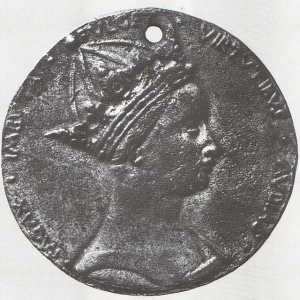
Margaret of Anjou

Ambassadors from France
Henry VI and the County of Maine

Richard, Duke of York

The War in France
A Note on Money
There were two types of money in the fifteenth century, money of account and actual coinage.
Money of Account
The English pound [£] or livre was divided into 20s (shillings) the shilling into 12d (pence).
The English mark was worth 13s 4d – two thirds of a pound
In France the livres tournois was the standard money of account. Divided into 20 sous and 12 deniers. Nine livres tournois equalled one English pound.
Coinage
There were no pound, mark, or shilling coins.
The English noble was a gold coin worth 6s 8d, half a mark.
The English silver penny was also a money of account and worth 1/240th of one pound sterling.
Silver minted coins: Groat = 4 pence; half groat; penny; halfpenny; farthing
In France the franc was a silver coin worth one livre.
The ecu was a gold coin worth 3s 4d sterling.
The salut was a gold coin minted in in Lancastrian France worth one and one half livres or 30 shillings. The French also minted the salut.
Incomes
A rough estimate of incomes: a parish priest received between £5 and £10 a year depending on the wealth of his parish., An archer might expect to earn £9 a year. The average income of a knight was £60. A lord’s income from land and crown annuities amounted on average to £865 from which he would pay his retinue and domestic servants. Richard, Duke of York the richest magnate in England claimed to be worth £3,230 a year.
Taken from J. Sumption, The Hundred Years War vol V, Triumph and Illusion, pp. 822-823
King Henry VI and his Council, 1445

The Proceedings of the Privy Council vol VI records only six meeting in 1445; two in January, one in February, two in March and one in May.
The assumption that council meetings were confined to a few favoured councillors, under the domination of the Earl of Suffolk is misleading. After Henry Benet ceased to be clerk of the council in 1443 and Thomas Kent took up the position, the records of council meetings and of those present become noticeably shorter. The ‘and others’ is significant. A meeting on 9 July is not in the Proceedings; those attending are listed in the Foedera.
Henry VI, Council Attendance, 1445
John Stafford, Chancellor January March
Ralph Butler, Lord Sudeley, Treasurer January
Duke of Gloucester March
Ralph, Lord Cromwell March
John, Viscount Beaumont January
Adam Moleyns, Keeper of the Privy Seal January
And others January March
A meeting at Westminster on 9 July 1445
Cardinal Beaufort
John Stafford, Chancellor
Thomas Beckington, Bishop of Bath and Wells
John Lowe, Bishop of Rochester
Humphrey, Duke of Buckingham (formerly Earl of Stafford)
Edmund Beaufort, Marquess of Dorset
Richard Neville. Earl of Salisbury
John Talbot, Earl of Shrewsbury
Walter. Lord Hungerford
Ralph Butler, Lord Sudeley Treasurer
Adam Moleyns, Keeper of the Privy Seal
John Fortescue, chief justice
Richard Newton, Chief Justice, King Bench
John Fray, Baron of the Exchequer
and others (1)
(1) Foedera XI, p 93
Henry VI, Council Proceedings 1445
Thomas Kent clerk of the council
Thomas Kent became clerk of the council and deputy keeper of the privy seal in November 1443 (1). He was appointed deputy constable of England in January 1445 (2, 3).
******************************
(1) CPR1441-1446, dated 15 July 1444. P. 277 (his salary was £100 a year assigned on various sources).
(2) Foedera XI, pp. 75-76 (deputy constable of England).
(3) CPR 1441-46 p. 348 (deputy constable of England).
*********************************
The Exchequer
The clerks of the Exchequer had been instructed to copy extensive Exchequer records ‘in a large and legible hand’ because the existing rolls were in small and often illegible script and the meaning was at times obscure, to the detriment of the inheritances of the king, the lords, and the people of the land, and of the office of the Exchequer.
A petition to the king requested that the Treasurer should be authorised to buy parchment and ‘other necessities’ to carry out this task. The petition is undated; Nicolas assigned it to 1445-1446 from a date on the original in a modern hand. But a more likely date is before 1443, during the tenure of the efficient and officious Treasurer Lord Cromwell.
The records were important: ‘the lawes and other contenyts of the booke called the reed booke of the exchequer,’ of taxation and levies in the shires, and the [. . . . . records?] from the reigns of Richard II, Henry IV and Henry V ‘and of yow sovereign lord.’ The petition is endorsed by King Henry (1).
(1) PPC VI pp. 325-26 (Addenda) The Red Book of the Exchequer (Liber Rubeus or Liber ruber Scaccarii) dating from the 13th-century is a record of precedents and office memoranda of the Exchequer. Nicolas’s note: ‘A transcript of the Pricy Seal issued in consequence of this petition is annexed to the Red Book of the Exchequer.’
Sir Andrew Ogard
Sir Andrew Ogard, born in Denmark, had petitioned parliament in 1433 with the backing of the Duke of Bedford while he was in England, for letters of denization (1, 2). Ogard held lands in Normandy granted to him by the Duke of Bedford and in England by purchase and through marriage (3, 4).
Ogard had served Bedford as a war captain in France and was a chamberlain in Bedford’s household (5). He was named as an executor of Bedford’s will in 1435.
He continued to serve in Normandy after Bedford’s death, as captain of Vire, and he entered the Duke of York’s service when York became the king’s lieutenant in France in 1441.
In 1445 Ogard took precautions to protect his position and establish his loyalty as a naturalised a citizen of England. He informed the Council that he had recently inherited estates in his native Denmark, and he petitioned the king for permission to accept them and do service for them if the law required it, just as he had done for King Henry. His request was as granted (6).
*********************************
(1) PROME XI, pp 114-115 (petition for denization).
(2) CPR 1429-1436 p. 288 denization
(3) Bell & Curry The Soldier, p. 116
(4) ‘The Land Settlement in Lancastrian Normandy’ Robert Massey, in Pollard Property and Politics, p.88
(5) L&P II, ii, p. 434 “Andrewe Ogard, knight, of the Kingdom of Denmarke, second chamberlyn to the regent capitayn of Vire.”
(6) PPC VI p 38 permission to inherit lands in Denmark
************************************
Sir James Stewart
Joan Beaufort, Queen of Scotland died in July 1445. She had married James Stewarat, known as the Black Knight of Lorne in 1439 two years after the assassination of King James I.
In November 1445 James Stewart, John, Earl of Athol, his son by Queen Joan, and William Dickson received a safe conduct for one year to travel to England (1). Sir James may have sought safety in England from the violent factions of the Scottish court after Queen Joan’s death.
(1) Foedera XI, p. 107
A Dutch Nobleman
Sir Adrian van Borselen, Lord of Brigdamme was a Dutch nobleman from Zeeland, a councillor and chamberlain to Philip Duke of Burgundy. His safe conduct dated 19 April was for six months (1). The reason for it is not given, he may have come to witness the queen’s coronation.
(1) Foedera XI, p. 84
King Henry VI’s Gifts, 1445
A list in the Foedera, addressed by Privy Seal to John Merston keeper of the jewels, is a quittance for the jewels purchased from the goldsmiths Mathew Pheilp and John Paddesley as gifts for the magnates who were presumably at court on 1 January 1445.
The Duke of Gloucester. A gold tablet set with jewels £90.
Cardinal Beaufort. A gold cup with a cover £40 7s.
John Holand, Duke of Exeter. God gold brooch (ouche) set with jewels £40.
John Stafford, Archbishop of Canterbury and Chancellor. Gold tablet set with jewels £50.
The Duchess of Buckingham. Gold tablet with an image of Our Lady £33 6. 8d.
Henry Beauchamp, Earl of Warwick. Gold brooch (ouche) set with jewels £30.
William Aiscough, Bishop of Salisbury. Gold tablet with an image of St Katherine £26 13s 4d.
John, Viscount Beaumont. Gold pouch (gipser) set with jewels £20.
Ralph, Lord Sudeley, Treasurer. Gold brooch set with jewels £20.
Household
The gifts to the household were crown jewels ‘taken from our jewel house’ in John Merston’s
keeping; their values are not listed.
Sir James Fiennes. Brooch (ouche) set with jewels.
Sir John Beauchamp, steward of the household. Gold brooch (ouche).
Sir Roger Fiennes, treasurer of the household. Gold brooch (ouche) decorated with a fleur de lys.
Rose Merston. Gold brooch (ouche) set with a pearl, a ruby, and a diamond (1).
See Year 1437 A King’s Gifts
(1) Foedera XI pp. 76-77
King Henry VI’s Household, 1445
Richard Jordon
Richard Jordan, keeper of the cellars in Windsor castle, at the manor of East Hampstead, and at Henley on the Heath, petitioned that in consideration of his long service and his increasing age, he might be granted a daily allowance of food while the court was at Windsor: two loaves of bread, a gallon of ale and meat twice a day on meat days with fish on Fridays. Also, a robe, annually, of the livery of the yeomen of the king’s household. A mandate was issued to the great wardrobe (1, 2).
****************************
(1) PPC VI, pp.35-36 (grant of food and clothing)
(2) CPR 1441-46, p. 325 (grant of food and clothing)
*******************************
William Cleve
William Cleve, calling himself clerk of the king’s works petitioned in January 1445 for an allocation of £1,000 to meet the costs of the Council’s instructions to refurbish the palaces at Eltham and Sheen in preparation of the arrival of Queen Margaret and the other foreign guests expected to visit for her coronation.
The money was to come from the tenth granted by Convocation in October 1444 for collection by mid-summer 1445. The Great Chamber and the Queen’s Chamber at Westminster were also in need of repair, as were the conduits in the Parliament Chamber and Painted Chamber. Scaffolding had to be erected at Westminster Abbey to prepare for the queen’s coronation’ (1)
Williams Cleve was appointed clerk of the works on 5 February 1445, a week after his petition had been granted (2). He had obviously been employed before that; he spoke of the work he had supervised at that the Tower for which he had not been paid. The ‘appointment’ is probably confirmation to him to take charge of the extensive repairs for which he requested the allocation £1,000 and confirmation of his wages.
Cleve was granted the position of clerk for the king’s works for life in June 1445 with grants of money and property, and offices at the Exchequer and the Tower ‘pertaining to his said office’ (3).
*******************************
(1) PPC VI, pp. 31-32 (Cleve’s petition).
(2) CPR 1441-46, p. 232 (February. Cleve appointed clerk of the works)
(3) CPR 1441-46 p 355 (June. Cleve granted clerk of the works for life)
**********************************
Parliament, 1445
The 1445 Parliament was unusual in that it lasted for four sessions, three in 1445 and a fourth at the beginning of 1446. It met on 25 February and was prorogued 15 March 1445 for the Easter break. It reconvened on 29 April and sat until 5 June. It met again on 20 October after the summer break and was prorogued on 15 December for the Christmas break.
Chronicles

“And in this yere, the xxiij day of Feuerere, the Kyng held his parlement at Westminister, to Archbisshops, bisshops, abbots and Priours, and to dukes, Erles, lordes and Barons, knyghtes, sqyers, and to Citizens Burgeises, and comons.
And this parlement endured vnto Palme-Sonday and then it was adiourned by ϸe King and his Consayle of his lords of the parlement unto the fest of Seint George was passed. And then, the xxix day of Aprell ϸe parlement bygan ageyn at Westminster with archbishops and oϸer lords as is beforesaid.” Brut Continuation F, pp. 487-488
“And this same yeer, on the Thursday the xxv day of Feuerer was a parlement begonne att Westmynstre, in whiche Gye [Henry – the name is corrected by Stowe] the yong erl of Warwic was maad duke of Warwic; and the lord Beumond was maad vicount Beaumond.” An English Chronicle, p. 61
“Item the thursday suyng began a noþer parliament and was holden at Westminster and at Estre folowyng hit was prolonged.” Robert Bale’s Chronicle, p. 119
“Ande in that same yere was a Parlyment holdyn at Westemyster,” Gregory’s Chronicle, p. 196
The Church in England, 1445
Cistercians in England, 1445
The Abbey of Morimond in France was a ‘daughter abbey’ of the Cistercian Abbey of Cîteaux the White Monks, in the Duchy of Burgundy. Cistercian envoys had been permitted by the Minority Council to carry out a visitation of all the Cistercian houses in England and Wales in 1432.
See Year 1432 Cistercians
The Abbot of Morimund was granted a licence to visit the houses of the Cistercian order in England in 1445. The abbots of Waverley and Combe in the diocese of the Archbishop of Canterbury, and the abbots of Fountains and Byland in the diocese of the Archbishop of York, were ordered to facilitate his visitation (1, 2).
*******************************
(1) Foedera XI, p. 93
(2) DKR. Forty eighth report of the Deputy Keeper of the Public Records p. 366
*******************************
Richard Praty
Richard Praty, Bishop of Chichester died in August 1445 (1, 2). He had been a chaplain in Henry’s household while the king was in France and dean of the chapel royal before becoming Henry’s choice to succeed Simon Sydenham as Bishop of Chichester in 1438.
Adam Moleyns was nominated as Bishop of Chichester to reward him for his services to the crown (3, 4).
**********************************
(1) Foedera XI, p. 100 (death of Praty).
(2) CPR 1441-1446 p. 374 (death of Praty).
(3) Foedera XI, p. 107 (election of Moleyns).
(4) CPR 1441-46, p. 396 (election of Moleyns).
**********************************
Edmund Kirton, Abbot of Westminster
As late as 1445 the Council was still fulfilling the provisions of King Henry V’s will.
Edmund Kirton Abbot of Westminster, and the prior and convent of the abbey were granted the manors of Ledecombe Regis in Berkshire and Offord Clughny in Huntingdonshire in July 1445 in accordance with Henry V’s will, despite Kirton’s unsavoury reputation (1).
Thomas Henley, the abbot of Reading and ‘a certain master of theology’ had been appointed by the prior of Winchester and two abbots to carry out a visitation of the Benedictine order in the diocese of London and especially that of Westminster.
They reported to Pope Eugenius that Kirton had been found to be ‘a fornicator, dilapidator, adulterer, perjurer, simoniac, and guilty of other crimes.’ In 1446 Eugenius ordered the abbot of St Augustine’s, Canterbury and John Obizis, a papal legate and a canon of York. to investigate the damning report. They were to depose Kirtin if they found the allegations to be true and oversee the election of a replacement whom they were to send to the pope with their decree (2).
Kirton survived the investigation and remained Abbot of Westminster until 1462 when he resigned due to ill health. He died 1466 and was buried in St. Andrew’s Chapel, Westminster. Were the charges against him false, the outcome of ecclesiastical infighting, or did Kirton have protection at court thanks to his link with King Henry V?
******************************
(1) Foedera XI, pp. 89-93 (Henry V’s grant).
(2) Papal Letters VIII, p. 309 (Eugenius’s order to investigate Kirton).
**************************
The Bishop of Skalholt
Godsuin (Gozewijn Comhaer) may have become Bishop of Skalholt in Iceland after John Bloxwich resigned the see in 1441, or he may have occupied the diocese simultaneously as Bloxwich was a notorious absentee. The Council certainly recognised Godsuin as bishop in 1445. They issued a safe conduct in December for one year for him to travel to England and return to Iceland (1. 2).
See Year 1438 Iceland
*****************************
(1) Foedera XI, p. 108 (safe conduct).
(2) DKR. Forty eighth report of the Deputy Keeper of the Public Records p, 369.
*******************************
Pilgrimages, 1445
Licences to convey pilgrims to St James de Compostella in Spain were issued from January to July 1445. To John Goding, Thomas Gille and twenty-seven others (1, 2).
See Year 1428 Pilgrimages
*********************
(1) Foedera XI, pp. 77-80.
(2) DKR. Forty eighth report of the Deputy Keeper of the Public Records, pp. 364-366.
*********************
London, 1445
St Pauls Steeple
On 1 February (Candlemass) the steeple on St Paul’s cathedral was struck by lightning, causing it to catch fire.
John Stow dates this incident to 1 February 1444, but he recorded it in the mayoralty of Henry Frowick which would make it 1 February 1445. C. L. Kingsford, in his notes to the Chronicles of London, says ‘the true date was 1 Feb. 1444,’ but in this he may be following Stow.
The chronicles, dated by mayoral years, record the fire at St Pauls under 1443-44 (Thomas Catworth, mayor) or 1444-1445 (Henry Frowyk, mayor), but agree on Candlemas.
Robert Bale’s Chronicle, Gregory’s Chronicle, and Brut Continuation F record it under 1445
“Item upon candelmas eve powles steple was sodenly on fire and contynued brennyng iij houres but it was holpen and quenched wt venegre.” Robert Bale’s Chronicle, p. 118
“And the same yere was Syn Poulys stypylle fyryd a-pon Candylmas evyn whythe the lyghtenynge.” Gregory’s Chronicle, p. 145
“And on Candelmes evyn before, bi A gret tempest of thondre & lightenyng at afternone, Poules steple was sett A fire on þe middes of the shafte in þe tymbre, which was qwenched bi force of labour, and specially bi þe labour of þe morow masse preste of þe Bow in Chepe, which was thought impossible, saufe only bi þe grace of God.” Brut Continuation F. p 487
“1445. The steeple of St Pauls in London caught fire and burned from three o’clock in the after noon until nine o’clock on the vigil of the Purification; and Queen Margaret was crowned.” Three Fifteenth Century Chronicles (Brief Notes) p .149
Chronicles of London (Vitellius A XVI) and the Great Chronicle (derived from the same source) misdate it to 1442-1443. The wording in the latter, ‘Upon Candylmesse evyn last passed before the landing of this noble pryncesse’, indicates 1445. Queen Margaret arrived in England in April 1445.
“Item the same yere vpon the Candelmas Evyn befor by a grete tempeste of Thundir and lightenyng at aftir none the Steple of Seynt Pawlis chiche was sette on fire aboute the medyll of the Shafte in the tymbir; whiche was quenchid by grete labour, and specially by the grete diligent labour of the morow messe preste of the Bowe in Chepe, which was thought impossible except the grace of god.” Chronicles of London Vitellius A XVI pp. 155-156
“Upon Candylmesse evyn last passid beffore the landyng of this noble pryncesse was an huge & wondyrfull thundyr wt Inestymable lygthnyng, In tyme whereof the shafft of Seynt pawlys Stepyll by ffury of the said wedyr was sett on ffyre, The which ffyre not w’owth Grete daunger & labour was at length Quenchid at which ffyre a preyst beyng than In the service of owir lady of Bowe namyd the morrowmesse preyst wan a memoriall lawde, ffor by God & hym that perylous ffyre was ovyrcomyn.. The Great Chronicle, p. 177
Waltham Annals dates it to 1444 and records more widespread storms
“In the year of our Lord 1444, upon the vigil of the purification of the blessed Virgin, [2 February] several places in England experienced terrible thunderstorms with violent winds and horrible noise in which the church at Baldock, (at about eight o’clock in the morning); the church at Walden, (about ten o’clock) and a church in Kent were badly shaken. The steeple of St Pauls in London, (about two o’clock in the afternoon), and the steeple of the church at Kingston upon Thames caught fire. Waltham Annals, English Historical Literature, pp. 352-353
***********************************
(1) Stow, Survey I, p, 326, and Survey II, p. 174.
(2) Kingsford, Chronicles of London, notes, p. 313.
**********************************
St Edward the Confessor’s Day 1445
King Edward the Confessor had been canonized by Pope Alexander III in 1161, and his remains moved (translated) to his shrine in Westminster Abbey on his saint’s day, October 13, in 1163.
In 1415 under the direction of Henry Chichele, Archbishop of Canterbury, Convocation had proclaimed the Feast of the Translation of St. Edward the Confessor on 13 October as a major holy day of the higher class at the behest of King Henry V. It was the anniversary the crowning of Henry’s father as King Henry IV, legitimising the Lancastrian line as kings of England.
Henry VI also felt a special veneration for St Edward. On 24 October 1444, undoubtedly at e his request, Convocation, led by Archbishop John Stafford, officially proclaimed that St. Edward’s Day was to be celebrated as a primary holy day (festum duplex) requiring a high level of liturgical observance by clergy and laymen, with formal religious celebrations.
“And that same yere, the x day of October was ordaynyd by the archbyschoppys and bysschoppys and there upon proclaymyd oppynly ynne chyrchys, that the day of Synt Edward shulde be kepte hooly day fro that day forthewarde.’ Gregory’s Chronicle, p. 185
“And in this yere was the translacioun of Seynt Edward made holy throwe London.” Short English Chronicle, p 65
The Duchy of Gascony, 1445
Bernard Angevin
Bernard Anvevin, Chancellor of the Duchy of Gascony, had been granted the castles, lands and lordships of Rauzan, Pujols and Blasimon in the diocese of Bazas in 1438 while he was in England.
See Year 1438 Bernard Angevin
The grant was confirmed to him and his heirs in 1445, ‘allowing him to pass down after his death his lordships without divisions to his first son as do the other nobles of Bordelais in order to keep united these lordships and to preserve due service and homage to the king’ (1).
Angevin was also granted a patent of nobility and a coat of arms. ‘Surrounded by two angels bearing the shield, it the most magnificent coat of arms painted in the Gascon rolls.’ (2).
****************************
(1) gasconrolls.org C 61 133 (grant to Bernard Angevin).
(2) Foedera XI, pp. 81-82 (coat of arms).
***************************
Bernard de Gnaros
A grant of nobility and a coat of arms was granted to Bernard de Gnaros in September 1445 for services to the crown in war past, present, and future (1). I have been unable to identify him.
(1) Foedera, XI, p. 100
John Arnaudin ‘archpriest’ of the church of St Pierre de Juliac
The Council made an unusual grant to John Arnaudin the ‘archpriest’ (abbot?) of the church of St Pierre de Juliac in the diocese of Bazas. He could retain in perpetuity ‘a fifth part with half of the great tithe’ amounting to no more than 20 shillings a year, from the tithe traditionally collected by the lord of Gensac (1, 2). The grant was confirmed in 1446 but the reason for the grant is not given. John Strangeways, the captain Fronsac castle, was also captain of Gensac.
***********************
(1) Foedera XI, pp. 84-85
***********************
England, Castile, and Portugal, 1445
The Truce of Tours between England and France negotiated by the Earl of Suffolk in 1444 specified the respective alliances of other rulers who were signatories to the truce in absentia.
See Year 1444 The Truce of Tours
Juan II, King of Castile, was listed as an ally of France. Castile was traditionally England’s rival in the wool trade. In March 1445 a proclamation issued to all the sheriffs in England announced that Castilian ships were not under King Henry’s protection, and that the duties imposed on Castilian merchants importing goods into England were to be charged at the higher ‘foreign rate’ than that paid by English merchants (1).
The Kingdom of Portugal was an ally of England under the truce. Prince Pedro, Duke of Coimbra, was Regent of Portugal for his young nephew King Afonso V. Prince Pedro was popular in England. During his visit to London in 1425 he had been instrumental in ending the standoff between the Duke of Gloucester and Hennry Beaufort.
See Year 1425 The Duke of Gloucester and Henry Beaufort
Pedro Rolando Alvaro Vasquez d’Almada, a Portuguese knight, was a brother in arms and close companion of Prince Pedro. He was known and respected in England as a warrior knight who had served in King Henry V’s armies.
Vasquez came to England in the summer of 1445 with an offer to mediate for a reconciliation between England and the Kingdom of Castile now that there was peace between England and France. While he was in England Vasquez was created a Knight of the Garter and Count of Avranches in Normandy (Conde de Abranches in Portuguese) with an annuity of 100 marks (2, 3, 4, 5, 6).
Prince Pedro was also a Knight of the Garter, and King Henry gladly accepted his offer and authorised him to treat for peace between England and King Juan of Castile (7).
************************************
(1) Foedera XI pp. 80-81 (proclamation against Castilians).
(2) Foedera XI, pp. 95-96 (grants to Alvaro Vaz).
(3) Issues of the Exchequer, p. 453 (£66 13s 4d paid to Alvaro Vaz).
(4) DKR. Forty eighth report of the Deputy Keeper of the Public Records p, 367 (Portugal to treat for peace).
(5) Collins, Garter, pp. 59, 294 and 300 (Alvaro Vaz, Knight of the Garter).
(6) Ferguson p. 54 (Alvaro Vaz Knight of the Garter).
(7) Foedera XI, pp. 97-98 (Portugal to treat for peace).
***************************************
Margaret of Anjou, Queen of England, 1445
Margaret of Anjou was received into Lancastrian France on 18 March at Pontoise by Richard, Duke of York, the king’s lieutenant in France. She sailed down the Seine from Mantes to Rouen to be welcomed by the Marquess of Suffolk and the household appointed for her by King Henry (1).
See Year 1444: Queen Margaret’s household
Margaret crossed to England in the Cok John of Cherbourg. Thomas Adam, master of the ship was promised an annuity of 20 marks on the customs of Southampton in reversion after the death of John William who held the annuity. Grants in reversion were commonplace during Henry VI’s reign (2,3).
Margaret disembarked at Southampton on 9 April 1445. Te Deums were sung and bells rung in every parish to give thanks for her safe arrival.
****************************************
(1) Escouchy, Chronique I, pp. 86-90 (Margaret’s reception in Rouen).
(2) Foedera XI, p. 85 (annuity to Thomas Adam).
(3) CPR 1441-46, p. 353 (annuity to Thomas Adam).
*****************************************
“Item the ffryday the ix day of Aprill the Quene cam into England from hemirshen and londed at iiij afternoon at portesmouth and the sonday folewyn was made greet joy of her comyng and the belles wer rong and Te deum sung in every Chirche solempny.” Robert Bale’s Chronicle, p. 119
“This yere Quene Margaret came in to Englond with grete rialte of the kynges coste.”
Note in left hand margin: “Quene Margaret, the Duke of Angyos dawgther, cam first to Englonde, Ao Domini 1444.” Short English Chronicle, p, 64
“And a pon the fyrste day of Aprylle Quene Margarete londyd at Portysmowthe,” Gregory’s Chronicle, pp. 185-186
“And she landed at pe towne of Hampton; and pere she was worthely receyued of pe peple of Hampton and of pe peple of the Cuntre aboute, with all reuerence and worship pat they couthe do.” Brut Continuation F, p. 488
“And duryng this parlement, the aforesaid dame Margaret landid at porchestre and wente fro theene3 to Hamptoun be water, and restid her there in the Goddeshous” English Chronicle p. 61
Queen Margaret’s Marriage, 1445
Henry and Margaret were married at the Premonstratensian Abbey of St Mary at Titchfield by William Aiscough, Bishop of Salisbury on 22 April, the eve of St George’s Day.
King Henry had ordered the royal goldsmith Mathew Phelip to alter a gold ring set with a ruby which Cardinal Beaufort had given him at his coronation in Paris to make a wedding ring for Queen Margaret (1).
(1) Foedera XI, p. 76
“On Thursday, the eve of Saint George, in 1445, the twenty-third year of Henry VI, King Henry married Margaret, daughter of the King of Jerusalem and Sicily and Count of Anjou, in the Abbey called Titchfield, near Southampton.” Benet’s Chronicle, p. 190
“Item the Thursday after [her arrival] the Quene was wedded at Suthwerk beside porstesmouth.” Robert Bale’s Chronicle, p. 119
“And after, oure Kyng come, and met with Dame Margarete, the Quene and brought hir to an abbey in þe newe Forest þat men calle þe abbey of […….] and there the Kyng was wedded to Dame Margarete the Quene with the Bisshop of Salisbury þat men called Maister William Ascu.” Brut Continuation F, p. 488
“and thanne she wente in to the abbey of Tychfeld, and there she was weddid to king Harri on the Thursday the xxij day of Aprille, and maister William Ascoghe, bishoppe of Salisbury dede the solemnite of the marriage and weddid thaym,” English Chronicle, pp 61-62
““and a-pon the x day of the same monythe [April] she was weddyd at a lytelle velage in Hampschyre i-named __” Gregory’s Chronicle, p. 186
“In the Begynnyng of this mayers yere, The kyng maryed dame margaret, dowgthir unto the kyng of Cycyle as before is said, at the toun or manoyr of Sowthwell.” The Great Chronicle p. 176
“In this yere Henry the VI maried Quene Margaret at Sowthwell,” Chronicles of London, (Vitellius A XVI, p 156
“IN this yere Kyng Henry maried at Southwyke Quene Margaret” Brut Continuation G. p 510
The Great Chronicle and Vitellius A XVI read ‘Sowthwell’ with a marginal note ‘quene margaret landyd at portsmouthe & was weddyd to k. henry at Tichefilde nere to sowthampton.’
Brut Continuation G p. 510 reads ‘Southwyke.’ Titchfield and Southwick are six or seven miles apart.
Margaret’s Progress to London
King Henry returned to London after the wedding. Margaret made a leisurely progress towards London escorted by lords and ladies of the court. She visited Cardinal Beaufort at Bishops Waltham and he entertained her royally. She went on to meet the Archbishop of Canterbury at his palace in Croydon, and then to the royal palace at Eltham which had been refurbished to receive her.
“And the first day of May beganne þe lordes to ryde ageinst her and soo after (she) was ledde and conveied in þis land from place to place be lord aftr lord att severall tymes wt notable power and greet array.” Robert Bale’s Chronicle, p. 119
“And the xxix day of Maye all the craftes of London with the Meire and Aldermen met with the quene on hors backe in blewe gownes browdered and rede hodis, and brought hir to the Towre of London;” Short English Chronicle, p. 64
“And then the king and his lordes departed from hir, and then met þe Cardinall of Wynchestre with the Quene, and conueyed hir with all reuerence and honoure þathe kouth do, to a Maner of his; and there she abode at nyght with all hir peple. And there was doon grete chere with chargeable costes, to hir and to all the peple þat come with hir þat tyme, in reuerence and worship of þe Kyng.
And so Quene Margaret was conveyed in the Countreyes of Sussexe and Surre till she come to þe Archbisshop of Canterburyes Maner in Croydon, in Surre; and there she rested hir all nyght with grete worship and reuerence, and with all true chere þat myght be doon to hir persone as for þat tyme.
And on þe morowe after, she went to þe Maner of Eltham; and þere she restid her aftir hir grete journay and travayle .viij. dayes, till she wold com to se the Citie of London.” Brut Continuation F, p. 488
Queen Margaret’s Entry into London, 1445
Margaret rode to London from Eltham on 28 May, to be welcomed by the mayor and aldermen. She was met at Black Heath, the traditional place of welcome to the City by the Mayor, Henry Frowick, accompanied by the sheriffs, aldermen, and representatives of the guilds in their full regalia of scarlet hoods and blue gowns, with their sleeves embroidered with the insignia of their crafts.
Item the ffriday xxviij day of May the Queen cam from Eltham unto the blak heeth and ther the mair of london with alle the aldremen and comens in costeous aray and shee in a chare richely dight and xxj chares folowyng wt ladies and gentiles in riche array and conveyed her unto the Tour of london and þe was the king present and resceyved her.
And the leverey of the citee was blew gownes embrawded and reed hoodes.” Robert Bale’s Chronicle, p. 119
“And upon the morowe. that was the Fryday, lordys of the realme, whythe nobylle and grete and costelowe arraye, the Mayre of London and the aldrymen in scharlet, whythe alle the craftyys of London in blewe, wythe dyvers dyvysyngys, every crafte to be knowe from othyr, rydyng agayne Quene Margarete and brought hyr unto the Toure of London, the queen havynge wythe hyyr xvij charys with ladys.” Gregory’s Chronicle, p. 186
“and she cam unto London the xviij day of Maij; and by the ways all the lordes of Englond reveyved her honourably in dyuers places, And in especiall the Duke of Glowcetur,
“And vpon blak heth the Maier, Aldermen and the commoners of the Citee, a certeyn of euery crafte, in blewe Gownys browdered wt the devise of his Crafte, and euery man a scarlet or a Reed hood;” Chronicles of London (Vitellius A XVI) p. 176
“and upon the xviij day of maii ffolowyng she cam unto london, In which way She was mett wt many of the lordys of England In moost Ricchest aray wt many a /Rych & costlew brawderid sleve, ffor In those dayes & long afftyr every lordys lyverey & servauntys were knowyn by the conysaunce brawderid upon pe sleve, and In lyke wyse alle knygthys & othyr hounourable mennys servauntys, and specyally she was honourably Ressayvid by the duke of Glowcetry, In whoos company was than many a noble man & many a lusty & costyously beseyn Bachiller,” The Great Chronicle, pp. 177-178
The Great Chronicle includes the pageants on the same day as Margaret’s reception and gives her lodging as ‘the bishops palace’ not the Tower of London. Probably the Bishop of London’s palace at Fulham.
“Upon Blak heth hyr Grace was mett wyth the mayer & the Cytyzyns, the said mayer & his brepern beyng In scarlet, and to the number of v C comoners all clothid In brown blew, wyth a conysaunce of everych ffelyshypp brawderid upon theyr slevys p oon Crafft mygth be knowyn ffrom an othir, And ovir that, everych Cytzyn ware upon his hede an hood owthir of Scarlet or of ffyne Reed, the which gave a mygthy shew,
and thus was this noble pryncesse brougth unto london Brydge, where [were iij pagyantes] and at othyr sundry placis of the Cyte, as In Cornhyll & iiij placis of Chepe Costlew & goodly pagentys were arerid In shewyng the lyfe of Seynt margaret & many oper excellent stories & devysis,
The whych I passe ovir ffor soo much as In the xth yere of owir said soverayn lord the Circumstaunce of a lyke tryumph ys there declaird & sett owth at length, [King Henry’s coronation] and thus was her Grace browgth unto the Byshoppys paleys where she was lodgid for that seson, and ekkis where at the kyngys pleasure tyll the ende of the fforenamyd/ monyth of maii,” The Great Chronicle, p. 178
Margaret lodged in the Tower of London where King Henry was waiting to welcome her. He created Knights of the Bath in her honour.
“And upon Thorsday the xxvj day of May, the kyng madde xlvj Knyghtys of the Bathe yn the Towre of London.” Gregory’s Chronicle, p.186
“And the xxix day of Maye all the craftes of London with the Meire and Aldermen met with the quene on hors backe in blewe gownes browdered and rede hodis, and brought hir to the Towre of London; and on the same day was made xlvij knyghtis of the Bathe.” Short English Chronicle, p. 64
“And þe Friday, þe xxvj day of Maye, the Mayre of London, with the aldermen and Shirrefs and comons of the Citie rode to þe Blake-Heth in Kent; and þere they abode and hoved on horsbak vnto the Quenes comyng. And so they come with hir to London; and she was brought to þe Toure of London; and þere she rested hir all nyght. And þere the Kyng, at the reuerence of þe Quene, and the first comyng, made .xlvj. Knyghtes of the Bath.” Brut Continuation F, p. 489
Pageants
The pageants devised for Margaret’s progress through London to Westminster for her coronation depicted her as the symbol of peace and prosperity. Wooden platforms along the route to Westminster served as rudimentary stages for the enactment of allegorical scenes against large, brightly painted backdrops (1).
“And agayne hyr comynge to London were ordaynyde many notabylle devysys in the cytte, as at the brygge and in other dyvers placys, at Ledynne halle, and in Cornehylle, and in iiij playcys yn Chepe, that ys to say, at the Grete Condyte, and at the Standarde, and at the Crosse, and atte the Lytylle Condyte.” Gregory’s Chronicle, p. 186
“and so brought her to london, where were ordyned dyuers pageantes, countenauntes of dyuers histories, shewed in dyuers places of the Cite in Roiall wise and costelwew;” Chronicles of London (Vitellius A XVI) p. 156
“And þen on þe morowen at after None, the Quene come from the Toure in a hors-bere, with .ij. stedes trapped all in white damask poudred with gold; and so was the vesture þat she had on; and þe pylowes and all þe bere in oon sute; and hir here combed downe about hir shulders, with a coronall of gold, riches perles and precious stones, with all lordes on horsbak, and ladyes in chares, þat is to sey, xix. chares of ladyes and theire gentelwomen,
and all the craftes of the Citie of London goynge on fote in theire best aray vnto Seint Paules. And by þe way, as she come þurgh þe Cite, there were shewed and made many devises and storyes, with angeles and oþer hevenly thinges, with songs and melody in dyuers places; and þe condites ran wyne, bothe white and rede, for all peple þat wold drynk. And then she was had oute of þe bere, and went on fote vp to þe high auter of Seint Paules; and þere she offred, and come oute ageyn to the bere at the west dore of Seint Paules; and so she passed forth till she come to Westminster, with lordes and ladys, and with the Maire and Aldermen and Comons of þe Cite of London. And there they toke theire leve, and went hoom ageyn.” Brut Continuation F, p. 489
(1) Gordon Kipling, ‘London Pageants for Margaret of Anjou,’ Medieval English Theatre 4, (1982) pp 5-27.
Queen Margaret’s Coronation
Margaret was crowned on 30 May 1445. The chronicles record her arrival in England, her coming to London, and her marriage to King Henry, and her coronation procession in some detail but there is no surviving source for her coronation ceremony. The probability is that it was closely modelled on Henry’s mother, Queen Catherine’s coronation which the chroniclers did record.
King Henry was still at Southwick on 18 April when he required the Abbot of Bury St Edmunds to attend Margaret of Anjou’s coronation, on the Sunday after Corpus Christi Day i.e. 30 May. Henry’s date of 25 May is probably a copying error, or he may have intended the abbot to be in London before the coronation (1).
(1) L&P II, ii, p. 470
Jewels
King Henry prepared for Margaret’s arrival and coronation well before she reached in England.
The treasurer and chamberlains of the Exchequer were ordered to assign 4,000 marks from the half fifteenth granted by the current Parliament; it was granted in March 1445 to be levied in November 1445. Of the 4,000 marks this 2,000 to be delivered to John Merston the Keeper of the Jewels to pay for the Jewel of St George bought from William Estfeld. The other 2,000 to repay a loan from Estfeld towards the costs of the queen’s journey to England (1).
Angelo Tany of Florence received a licence to import a balas ruby of 320 carats weighing 2 ounces without paying customs duties until he sold it (2).
Two merchants of Genoa, Christopher de Poges and Austin de la Robbe, and Peter de Saint John, burgess of Bruges, were licensed to import two great diamonds, two smaller ones, four great rubies, four sapphires and twelve pearls; if the jewels were not sold the merchants could take them out of England without paying customs (3).
Two damascene goldsmiths from Constantinople were licenced to work in England (4).
King Henry £540 borrowed from the executors of Lord Fanhope’s estate to buy two ouches (a jewel set in a gold brooch or clasp) which he had commanded to be delivered to John Meston keeper of the jewels. The Treasurer was instructed to repay the loan.
The abbot of St Albans was paid in May for the purchase of a “circle of ten ouches of gold set with a great pearle, baleys (ruby) and sapphire” (5).
Henry instructed the Treasurer to deliver 1,000 marks for the costs of the coronation and another 500 marks in ready money for immediate expenses to John Merston, keeper of the jewels. And to release crown jewels into John Merston’s keeping: a gold necklace called the Iklyngton Collar, set with four rubies, four great sapphires, thirty two great pearls and fifty-three other pearls bought from a merchant of Cologne for 2,000 marks (6).
A girdle of gold set with rubies, pearls and diamonds; a great ouche (brooch) set with diamonds, rubies and pearls, and the Iklyngton Collar were to be given to the Queen as gifts at her Coronation (7).
**********************************
(1) Foedera XI pp 82-83 (payment to Estfeld).
(2) PPC VI, pp. 321-22 (balas ruby).
(3) PPC VI 30-31 (jewels imported).
(4) Foedera xi p 77 (damascene goldsmiths).
(5) PPC VI p 39 (purchase of jewels).
(6) Foedera XI p 83
(7) Foedera XI p 84
***************************
“and on the morowe she cam þurgh the citee unto Westminster in a litier of white cloth of gold and she in þe same array sitting and ij stedes trapped in the same bar þe same littier and a canape of the same sorte born over her heed wt iiij knights and all lordes knightes and squyeres and other conveyed her and in all places of the citee was made as costeous array as ever was seyn afore.” Robert Bale’s Chronicle, pp, 119-20
“And on the morowe all the craftes of London in her best a ray brought hir to Westmester, and all the forsaide knyghtes a for ridynge.” Short English Chroncile, pp. 64-65
Parenthesis inserted by the Corrector in the margin: “And the xxx day of May (the whiche was than the Sonday next after Trinite Sonday she was crowned at Westmestre. And iij dayes after open justynge to all tho that wolde come.”
“And apon the morowe the Satyrday, she was brought thoroughe London syttyng in a lytter by twyne ij goode and nobyelle stedys i-trappyd with whyte satton and sche was conveyyde unto Westemyster.
And apon the morowe the Sonday was the coronacyon and ij dayes aftyr there was a grette revylle of justys of pes in the saynttewery at Westemyster, &c.” Gregory’s Chronicle, p. 186
“Upon the xxix day whereof, hry Grace was conveyed In an hors lyttyr ffrom the Towir of london thorwth the Cyte wnto Westmynstyr wyth as Grete Tryumph as evyr was Quene of this land And there upon the morn beyng Sonedaye, She was Solempnly Crownyd, and afftyr ffestid In the Grete hall with all Circumstancis of honour that apparteynyth to such a coronacion as beffore In the x yere ys at length declarid, And In the weke fflowyng were holdyn wythyn the paleys of Westmynstyr, marcyall Justis & othyr Faytys of Armys by iij dyes contynuell, To the Grete cumfort of the kyng & Quene & off theyr Subgectys.” The Great Chronicle, p. 178
“and on the Sunday the xxx day of May next folowyng she was crouned at Westymstre.” An English Chronicle, pp. 61-62
Brut Continuation G combined the breaking off of the Armagnac marriage in 1442, the marriage with Margaret of Anjou in 1445, and the ceding of the County of Maine to King Charles in 1446. into one scathing condemnation of King Henry and by implication the Marquess of Suffolk. The judgement has largely been accepted by English historians ever since.
See Year 1442 An Armagnac Marriage
“Also here is to be noted pat fro pis tye forward, King Henry neuer profited ne Went forward; but Fortune began to turn from him on al sides, as wel in Fraunce, Normandy, Guyan, as in Englond.”
“Some men hold opinion pat King Henry gaf commission plenerly to Sir Edward Hulle, Sir Robert Roos, the Dean of St Seuerynes (Thomas Beckington) & oper, to conclude A mariage for him with perle of Arminakes suster, which was promysed (as it was seid) & concluded; but afterward it was broken,”
“& he wedded Quene Margarete as A-foreis seid; which was A dere mariage for pe reame of Englond; ffor it is knowen verely pat, for to haue hir, was delyuered pe Duchie of Angeo & pe Erledome of Maign which was pe key of Normandie, for pe Frensh men tentre” .
“And Aboue pis, pe said Marquys of Southfolk axed in playn parlement A fyftenth & an half to feche hir out of Fraunce.”
“So now what A mariage was pis, as to pe comparison of pat oper mariage of Armynyke! for per shuld haue ben delyuered so many castels & townes in Gwyhen; And so moche gode shold haue bene yiffen with hir. pa al Englond shold haue bene enryched per-by, but contrary-wise fell.” Brut Continuation G, p. 511
The coronation was followed by several days of jousting.
“and the xxx day of Maij she was crowned at Wesytmynster, where were Jusices iij diaes continaulaly after. Chronicles of London (Vitellius A XVI) p. 156
“Item the sonday morn folowyng she was crouned at Westminster and þe wer roiall justes made.”
“And the kyng lay atte Tour. And ϸr and at Smythfeldw wer proposed divers feets and challenges and justes to be doon of royalte in honour of the seid coronacion” Robret Bale’s Chronicle, p. 120
Bale’s Chronicle (p. 120) has two entries on the jousts, one under 1440-1445 and one under 1445-1446 with, “and upon midsomer and seint petre even folowyng was made þe royallest wacche þt ever was seyn ther a fore, and the King and queen and þe lordes wer present the same evenes in the cite” following the 1444-1445 text. Mid-Summer Day is 24 June and St Peter and Paul’s Day is 29 June by which time the king and queen were at Windsor.
Queen Margaret’s Coronation Expenses
Roger Fiennes, the treasurer of the household, was allocated 2,000 marks, and £1,000 in ‘prest’ ready money for the coronation. Plus £1,000 for the expenses of the Chief Butler who was responsible for the purchase of wine. for the coronation; and £500 in ‘prest’ money (1).
Robert Rolleston, the long serving Keeper of the Great Wardrobe had been replaced in that office by John Norreys in 1444. In May Norreys was ordered to supply eight yards of scarlet cloth to Lord Dudley for a gown for the queen’s coronation (2).
Richard Andrew, the king’s secretary who accompanied the Earl of Suffolk to Tours in 1444 and went back with him to escort Margaret to England was granted an annuity of £100 in May 1445 for his services to the queen (3, 4).
*************************************
(1) Foedera XI, pp. 82-84 (household and wine expenses).
(2) Foedera XI, p. 84 (scarlet cloth to Lord Dudley).
(3) Foedera XI, p. 85 (Richard Andrew).
(4) CPR 1441-46, p. 354 (Richard Andrew).
****************************
Ambassadors from France, 1445
The Earl of Suffolk reported to Parliament on the success of his embassy to Tours in 1444 and announced that French ambassadors would arrive shortly. He was commended and thanked by the Lords and the Commons, including the Duke of Gloucester, for negotiating the truce of Tours (1).
See Year 1444 The Truce of Tours
In accordance with his promise to continue peace talks, on 9 June 1445 Charles VII commissioned ambassadors to travel to England to conclude peace and to arrange for a personal meeting between himself and to go to England to conclude peace and to arrange a personal meeting between himself and King Henry (2, 3).
Louis de Bourbon, Comte de Vendome, King Charles’s cousin, had been a prisoner in England.
Jacques Juvenal des Ursins, the Archbishop of Rheims.
Guy, Comte de Laval, was the Duke of Britany’s son-in-law.
Raoul de Gaucourt, who did not go.
Bertrand de Beauvau, Lord of Précigny, represented René, Duke of Anjou, King Henry’s father-in-law.
Guillaume Cousinot, King Charles’s councillor.
Etienne Chevalier, King Charles’s secretary.
“And after the feast of St John the Baptist [24 June] French ambassadors came to England, that is to say the Archbishop of Rheims, [Jacques Juvenal des Ursins] the Count of ‘Auden’ [Louis de Bourbon, Count of Vendôme] and [Guy] Count of Laval, accompanied by two hundred men. The Bishop of ‘Seawntis’ [Guillaume de Malestroit, Bishop of Nantes] and the Chancellor of Brittany came from Brittany, with forty men. They came to negotiate peace between the realms of England and France. The king of England gave them many rich gifts, and then they returned home.” Benet’s Chronicle, p. 191
The chronicles are dismissive of the French embassy:
“Item atte the begynnyng of July com Enbassiators for tretee of peis and taryed her iij wekes and had greet chier.” Robert Bale’s Chronicle, p. 120
“And in this yere came serteyne enbassetours oute of Fraunce to trete for pees to be hadde generall whiche duryd not but xij monthis after the xviij monthis a for wretyn.” Short English Chronicle, p. 65
“And in the same yere come dyvers enbassytourys of lordys of Fraunce for to trete of the pes.” Gregory’s Chronicle, p. 185
“Thys mayers tyme alsoo a noble ambassad was sent ffrom the dawphyn of vyen unto the kyng, ffor to entreate of a perpetuell peas atwene pe Realmys of Engeland & of Fraunce, But the conclucyon thereof was a Trw ffor a year,” The Great Chronicle, p. 178
“Also this yere came a grete ambassade into Englond out of ffraunce, for to haue concluded a perpetuall peas; but in conclusion it tourned vnto a trewis for a yere.” Chronicles of London (Vitellius A XVI) p. 157
“Also pis same yere come A gret Embassate into Englond out of Fraunce, forto haue concluded A perpetual pees; but in conclusion it turned vnto A trewes of a Yere.” Brut Continuation G, p. 511
The Brut, Continuation F end abruptly here:
“And in this yere, þe xvij day of Iuyll, come þe ambassatours of Fraunce to London, forto trete for peas between England and Fraunce, þat is to say, the Archbisshop of Reynes, þe Erle of Gudoam, with oþer lordes, knyghtes, squyers and clerkes of Fraunce, by the grace of God for a final peas.” Brut Continuation F, p. 490.
******************************
(1) PROME XI, pp. 410-12 . (Suffolk’s report to Parliament)
(2) Foedera XI, pp. 86-87 (King Charles’s authorisation to his ambassadors).
(3) Beaucourt Charles VII, vol IV, p. 145 (French ambassadors).
****************************
Primary Sources for the Anglo-French Negotiations, 1445
Stevenson published three accounts in Letters and Papers of the visit of the French embassy in the summer of 1445. It was the first time in thirty years that ambassadors from the King of France had set foot in England.
Journal of the embassy sent into England to treat with Henry VI for a peace with France. L&P I, pp. 87-148
This is the most complete account of the embassy covering the period from 2 July when the French ambassadors arrived until their departure on 30 July. It was probably compiled by Etienne Chevalier, King Charles’s secretary from his own observations as part of the French delegation, and from reports by Jacques Juvenal des Ursins of what took place during the actual negotiations.
Appendix to the previous narrative, L&P I, pp. 149- 152
It only covers 19 July, the first day of the negotiations. But it contains one serious divergence from the main narrative. A short memorandum, written on the reverse side of the main French account of these proceedings, but crossed through, claims that Suffolk had offered to renounce Henry VI’s claim to the French crown in return for Normandy and Gascony when he was in Tours.
Narrative of the proceedings of the embassy sent by the King of France into England in July 1445, L&P I, pp. 153-159
Another version of the ambassadors’ visit, described by Stevenson as a draft, hurriedly and obscurely written but independent, differs slightly from the main account. It is much shorter and is not as detailed.
Arrival of the French Ambassadors, 1445
King Charles’s ambassadors and an envoy from the King of Spain (Castile) arrived in Calais at the beginning of July. Duke René of Anjou and the Duke of Alencon’s representatives arrived separately. They were escorted across the channel to Dover by Garter King of Arms. They travelled to Canterbury where they were entertained by the Prior of Canterbury cathedral.
Sir Robert Roos and Sir Thomas Hoo met them at Rochester on 9 July and informed them that King Henry had only learned of their arrival on the previous Monday ‘as he was going to bed.’ He requested them to stay where they were until arrangements could be made for their reception in London.
Letters from the Marquess of Suffolk to the Count of Vendôme informed the ambassadors that King Henry would receive them 15 July, the following Thursday. At Dartford on 13 July, they conferred on how they would act and what they would say when they reached London. They would enter together dressed in their finest clothes: ‘in good and honourable garments.’
Protocols for their behaviour and the order of precedence for them to enter King Henry presence were established: King Charles’s ambassadors would enter first, followed by Alphonso, the King of Castile’s ambassador, then René Duke of Anjou’s envoys, the Duke of Brittany’s envoys and lastly the Duke of Alençon’s envoys. They were to agree with whatever points King Charles’s ambassadors chose to make and not deviate from them. They and their servants were not to quarrel with the English ‘or go out at nights,’ or discuss points of difference with the English.
Alphonso said he had been sent by the King of Castile as an observer and would follow the French party line. René of Anjou’s envoys said they had their own credentials to present to King Henry, but they had no secret agenda. The Duke of Alençon’s envoys concurred.
The Duke of Brittany’s envoys said they too had credentials. The Duke of Brittany had other matters he wished to raise with King Henry but for the present meeting their only brief was to urge the English to make peace.
Reception of the French Ambassadors by Henry VI, 1445
The ambassadors set out for London on the afternoon of Wednesday, 14 July. The Marquess of Suffolk, the Marquess of Dorset, the Earls of Salisbury and Shrewsbury, rode out to meet them as they approached the city. Closer to the city, as protocol demanded, the Dukes of Exeter and Warwick with representatives of the clergy. waited to receive them.
The whole cavalcade rode to London Bridge to be welcomed in the city by the mayor and aldermen, about sixty in all, wearing their full regalia of scarlet robes trimmed with miniver. Members of the London guilds lined the Bridge displaying the insignia of their trades and crowds gathered; the French reported that they were welcoming.
The Duke of Buckingham, Suffolk, Dorset, and the Earl of Shrewsbury escorted the ambassadors to Westminster by barge along the Thames on 15 July where they were received by King Henry.
Henry, richly dressed in a robe of red cloth of gold was seated on a dais displaying a blue cloth with the livery of King Henry V and the motto “Jamais” embroidered in gold. Behind the king was a tapestry with ladies presenting the arms of France to an unnamed lord.
Henry descended the dais to greet the Count of Vendôme and the Archbishop, Jacques Juvenal des Ursins. He doffed his hat to them and extended his hand to other members of the party.
The English lords stood grouped around the dais, Cardinal Kemp Archbishop of York, John Stafford, Archbishop of Canterbury, the Duke of Gloucester, John Holand, Duke of Exeter, Henry Beauchamp, Duke of Warwick, Adam Moleyns the Privy Seal, ‘and many others.’
Jacques Juvenal des Ursins Archbishop of Reims was the principal negotiator. He presented the King Charles’s letters of credence. He spoke in French on advice from Suffolk, for ‘they had ascertained that the king of England understood it well.’ He introduced his colleagues and stated that the Count of Vendôme carried letters to King Henry from King Charles.
John Stafford, Archbishop of Canterbury and Chancellor of England replied in King Henry’s name in Latin. King Henry appeared gratified. Through the Chancellor he expressed his affection for ‘his uncle’ King Charles and for the Dauphin Louis and said he knew they desired peace as much as he did. Henry then glanced at the Duke of Gloucester standing to his left and said in English to the Chancellor “I am very much rejoiced that some who are present should hear these words’ they are not at their ease.”
Henry rebuked his Chancellor for not speaking in more friendly terms. Through Suffolk he informed the French that he did not consider them strangers but as much a part of his household as they were of King Charles’s.
After that, in what was surely an embarrassing anticlimax if the French report is accurate, Jacques Juvenal des Ursins presented the other envoys, and the audience was at an end. Suffolk informed Bernard de Beauvau that there would be another audience on the following day and gave them some advice in how to act: keep the meetings informal as among familiar friends; this would please King Henry and lead to mutual agreement.
The second audience with King Henry was fixed for three o’clock on 16 July. Suffolk met the ambassadors in the ante chamber and openly expressed his willingness to serve the King of France because, he said, he knew of King Henry’s affection for his uncle.
The French were admitted to King Henry’s privy chamber which was dark. Henry stood to receive them, dressed in a black velvet gown. Juvenal des Ursins’s opening address stressed King Charles’s desire for peace. He outlined all that King Charles had done and would do to further the cause of peace. Charles had always treated the English honourably, even in time of war. He had personally arranged for King Henry’s marriage although he had been ill at the time, and he had sent her to England as soon as he could. Many of his lords had urged him to continue the war, which he was well able to do, but he had agreed to a truce in the hope that peace would follow. He had instructed his ambassadors to negotiate simply and openly and not to delay a successful outcome by diplomatic niceties.
Anglo-French Negotiations, July 1445
King Henry had named John Kemp, Cardinal Archbishop of York, the Marquess of Suffolk, and Ralph Butler, Lord Sudeley the Treasurer, as his representatives (1, 2).
Discussions began on Monday,19 July and lasted two days (3, 4, 5).
Suffolk claimed the duchies of Normandy and Gascony ‘and the other counties in which the King of England had rights,’ as English possessions in full sovereignty, as he had at Tours.
In an appendix to the main account there is a somewhat different version. The report covers only 19 July and Stevenson says it was written on the reverse side of the main account and then crossed through. He assumes it was revised in the final draft.
It contains one serious discrepancy. It claims that Suffolk, in recapitulating what he had said at Tours, mentioned that King Henry would consider resigning his claim to the French crown in exchange for Normandy and Gascony. The French replied that they had no instructions to negotiate this point and that if Suffolk had raised it at Tours he would have been told that King Charles would not accept it (6).
Juvenal des Ursins spoke at some length. The actual speech is given. The gist of it was that it should be easy to establish peace between such close kin as King Charles and King Henry. He repeated the same offer the French had made Tours: Gascony, Quercy, Périgord, and Calais, but not Normandy. (7)
Whether by accident or design the safe conducts for envoys for the Duke of Burgundy’s representatives to attend the Anglo-French talks were not issued until the beginning of July, too late to be of any use since by that time the French ambassadors had arrived in England. The Burgundians did not come (8).
Burgundy sent letters explaining that his embassy had not come to England as expected because no safe conducts had been received, despite his request. He asked the French ambassadors to expedite the despatch of safe conducts, it if they could. He would send an embassy immediately they were received and he the ambassadors not to conclude peace before his ambassadors arrived. King Charles had agreed that nothing would be settled without Burgundy’s consent. The French decided to raise the question of the safe conduct with Suffolk.
King Charles wrote to inform his ambassadors that he had signed a treaty with Isabelle, Duchess of Burgundy at Chalons. They decided to say nothing about the treaty to the English.
The ambassadors dined with Cardinal Kemp on Tuesday, 20 July. The meetings resumed after dinner. Kemp said he hoped the French were now prepared to make an offer that would lead to peace. Suffolk again asked for Normandy and Gascony and other territories which had belonged to the English before King Henry V had claimed the crown.
Juvenal des Ursins replied that the English always had a claim to Gascony and Ponthieu [in Picardy] but not Normandy. Normandy was not an English possession.
Kemp said Poitou [on the west coast south of Brittany] and Normandy were part of the claim. He requested Normandy, Gascony, Poitou and Ponthieu in full sovereignty.
Juvenal des Ursins pointed out that King Henry III had renounced Poitou along with Normandy. He rehashed the history of the concessions made by Edward II and Henry III. Nothing had been returned to the English without homage.
The French and Breton ambassadors took time out on Wednesday 21 July to pay a courtesy visit to Cardinal Beaufort who had just arrived in London, but the ageing Cardinal took no part in the negotiations.
After their visit the Duke of Buckingham (formerly the Earl of Stafford) joined the negotiations. The French conceded that they might include Limosin (to the east of Gascony). They considered throwing in Saintonge (north of Gascony south of Poitou) but it is not clear if they actually offered this.
Cardinal Kemp recapitulated all that had been discussed. He requested the French to state plainly the most they were prepared to concede; given the good will of King Charles it must surely be more than they had offered so far.
Suffolk urged them to speak plainly and he would do likewise. If a peace agreement could not be reached what would the next step be?
The French maintained that they had been sent to negotiate for peace and they had followed their instructions to the letter. But they would consult their instructions from King Charles. They withdrew to confer on what they had already decided and returned to reiterate their offer.
Kemp rejected it. He expressed surprise at so meagre an offer and said it was not a bargaining position; it was worth nothing. Before anything else could be decided King Henry must be consulted.
Bertrand de Beauvau suggested that the impasse could be broken by a personal meeting between King Henry and King Charles. Beauvau’s apparently spur of the moment suggestion may have been preconceived: when Juvenal des Ursin formally invited King Henry to visit France he stated his willingness to prolong the truce to 1 November 1446 so that the necessary arrangement could be made. He would not have done this without instructions from Charles VII.
Suffolk rode to Windsor to inform King Henry. Henry returned to London, to the bishop of London’s palace at Fulham, although it was not until 27 July that he received the ambassadors in a private audience with only Cardinal Kemp, Suffolk and Lord Sudeley present.
Juvenal des Ursins spoke at length, stressing ‘his uncle’s’ affection for Henry who was plainly delighted; he raised his hat whenever King Charles was mentioned, repeating “Saint Jehan grant mercis.”
Juvenal des Ursins extended a formal invitation for the King of England to visit the King of France. Suffolk requested a longer period for the truce, but des Ursins declared that an extension to 1 November 1446 was the most he could offer. He suggested that English envoys should accompany him back to France to persuade King Charles to extend it truce beyond that date.
Cardinal Kemp relied formally in Latin: King Henry was well aware of the advantages of peace and the evils of war; he would like to meet his uncle. Even though the French offers had been meagre the king had agreed to cross to France. However, such a serious undertaking required further consultation. It would be costly and some guarantee should be offered that peace. or an extension of the truce. would be the outcome. A further answer would be sent to King Charles (9).
The French ambassadors went home well pleased. They had done all that King Charles asked of them. They had fulfilled his promise to send an embassy to England although Charles had no intention of making peace unless the English withdrew their claim to the Duchy of Normandy. They had dangled the carrot of peace by means of a visit to France by King Henry so that King Charles could exploit his nephew’s naiveté in a personal meeting.
The truce was prorogued on 13 August 1445 to 1 November 1446. King Charles confirmed it in September (10).
******************************************
(1) Foedera XI pp. 94-95 (powers for English to negotiate)
(2) CPR 1441-46 p. 359 (English negotiators named)
(3) Griffiths, Henry VI, p. 492
(4) Wolffe, Henry VI, p. 189
(5) Dicks. ‘The question of peace: Anglo-French diplomacy 1439-1449,’ pp. 139-156 (the most detailed account)
(6) L&P I, pp. 149-152 (Appendix to the Journal)
(7) L&P I, pp. 130-132 (Juvenal des Ursins’s speech)
(8) Foedera XI pp. 88-89 check (safe conducts for Burgundians)
(9) L&P I, pp. 87-148 (Journal of the embassy sent into England to treat with Henry VI for a peace with France).
(10) Foedera XI, pp. 97-101 (truce prorogued; Charles VII’s confirmation)
****************************************
The Question of Maine, 1445
The County of Maine was the patrimony of the House of Anjou. The Duke of Bedford had conquered parts of Maine in 1425, including its capital Le Mans and he took the title Duke of Anjou although the English never conquered the duchy an inconvenient fact that the English chose to ignore. Even today few English historians bother to distinguish between Maine and Anjou in their accounts of the war in France. The chronicles tend to lump them together.
The English Council recognised that Maine was negotiable. It could be offered to the French, but only in the context of a final peace. Did Suffolk offer to cede Maine at Tours in 1444? The evidence is scanty and open to interpretation.
Harriss and Watts argue that he did. Wolffe and Griffiths argue that the question was first raised in 1445 during the visit to England in November by two of King Charles’s envoys, although Wolffe thinks King Charles and the Angevins had it in mind at Tours.
Harriss
“Did Suffolk at Tours also make a secret concession of Maine, as his enemies later claimed? The context of the negotiations and the evidence of French sources strongly suggest that he did” (1)
Harriss assumes that the twenty-year truce which the Duke of Anjou offered through King Charles’s envoys originated at Tours in 1444 and that a suggestion that Margaret should bring the county of Maine to King Henry as dowry was ruled out by Charles VII. A verbal promise would not have been made to the Count of Maine who was not Henry’s father-in-law.
Watts
“It seems likely that the twenty-year alliance with Anjou as the quid pro quo for Maine was, like the cession itself, hatched at Tours when the marriage was negotiated and not later” (2).
Watts argues that the English Council and many of the nobility favoured a peace plan that included the surrender of Maine provided they did not have to take responsibility for it.
Wolffe
“The French were later to maintain that Adam Moleyns . . . . had instructions from Henry to implement this surrender when he was again in France even as early as September 1445. It was also later asserted more than once that Henry have given an oral undertaking to surrender it by 1 October 1445 to the great French embassy in London in July of that year . . . . Suffolk always strenuously protested his innocence and certainly no promises appears to have been given at Tours in May 1444. Charles VII and the Angevins had it very much in mind from the beginning of these new negotiations” (3)
Griffiths
“In November 1445 Charles’s envoys Cousinot and Havart presented Henry VI with a demand that the county of Maine, including the castle and city of Le Mans, should be ceded to Duke René. This demand, which was René’s idea had not hitherto figured in the discussions . . . . Shortly before the envoys were given their final instructions in mid-October, René put it to Charles VII, along with a reciprocal proposal that he should offer Henry VI an alliance to last for René’s lifetime and a truce for twenty years. Charles agreed to this bold stratagem . . . . he allowed René to commission his envoys accordingly”
“That Charles VII had only recently approved the demand is indicated by Rene’s reference to his receipt of the king’s letters patent authorising it (4).
**********************************
(1) Harriss, Beaufort, pp. 345-346
(2) Watts, Henry Vi and the Politics of Kingship, p. 222 n. 71 and p. 223 n. 75
(3) Wolffe, Henry VI, pp. 173-745
(4) Griffiths, Henry VI, p. 496, and fn. 80
********************************
The Earl of Suffolk and Maine
Suffolk would not have offered Maine even in secret without the knowledge of King Henry and the Council, he had not wanted to undertake the mission in the first place. But why would he offer it? In exchange for the Duchy of Normandy in full sovereignty? This would have met with their full approval, Maine was a small price to pay for Normandy, but there was never any chance that King Charles would accept it.
At the request of the Duke of Anjou to secure the marriage with his daughter? The marriage was a done deal before Suffolk arrived in Tours. Margaret was betrothed to the Count of Nevers, a client of the Duke of Burgundy in 1443; the contract was broken on King Charles’s orders so that she could marry King Henry (1).
Suffolk expected to be offered one of King Charles’s daughters; he was forced to accept the Angevin marriage as second best. He had no need to offer Maine to the Duke of Anjou as a bribe. That is not to say that the thought did not occur to René of Anjou or more probably his brother who was Count of Maine. Margaret brought no dowry to England; and it is nonsense to suggest that the English King would grant Maine (or anything else) to Margaret as her dowry.
The detailed account of the visit by the French ambassadors in July makes no mention of Maine. The French later claimed that Bertrand de Beauvau had raised the possibility, but what Beauvau suggested at the time, following instructions from King Charles, was a meeting between the two kings. It was this suggestion that Suffolk caried to King Henry at Windsor, not the ceding of Maine.
Many years later, when Suffolk had to defend his actions in Tours he declared that the French had demanded territorial concessions that he had resisted:
“that when he was at Toures in ambassiad and aferr at Loreyne, and had ample and as large power as any was gevyn to an ambassand amou thr convocacions and tarites was desired gretly pver the other partie to ayelde up or to arelessed to theym the seid toune of Anyoies and Mayne, with their appurtenannees and notwithstrandynge his seid power was large and sufficiant discharge for him to have resenably departed the kynge’s title thergore, yet he gaffe theym never answere nor comfort therof” (2).
Advis et d’instructions
Beaucout’s Footnote: “An undated document which appears to have been misplaced at the end of a manuscript among pieces relating to the Duchy of Savoy allows a precise dating relative to the promise to abandon Maine: It is the minute given to the king’s [Charles VII] representatives during the negotiations on this subject. It follows from this that during the time when the Treaty of Tours was signed (28 May 1444) something was said touching the deliverance of Maine. Auvergnas Chaperon and Charles de Castillon were sent some months later to sound out the King of England on this point.
That during the great embassy [of July 1445] a verbal promise was made to the Lord of Précigny [Bertrand de Beauvais] touching the deliverance [of Maine] by 1 October. The Bishop of Chichester [Adam Moleyns] had been authorised to make the deliverance on the terms aforesaid while on his visit [to France] in September 1445, but he did nothing, instead he persuaded the king to send another embassy saying that he would not be responsible for doing this thing. In the end Cousinot and Harvart obtained the deliverance of the county of Maine, on 30 April 1446 as previously stated” (3)
Adam Moleyns may have accompanied the French ambassadors on their return to France In He was given the same powers to treat as Suffolk and the English negotiations had, with no mention of Maine (4).
“And afterwards Master Adam Molyens crossed to France with forty men, and when he returned to England he was accompanied by the chief justice of the king of France and a knight, to treat for peace, but nothing was settled.” Benet’s Chroncile, p. 191
The Advis et d’instructions claims that he was asked to ‘deliver’ Maine in 1445 but that he refused. Moleyns was in France again in 1446 and it may have been at that time rather than in 1445 that the request was put to him.
******************************************
(1) Cron, Margaret of Anjou and the Men Around Her, p. 19
(2) James, ‘Suffolk,’ thesis, p. 68 citing HMC Third report, p. 280
(3) Beaucourt, Charles VII, vol IV, 284-285 fn 1 (Advis et d’instructions)
(4) CPR 1441-46 p. 359 (powers to Adam Moleyns dated 11 August 1445).
(5) Dicks, ‘The Question of Peace,’ pp. pp. 157-58 (Moleyns in France)
**********************************************
Henry VI and the County of Maine, 1445
Maine had not figured in the abortive peace negotiations in July.
The resourceful Bertrand de Beauvau, who had witnessed King Henry’s behaviour during the embassy, may have suggested to René of Anjou that Henry’s protestations of his love for his new family would be well worth exploiting. René should request Henry to demonstrate his affection by returning the County of Maine to his father-in-law. Maine was linked in English minds with the Duchy of Anjou, not with Normandy, and therefore it was not sacrosanct.
King Charles commissioned William Cousinot, his master of requests, who had been with the French embassy in July, and John Havart to go to England and encourage King Henry to visit France by offering to extend the truce (1). He gave René permission to raise the question of Maine with King Henry. Safe conducts were issued to them at the end of October and they arrived in November.
King Henry commissioned Suffolk, Adam Moleyns, bishop elect of Chichester and keeper of the privy seal, John Viscount Beaumont constable of England and Ralph Butler, Lord Sudeley the treasurer, were appointed to negotiate with them (2)
Cousinot presented René of Anjou’s procuration, authorised by King Charles, requesting ‘the surrender of Maine or what our dear son holds of it’ in return for a twenty year truce, not with France but with the House of Anjou.
René of Anjou’s procuration to Cousinot and Havart dated 17 October 1445
The marriage of his beloved daughter Margaret to his dear son-in-law King Henry was agreed to and consummated at the pleasure and good will ( plaisir et vouloir) of King Charles in the hope that the affinity and love established by the marriage would lead to the establishment of a final peace by the deliverance of the county of Maine or what our dear son holds of it as we have previously requested (ainsi que de ce l’avons requis); this would in turn lead to an alliance with René for life, and a twenty year truce with the House of Anjou. King Charles had given René permission to take this offer.
The procuration is signed by Jacques, Archbishop of Reims, Pierre de Brezé, and [Charles] d’Haraucourt (3)
Cousinot carried letters from King Charles to King Henry and Queen Margaret. Charles exhorted them to work for peace and advised them that the best way to achieve it would be to agree to René’s request. The king and queen accepted a proposal they did not fully understand. Henry wanted peace and to please his uncle and his wife; Margaret wanted to please her husband and her father. Margaret wrote to Charles that she had done all she could to further his wishes in the cause of peace (4, 5). King Henry went a step further: he promised to ceded Maine.
King Henry wrote to King Charles on 22 December 1445. He undertook ‘on his kingly honour’ to cede Maine to René and his brother Charles, the titular count of Maine, by 30 April 1446 only four months away in return for a formal alliance and truce with the Angevins.
King Henry’s Letter to King Charles VII, dated 22 December 1445
The original of King Henry’s letter agreeing to cede Maine is not extant. It is dated 22 December 1445 at Windsor. It is known from a copy made at a later date included in ‘William Worcester’s Collections.’ It is in French, embedded in a report of a meeting at Le Mans in 1447 and preceded by a confirmation in Latin signed by Thomas Kent as clerk of the council of the delivery of Maine to the French
Henry will cede Maine to Rene of Anjou and his brother Charles of Maine as King Charles and René have requested him to do through their ambassadors as ‘one of the best and aptest means to arrive at the blessings of a peace between us and you.’
He does this because he wishes to please King Charles ‘in every way which is honourable, possible and lawful; favouring also out most dear and well-beloved companion the queen, who has requested us to do this many times, and out of regard to our said father and uncle, for whom it is most reasonable that we should do more than for others who are not so nearly connected with us.’ And also because he desires peace.
Henry gave his ‘kingly’ promise to cede Le Mans and all other English holdings in Maine by 30 April 1446, but only if the letters which the ambassadors have shown him, in which King Charles agreed to an English alliance with the Angevins for their life time and a truce with them for twenty years are forwarded to the English.
The letter was signed HENRY and sealed with Henry’s privy seal (6).
In another letter of the same date Henry expressed his affection for his uncle. He expressed an interest in Charkes’s health and stated his intention to visit France. He hoped that this would lead to an extension of the truce and eventually to a final peace. He did not mention Maine (7).
Henry wrote again on the same theme on 2 January 1446 without referring to Maine (8).
Two treaties were signed at the end of December and ratified in January 1446. The extension of the truce to 1 April 1447 and an agreement that King Henry would visit France before 1 November 1446 (9, 10)
************************************
(1) Foedera XI, pp. 102-06 (Charles’s VII commission).
(2) Foedera XI, pp. 106-107 (English negotiators).
(3) Lecoy, Le Roi René vol II, pp. 258-60 (René’s procuration).
(4) L&P I, pp. 164-167 (Queen Margaret’s letter to King Charles).
(5) H. E. Maurer and B. M. Cron (eds.) The Letters of Margaret of Anjou, pp. 175-178.
(6) L&P II, pp. 639-643 William Worcester’s Collections (King Henry’s letter of 22 December)
(7) Escouchy, Chronique, vol III, pp. 151-153 (Henry’s second letter)
(8) L&P I, pp. 368-71 (Henry’s letter, January 1446)
(9) Foedera XI pp 108-112 and pp. 113-114 (extension of the truce agreement for Henry to visit France)
(10) Dicks, ‘The Question of Peace,’ p. 161 (the two agreements).
********************************************
Misdating
The letter from Charles VII to King Henry complaining of the conduct of Matthew Gough, Fulk Eyton, and Osbert Mundford in delaying the surrender of Maine and Le Mans is misdated. It belongs in 1447 (1)
(1) L&P II, p. 361
Richard, Duke of York
Richard Duke of York, the king’s lieutenant in France also corresponded with King Charles VII throughout 1445 (1).
King Charles wrote to York in February, not long after he had successfully married his niece to the King of England, to offer a marriage for York’s eldest son Edward to one of the king’s daughters.
York was flattered but cautious. King Charles had refused Suffolk’s request for Charles’s daughter as a bride for King Henry, but now he was offering a marriage with York’s heir. York met Suffolk in Rouen in March 1445 and questioned him. What did he know of the proposal? Suffolk confirmed that Charles meant what he said and he advised York to send envoys to the king.
York wrote from Rouen on 21 April to thank Charles and to apologise for not replying sooner, he had only just arrived in Rouen having escorted Margaret of Anjou from Pontoise and attending on her from the time of her arrival until she embarked for England. York’s envoys Richard Merbury and Jehan Ernoys would be sent to find out where Charles was likely to be in mid-May so that York could send an embassy to discuss terms for a marriage
Merbury and Ernoys carried Charles’s reply to York in Rouen in June. King Charles suggested his youngest daughter Madeline as a suitable bride. Edward of York was three years old, and Madeline was barely two. York somewhat optimistically replied that the Princess Jeanne would be more suitable as she was of marriable age! He was would send the Bishop of Bayeux, and other officials in York’s household, including Robert Merbury for further discussions.
York was at Honfleur in September preparing to embark for England. He wrote to tell King Charles that he had been summoned by King Henry to attend Parliament. The Bishop of Bayeux had informed him that Charles insisted on Madelaine; York assented joyfully. York had written to the king’s councillor Pierre de Brezé that he would send another embassy but the summons to England had intervened. York ended by assuring King Charles that he would accept the king’s gracious and good pleasure . . . . with a right god will’ and do anything in his power to please the king.
King Charles’s ambassadors were in England to negotiate the surrender of Maine. They brought letters from King Charls to the Duke of York in which Charles appeared to question whether York wished to proceed with the marriage proposal, or perhaps suggested a postponement? York assured him that he had not changed his mind, his attendance at Parliament and on the king had distracted him, but he promised to send envoys to explain ‘at considerable length his wishes and intentions in this matter.’
“About St Nicholas Day [6 December] the Duke of York came from Normandy, where he had stayed for five years.” Benet’s Chronicle, p. 191
Perhaps he did, but there the record of the correspondence ends. Griffiths, who described York ‘as wellnigh obsequious in his communications with Chares VII’ noted that the negotiations continued until at least 1446 when Lord Dudley, on embassy to King Charles from King Henry, and York’s original envoy Jehan Ernoys, were empowered to discuss the marriage.
King Charles was playing the long game in 1445. His immediate diplomatic strategy was to strengthen ties with England. His ultimate aim was to expel the English from France, but this would take time, and a link, however tenuous, with the Duke of York, the king’s lieutenant in France could prove advantageous. Time was on Charles’s side. The proposed marriage could not take place for at least ten years, while a betrothal contract could be broken at any time.
The political compass shifted at the beginning of 1446. York was no longer the king’s lieutenant in France, and he was out of favour at King Henrys court. Charles quietly allowed the marriage proposal to drop, and the Duke of York was in no position to insist on continuing negotiations.
*****************************************
(1) L&P I, pp. 79-86 (April and June); pp. 160-163 (September); pp 168-170 (December).
(2) Griffiths, Henry VI, p. 505 citing HMC IX pt 2 p. 410 (22 December, misdated to 1456).
******************************************
The Duke of York and the Pauncefoot inheritance
The lordship of Crickhowell in the Marches of Wales was held from the Mortimer Earls of March by the Pauncefoot family. John Pauncefoot inherited it as a minor while he was a ward of the Countess of March.
John received an annuity of £20 from the Earls of March and a £40 annuity from King Henry IV for his services, he fought at the battle of Shrewsbury in 1403. He was recognised as holding the castle of Crickhowell. He served in France under Henry V in the retinue of Edmund Mortimer Earl of March
He was MP for Gloucestershire in 1421 and sheriff of Gloucestershire in 1423, 1426-27, and 1434-35. Sheriff of Herefordshire in 1437-1438 under Henry VI. It is reasonable to assume that John Pauncefoot was a loyal Lancastrian.
In September/October 1444 Pauncefoot entailed Crickhowell on himself, his younger son Thomas, and any heirs of the body of his father Hugh, with reversion to the king in default of heirs, for an annual rent of a rose at midsummer and one knights’ fee (1).
The Duke of York’s council in England got wind of this legal arrangement and reported it to York who was in Normandy. In March 1445 York petitioned the king for redress. His indignant statement that Crickhowell had belonged to his ancestors time out of mind was ingenuous. He claimed Crickhowell through his inheritance of the Mortimer estates when Edmund Mortimer, Earl of March died childless.
King Henry (or the Council) granted York a licence to appeal his case in Parliament which was then in session (2, 3).
York came home towards the end of 1445 to attend parliament, but there is no record on the parliamentary rolls that appealed to parliament. Possibly he was involved in the far more serious need to defend his actions in Normandy. John Paucefoot probably died in 1445.
York’s biographer states, somewhat vaguely, that a legal action was fought with the Pauncefoot family, but that York chose not to prosecute it further, and that ‘the final outcome is nowhere stated but York apparently lost his case’ (4).
No magnate ever gave up a claim to a lordship voluntarily, but if the Duke of York lost in the courts it was because his case was weak from the start, although it may be that Pauncefoot’s services to the crown did not go unnoticed.
*****************************
(1) historyofparliamentonline, L.S. Woodger, ‘Sir John Pauncefoot’
(2) PPC VI, pp. 36-37 (licence to appeal).
(3) CPR 1441-46 p 334
(4) Johnson, Duke Richard of York, p. 13 and p. 51 footnote 3.
*********************************
The Hundred Years War, 1445
Gallardon
Francois de Surienne, captain of Gallardon, had agreed to surrender and demolish Tourville and Gallardon, situated to the west of Paris for 11,000 gold saluts in 1442.
Dunois, Bastard of Orleans made a down payment 2,900 to the defenders, and de Surienne, Matthew Gough, Thomas Gerrard, and Thomas Stones issued a joint receipt (1). The Duke of Orleans, Dunois, and the vidame de Chartres signed bonds for payment of the full amount.
See Year 1442 Gallardon
In 1445 Sir Thomas Hoo as Chancellor of France acknowledged receipt of 1,000 gold saluts in wines and silk cloth, in payment of the debt. By that time the Truce of Tours had been signed. Why was payment made to the treasury in Rouen? Was the balance of 5,000 saluts owed to the English crown under the terms of the original agreement? Was it ever received?
***********************************
(1) L&P II, p 331-333 (Agreement of 1442).
(2) L&P II, pp. 360-61. (Receipt from Sir Thomas Hoo. ‘Payment to Rouen, signed at Paris [written in on a blank] 18 March 1444. Which would be 1445 if New Year is 1 April, or is the correct date 1444 before the Truce of Tours?
************************************
William de Thembronne, captain of Rue
The port of Rue at the mouth of the Somme opposite Le Crotoy had been captured by a French force in 1435. Rue had been defended by a detachment of troops from Le Crotoy, many of whom were captured. ‘William de Thembronne, captain of Rue’ may have been among them.
See Year 1435 The Death of the Earl of Arundel
The English council invoked the treaty of peace and protection negotiated by the Duke of York with Duchess Isabelle of Burgundy in 1443 to obtain William of Thembronne’s release.
See Year 1443: The Duke of York and Isabelle of Burgundy
They commissioned William Pirton, lieutenant of Guines, and John Coppledyke, lieutenant of Le Crotoy, to treat with Duchess Isabelle in 1445 ‘concerning the capture of William de Therbronne, captain of Rue’ (1).
**************************************
(1) Foedera XI, p. 82 (Thembronne may be a corruption of Teenbronne in West Flanders or of Thiembronne in the Pale of Calais)
(2) DKR. Forty eighth report of the Deputy Keeper of the Public Records, p. 365
*****************************************
Bibliography, 1445
Primary Sources
Bale’s Chronicle. Robert Bale’s Chronicle in Six Town Chronicles of England ed. R. Flenley (1911)
Benet’s Chronicle. John Benet’s Chronicle for the years 1400-1460, ed. G. L. Harriss, & M. A. Harriss, Camden Miscellany XXIV, Camden Society 4th Series IX (Royal Historical Society, 1972)
The Brut, or the Chronicles of England II, ed. F.W.D. Brie, (Early English Text Society, 1908)
Calendar of the Patent Rolls 1441-1446
A Chronicle of London from 1089 to 1483, ed. N.H. Nicolas, & E. Tyrell, (1827)
Chronicles of London, ed. C.L. Kingsford (1905)
An English Chronicle of the reigns of Richard II, Henry IV, Henry V and Henry VI, ed. J.S. Davies, Camden Society Old ser. LXIV, (1856)
An English Chronicle, 1377-1461, ed. W. Marx (2003)
Escouchy, Mathieu d’, Chronique, 3 vols. ed., G. du Fresne de Beaucourt (1863=64)
DKR. Forty eighth report of the Deputy Keeper of the Public Records (1887)
Foedera, conventiones, literae…… vols X-XI, ed. T. Rymer, (1704-35)
The Great Chronicle of London, ed. A.H. Thomas, & I. D. Thornley, (1938)
Gregory’s Chronicle. The Historical Collections of a Citizen of London in the Fifteenth Century, ed. J. Gairdner, (Camden Society XVII, 1876)
HMC Historical Manuscripts Commission: Third Report (1870).
Issues of the Exchequer, ed. F. Devon (1837)
L&P. Letters and Papers Illustrative of the Wars of the English in France during the reign of Henry VI, , 2 vols in 3 ed. J. Stevenson (1861-1864)
Papal Letters. Calendar of Entries in the Papal Registers Relating to Great Britain and Ireland, vols VII, VIII and IX ed. J.A. Twemlow (1906 1909 1912).
PPC. Proceedings and Ordinances of the Privy Council of England, vols III – VI, ed. N.H. Nicolas (1834-37)
PROME A. Curry & R. Horrox, eds., The Parliament Rolls of Medieval England, vols X-XIII, (2005)
Short English Chronicle, and Brief Notes, in Three Fifteenth Century Chronicles. ed. J. Gairdner (1880)
Stow, J., A Survey of London, ed., C.L. Kingsford, 2 vols., (Oxford, 1908)
Waltham Annals in English Historical Literature in the Fifteenth Century, ed. C.L. Kingsford (1913)
Secondary Sources
Bell, A.R., and Curry, A., The Soldier in Medieval England (2013)
Beaucourt, G. du Fresne de, Histoire de Charles VII, 6 vols, (Paris, 1881-1891)
Collins, H.E.L, The Order of the Garter, 1348-1461, (Oxford, 2000)
Cron, B.M., Margaret of Anjou and the Men Around Her (2021)
Ferguson, J., English Diplomacy 1422-1461 (1972)
Griffiths, R.A., The reign of King Henry V, (1981)
Harriss, G.L., Cardinal Beaufort, (1988)
Johnson, P.A., Duke Richard of York 1411-1460 (1988)
Kipling, G., ‘The London Pageants for Margaret of Anjou,’ Medieval English Theatre, 4 (1982)
Lecoy de la Marche, A., Le Roi Rene, 2 vols, (1875)
Massey, R., ‘The Land Settlement in Lancastrian Normandy.’ in Pollard, A.J., Property and Politics: Essays in Later Medieval History (1984)
Maurer, H.E., & Cron, B. M., The Letters of Margaret of Anjou (2019)
Watts, J., Henry VI and the Politics of Kingship, (Cambridge, 1996)
Wolffe, B.P., Henry VI (1981)
Theses
Dicks, S.E., ‘The Question of Peace: Anglo-French diplomacy A.D. 1439-1449,’ PhD thesis, University of Oklahoma, (1966)
James, L.E., ‘The Career and Political Influence of William de la Pole lst Duke of Suffolk 1437-1450,’ B. Litt. Thesis in Modern History, University of Oxford (1979)
On Line
Gascon Rolls: https://www.gasconrolls.org/edition/calendars /document.html
historyofparliamentonline