
1443
King Henry VI 1443
1443
Henry VI
ANNO XXII-XXIII

King Henry VI (1422-1461) was the third and last Lancastrian king of England. King Henry’s regnal year dates from 1 September to 31 August.
Four of the primary sources covering King Henry’s reign, the Proceedings of the Privy Council, the Foedera, selected texts from the fifteenth century chronicles, and Letters and Papers Illustrative of the Wars of the English in France, arranged chronologically by year, are brought together in the text with references to other authorities, primary and secondary. A bibliography is appended at the end of each year.
See Introduction.
See list of Years above:
The Minority Years 1422-1437.
King Henry’s Personal Rule 1437-
************************************
֍ Key Events
The Duke of Somerset’s expedition to France.
The truce between the Duke of York and the Duchess of Burgundy.
Dieppe fell to the French.
*************************************
Contents
 The King’s Council
A Great Council
Council Attendance
Council Proceedings
Grants
King Henry
King’s College, Cambridge
King Henry’s Household
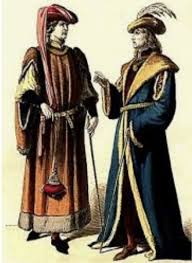 Magnates
 The Church
 The Bishops
 Calais
 Wales
Wales
Gruffydd ap Nicholas.
 Ireland
The Earl of Ormond and the Archbishop of Dublin.
 Scotland
Wardens of the March.
The King of Aragon
‘The subjects of the King of Aragon’ exempted from the ‘hosting statute.’
The Netherlands

Flanders
Holland and Zeeland.
 The Hanseatic League
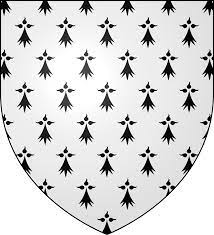 The Duchy of Brittany
Breton Piracy.
 London
‘Riotous assembles’
Lawlessness
 The Duchy of Gascony
Sir William Bonville.
The War in France
A Great Debate: Gascony or Normandy
John Beaufort, Earl then Duke of Somerset
The Duke of Somerset’s Articles and Indenture
The Duke of Somerset’s Army
John Beaufort ‘lieutenant and captain general of Gascony and France’
The Duke of Somerset’s Campaign
The Duke of Somerset’s return
Somerset abandoned his army and returned to England.
 The Duchy of Normandy
A Threat to Normandy
The Duke of York and Isabelle of Burgundy
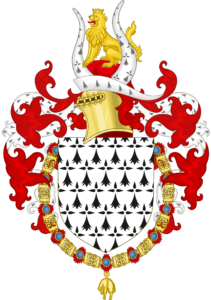 Francis, Duke of Brittany
Gilles of Brittany.
Three Deaths
Archbishop Chichele.
Louis of Luxembourg.
Sir John Cornwall, Lord Fanhope.
Bibliography, 1443
A list of primary and secondary sources referred to in the text.
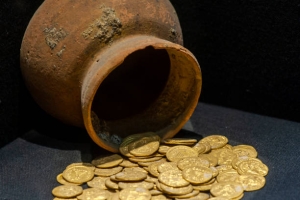
A Note on Money
There were two types of money in the fifteenth century, money of account and actual coinage.
Money of Account
The English pound [£] or livre was divided into 20s (shillings) the shilling into 12d (pence).
The English mark was worth 13s 4d – two thirds of a pound
In France the livres tournois was the standard money of account. Divided into 20 sous and 12 deniers. Nine livres tournois equalled one English pound.
Coinage
There were no pound, mark, or shilling coins.
The English noble was a gold coin worth 6s 8d, half a mark.
The English silver penny was also a money of account and worth 1/240th of one pound sterling.
Silver minted coins: Groat = 4 pence; half groat; penny; halfpenny; farthing
In France the franc was a silver coin worth one livre.
The ecu was a gold coin worth 3s 4d sterling.
The salut was a gold coin minted in in Lancastrian France worth one and one half livres or 30 shillings. The French also minted the salut.
Incomes
A rough estimate of incomes: a parish priest received between £5 and £10 a year depending on the wealth of his parish., An archer might expect to earn £9 a year. The average income of a knight was £60. A lord’s income from land and crown annuities amounted on average to £865 from which he would pay his retinue and domestic servants. Richard, Duke of York the richest magnate in England claimed to be worth £3,230 a year.
Taken from J. Sumption, The Hundred Years War vol V, Triumph and Illusion, pp. 822-823
The King’s Council
The record of meetings in the Proceedings for 1443 is extensive, sixty-nine meetings from February to July. Volume V ends with the July meetings: Five in February. Fifteen in March. Five in April. Nineteen in May. Ten in June and fifteen in July, some have no day.
Volume VI of the Proceedings opens in August with an exchange of letters concerning Gilles of Brittany’s visit to England. The only certain council meetings recorded for August to December are three in December.
A Great Council
Letters of privy seal on 7 March 1443 summoned a Great Council to meet at Westminster in the quinzaine of Easter. Easter Sunday fell on 21 April in 1443, the quinzaine was a week later (1). The meeting on 11 May was attended by eighteen councillors, ten of whom did not attend meetings in any other month.
Ralph, Earl of Westmorland and Marmaduke Lumley Bishop of Carlisle were summoned on 27 March (2). Lord Dacre and one of his sons were summoned on 3 April with a penalty of £2,000 for Dacre and £1,000 for his son if they failed to attend (3).
It was not unusual for some of the northern lords who were not politically minded to avoid attending Council. They preferred to remain in the north to guard the Scottish border while Parliament or Great Councils were in session.
***************************************
(1) PPC V, p. 237 (Great Council)
(2) PPC V, p. 250 (Westmorland and Lumley)
(3) PPC V, p. 258 (Dacre)
*****************************************
Council Attendance
Attendances vary from a few councillors present to fully attended meetings. A ‘meeting’ on 25 February at Sheen in King Henry’s presence was attended only by the Earl of Suffolk and William Lyndwood the Privy Seal. Two meetings on 2 March, one at Sheen and one at Westminster record William Lyndwood, Privy Seal and Adam Moleyns as present at both.
King Henry February. March. May
Chancellor John Stafford February. March. April. May. June. July. December.
Treasurer, Ralph, Lord Cromwell (to July) February. March. May. June. July
Treasurer, (from July) Ralph Butler, Lord Sudeley March. July, July. December
Privy Seal, William Lyndwood. Bishop of Lincoln February. March. April. May. June. July
Adam Moleyns March, April. May. June. July. December
Cardinal Henry Beaufort February. April. May. June
The Duke of Gloucester February. March. April. May. June. July. December.
John Kemp, Cardinal, Archbishop of York: February. March. May. June. July
William Aiscough, Bishop of Salisbury February. March. May. June. July
Marmaduke Lumley, Bishop of Carlisle May. June. July
Thomas Bourchier, Bishop of Worcester May. June
Thomas Brouns, Bishop of Norwich May. July
Robert Gilbert, Bishop of London May
Nicholas Ashby, Bishop of Landaff May
John Holand, Earl of Huntingdon March June. July. December.
Henry Percy, Earl of Northumberland February. March. May. June. July
Richard Neville, Earl of Salisbury May. June. July
William de la Pole, Earl of Suffolk February. March. April. May. June July
Humphrey, Earl of Stafford February. May. June. July. December.
Henry Beauchamp, Earl of Warwick July
John Beaufort, Earl of Somerset May. June
John Talbot Earl of Shrewsbury July
Edmund Beaufort, Earl of Dorset May. July
Viscount Beaumont February. April. May.
Louis of Luxembourg July
John Cornwall, Lord Fanhope February. May. June
Sir John Stourton May. June
Robert, Lord Willoughby May
Walter, Lord Hungerford May
William Neville, Lord Fauconberg May
Lord Grey of Ruthin May
Thomas, Lord Dacre May
John, Lord Dudley May
Robert, Lord Poynings May
Henry, Lord Bourchier May
Robert Rolleston, Wardrober March. July. December
Chief Baron March. April
Sir John Fortescue, chief judge March. April. May. July
John Westbury, Judge March. May
Richard Newton, Judge March. May
John and William Beauchamp April
Council Proceedings
Ghillebert de Lannoy
In the euphoria following the signing of the Treaty of Troyes in 1420, King Henry V and Duke Philip of Burgundy had vowed to give thanks to God by going on crusade to rescue Jerusalem and the Holy Land from the infidels (1).
Henry V commissioned the experienced Burgundian traveller and diplomat, Ghillebert de Lannoy as an ambassador to undertake an extensive military reconnaissance mission and to distribute gifts from the King of England to the rulers of Egypt, Syria, the Levant, and Jerusalem (2). Henry gave Ghillebert £200 for his expenses and when Lannoy claimed that he had been robbed of the £200, King Henry generously replaced it.
Lannoy left in May 1421 and was away for two years. By the time he returned to London in October/November 1423, King Henry was dead. The Council awarded Lannoy £100, with 50 marks to John de la Roe who had accompanied him. They also paid John Killingham, Keeper of the Bell [Inn?] in Carter Lane £17 14s 8d for the hire of servants and horses for 28 days for Lannoy’s use while he was in London (3, 4).
Twenty years later in 1443 Lannoy petitioned for a pardon for having falsely stated that he had been robbed. Lannoy deposed that he had confessed his sin to Henry Beaufort in 1423 after he returned to England and Beaufort had absolved him. But in 1443 ‘already old, broken by labours and age and declining to the evening of his life’ his conscience troubled him and he petitioned Henry VI to confirm his father’s gift, or impose restitution on him. King Henry granted him a full pardon (5).
**********************************************
(1) Vaughan, Philip, pp. 268-269 (Philip as crusader).
(2) M. Labarge, ‘Ghillebert de Lannoy: Burgundian Traveller.’ History Today, (1976). No references, but a useful survey. Lannoy also rates an entry in the Oxford Dictionary of National Biography.
(3) PPC III, pp. 117–118 (Lannoy’s expenses).
(4) Issues of Exchequer, pp, 383–384 (Lannoy’s expenses).
(5) Foedera XI, pp. 22-23 (pardon to Ghillebert de Lannoy).
**********************************************
John Brugge, Prior of Farleigh
In the Star Chamber on 2 May with only the Chancellor and Adam Moleyns recorded as present, “The king commanded by the advice of his Council, that the Prior of Farlee was to appear before the Council on 12 May under a penalty of 1,000 marks for nonappearance ‘to answer to certain matters’ etc. (1).
Farleigh was a Cluniac Priory in Wiltshire, founded in the twelfth century. John Brugge was appointed Prior of Farleigh by King Henry in 1437 on the recommendation of the Prior of Lewes (1). The penalty indicates that the ‘certain matters’ probably had to do with irregularity in the payment of dues to the crown, or to King Henry. Farleigh had belonged to Humphrey de Bohn, Henry VI’s great grandfather, giving the Lancastrian kings the right of appointment (3).
*******************************************
(1) PPC V, p. 266 (Prior to appear before Council)
(2) CPR 1436-1441 p. 120 (appointment of Brugges).
(3) britishhistoryonline, Victoria History of the County of Wilshire, vol, III (1956) (Farleigh Priory)
***********************************
Thomas Browne
The entry in the Proceedings for 5 April (probably not a Council meeting) records that Chancellor Stafford, the Earl of Suffolk and Adam Moleyns met at Suffolk’s Inn on 2 April and ‘on that same day’ in the Star Chamber. They were arranging for military equipment to be supplied to the Earl of Somerset, and for wheat to be shipped to Bayonne.
The clerk of the Council, Henry Benet, then recorded under 5 April that the three councillors ‘had commanded Thomas Browne’s and Walsingham’s bill be passed as desired;’ that Browne would do all he could to recapture the prisoners who had escaped from Maidstone gaol – and Benet made a note to remind himself of their decision (1).
A Thomas Browne was sheriff of Kent in 1444, but it is impossible to know if this is the same man
(1) PPC V, p. 245
John Clerc
John Clerc alias John Codeman was pardoned in May 1442 for failing to pay the surety he had posted for John Honyythorene alias Honylane rector of Hornblowton church in Somerset who was accused of ‘divers felonies,’ because the latter had then surrendered himself in the Marshalsea prison (1).
Clerc received a general pardon in March 1443, presumably because the case against him and Honythorn had either been settled or dropped (2).
*****************************************
(1) CPR 1441-46, p. 69 (first pardon May 1442).
(2) PPC V, p. 250 (second pardon March 1443).
***************************************
Balthazar, Duke of Zagan
Philp Phoewzet was paid 100 shillings [£5] in May 1443 for bringing letters from Balthazar Duke of Silesia ‘and returning with the answers’ (1). Balthazar was Duke of Zagan one of the fourteen provinces of the Duchy of Silesia in Poland. Nothing is known of why Balthazar chose to send a messenger to King Henry, he is not mentioned in Fergusson’s English Diplomacy. Balthazar succeeded his father in 1439. Possibly he was seeking an alliance (and an annuity) from the King of England similar to those of the princes of Germany.
(1) PPC V, p. 275
Thomas Oker and Ralph Basset
Thomas Oker and Ralph Basset came before the Council on 26 June. They were instructed to answer by the following Friday a bill of complaint laid against them by Nicholas Fitzherbert.
The councillors present on 26 June, Chancellor Stafford, Treasurer Cromwell and the Earl of Suffolk, were joined on 29 June by the Earl of Salisbury, the judges, and the king’s sergeants and attorneys to hear Oker and Basset’s defence (1).
Under oath Oker said he was in the field on Saturday the 20th with this servants and tenants. Easter Saturday fell on the 20th of April in 1443. The only other Saturday the 20th is in January 1443. Nicholas Montgomery (sic) was there with a large retinue.
Basset deposed that he came with thirty men on horseback. Others who had an interest were there too. His men wore padded jackets and helmets as he expected a riot which he hoped to prevent. The quarrel appears to have been over land use, possibly a boundary dispute. Oker and his men had come with axes and spades to ‘drowe downe the ditch.’ The judges in Council were to adjudicate. Nicholas Fitzherbert became Nicholas Montgomery in the second hearing, presumably a clerk’s error.
Oker and Basset gave a recognizance of £100 on 13 July to attend the court of chancery on 1 November 1443 to answer Fitzherbert’s accusations. In the meanwhile, they were to keep the peace and do no further harm to Nicholas Fitzherbert or his servants (2).
*************************************
(1) PPC V, pp. 290-291 (26 June) and 294-295 (29 June).
(2) CCLR 1441-1447, p. 153 (recognizances).
*************************************
Flete vs Ryman
Evidence in another even more obscure case was heard by the council and the judges on 29 June. Witnesses were summoned in a suite between [. . . .] Flete and the executors of [. . . .] Ryman. Presumably the dispute was over Ryman’s will. Flete’s council was to settle with the chief justice, Sir John Fortescue, what writs should be issued (1).
NB: What appears to be a muddled entry in the Proceedings for July refers to both cases as if they were one:
‘Will Okerst of Sussex and Th Staundon appeared etc., in the matter etc., touching Flete and they both [were] charged that they shall not depart etc. (2).
************************************
(1) PPC V, p. 294 (Flete and Ryman).
(2) PPC V, p. 310 (Oker, Standon, and Flete).
*************************************
Sir Richard Vernon
The Vernon family, Richard, Fulk, and John, had given bonds in November 1442 as surety that John would appear before the court at the end of March 1443. He had failed to do so, and the chancellor required corroboration that the privy seal writ summoning him had been delivered. John Mortayne, a crier of the court of common pleas, stated in Council that he had delivered a writ to Sir Richard Vernon of Haddon Peak in Derbyshire in the presence of Vernon’s wife.
Almost a year later, in May 1444, King Henry pardoned the Vernon family and excused them for bonds, amounting to £100, presumably John’s for nonappearance (2).
**************************************
(1) PPC V, p. 295 (Privy Seal Writ to Richard Vernon).
(2) CPR 1441-46, p. 268 (May 1444 King Henry’s pardon).
************************************************
William Wadham
The Council refused to grant a pardon to William Wadham, the sheriff of Devon in 1442. No reason is given, but sheriffs were responsible for collecting income due to the crown and their accounts were often in arrears due to the difficulties of collection. Sheriffs were sometimes pardoned late returns to the Exchequer if they offered an adequate explanation. In this case it appears that Wadham failed to do so (1).
See Year 1423 Sheriffs
(1) PPC V, p. 267
Scutage
The sheriffs of London were ordered to not collect ‘skuage’ until the chief justices had completed an investigation into the matter. ‘Scutage’ or knights’ fees was an ancient but unpopular right of the crown to demand 40 shillings from men with an income of over £40 a year who refused to receive, and pay for, knighthood. Had the legality of the fine been challenged by some wealthy London citizens? The sheriffs were nevertheless to require securities for future payment pending the outcome of the judges’ pronouncement (1).
See Year 1430 Distraint of knighthood
See Year 1437 Knights’ fees
(1) PPC V, p. 278
William Bowes, William Hotone and William Rakwood
The Council summoned Bowes, Hotone and Rakwood to appear before the council at Easter ‘to answer certain matters’ under a penalty of 400 marks each. The certain matters are not specified (1).
(1) PPC V. p. 267
Franke
‘Frankes bille of Lynne is graunted’
The petition of [ . . . . ] Franke of Lynne was granted (1).
(1) PPC V, p. 284
Grants
The Privy Seal Office
Privy Seal Office clerks wrote the royal letters conveying King Henry and the Council’s instructions for warrants, writs, and letters to be issued in the king’s name. Henry regularly issued writs of privy seal to the Chancery to execute his orders under the Great Seal, and to the Treasurer and Chamberlains of the Exchequer to make payments as instructed. The endorsement ‘by p.s.’ occurs on a wide variety of documents.
The clerks of the Privy Seal Office were to be paid 40 marks in 1443:
‘Be there made letters under the privy seal unto the Treasurer and Chamberlains of the Exchequer commanding them that for such labours as the clerks of the privy seal have had at this time of writing that they do deliver unto them by way of reward of 40 marks’ (1).
(1) PPC V, p. 246
William Lyndwood, Bishop of St David’s
William Lyndwood was appointed Keeper of the Privy Seal by the Duke of Gloucester in 1432. He retained the post after King Henry returned from France. He became Bishop of St David’s by papal provision after the death of Thomas Rudbourne in June 1442 (1, 2).
In April 1443 King Henry ordered the Treasurer to pay the tallies issued to Lyndwood by the Exchequer for his wages as Keeper of the Privy Seal which had not been honoured. Over how many years and in what amount is not stated. Lyndwood was also to be paid the tallies assigned to him on custom duties (3).
********************************************
(1) Handbook of British Chronology, p. 92 (Privy Seal).
(2) Papal Letters IX, p. 297 (papal provision).
(3) PPC V, p. 265 (Henry ordered payment to Lyndwood).
******************************************
Richard Alred
In July Robert Rolleston, Keeper of the Great Wardrobe, who was present at the council meeting on 8 July was instructed to deliver a livery of clothing to Richard Alred, for the feast of St John the Baptist next coming. [29 August, John the Baptist’s beheading] (1)
(1) PPC V, p. 301.
Robert Booth, Sheriff of Chester
The office of sheriff of Chester, granted to Sir Robert Booth for life in 1441 was cancelled in 1443 on favour of a grant jointly with his son William for their lives (1). They remained in office for the rest of Henry VI’s reign.
‘Sir Robert Booth of Dunham Massey was appointed sheriff of the country of Chester for life in November 1441, on his surrender of a grant of 1439 by which he had been appointed ‘during good behaviour.’ Then on 8 March 1443 Sir Robert and his son William were appointed joint sheriffs in survivorship and given the power to act together or separately (conjunctim vel divisim) (2).
Master Robert Kent was to be paid four nobles for riding into Cheshire. No reason is given (3).
******************************************
(1) PPC V, p. 224 (revocation of the grant to Robert Booth alone).
(2) Clayton, Administration of Chester, p. 173 (joint grant).
(3) PPC V, p. 234 (Robert Kent).
*****************************************
Roger Hunt, Sheriff of Cambridgeshire and Huntingdonshire
Roger Hunt the long serving MP for Huntingdonshire was Speaker of the Commons for a second time in July 1433. He was named as sheriff for Cambridgeshire and Huntingdonshire, in November 1433 and served until November. 1435 (1).
He had petitioned to be excused because of the expense involved, but his request was ignored. Hunt was made a Baron of the Exchequer in 1439, but despite his repeated complaints it was not until February 1443 that he was awarded the £200 he claimed to have lost during two consecutive terms as sheriff. The grant was assigned on the the London customs and given priority for prompt payment at the Exchequer (2).
***************************************
(1) historyofparliamentonline.org (Roger Hunt)
(2) PPC V, p. 227 (grant of £200).
**************************************
Bristol
The Council instructed the master of the mint in the Tower of London to make and deliver a new seal to the comptroller of customs in Bristol.
Bristol was the principal port for trade with countries along the Atlantic seaboard, Ireland, Iceland, Spain and Portugal, but mainly with wine imported from English Gascony. The Council was soliciting Bristol merchants for aid in men and money for the defence of Gascony. The oldest known seal for the city of Bristol dated to Edward I in the thirteenth century, was the gift od a new seal a bribe or a reward?
(1) PPC V, p. 246.
Wool Exports
The poorer northern counties periodically petitioned the Council for relief from the wool tax. The merchants of Newcastle on Tyne were licenced in February 1443 to purchase wool hides and woolfells in Northumberland, Cumberland, Westmorland, and the bishopric of Durham for two years from Michaelmas to be exported via Calais for sale in Bruges (Flanders) during the first year and in Zeeland during the second year without paying customs duties. The licence did not apply to any other wool (1).
(1) PPC V, p. 227.
John Nanfan and Richard Curson
Richard Beauchamp, Earl of Warwick died in Rouen in 1439. John Nanfan, a retainer in Warwick’s service requested a certificate from the Council to authenticate his claim for the sum he and Richard Curson had paid to Warwick’s soldiers just before Warwick’s body was sent home (1).
Richard Curson one of Warwick’s lieutenants was in France as captain of Honfleur in 1443, but he may have returned home with Warwick’s body in 1439.
(1) PPC V, p. 225.
Sir John Stourton
Sir John Stourton, a member of the Council, petitioned the king in May 1443, over two years after the Duke of Orleans returned to France, for the arrears due to him for the custody of Orleans. Henry granted him an annuity of £40 (1).
Orleans was in Stourton’s custody from July 1438 to February 1440. The daily allowance for Orleans’s keep was 13s 4d. This was increased to £3 13s 4d a day when Stourton escorted Orleans to Calais in 1439 for the conference at Oye (8 May to 19 October 1439).
Henry ordered the Treasurer to settle the outstanding debt. It was computed at £95 for 305 days. Stourton was assigned £73 17s 7d for payment by Michaelmas 1444 (2). It was paid by assignment on 7 November 1444 (3).
*******************************************
(1) PPC V, p. 274 (Stourton’s petition).
(2) L&P I, pp. 432-434 (King Henry ordered payment).
(3) Issues of the Exchequer, p. 450 (Payment to Stourton).
******************************************
Francois de Surienne ‘L’Aragonais’
Francois de Surienne was a mercenary war captain in English pay.
See Year 1437 Francois de Surienne.
King Henry ordered a payment of £100 to in July Surienne if it could be made available!
‘And £20 to [. . . .] Galaad who came with him.’ This is a separate item entry and may not refer to Surienne (1).
Thomas de Quense, Surienne’s master escalier had been in England for six months ‘for certain affairs of ours and his own.’ He probably came to England to explain that the loss of Gallardon was not Surienne’s fault. He surrendered Gallardon to Dunois Bastard of Orleans in October 1442 when there was no possibility of holding the town any longer.
See Year 1442 Gallardon.
Quesne may have been bargaining on Surienne’s behalf for their future services, since Council was obviously interested in retaining Surienne. He was awarded £100 in November 1443 for his expenses, and as a gift to him from King Henry (2).
*************************************************
(1) PPC V, p. 296 (payment to Surienne and Galaad).
(2) L&P I, p. 438 (Thomas de Quense).
**********************************************
Sir John Fastolf
Sir John Fastolf, the Duke of Bedford’s master of the household, and he still had influence at court. He was appointed to act as an administrator of the money allocated to the Earl of Somerset for his expedition to France.
See John Beaufort, Earl of Somerset below.
Fastolf profited from his service as a war captain in France; he returned to England in 1439 a wealthy man. He invested some of his war profits in building Caister Castle in his hometown in Norfolk. In October 1443 the Council granted him six small ships for life to transport building materials for Caister (1).
Purveyors were forbidden to arrest them or impound any of their cargoes provided Fastolf did not ship any ‘merchandise pertaining to the staple;’ i.e. wool ‘on pain of forfeiture,’ and that the vessels were kept in readiness to serve the king at need ‘on any voyages to foreign’ parts” (2).
**********************************
(1) Foedera XI, p. 44 (grant of ships to Fastolf).
(2) CPR 1441-46, p. 206 (grant of ships to Fastolf).
************************************
Denizations
Michael Belwell
Michael Belwell, a native of France, was a surgeon and yeoman in the king’s household. He was granted letters of denization in February 1443 (1, 2).
*******************
(1) Foedera XI, p. 18 (Belwell).
(2) CPR 1441-1446, p. 173 (Belwell).
**********************
Thomas Vaughan and John Geraldyn
The Earl of Somerset and Adam Moleyns requested that letters of denization be granted to Somerset’s retainer, the Welshman, Thomas Vaughan,
James Fitzgerald, Earl of Desmond sought the same privilege for the Irish sounding John Geraldyn, described as ‘of Florence.’ They either had paid or were to continue to ‘pay customs and subsidies as strangers’ (1).
An appeal for a loan had been sent to James Fitzgerald, Earl of Desmond. Was the denization request a quid pro quo?
See King Henry’s Letters below.
(1) PPC V, p. 256
King Henry
King’s College, Cambridge
King Henry founded Eton College in 1440. His interest in religious education inspired him to endow a college at the University of Cambridge in 1441 to commemorate his birthday, St Nicholas’s Day, 6 December. It was to be called the Royal College of St Nicholas.
The statutes for the new college were prepared by William Alnwick, Bishop of Lincoln, William Aiscough, Bishop of Salisbury, the king’s confessor, John Somerset, the king’s physician and tutor, and John Langton, chancellor of the university (1).
The foundation was increased from the original twelve scholars to seventy fellows and scholars and renamed the Royal College of the Blessed Mary and Saint Nicholas, now known as King’s College (2).
William Millington was appointed as its first Provost in 1443 and the land in the centre of Cambridge acquired by the king was granted to him and the fellows (3).
**********************************************
(1) English Historical Documents IV, ed. A R, Myers, pp. 895-901 (statutes in modern English).
(2) Wolffe, Henry VI, pp. 137-140 (foundation of King’s and sources given there).
(3) Foedera XI, pp. 36-41 (The document appointing William Millington as the college’s first proctor dated 10 July 1443 is a recapitulation of its foundation, beginning with the foundation date).
************************************************
King Henry’s Household
The Treasurer was to deliver to John Merston, Keeper of the King’s jewels, a sum considerate adequate for King Henry’s alms giving at Easter. This was probably intended to prevent Henry distributing over generous alms during the Easter festivities (1).
(1) PPC V, p. 244 (King Henry’s alms).
John St Loo
John St Loo was a king’s esquire, formerly Constable of Bristol Castle. He was named to a commission of array for Somersetshire in March 1443. Twice before, in 1442, he had been named and then omitted as a commissioner to raise loans in Bristol (1). King Henry granted him an income from crown lands in the West Country in January 1443 (2).
Henry questioned whether it was necessary to send St Loo to Bristol and into Somersetshire (3). Presumably he had appealed to the king to exempt him, but the Council evidently disagreed. St Loo was ordered to go to Bristol where he was well known, to raise a loan: ‘to do that which he might for the king’s aid as for Bayonne &c.’ (4)
*********************************************
(1) CPR 1441-1446, pp. 68 and 93 (St Loo omitted from commissions 1442).
(2) CPR 1441-144,6 p.142 (grant of income January 1443).
(3) PPC V, p. 242 (Henry’s question).
(4) CPR 1441-1446, pp. 200-201 (St Loo named to commission March 1443).
********************************************
The Magnates
 The Duke of Gloucester and St Albans Abbey
Humphrey, Duke of Gloucester was over fifty and no longer at the centre of political affairs, but he was still active. He attended Council regularly and as justiciar of South Wales was consulted by the Council on Welsh affairs.
See Wales below.
Gloucester was also preparing to save his immortal soul. Oxford University was committed to saying masses for him in perpetuity. In April 1443 at Kennington palace, with only the household men Lord Beaumont, and John and William Beauchamp present, Adam Moleyns the Dean of Salisbury cathedral, obtained a licence from King Henry for the Duke of Gloucester, Richard Leyot, and Walter Shirington, Chancellor of the Duchy of Lancaster, to transfer ownership of the Priory of Saint Nichoals in Pembrokeshire ‘without fine or fee’ to Salisbury Cathedral to pray for Gloucester and say masses for him after his death (1).
Three months later Gloucester changed his mind. John Whethamstede, Abbot of St Albans Abbey where Gloucester and the disgraced Eleanor had stayed in the past, may have persuaded him to consider St Albans as a fitting site for his tomb. In July King Henry approved the transfer of the Priory of Pembroke to St Albans where Gloucester would be buried (2). King Henry excluded the priory of Pembroke ‘which by licence of our present sovereign lord was given to [St Albans] by Humphrey late Duke of Gloucester to pray for his soul forever’ when he created his half-brother Jasper Tudor Earl of Pembroke by act of parliament in 1454 (3).
The schedule of the costs of Gloucester’s funeral and internment at St Albans in 1447 include £433 6s 8d for Gloucester’s tomb, and for two priests saying masses daily at 6d a day. The numerous other provisions do not include any mention of Duchess Eleanor (4).
************************************************
(1) PPC V, p. 266 (Moleyns’s request for Salisbury cathedral).
(2) Vickers, Humphrey, p. 281 (Gloucester and St Albans).
(3) PROME XI, p, 283 (Priory of Pembroke given by Gloucester).
(4) Vickers, Humphrey, p. 439 (schedule of costs for Gloucester’s death and burial).
********************************************
Ralph Neville, Earl of Westmorland
After the death of Joan Beaufort Countess of Westmorland in November 1440 Ralph Neville, Earl of Westmorland received the reversion of some of the Westmorland lands held by Joan in dower which he considered rightfully his.
The feud between Joan’s stepson Ralph, and her son and heir Richard Neville, Earl of Salisbury, over the Westmorland inheritance died down but was not entirely extinguished.
See Years 1435 and 1438 The Westmorland Inheritance.
Westmorland was summoned to appear before Council in May 1443, and he received bonds from Salisbury and his brothers, Edward, Lord Berganveeny, George, Lord Latimer and William, Lord Fauconberg that they would attend, which they did (1).
Westmorland had come to accept that remaining at loggerheads with the junior branch of the Nevilles in the persons of the Earl of Salisbury and his brothers would do be futile, they had far more influence at court in their own right and through their relationship to Cardinal Beaufort, the late countess’s brother, than he would ever have.
Significantly, Cardinal Beaufort was involved in the negotiations. Westmorland undertook to recognise Salisbury’s right to all Westmorland lands in Yorkshire, and in Essex, York, and London except the Neville Inn and Ripon holdings.
Ralph was to receive the annuity of £20 from the crown as Earl of Westmorland and the Westmorland lands in County Durham as the rightful heir.
Ralph undertook to pay Salisbury and his brothers pensions totalling £400 a year if he broke the settlement. Ralph’s brother Thomas made a separate pledge. But Salisbury was not required to give a similar undertaking (3).
A final settlement was reached in August by order of the Council. Perhaps they hoped that if the Nevilles stopped fighting among themselves, they might be prepared to send men to fight in France.
********************************************
(1) PPC V, pp. 250 and pp. 282-3 (late May)
(2) CCLR 1441-47, pp. 150-51 and pp.195-196
(3) James Petre, ‘The Nevills of Brancepeth and Raby, Part I ,1425 to 1469: Nevill v Nevill,’ Ricardian 5, no. 75, (December 1981), p. 427.
**********************************************
The Duchess of Norfolk
‘Be there made letters to my Lady of Norfolk.’ In left hand margin: ‘Sir Will Bingham sute.’ (1)
Katherine Neville the Dowager Duchess of Norfolk married Sir Thomas Strangeways as her second husband but retained her title. Katherine’s son, John, Duke of Norfork married Eleanor Bourchier. Either lady may be meant, presumably she was in dispute with Sir William Bingam, otherwise unidentified.
(1) PPC V, p. 245.
 John Talbot, Earl of Shrewsbury
Talbot accompanied Louis of Luxemburg to England in June 1443. He claimed that he was owed £4,627 10s 6¼d, by the exchequer in Rouen for his services in France. A mandate from King Henry acknowledged the debt and Talbot agreed to remit half the sum in return for the balance of £2,426 0s 4¼d being paid to him immediately. An endorsement on the mandate shows a payment of 1,000 and 500 marks [£1,000] from the English Exchequer (1).
The mandate refers to 1430 when the Minority Council awarded Talbot £8,000 towards his ransom after he was captured at the Battle of Patay in 1429. It was assigned on the gabelle, the salt tax levied in Lancastrian France, ‘which long ago we granted [him] arising from the impost upon salt.’
See Years 1430 and 1432 : John, Lord Talbot
Talbot did not receive the £8,000 because, as the mandate of 1443 ingenuously puts it, ‘of the grete charges that we had in our said royaume and the litel revenues that we had to do ther with.’
In December 1443 when Talbot was back in France the full £10, 426 0s 4¼d was granted to him. It would be paid in yearly instalments by assignments on the customs and other crown income after Cardinal Beaufort’s loan of £21,000 had been repaid. These assignments might prove difficult to collect (2).
King Henry authorised the Treasurer to pledge crown jewels as security of a loan of 2,000 marks ‘and to deliver the same to the Earl of Shrewsbury’ (3).
***************************************
(1) L&P I, pp. 434-436 (acknowledgement of the debt).
(2) CPR 1441-1446, pp. 27-228 (grant and assignments for payment: 11,000 marks on the customs; 600 marks from the wool subsidy and tunnage and poundage; 500 marks from royal demesne income).
(3) PPC VI, p. 23 (loan raised for Talbot).
**************************************************
Edmund Beaufort, Earl of Dorset
King Henry had granted the Constableships of Windsor Castle, with Carmarthen Castle and Aberystwyth Castle in Wales to Edmund Beaufort, Earl of Dorset, for life in July 1438, the wages to be paid from the issues of South Wales (1).
Edmund petitioned for payment of the overdue wages for the garrison at Aberystwyth in February 1441: one man at arms and twelve archers from 7 March 1438 to the present. The Treasurer was ordered to make the payment (2).
No payment was made, and on 7 March 1443 with only the Chancellor and Privy Seal present it was agreed that the Chamberlain of South Wales should be ordered to pay the wages for one man-at-arms and twelve archers for Aberystwyth from 7 March 1438. (3)
King Henry, with only the Earl of Suffolk present in the king’s private chamber at Sheen, confirmed the grant of the constableship of Windsor to Edmund; he was to take payment directly from the revenues of Windsor ‘by his own hand,’ obviously a more secure source than from South Wales (4).
He was expected to appoint deputies to his castles in Wales, but he was warned not to appoint anyone who did not quality under the statutes governing Wales (5). This probably means that the Council did not wish to risk having Welshmen in command of Welsh castles.
Was the belated attention to Edmund’s claims an inducement to Edmund to accompany his brother the Earl of Somerset’s expedition to France? He was the more experienced and reliable soldier.
**********************************
(1) CPR 1436-1441 p. 188 (original grant 1438)
(2) PPC V, p. 134 (Edmund’s petition, 1441).
(3) PPC V, pp. 239-240 (Chamberlain to pay wages).
(4) PPC V, pp. 229-230 (grant of 1443).
(5) PPC V, p. 243 (appointment of deputies).
***************************************
John, Lord Tiptoft
Lord Tiptoft, an original member of the Minority Council, died in January 1443 and his estates escheated to the crown. William Stevens, a clerk of Wells cathedral, was ordered to deliver the records in the court rolls to the stewards of the Tiptoft estates in Somersetshire and Dorset. King Henry ordered them to be broken up for regranting (1).
Tiptoft’s estates were granted to Cardinal Beaufort in May 1443 during the minority of the heir, who was now sixteen, as repayment for a loan. In October 1444 the Gournay lands in Somersetshire and Dorset were transferred to Edmund Beaufort, presumably at the Cardinal’s request (2).
********************************
(1) PPC V pp 245-246 (Tiptoft estates).
(2) Roskell, ‘Sir John Tiptoft, Commons Speaker in 1406,’ in Parliament and Politics III, p. 149
***************************************
John, Lord Clinton
Lord Clinton accompanied the Duke of York’s army to France in 1441 with a contingent of 20 men at arms and 56 archers (1).
He was captured at Pontoise in August 1441. Sumption 585 His ransom was sent at 6,000 marks (£4,000) which seriously impoverished his family, and he remained a prisoner for six years (2).
The Council issued a protection for him in 1443, for one year, meaning that his property could not be taken into the king’s hands or be held liable for any debts (3).
*****************************************
(1) Johnson, York, p. 230 (Clinton to France).
(2) Complete Peerage III, p. 315 (does not give a source for the ransom).
(3) PPC V, p. 278 (Council protection for one year).
******************************
Thomas Lord Roos
Thomas, Lord Roos was Edmund Beaufort, Earl of Dorset’s stepson. Born in 1427, he was the son of Beaufort’s wife Eleanor Beauchamp by her previous marriage. Thomas was still a minor in 1443, and the Council agreed in May that he should receive £40 a year for his maintenance from 25 January 1443.
This was not particularly generous, but it may be another mark of favour being shown to the Beaufort family at this time (1). Ross petitioned to have the granted backdated to Michaelmas (September 1442) under the Great Seal, without having to pay a fee for the confirmation.
(1) PPC V, p. 271 and p. 282.
The Church
William Patrick
Pope Eugenius issued a papal bull to allow William Patrick, prior of the cell of Lytham attached to the Benedictine monastery of St Cuthbert at Durham, to accept a benefice (1). He was pardoned in December 1443 for receiving papal bulls without royal licence (2).
*********************************
(1) Papal Letters IX, p. 355 (papal grant of a benefice).
(2) Foedera XI, p 48 (pardon for accepting without licence).
************************************
Arbury Priory
Arbury [Erdebury] an Augustinian monastery in Warwickshire founded in the twelfth century by Ralph Lord Sudeley. A licence was granted to the Prior in May 1443 to enlarge its holding by purchasing land worth 100 mark (1)
(1) PPC V, p 274
Anchoress of Westminster
King Henry granted the anchoress of Westminster an annuity of 6 marks to be paid from the Hanaper without any fee (1). An anchoress was usually a secular lady and although she was completely cut off from the world, she still needed money for her food and other necessities.
(1) PPC V, p. 282
Alberto Alberti
King Henry granted an annuity of 50 marks to Alberto Alberti whom Pope Eugenius made Cardinal of St Eustace in 1439. He was an Italian bishop with no known connections to England. The grant is repeated in the Foedera under 12 September 1443 (1, 2). It may have been made at the pope’s request.
*********************
(1) PPC V, p. 300
(2) Foedera XI, p. 42
*********************
Richard Caudray
Richard Caudray dean of St Martin le Grand, London, had promised a loan to the crown for the Earl of Somerset’s expedition to France.
See Magnates’ loans above.
In December he received a licence valid for twenty years for him and his successors by their letters patent’ i.e. their right, to certify to the Chancellor the names of all persons excommunicated for forty days on Caudray’s orders (1, 2).
*********************
(1) Foedera XI, p. 49.
(2) CPR 1441-46, p. 238
*******************
Thomas Chichele
Pope Martin V had provided his nephew, Prospero Colonna, to the archdeaconry of Canterbury over the protest of Henry Chichele, the Archbishop of Canterbury.
See Year 1426: The Duke of Bedford and Pope Martin, Prospero Colonna,
Colonna lost the archdeaconry in 1431when Pope Eugenius excommunicated his family (1). Archbishop Chichele reclaimed it and granted to his relative, Thomas Chichele, a doctor of cannon law. Pope Eugenius V promoted Thomas to become an apostolic notary in 1442 and in February 1443 he was given licence to accept the position (2, 3).
**********************************************
(1) Harvey, England Rome and the Papacy, p. 96 (Prospero Colonna).
(2) Papal Letters VIII, p. 240 (apostolic notary).
(3) Foedera XI, pp. 19-20 (licence to Thomas Chichele).
***********************************************
The Bishops
Henry Chichele, Archbiushop of Canterbury
Henry Chichele, archbishop of Canterbury, was ill for at least a year before he died in April 1443. He wrote to Pope Eugenius in 1442 asking permission to resign because he was eighty years old and ‘worn out with the toils of life he desires rest from the toils of the world’ to prepare for death. He recommended John Stafford, the Bishop of Bath and Wells and England’s Chancellor, as his successor. This was in line with King Henry’s wishes. Henry requested Pope Eugenius to make provision for an adequate pension to be paid to Chichele out of the revenues of the archbishopric of Canterbury (1).
See John Stafford below.
Chichele died on 13 April 1443. He had been Archbishop of Canterbury for nearly thirty years.
“Item this yer dyed the Bisshop of Caunterbury and ϸan the Bishop of Bath Chauncellor of þis lond was made Bisshopp of cauntorbury and occupied there with þe office of chauncellor. Bale’s Chronicle, p. 118
Also in this yere deide Henry Chicheley erchebissop of Caunterbury, in the Passion weke, and is beryed in Caunterbury; and for hym was the bisshop of Bathe, magister John Stafford chaunceler of Engelond, stalled erchebisshop of Caunterbury.” Chronicle of London (Harley 565) p. 131
“And in this yere died herry Chichele, Archebysshop of Caunterbury, in the passion weke, and is buryed in Caunterbery; and ffor him whas made Chaunceler the Bisshop of Bathe, Bisshop of Caunterbery.” Chronicles of London (Cleopatra C IV) p. 151
“And about this time, the 12th of April, Henry Chichele, Doctor of Law and Archbishop of Canterbury died at Lambeth and John Stafford was created Archbishop.” Benet’s Chronicle, p. 189
“This year Henry Chichele Archbishop of Canterbury died. A very modest man, mild in his reforms, he raised many worthy clerks to high positions (in the church). He founded a college for forty scholars in the university of Oxford and a college at Higham Ferrers in Northamptonshire. He was archbishop of Canterbury for twenty nine years; may his spirit rest in peace in Christ God.” Chronicon Regum Angliae, p. 32
See Henry Chichele, an Obituary, below.
(1) Bekyngton, Correspondence I, pp. 145 and 149 (Chichele’s letter; Henry VI’s letter).
John Stafford, Archbishop of Canterbury
The congé d’élire for the prior and convent of Christchurch, Canterbury to nominate a new archbishop was issued on 27 April (1). The Chancellor, John Stafford, Bishop of Bath and Wells was King Henry’s choice to succeed Chichele. Pope Eugenius was informed on 24 May that King Henry had given his assent, and Eugenius issued the bull of translation. The temporalities were restored to Stafford on 15 June 1443 (2, 3).
*****************************
(1) Foedera XI, p. 26 (congé d’élire).
(2) Foedera XI, p. 28 (temporalities restored).
(3) CPR 1441-46, p. 190 (temporalities restored).
*******************************
Thomas Beckington, Bishop of Bath and Wells
King Henry created his secretary, Thomas Beckington, Bishop of Bath and Wells in succession to Stafford as a reward for his admittedly unsuccessful negotiations for Henry’s marriage to the Earl of Armagnac’s daughter and his usefulness in composing letters for the king. He received the temporalities on 24 September 1443 (1).
See Year 1442: The Armagnac Marriage.
(1) Foedera XI, p. 43
Thomas Bourchier, Bishop of Ely
Thomas Bourchier, Bishop of Worcester became Bishop of Ely in 1443 eight years after he was first nominated. Pope Eugenius had translated Thomas Bourchier to Ely at the request of the dean and chapter in August 1436, expecting this would please King Henry as the English Council had insisted on Bourchier becoming Bishop of Worchester in 1435 over Eugenius’s objections that Bourchier was young to become a bishop. The Council refused to recognise Eugenius’s right to nominate him.
See Years 1434 and 1435 Thomas Bourchier
Louis of Luxembourg the Chancelor of Lancastrian France was in England in 1437. As a reward for his services King Henry created Luxembourg as administrator for the see of Ely for as long as the see remained in the king’s hands and requested Pope Eugenius to confirm Luxembourg as bishop of Ely.
See Year 1437 The Bishopric of Ely
Louis of Luxembourg died in September 1443, and Thomas Bourchie became Bishop of Ely in December. The temporalities were restored to him in February 1444 (1).
(1) Foedera XI, p. 52
 Calais
Hammond Sutton
Hammond Sutton, the Mayor of the Staple in Calais was granted a licence in May to take bullion and plate to the value of £500 out of the country on his return to Calais (1).
On 25 May, the Council ordered the Treasurer of Calais to pay to the victualler of Calais the one third of a mark [4s 5¼d] assigned from the tax on each sack of wool (2).
*********************************************
(1) PPC V, p. 278 (licence to take bullion out of the country).
(2) PPC V, p. 279 (assignment to the victualler of Calais).
****************************************
The Earl of Stafford
Humphrey, Earl of Stafford, was Captain of Calais. Wages of £5,000 were due to Stafford for himself and the garrison. In June John Langton as Treasurer of Calais was instructed to pay Stafford, the ‘Earl of Buckingham,’ £3,400 which Treasurer Cromwell had transferred to him from the English Exchequer (1).
See Year 1442 The Earl of Stafford
Repairs to Calais
On 3 June the Council allocated £1,000 from the Calais mint to John Langton, the Treasurer of Calais to continue the repairs to the defences of Calais, to expedite repairs to the west and east jetties, the water supply and the walls of the town and castle before the winter set in. Money for the repairs had previously been assigned on the subsidy on wool and wool fells, but one third of this had been transferred to the victualler of Calais (2).
Willliam Morton was instructed at the end of June to use the money assigned to him for repairs in Calais to include repairing the damage done to the defences of Guines. John Langton was to take £200 out of the wool subsidies in Calais to repay the £200 he had lent towards payment of the garrisons’ wages (3).
See Year 1442 Calais.
**************************************
(1) PPC V, p. 285 (money allocated to Langton to pay Stafford).
(2) PPC V, p. 283 (repairs to Calais).
(3) PPC V, p. 293 (repairs to Guines; repayment to Langton).
***************************************
Wales
Wales was considered particularly dangerous as a hotbed of sedition. Any report of unrest there always alarmed the Council.
An itinerant monk wandering in Wales was reported to be telling stories in public meeting places, ‘Cronicles at Comorthees and other gatherings’ to rouse the people. He was to be found and arrested (1).
(1) PPC V, p. 233
Gruffydd ap David ap Thomas
Gruffydd ap David ap Thomas had served as a royal official in a minor capacity in Carmarthenshire, but he became involved in disturbances under the leadership of Gruffydd ap Nicholas, a powerful Welsh landowner, who also acted as the local deputy to the Duke of Gloucester (1).
Gloucester had presided over the judicial sessions in Carmarthen and Cardigan in September 1442 and he fined Gruffydd ap David ap Thomas 1,000 marks for his part in the unrest (a not uncommon occurrence) of 1439. David was imprisoned in the Fleet in London in November 1442 because he could not offer securities for this enormous fine (1).
In February 1443 with Gloucester present at the meeting, the Council decided, possibly on Gloucester’s recommendation, to return him to prison in Carmarthen until the debt was paid (1). But he remained in the Fleet until May, when with Gloucester present again, the Council was informed that Sir William ap Thomas had stood surety for the 1,000 marks and the keeper of the Fleet was ordered to release him (2). Gruffydd ap David ap Thomas then undertook to surrender himself to prison in Carmarthen until the debt was paid.
**********************************************
(1) Griffiths, ‘Gruffydd ap Nicholas and the rise of the House of Dinefwr,’ in King and Country, pp. 195-196
(2) PPC V, p. 229 and p. 272 (imprisonment and release).
**********************************************
Gruffydd ap Nicholas
Power politics in Wales were intricate and complicated. Maredudd Gogh the itinerant bailiff of Carmarthenshire presented bills of complaint to the Council against Gruffydd ap Nicholas’s son, Owain, and in March 1443 the Council ordered Owain’s arrest (1).
They summoned Gruffydd ap Nicholas and the Abbot of Whitland to appear before the council in May, presumably to answer the charges against Owain. This was tricky; as Griffiths puts it: “With Lord Audley and the Duke of Gloucester as chamberlain and justiciar, relying on Gruffydd ap Nicholas to perform their duties for them, this move could be nothing more than setting a father to catch a son who had his full support.” No action was taken against Owain who remained at liberty (2).
********************************************************
(1) PPC V, pp. 244-245 (Owain arrested, Gruffydd ap Nicholas summoned).
(2) Griffiths, ‘Gruffydd ap Nicholas and the rise of the House of Dinefwr,’ in King and Country, p. 197.
*******************************************************
Conway Castle
Bartholomew Bolde and the new Treasurer, Ralph Butler were joint captains of Conway Castle in North Wales. The Council authorised payment to them ‘for the keeping of Conway’ with eight soldiers (1, 2).
******************************
(1) PPC V, p .305 (Conway Castle).
(2) Griffiths, King and Country, p. 268 (Conway Castle).
********************************
Ireland
The Archbishop of Dublin and the Earl of Ormond
The quarrel between James Butler, Earl of Ormond, the king’s lieutenant in Ireland and Richard Talbot Archbishop of Dublin, had been discussed at great length by the Council in 1442; they judged that both men were equally guilty, that their feud was directly responsible for the continuing unrest in Ireland which the Council deplored. King Henry had required them to reconcile, and they were to appear before the Council in February 1443 to hear the king’s judgement.
Ignoring Richard Wogan whom they had appointed as Chancellor of Ireland in 1441, the Council had reinstated Archbishop Talbot as Chancellor in August 1442. In March 1443 they reversed their decision, dismissed Talbot, and reappointed Richard Wogan (1).
See Year 1442: Archbishop Talbot and the Earl of Ormond
This might seem sensible in view of the archbishop’s quarrel with Ormond, but it was widely reported that Wogan had abandoned his post and fled from Ireland in 1442 fearing reprisals from Ormond (2). Perhaps the reappointment was intended as a reprimand to both the contending parties. But it demonstrates that the Council had very little understanding of the conditions in Ireland and no idea at all how to manage them.
Towards the end of March 1443, the draft of a letter to be sent to Ormond and Talbot was delivered to the Earl of Suffolk. On 27 March the Council sealed letters ordering Ormond and Talbot to appear before the king and council after Easter to answer on their faith and allegiance any complaints the Irish Council wished to make against them.
In the margin of the Proceedings: These letters were sealed but Chancellor Stafford and Adam Moleyns commanded for the king that they should not pass (should not be sent) (3).
****************************************
(1) CPR 1436-41 p. 514 (Wogan appointed February 1441). CPR 1441-46 p. 126 (Wogan reappointed March 1443).
(2) M.C. Griffith, ‘The Talbot-Ormond Struggle for Control of the Anglo-Irish Government, 1414-47,’ Irish Historical Studies vol. 2, No. 8 (Sept 1941), p. 386
(3) PPC V, p. 250 (the chancellor’s letters not to be sent).
***************************************************
The Irish Council
A letter dated 25 April from Drogheda signed significantly ‘your servants, Sir Richard FitzEustace, Keeper of the Great Seal of Ireland, Giles Thorndon, Treasurer, and the remnant of oure saide sovereign lord’s councillors of his said land,’ reached England in May.
The letter reminded the Council that the Irish Council had previously requested King Henry to instruct the English Exchequer to remit what was due to the Earl of Ormond as lieutenant of Ireland so that he could pay the officials employed in governing the country, especially the judges and the constables. Cork, Limerick, and Galway, had not paid their fee farms dues or the customs duties owed to the crown. They suggested that ships putting into Bristol from Ireland should be arrested until the fees were paid.
Ireland had become so impoverished that no one was being paid. Although Ireland had long been loyal to, and been ruled by, the kings of England, Ireland had her own offices of state the same as in England, but government would breakdown entirely unless the king ordered immediate payment of all arrears. The writers understood that the king had not realised the impoverished state of Ireland when he made grants to ‘certain persons’ for a term of years, but these had further diminished the revenues, and the writers respectfully requested the king not to make any further grants.
Finally, they requested that Sir James Alleyn ‘a knight of Ireland, ‘sent to present the letter to the Council’, should have a quick answer to their complaints so that he could return to Ireland without delay with the Council’s response (1).
(1) PPC V, Appendix, pp. 325-27 (letter from the Irish Council)
The Council’s Response
The Council response to the Irish Council’s letter is dated 4 July 1443. They agreed that the lieutenant of Ireland should be paid. Ormond was to summon the Irish parliament to examine the payment of illegal or unauthorised grants and what mechanism might be employed to recover the money. In the meanwhile, the cities and towns were to be commanded to pay the customary dues to the crown from fee farms and customs (1).
They added a clause to the letters of credence that Sir James Alleyn was to carry to Ireland: King Henry was shocked that the Earl of Shrewsbury had not been paid what was due to him from Ireland. Payment should be paid at once (2). The Council was negotiating with Talbot, who was in England, to settle for less than was owed to him for his services in France. Did they hope that the order to Ireland would raise enough money to placate him?
See John, Lord Talbot above.
The letters to the Treasurer of Ireland to be caried by Alleyn were ‘read and passed’ in Council on 11 July (3)
*************************************
(1) PPC V, p. 297 (The Council’s reply)
(2) PPC V, p. 301 (payment to the Earl of Shrewsbury).
(3) PPC V, pp. 304-305 (letters to the Treasurer of Ireland).
*****************************************
Purveyance
Royal officers in Ireland practiced purveyance as they did in England. In March 1443 the sheriffs of Drogheda were ordered to pay William Galway £30 for six horses taken by Thomas Wise ‘for the king’s use.’ The chancellor of England was to command Wise to appear at a designated time and place to answer William Galway’s claims
(1) PPC V, p. 230
Hugh Middelton
Few appointments of any value in Ireland, secular or ecclesiastical, escaped a dispute of one sort or another. Thomas Fitzgerald, claimed to be the prior of the Order of Saint John of Jerusalem (the Knights Hospitallers of Rhodes) in Ireland.
Gerald de Lastic, Grand Master of the Order, instructed Hugh Middelton, Turcoplier of Rhodes, a military position usually held by an English knight, as prior of the said priory in Ireland to make a visitation (an inspection) of the priory on the authority of Pope Eugenius (1).
The English Council ordered Fitzgerald ‘who pretends to be prior of the order of St John of Jerusalem in Ireland,’ and other members of the order to obey Hugh Middelton. For good measure they instructed the Earl of Ormond, the Irish Council, and the mayor of Dublin, to support Midelton against Fitzgerald (2, 3).
***************************************
(1) Papal Letters IX, p. 265 (visitation authorised by the pope).
(2) Foedera XI, pp. 45-46 (Fitzgerald ordered to obey Middelton).
(3) CPR 1441-1446 p. 226 (Irish Council to support Middellton).
****************************************
Scotland
Wardens of the March
The Wardens of the March were required to renew their oath to maintain the truce between Scotland and England, signed in May 1438.
See Year 1438 Scotland.
Robert Neville Bishop of Durham, his brother William Neville, Lord Fauconberg, and Sir William Eure took the oath of Henry Percy, Earl of Northumberland, Warden of the East March at Newcastle.
The northern lords William, Lord Fitzhugh, Thomas, Lord Dacre of Gillesland and Sir Christopher Cowan witnessed the oath of Marmaduke Lumley, Bishop of Carlisle, Warden of the West March. The Wardens in turn were to administer the oath to the border lords (1).
The order is dated to May 1442 in the Foedera but is more likely to be 1443 following Lord Fauconberg’s appointment as captain of Roxburgh. Fauconberg was still in France in 1442.
(1) Foedera XI, pp. 4-6 (oath to maintain the truce with Scotland).
Roxburgh Castle
Sir Ralph Grey the captain of Roxburgh Castle accompanied the Duke of York’s army to France in 1441. He died there early in 1443.
See Year 1440 Sir Ralph Grey.
Letters would be sent to Grey’s unnamed lieutenant thanking him for his services and requesting him to continue in post, with a promise of a reward for himself and the garrison (1). He had presumably been acting captain of Roxburgh since1441.
(1) PPC V, p. 250 (Letters to Roxburgh’s lieutenant).
Lord Fauconberg
At the end of March 1443 King Henry ordered indentures to be drawn up with William Neville, Lord Fauconberg, to become captain of Roxburgh castle for five years on the same terms as those of the late Sir Ralph Grey (1).
Lord Fauconberg had served as a war captain in France from 1436 to 1442. He was made a knight of the garter in 1440 for his distinguished war service in France from 1436 to 1442, marred only by the loss of Evreux in 1441. He returned to England and was appointed captain of Roxburgh castle in March 1443.
See Year 1436 Lord Fauconberg.
See Years 1437 Le Crotoy. 1439, Meaux. 1440, Harfleur, 1441: Pontoise and Evreux.
In May the Council ordered payment of a tally of £10 still owed to Grey as constable of Roxburgh and a prest (cash payment) of £250 to Lord Fauconberg confirming his appointment from 27 March (2).
*****************************************
(1) PPC V, p. 249 (Fauconberg captain of Roxburgh).
(2) Documents Relating to Scotland IV, p. 237 (payment to Fauconberg).
*****************************************
The Kingdom of Aragon
 The English Council maintained good relations with King Alfonso of Aragon to counter Castile’s alliance with France. In January 1443 the Council exempted of ‘the subjects of the King of Aragon’ from the ‘hosting statute passed by the Parliament at Reading of 1440 requiring alien merchants to have their trading activities supervised by an English host to ensure that they used the money they received from the sale of their imports to purchase English goods (1).
See Year 1440 Anti-alien legislation
Did Alfonso request the exemption to expand his country’s trade with England? Or did Aragonese merchants approach the Council? They traded extensively with the Eastern Mediterranean, and the Council may have hoped that they would import luxury goods to compete with or undercut the Italian merchants’ virtual monopoly on luxury items. Italians were not popular in London, the less well known Aragonese might be more acceptable, and so cause less trouble. Very little research into Aragon’s trading and diplomatic relations with England has been published.
Robert Rolleston, Keeper of the Great Wardrobe was ordered to prepare two robes of the Order of the Garter for delivery by Garter King of Arms to King Alfonso V of Aragon and ‘Don Henrik of Portingale’ [Portugal] uncle to the King of Portugal (2). The latter is better known in England as Henry the Navigator, uncle of King Afonso V of Portugal who became a Knight of the Garter in 1441. But King Alfonso V of Aragon did not become a member until 1450.
This entry is followed by “Memorandum: that it be spoke to the [king’s] secretary that a letter be sent unto the King of Aragon in all haste.” (3) Was the Council anxious to correct its mistake?
******************************************
(1) Foedera XI, p. 18 (Aragon merchants exempted).
(2) PPC V, p. 309 (robes of the Garter).
(3) PPC V, p. 310 (letter to Aragon).
*********************************
The Netherlands
Flanders
The Council issued a safe conduct in February to the crew and cargo of a Flemish ship, the Gabriel of Dunkirk to sail to England with twelve merchants and mariners and their cargo, and to take on other goods, notwithstanding any existing trading regulations (1).
In May the Chancellor requested safe conducts for a year from June 1443 to June 1444 for twenty Flemings to sail to England with their merchandise (2).
****************************
(1) PPC V, p. 228 (Flemish ship).
(2) PPC V, pp. 274-275 (safe conducts for Flemings)
*****************************
Holland and Zeeland
Commissioners from Holland and Zeeland had come to England in 1442 to discuss trade relations and reparations. Their powers to treat had been deemed insufficient, a favourite ploy of the Council when they were uncertain of how to proceed; the talks were postponed and the Dutch commissioners were given safe conducts to return home for further instructions. They were to be back in England by February 1443.
See Year 1442 The Netherlands.
Safe conducts were issued in February 1443 for Arnold de Tresgrauenzande [Sgranenzando] and Cornelius Barom [Baroens], to return to England, accompanied by Bartholomew van Eten and Theodore Uten to resume negotiations ‘for redress of injuries’ (1, 2). This seems to mean reciprocal agreements and disagreements over terms of trade and restitution or reparation for merchandise seized on land or stolen at sea.
David Lyndwood, the Privy Seal, and Adam Moleyns were named in July as commissioners to hear the Dutch complaints.
Moleyns was the work horse of the Council. King Henry had granted him 100 marks for his services (3). He was heavily engaged in the preparations for the Duke of Somerset’s expedition to France and on 8 July he begged to be excused from the commission (4). As usual his request was ignored and on 13 July he and Lyndwood were empowered to hear investigate the complaints of Dutch merchants and their claims for reparations against the English.
Lyndwood and Moleyns were still not satisfied with the powers of the Dutch commissioners, and they requested instructions from the Council. The sticking point appears to be a lack of witnesses to confirm the Dutch claims. The Council opined they should issue letters of inquisition as who had taken goods from the Hollanders and Zealanders and accept testimony from whoever was available (5).
***********************************
(1) PPC V, p. 302 (envoys from Holland and Zeeland).
(2) Foedera XI, p. 20 (envoys from Holland and Zeeland).
(3) PPC V, p. 300 (Moleyns rewarded).
(4) PPC V, p. 302 (Moleyns requested to be excused).
(5) PPC V, pp. 307-308 (instructions from the Council).
****************************************
The Hanseatic League
At the end of February, the Council decided to send ‘a clerk and a merchant’ to Cologne to present English merchants’ demands for restitution for damages done to English trade by traders of the Hanse, Prussia, and Dansk, while simultaneously ordering customs officials to allow merchants of those same countries to come and go freely (1).
William Lyndwood, Keeper of the Privy Seal, and Bishop of St David’s since 1442, and the two chief justices, were appointed to adjudicate on a current dispute between Prussian and English merchants. The Mayor of London requested King Henry to instruct them to begin proceedings and that if any appeal was made to him or the Council outside the judicial hearing it should not be attended to. The Council replied on 5 March that the commissioners were ready: the English merchants should prepare their case, the crown would do justice to them (2).
The harassed Treasurer, Lord Cromwell, searching for income from all sources was exasperated by the Hanseatic League citing ancient charter rights to demand exemption from taxes or customs duties. He declared that their evasions of lawful taxation meant that they paid less in taxes than the king’s English subjects and that the loss to the crown amounted to £100,000 annually. This was obviously an exaggeration, but it demonstrates the tensions in council and the strain that demands to finance the Earl of Somerset’s expedition was placing on the Exchequer (3).
The Council performed a difficult balancing act between satisfying the complaints of English merchants against their foreign competitors and the need to encourage those same competitors to trade freely with England.
*********************************
(1) PPC V, p 228 (envoys to Cologne)
(2) PPC V, p. 234 (negotiations with Prussia)
(3) PPC V, p. 233 (Cromwell’s complaint).
******************************
The Duchy of Brittany
Breton Piracy
English merchants were demanding that the king issue letters of marque against Breton pirate ships. King Henry temporized. England had a treaty with Brittany protecting Breton ships against English pirates.
See Year 1428 Letters of marque.
See Year 1433 Piracy.
See Year 1440 A Treaty with Brittany.
See Year 1441 and 1442 The Duke of Brittany.
In May 1443 ‘Waleys and such others as sue for letters of marque’ were told that they should lodge their claims with the new Duke Francis of Brittany. If he ignored their complaints or refused to make reparations then, as King of England, Henry would protect his subjects and issue letters of marque (1).
This answer proved unsatisfactory, and in June the Council commissioned Gervaise le Vulre the king’s French secretary and a pursuivant, to carry copies of the English merchants’ complaints to Duke Francis and request him to see that justice is done (2). It is the first record of Le Vulre being used as a messenger to Brittany.
At the beginning of July just as Le Vulre was about to leave England (3), Duke Francis demanded restitution from King Henry for the theft of some horses. One Haukyng Selander had stolen horses from a Breton who is not named and passed them on to Sir William Bonville. The Breton reported the theft to Duke Francis and swore on oath that the horses (or one of them) belonged to him (4). The Council accepted the Breton’s oath and ordered Selander ‘and those that have the horses’ to return them or explain why they will not do so (5). Were the horses stolen in Gascony and purchased by the seneschal Sir William Bonville?
“Be there made a letter to my Lord of Somerset” (6), This sentence follows the account of the theft of the horses. Was Somerset being informed because he was still expected to take an interest in Gascony?
The entry in the Proceedings under July that Garter King of Arms who was going with letters to the Duke of Brittany was to be paid £20 may be an error for Le Vulre, unless they were both sent. Garter could have returned from Rouen by July (7).
****************************
(1) PPC V, p. 277 (English merchants’ complaints).
(2) PPC V, p. 283 (Vulre to go to Brittany).
(3) PPC V, p. 297 (Vulre received 40 marks for his journey).
(4) PPC V, p. 296 (theft of horses).
(5) PPC VI, p. 2 (order to return horses).
(6) PPC V, p. 297 (letter to Somerset).
(7) PPC V, p. 310 (Garter to be paid for going to Brittany).
*********************************
London
The Cross in West Cheap
Gregory is the only chronicle to record the repair of the cross in Cheapside; he dated it to erroneously to 1441. Stow followed Gregory but also dated it correctly to 1443.
“And the same yere the Crosse in Chepe was take a downe and a newe sette uppe there þat the olde Crosse stode.” Gregory’s Chronicle, p. 183
“This crosse in west Cheape being . . .by length of time decayed, John Hatherley, Maior of London procured in the yeare 1441 licence of King H the 6 to reedifie the same in more beautifful manner for the honour of the citie: and had licence also to take up 200 fodder of lead for the building thereof of certain Conduits and a common Granarie” (1).
Water Conduits
John Hatherley, an ironmonger, was mayor of London in 1442-43. He improved the amenities of the city including the vital water supply.
Hatherley obtained confirmation of the ancient grants to the city of the conduit and fountains which supplied the water and a licence for the Corporation of Lonson to remove and re-erect the conduits. He purchased a licence from the Council to obtain 200 fothers of lead, and the right to press workmen to construct the conduits (2).
“Then in the yeare 1443, the 21 of Henrie the sixt, John Hatherley, Maior, purchased a licence of the said king to take vp 200 fodder of Leade, for the building of water Conduits, a common Granerie, and the crosse in west Cheape more richly for the honour of the Citie” (3).
“The Conduit in West Cheape by Powles gate was builded about the year 1442. One thousand marks was graunted by the Common Council for the building thereof and repayring of the other Conduits” (4)
******************************************
(1) Stow, Survey I, p. 266 (Cross in Cheapside).
(2) Foedera XI, pp. 29 and p 33 (conduits).
(3) Stow, Survey I, p. 153 (conduits).
(4) Stow, Survey I, p. 17 (conduits).
*************************************
Coins found at the Guildhall
The Guildhall was the centre of civic government in London where the mayors and sheriffs of the city were elected, and the Common Council held its meetings. It was also the venue for important trials such as that of Eleanor Cobham.
Rebuilding at the Guildhall began in 1410 on the site of a much older hall. The Guildhall library was formed in 1423 using money left for the purpose by Mayor Richard Whittington. The porch was completed in 1430 and the main structure by 1439, but work was still in progress in 1443. The adjoining chapel was dedicated in 1444.
Masons excavating a wall on the site in October 1443 found a hoard of penny coins, varying in weight, some of them minted in towns outside London.
“This yer was found be a mason in the oold werk of the Guyldhall in london the first day of Octobr a greet portion of money whereof was greet multitude of pens wherof xxd weyed an unce.” Robert Bale’s Chronicle, p. 116
“And that same yere there was founde in a walle in the Gylhalle a certayne sum of mony, and alle in pense, and every peny weyde j d. ob., and sum a goode dele more, and sum more; and hyt was of many dyvers cunys, for sum were made yn London and sum in Cheschyre, and sum in Lancaster, and in many othyr dyvers placys of the londe, but alle was the kyngys owne kune.” Gregory’s Chronicle, pp. 184-185
Bakewell Hall
Rawlinson B 355 identifies a different location for the find, Bakewell Hall, which stood on the east side of Guildhall Yard in Basinghall Street, housing factors for the wool and cloth trade.
“In this year at Bakewell hall in London while demolishing some old stone walls, labours came upon a lost treasure in (silver?) coins, bearing unknown inscriptions and images, (worth?) £219.” Rawlinson B 355 p. 102
The Mayor and Common Council of London bought the lease of Bakewell Hall for £50 paid to the Hanaper under King Richard II. John Stow believed that the original hall dated back to William the Conqueror.
“This Bakewell Hall hath beene long since employed as a weekly market place for all sorts of Wollen clothes broade and narrow, brought from all partes of this realm, there to be sold In 1438/38 the Mayor “decreed that no foreign or stranger should sell any woolen cloth but in the Bakewell hall vpon forfeiture thereof” (1)
(1) Stow, Survey, I, pp. 286-288 (Bakewell Hall) and II, pp. 336-37 (Kingsford’s description).
‘Riotous assemblies’
Norwich
Norwich was a wealthy and turbulent city. Violent disputes over the mayoral election in 1437 had resulted in the king and council suspending the city’s liberties and franchises, although they were later restored.
See Year 1437 Norwich.
Trouble had been brewing between the city officials and John Heverford the prior of the cathedral church of Holy Trinity in Norwich, the seat of the Bishop of Norwich, since 1441 (1, 2).
King Henry had confirmed the prior’s right to hold judicial sessions and levy fines, not only in the abbey’s precincts but also in certain districts within the city (3, 4).
The mayor, sheriffs and aldermen counter claimed that the prior had imposed unlawful tolls on the citizens in violation of the franchise granted to them by King Henry IV in 1404 and that he had encroached on their judicial powers within the enclave of the cathedral that was within the city walls.
The city was also at loggerhead with the Abbey of St Benet’s Holm in a separate dispute over water rights on the river. The abbot claimed that mills built by the city damaged the abbey’s lands.
In 1442 both sides agreed to accept arbitration, and William de la Pole Earl of Suffolk, steward of the household and influential with King Henry, was named as arbitrator. Not surprisingly Suffolk found in favour of the abbot and the prior. He was expected to uphold the church against the troublesome city. Suffolk ordered the city’s mills to be removed at the city’s cost before April 1442. The citizens appealed to Suffolk to reverse his decision, claiming that some of the clauses in the arbitration were unclear or unfair, but Suffolk did not alter the award.
“This yer the citee of Norwich was grevously hurt for a discension moved betwene the citezons þere, and an abbot or a priour.” Bale’s Chronicle, p. 116
“There was a major insurrection in the city of Norwich after Christmas. The citizens rose against the cathedral church of Christ within the city, and because of this the city lost its franchise.” Benet’s Chronicle, p. 189
The mayor and aldermen retaliated by refusing to seal the arbitration. They discussed what to do during a daylong meeting at the end of January 1443. Violence to achieve their ends was not unusual for the men of Norwich, and the solution appeared to be simple: the meeting was ‘invaded’ probably by those already there, and the city’s seal was stolen. Without the seal the arbitration would be deemed invalid.
They followed this up by marching on the priory where they released two men whom the prior had arrested for failure to pay their fines. According to later indictments, a mob of nearly 100 people led by the mayor and the sheriffs threatened to burn down the priory unless the monks handed over a ‘false treaty’ dating back to 1429 on which the prior based his claim to the right to hold judicial courts and levy fines.
“Also in this yere the citezeins of the citee of Norwich aresyn ayens the priour of Crichyrche of the same citee, for certeyn newe customes and bondschipes that he wolde have begonne to have reysyd of the seid citee of alle the comons therinne : wherfore the comons aroos, and wolde a fryred and sauted the priory and have distroid the prior of the place into the tyme they hadde the fals contryved evidens that weren sealed be old tyme with the comoun seal unwteynge of them, but thorugh a priour of old, and certeyn false aldermen of the same citee, that now arn dede;” Chronicle of London (Harley 565) pp. 131-132 and Chronicles of London (Cleopatra C IV) pp. 150 to 151
The King’s Council expected trouble: they agreed in February that it might be necessary to suspend the city’s franchises, as they had in 1437. A local landowner, John Clifton would be appointed governor (5). The city, together with certain leading citizens, was to be fined over £1,000. The Council never missed an opportunity to raise money, no matter what the situation. They assigned ‘monie that wol growe by the fines of Norwich’ to victualling Dieppe.
See Dieppe below.
The Duke of Norfolk and Earl of Oxford led an oyer and terminer commission to Norwich to investigate the disturbances, and possibly to rescue the prior and defend church property, but the inhabitants resisted for a week before the ring leaders were arrested. Cleopatra IV claims that the Earls of Stafford and Huntingdon were sent to reinforce Norfolk. The Council thanked him and requested him to stay put and maintain order (6, 7).
“and the comowns kepte with strong hond the town ayens the duke of Norfolk and alle his pissounz, that wolde a comen thider for the cause afornsaid.”
Chronicle of London (Harley 565) pp. 131-132 and Chronicles of London (Cleopatra C IV) pp. 150 to 151
An obscure entry in the Proceedings dated 21 March may refer to these arrests:
‘Be there made a warrant to the Treasurer and Chamberlains [of the Exchequer] to pay to Tymperlee that brought men of Norwich, v marcs’ (8).
********************************************************
(1) Storey, End of Lancaster, Appendix III, ‘The Norwich Riots,’ pp. 219-220.
(2) P. C. Maddern, Violence and Social Order, East Anglia 1422-1442, Chapter 6, ‘The Bloodless ‘Riots’: Norwich 1437 to 1443,’ pp. 175-205 (for a differing interpretation).
(3) CPR 1436-41, 25 May 1441, pp. 552-3 (King Henry’s confirmation of the prior’s rights).
(4) CPR 1441-46, February 8, 1444, pp. 232-3 (recapitulation of King Henry’s grants to the prior and church).
(5) PPC V, p. 229 (Sir John Clifton).
(6) PPC V, p. 235 (Duke of Norfolk’s oyer and terminer).
(7) CPR 1441-46, p.199 (Duke of Norfolk’s oyer and terminer).
(8) PPC V, p. 238 (Tymperlee).
***************************************************
Sir John Fortescue
Sir John Fortescue, chief justice of King’s Bench was in Norfolk with Judge Westbury to hold judicial sessions either at Thetford or Walsingham. Sir Richard Newton, chief justice of the Court of Common Pleas, was directed by the Council to wind up his proceedings as quickly as possible because Fortescue had requested his presence in Norfolk. The Council left the decision of where the sessions should take place to Fortescue and Newton’s discretion, depending on the sympathies or otherwise of the local citizens. Fortescue could suspend the sessions at his discretion. A note in the left-hand margin of the Proceedings indicates that twelve miscreants were to be indicted. Fortescue and the other justices were to be thanked for their ‘great labours’ (1)
“Wherfore the kyng sente thider the chief juste John Fortescu, the erle of Stafford, and the erle of Huntyngdon, and seten there in sessyons, at the whiche were manye of the citee endyted, and the priour also;”
Chronicle of London (Harley 565) pp. 131-132 and Chronicles of London (Cleopatra C IV) pp. 150 to 151
Fortescue was asked to assess the situation in Norwich and tender his advice to the Council. On 14 March the Council met to examine the list of names he submitted: ‘indifferent (neutral) persones suche as may be maade justices of the pees and sherriefs’ in Norfolk.
On the same day, 14 March, the Duke of Norfolk was ordered to install Sir John Clifton as governor of Norwich in the king’s name. King Henry wished the judges to enter [record] the submission of Norwich ‘in the latest and lowest wise. . .’ for the king’s honour so that it may be seen that the seizure of Norwich’s franchise was just (2).
According to the chronicles many wealthy citizens left Norwich taking their valuables with them, either for fear of arrest or because of the disturbances.
“and also the citee loste there libertes and fraunchises and fredoms that they hadde afore, and all the citee cesed into the kynges hand; and a knyght callyd Sr John Clyfton mad captayn therof; and manye of the worthy men there of the citee ben fled into othere cuntres over the see, for drede, with as moche of there goodes as they myghte have with them, and left there faire places stonde stille.” Chronicle of London (Harley 565) pp. 131-132 and Chronicles of London (Cleopatra C IV) pp. 150 to 151
Fortescue attended council meetings in March, April and May. On 23 March he and Judge Westbury reported on their judicial proceedings (3). In May Fortescue was paid 50 marks and Westbury £10 for their services at Norwich (4) and Fortescue was granted a cask of wine in addition to one that had been granted to him previously (5).
*********************************************
(1) PPC V, pp. 231-232 (Fortescue judicial sessions).
(2) PPC V, pp. 242-243 (Council discussions of Norwich).
(3) PPC V, p. 249 (Fortescue reported to Council).
(4) PPC V, p. 268 (payment to Fortescue).
(5) Foedera XI, p. 28 (cask of wine).
***************************************
Judgement
On 30 March King Henry confirmed the decision to suspend Norwich’s franchises. He ‘commanded the Council to make Sir John Clifton governor of Norwich and to appoint sheriffs and justices of the peace there’ (1).
One Thomas Pilly of Norwich, who may have been arrested for his part in the disturbances, was to be released from the Tower of London ‘for it is said there is nothing found against him’ (2).
The Council continued pursuing their chief interest, the collection of fines. The Treasurer and Exchequer officials were ordered in July to supply the Chief Baron of the Exchequer and one Alrede who were to go to Norwich, with the names of the men who had given recognisances for their fines in an effort to collect them.
An incomplete entry records that letters were to be sent to the sherifs of Norwich and Norfolk ‘to surcease (stop) making any le . . . . .’ (3).
***********************************************
(1) PPC V, p. 256 (King Henry confirmed suspension of franchises).
(2) PPC V, p. 271 (Thomas Pilly).
(3) PPC V, p. 306 (collection of fines).
***********************************************
The 1437 disturbance in Norwich was over the mayoral election, a falling out between the haves and have nots in local government. The events of 1443 in Norwich reflect the perennial struggle, common in other cathedral cities, between the local oligarchy and the church over property rights, i.e. income. A clash of financial interests between townsmen and churchmen was not unusual during Henry VI’s reign. The complaints of the citizens of Norwich were not unlike those of the Abbey of St Mary’s.
See St Mary’s Abbey, York, below.
The crown had a vested interest in upholding the church, although King Henry’s piety may have been influential in this case, but basically they had the same root cause: acquiring and maintaining power, privileges, and income. Patronage too played a part. The Norwich ‘riots’ have received more attention and analysis than other cities because the source material is more plentiful.
Storey and Maddern use the same sources to draw different conclusions on the ‘riots’ in Norwich in 1437 and 1443. They do not differentiate sufficiently between the two quite separate incidents Storey features the riots prominently, Maddern claims they were not riots at all. Nevertheless, the disturbances in 1443 were serious enough to catch the attention of the usually parochial London chroniclers and they did result in the suspension of the city’s franchises for the next four years.
William Chartesey
William Chartesey ‘gentleman’ was excused by King Henry from jury duty, from serving in any public or royal office, and from accepting knighthood at the request of Thomas Brouns, Bishop of Norwich (1, 2).
Chartesey is otherwise unknown. He was obviously well-to-do but not necessarily wealthy. He probably held public office at some time in his life, perhaps as a citizen of Norwich. It is tempting to speculate that he came to the attention of the bishop during the disturbances in Norwich 1443 and that the request was for his protection, although it is more probable that it was the standard exemption sought by, and granted to, an ageing man.
*****************************
(1) PPC V, p 225 (Chartesey).
(2) CPR 1441-46 p 165 (Chartesey).
****************************
Lord Hungerford and the City of Salisbury
An entry in the Proceeding for 15 March is repeated for 23 March. The wording is different, but the content is the same. Lord Hungerford was not present at either meeting.
The Council directed that a letter of thanks ‘regraciatorie’ from King Henry should be sent to Lord Hungerford for his swift action in suppressing disturbances in the city of Salisbury. Hungerford was a great landowner owner in the West Country with an interest in Salisbury cathedral where he would be buried. His manor of Heytesbury was less than twenty miles from Salisbury.
On hearing of the disturbances Hungerford ‘not sparing his body neither goods,’ rode there in person and restored order, even though he was now over sixty. The Council was relieved that they would not have to take any action themselves; in thanking him they requested Hungerford in the king’s name to keep a watchful eye on future events in Salisbury in case trouble erupted again, which they thought was all too likely (1).
The cause of the disturbances is not stated, but it may have been similar to that of Norwich on a smaller scale, a clash between locals and the church. William Aiscough the Bishop of Salisbury was extremely unpopular; he was constantly at court, he rarely visited his diocese, and he had a reputation for worldliness and avarice.
Possibly to protect him from criticism King Henry excused Aiscough in July 1443 from attending council or parliament (2). This was usually for reasons of old age or sickness, but Ainscough continued to attend court and serve as Henry’s confessor.
************************************
(1) PPC V, pp. 246 and 247 (letter of thanks to Hungerford).
(2) Foedera XI, p. 41 (Aiscough excused).
************************************
Sir John Neville and Fountains Abbey
Sir John Neville, the younger brother of Ralph, Earl of Westmorland came before the Council in March. He was required to identify the men who had recently attacked Fountains Abbey near Ripon in Yorkshire.
Neville denied any knowledge of the miscreants but promised to discover and report the guilty parties. He was charged on pain of a £1,000 fine to keep the peace so that neither he nor any of his retainers would do further harm to the abbot or the inhabitants of the abbey. The reason for the strife is not given, but raids on property or theft of valuables were common in local disputes in retaliation for perceived injustices. The implication here is that ‘the men who had been lately making a riot at the abbey’ were Neville’s retainers, while the size of the pledge for good behaviour was large enough to indicate that the riot was serious and probably destructive (1).
Perhaps the disturbances at an abbey had attracted King Henry’s attention. Richard Aldred, carried a message from Henry to the Council requesting further information relative to ‘the matter of Sir John Neville’ (2).
*******************************************
(1) PPC V, p. 241 (Neville before the Council, 12 March).
(2) PPC V. p. 242 (King Henry’s message, March 13).
********************************************
Abbey of St Mary’s, York
The great Benedictine abbey of St Mary in York was the wealthiest abbey in the north. It held extensive properties and patronage in Yorkshire, owing towns, manors, and lands, the advowsons of churches, seven in the city of York, and in other counties as well as in Yorkshire. John Cottingham was abbot of St Mary’s, John Thirske was the mayor of York.
Clashes between the abbey and the city authorities of York over claims to jurisdiction and local privileges date back to the eleventh century. In the mid fourteen century the citizens complained that the abbot usurped their rights and liberties within the city its suburbs (1).
Similar dissensions were probably behind the order issued by King Henry at Sheen in February 1443 with only John Kemp, Archbishop of York and Chancellor Stafford present. The mayor and city officials were to keep the peace with the abbot and convent of St Mary’s, and submit their dispute to arbitration (2). It was the standard response by the Council in situations they were powerless to control.
John Kemp the Archbishop of York although he was rarely in his diocese, obviously had an interest in settling the dispute, which might come under the chancellor’s jurisdiction.
King Henry’s directive may have been followed up by the appointment of John Lord Scrope of Masham as arbitrator. Scrope was a commissioner of the peace in Yorkshire and in March the Council directed him to settle the differences between the abbot and the mayor (3).
*************************************
(1) ‘Houses of Benedictine monks: Abbey of St Mary, York’, in A History of the County of York: Volume 3, ed. William Page (1974). British History Online https://www.british-history.ac.uk/vch/yorks/vol3/pp107-112 (the 1442/1443 dispute is not covered).
(2) PPC V, p. 225 (order to keep the peace).
(3) PPC V, p. 232 (Lord Scrope).
**************************************
John Kemp, Archbishop of York
Occasionally the Council was required to sit in judgement on one of their own.
John Kemp Archbishop of York was a great landowner in Yorkshire by virtue of his office, but he was not a local man and was therefore regarded with suspicion and dislike in the north. The northern magnates who were supposed to keep the peace were a law unto themselves and they resented any intrusion into their jurisdiction by outsiders.
The Council met on 10 May in King Henry’s private chamber at Westminster specifically to deal with Kemp’s accusations against a fellow councillor. He alleged that his officials, going about their lawful business in Yorkshire, had been attacked and injured by ‘a grete multitude that in rioteuse wise’ broke down his park fences, damaged his water and windmills at Ripon, and looted his tenants’ houses at Bishopsthorpe. Kemp believed that they had intended to storm his manor of Southwell (1, 2).
The chief justices, Sir John Fortescue and Richard Newton, had been summoned to the meeting and King Henry ordered them to report their opinion of Kemp’s complaint and what judgement should be passed.
King Henry did not attend the meeting in the Council Chamber at Westminster on the following day, 11 May, when the judges, and the king’s sergeants and attorneys, gave it as their opinion that Kemp’s allegations should be investigated and the truth established.
Two justices of the peace for Yorkshire should be instructed to visit the locality where the ‘riot’ had taken place. If any of the rioters could be identified, they should be arrested and made to post bail. Any weapons in their possession should be confiscated. If no rioters could be found, the justices were to take testimony from local people.
An oyer and terminer commission should be sent to reinforce the justices and gather evidence. The leaders of the outrage were to be sent south to appear before the king and council. Attacks on church property were not taken lightly.
These findings were reported to King Henry who endorsed his Council’s decisions (3). The keepers of the peace in all three ridings of Yorkshire and the sheriffs of Yorkshire were ordered to prevent a repetition of attacks on the archbishop, his servants, and his property (4).
Edmund Beaufort Earl of Dorset, Lord Willoughby, and the two chief justices were ordered to go north on an oyer and terminer commission. Letters of privy seal ordered the knights and squires in Yorkshire to cooperate with them (5).
The Earl of Northumberland had thus far been conspicuous by his silence. Archbishop Kemp requested that he be summoned and questioned about a letter Northumberland was said to have sent to his officers in Yorkshire inciting them to attack, or at least instigate attacks, on the archbishop’s servants and property. This posed a problem; Northumberland was a member of the Council. The judges were asked if he could be summoned and questioned on the grounds of breaking the king’s peace, and the councillors were asked to give their individual opinions.
Lord Hungerford, Lord Sudeley, and Viscount Beaumont opined that Northumberland must be given the right of reply. The Earls of Suffolk and Salisbury agreed but said that he should then be examined further. The Bishops of St Davids, Worcester, and Norwich are listed after Salisbury but with no note of how they voted (6).
Northumberland duly presented a written answer to the charges brought by Archbishop Kemp. His defence is not recorded in the Proceedings, but it did not satisfy the council. Apparently, he was behind the attacks. The Council opted out, as it usually did in sticky situations, and ordered arbitration (7).
The northern knight Sir John Pennington, a retainer of Northumberland, appeared in Chancery and confessed that he had ‘witnessed’ the disturbances. Chancellor Stafford was all for committing him to the Fleet prison for disturbing the king’s peace, but the Earl of Northumberland stood bail for him, and he was ordered to keep the peace pending the outcome of the investigation and to present himself before the Council if summoned (8).
The damage to buildings belonging to the diocese of York was assessed by clerks of the king’s works who were to oversee the repairs. The Council noted their disapproval; all this was costly and disruptive. John Arderne, clerk of the king’s works, had spent so much time in the north that he had to appoint a deputy to carry out his other duties in his absence. The arbitrators, who are not named, declared that Northumberland would pay for the restoration ‘over time’ (9).
***************************************************
(1) PPC V, pp. 268-269 (Archbishop Kemp’s accusations).
(2) CCLR 1441-1447, pp. 143-144 (Kemp’s accusations).
(3) PPC V p 269-271 (recommendations by the justices).
(4) Foedera XI, pp. 27-28 (sheriffs ordered to protect Kemp).
(5) PPC V, pp. 275-276 (oyer and terminer commission. Payment of 5 marks [£3 6s 8d] a day for Edmund Beaufort and 4 shillings [£2] for Lord Willoughby).
(6) PPC V, p. 273 (right of reply).
(7) PPC V, p. 275 (Northumberland).
(8) CCLR 1441-47, p. 144 (Pennington).
(9) PPC V, p. 309 (repairs).
*********************************
Lawlessness
Thieves Hanged
At the end of May five men, including a priest were tried in Kings Bench as thieves. They were carried through London standing upright in a cart to Tyburn where they were hanged. Two more men and a woman were hanged as thieves a week later, on 4 June.
The grove of elm trees at Tyburn was the traditional hanging place for convicted thieves. The first scaffold was erected there in the fifteenth century where as many as ten men could be hanged at one time (1). Londoners enjoyed public hangings, they were always well attended, but on this occasion a violent thunderstorm frightened the spectators.
(1) Bellamy, Crime and Punishment, pp. 186-187
“And in this same yere, and the yere of grace M+ CCC xliij, þe Tewesday the xiiij day of Maye, oon Botiler Steynour, and a Baker, and two oϸer men and a preest, which were strong, errant theves, robbyng and quellyng the Kynges peple, were dampned at Westminster to be ledde in a Cart standing vpright from the Kynges Benche in Suthwerk, and so thurgh the Cite of London, tyll they come to Tyburn, and there to be hanged. And os they deyed, all v persones;
and at the coming of ϸem into the Cart, ϸere fell suche wedryng from the skye, ϸat folke were sore adredde and agast, it was so horrible and grete, what of rayne, thondere and lightnyng and hayll, in theire passage to ϸe deth.
And on the Tewesday next suyng, two strong theves, and a woman thefe, were hanged at Tyborn for their fals offences and trespasse[s], and murdryng of the Kynges peple.” Brut Continuation F, p. 483
Murder
A woman was burned on Tower Hill for murdering her husband. The penalty for a convicted murderer was hanging if he was a man, but women were burned.
“And that same yere was a woman of Westemyster brentt at Toure-hylle for kyllynge of hyr hosbond.”
Only Gregroy records the suicide of a pin maker who handed himself semi naked. He was carried out of the city for burial
“Ande in that same yere there was a pynner [pin maker] hyngge hym sylfe on a Palme Sondaye. And he was alle nakyd save hys breche; and then he was caryd in a carte owte of the cytte.” Gregory’s Chronicle, p. 184
Sir Christopher Talbot
Sir Christopher Talbot, son of the Earl of Shrewsbury, was murdered by a Welsh knight, Sir Gruffvdd Vychan (Griffith Vaughan) of Treflidian, at Caus in Shropshire on 10 August 1443. He was “struck to the heart and slew with a lance worth 2s.” (1).
The Chronicle of the Grey Friars notes the death but says he was slain in Calais: ‘And sir Christopher Talbot was falsely slayne at Callys.’ (A misreading of Caus?)
(1) CPR 1441-46, dated 25 November 1445, p. 398
Juliana Ridligo
Contemporary accounts depict Eleanor Cobham Duchess of Gloucester as unpopular and deserving of her fate after her trial and conviction for dabbling in witchcraft, but there may have been more sympathy for the unfortunate lady that the records show.
See Year 1441 Eleanor Cobham.
As King Henry was crossing Black Heath in June 1443, he was accosted by Juliana Ridligo a woman who lived in Greenwich, where the Duke and Duchess of Gloucester had their palace at Pleasaunce. Juliana rebuked the king for his treatment of Eleanor and said she should be returned to her husband’s custody. This upset King Henry; Juliana was arrested and brought to trial in King s Bench for what amounted to petty treason, criticism of the king. The judges examined her twice, but she refused to answer them. She was condemned to death, but not before she was paraded through the City and across Black Heath where her offence took place with a placard or crown inscribed with her words, her ‘proude and lewed language ϸat she had spoke and shewed to ϸe Kyng.’ She was then pressed to death, presumably in the Tower of London (1).
(1) Griffiths, King and Country, p. 249 citing TNA King’s Bench Plea roll 725 rex m.35d
The Chronicles
“And in this same yere, ϸe Monday next folowyng, the woman of Kent ϸat met with the Kyng at ϸe Blak-Heth in Kent, and spake to hym boldly, and reviled hym vngoodly and vnwisely for Dame Alianore Cobham, ϸat he shuld haue hir hoom ageyn to hir husband, the Duke of Gloucestre. And with these words the Kyng wexe wroth, and toke it to hert; and she was arested and brought into prison by the lawe, and so broght to Westminster afore the Iustice[s] of the Kynges Benche. And ϸere she was reprevedfor hir vngoodly langage, and fole-hardynesse to speke so to hir liege lorde, the Kyng. And she ansuered not, bot asked the Kynges grace.
And fro ϸat day she was put vp ageyn in the Kynges Benche till Wednesday next, and then was brought ageyn to Westminster afore the Iustices. And when she was examyned, she wold not speke ne ansuere; and ϸerfore ϸe Iustices gafe hir dome, ϸat she shuld stand in a cart vpright, from the Kynges Benche, and so thurgh London, ϸat all peple myght se hir, with a paupire about hir hede, of hir proude and lewed langage ϸat she had spoke and shewed to ϸe Kyng. And so she was caryed ageyn ϸurgh London and Suthwerk, in ϸe same Cart, tyll she come to ϸe Blak-Heth ϸere as se seide these words vnton the King; and then was caryed ageyn to Suthwerk, and delyuerd ageyn to ϸe kepers of ϸe Kynges Benche, for to haue hir Iugement as ϸe Iuge had ordeyned it for her offence, forto lay as moche yron vpon hir body till she be deed; and thus she ended in this world, for hir proude langage to hir Kyng and souerayn lord. Brut Continuation F, pp. 483-484
“Also in this yere was a mad woman pressyd to the deth, for sche hadde spoken ungoodly and to presumptuously unto oure liege lord the kyng at the Blak heth; and whanne she was brought aforn the juge she wolde not speke a word, for the which obstinacye she was put to the deth as y have rehersyd beforn.”
Chronicle of London (Harley 565) p.133 and Chronicles of London (Cleopatra C IV) p. 152
֍ A Chronicle of London (Harley 565) and Chronicles of London (Cleopatra C IV) end in 1443.
Disturbances in London
The Council had received complaints from London citizens against one Ferrier who had apparently invaded the homes of citizens living on London Bridge and in Brigdeward Within. He appears to have been wealthy enough not to be thrown in gaol; in May he was ordered to appear before the Council when summoned on pain of a fine of £1,000 until the charges against him had been heard.
The Council ordered the mayor and aldermen of London to enforce the peace and disburse groups or gatherings using seditious language, i.e. criticism of the government. Two men employed in the royal stables had instigated a riot in Southwark and been confined in the Fleet prison (1).
(1) PPC V, pp, 277-278 (disturbances in London).
Thomas Catworth
Mayors of London were elected annually on 13 October from among the aldermen of the city. The mayor elect was sworn in at the Guildhall on 28 October and on the following day, when his term of office began; he rode to Westminster escorted by the aldermen and chief citizens, to take his oath of office before the king.
The Council anticipated disturbances in the mayoral election of 1443. On 7 October the outgoing mayor, John Hatherley, and the sheriffs were ordered to issue a proclamation forbidding anyone who was not entitled to take part in the election from gathering or interfering in any way with the vote (1).
(1) Foedera XI, p. 43
Thomas Catworth, a grocer, was elected apparently peacefully as no trouble is recorded in the chronicles.
Kings Bench
Sir John Fortescue and the other judges of King’s Bench were to instruct attorneys to represent 140 people who were likely to be arrested. No reason is given. There are lacunae in the text: “commadnying them that for [. . . .] vijxx persones endited wt [. . . .] ask for ϸe which a capias is lyke to go oute” (1).
(1) PPC V, p. 298
Northampton
“Tanfield. In the name of the mayor and town of North[ampton] was charged that they suffer Slaade [to] come peacefully to the king [and] council to answer to such complaints as be made upon him” (1).
Robert Tanfield was one of the Earl of Somerset’s attorneys. Was Slaade a troublemaker in Northampton referred through Tanfield to the Council?
(1) PPC V, p. 291
Lord Grey of Ruthin
Edmund, Lord Grey of Ruthin attended the Great Council in 1443. He appears to have been involved in a dispute with the town of Northampton. In July the Council ordered him to maintain the peace there and do no harm to its citizens. I have found no other reference to this dispute. ‘ϸe towne of Nortħ’ in the Proceedings may not be Northampton. Bedfordshire was Lord Grey’s home county (1).
(1) PPC V, pp. 305-306 (Lord Grey of Ruthin ordered to keep the peace).
The Duchy of Gascony
Wheat for Gascony
The Council attempted to alleviate food shortages in the Duchy of Gascony as some compensation for failing to send an army, or perhaps to prepare for the army’s arrival.
Licenses were issued to anyone willing to ship wheat or other produce to Bordeaux or Bayonne to export them without paying customs duties or the tax subsidy (1). This was a major concession, and many merchants and factors took advantage of it, although the permission was probably of short duration.
“Also in this same yere was cryed that alle men that wolde aventur ony corn or vitaill to Burdeux or to Bayon, or to ony othere place of that cost on oure party, shulde gon custom fre; whiche caused moche corn and vitaill to be shipped thider.” Chronicle of London (Harley 565) p. 135 and Chronicles of London (Cleopatra C IV) p. 151
In April two ships from Bayonne, the Katherine and the George were cleared to carry wheat to Bayonne ‘for the victualling’ of the city (2).
An entry in the Gascon Rolls in May 1443 records an order to all king’s officers to allow Sir Philip Chetwynde the mayor or Bayonne, and William Carver a mercer of London, to ship 400 quarters of wheat bought in England to Bayonne ‘without impediment.’ Carver himself and Stephen Foster, a fishmonger, guaranteed to send the wheat to Bayonne and nowhere else and to notify the king if the shipment was lost or captured at sea (3).
*****************************
(1) PPC V, p. 250 (licences to ship wheat).
(2) PPC V, p. 259 (ships from Bayonne).
(3) https://gasconrolls.org/edition/calendars/C61_132/document.html
********************************
Sir William Bonville
King Henry appointed Sir William Bonville as seneschal of Gascony at the end of 1442. He was to lead a small army to Bordeaux. Bonville was nearly fifty years old and had not seen service in France since he was a young man, but he was willing to go.
See Year 1442: Sir William Bonville.
Bonville’s troops mustered at Plymouth in January 1443 and were still there in mid-February awaiting payment. He sailed in March, after the first quarter’s instalment of the soldiers’ wages had been paid, but it was a pitifully small force; some of those who mustered failed to embark, one ship foundered, and Bonville reached Bordeaux with less than four hundred men (1, 2). The Earl of Somerset was expected to follow him with a large army but Bonville waited in vain for over a year; the army never materialised.
***************************************
(1) Vale, English Gascony, pp. 125-26. (Vale estimates that of the original 620 mustered, less than 370 arrived in Bordeaux).
(2) CPR 1441-1446, p. 424 (Bonville’s statement).
**************************************
Sir Nicholas Carew
On 27 March, the Council sent a messenger [Thomas West] to Sir Nicholas Carew to explain the situation in Gascony and request him to undertake a spying and information gathering mission. He was to ‘man and victual ships’ to sail to Bordeaux and Bayonne, not as transports but to gather information on the presence of French forces there and on the loyalty of the citizens, ‘the sentiments of the inhabitants’ and to return and report to the king on how urgently they needed assistance (1).
Sir Nicholas Carew is referred to as Baron of Carew in the Proceedings and once in the Calendar of Patent Rolls but otherwise as a knight. He may have been the son of Sir Thomas Cawew who served King Henry V at sea.
See Year 1423: War service debts.
(1) PPC V. p. 249
Bidau de Ville
At the end of March, a king’s messenger [ . . . . ] Bidan, was paid 40 marks to travel to Gascony carrying letters from King Henry to Bordeaux, Dax, Bayonne ‘and elsewhere.’
Vale identified Bidan as Bidau de Ville, a Gascon esquire ‘who was to return immediately to the king’ (1). King Henry was still promising to send an army to Bordeaux, but was Bidan to break the news that the Earl of Somerset would not be coming to their relief any time soon?
William Canynges, the great Bristol merchant trader. five times mayor of Bristol, whose ships ranged from Iceland to the Mediterranean, was ordered to give passage to ‘Bidan esquire.’ Canynges’s ship the Katherine was transporting wheat and other food stuffs to Bayonne (2).
*******************************
(1) Vale, English Gascony, p. 127 (Bidan).
(2) PPC V, p. 248 (Bidan to Gascony in Canynges’s ship).
******************************
Edward Hull
The Council sent Robert Hunter, a servant of Edward Hull, to Bordeaux in June 1443 to confirm Hull as Constable of Bordeaux retrospectively (1). Hull had been appointed constable by the Council in Bordeaux in October 1442 (2).
See Year 1442 The Duchy of Gascony
***************************************
(1) PPC V, p. 284 (Hunter was paid was paid £20)
(2) Vale, English Gascony, p. 247, citing NA E364/84. Hull accounted as Constable from September 1442, the beginning of Henry VI’s regnal year, but he was appointed by the Bordeaux Council in October).
**************************************
The Bishop of Bazas
Henry Cavier, Bishop of Bazas and perpetual administrator of the abbey of Saint-Croix in Bordeaux been appointed to the Council in Bordeaux in 1442.
See Year 1442 The Bishop of Bazas
In July 1443 the Council in England ordered Pey Berland, the Archbishop of Bordeaux and royal officers to ensure the protection of Cavier and the abbey of Saint Croix (1, 2). This may have been in anticipation of a renewal of the incursions into the duchy by King Charles VII.
*************************************
(1) Foedera XI, p. 34 (Bishop of Bazas).
(2) https://gasconrolls.org/edition/calendars/C61_132/document.html
**********************************
Blaye
An internal crisis in Gascony occupied the Council in the summer of 1443. The fortified town of Blaye at the estuary of the Gironde had been captured by the French in 1438.
Jean de Foix, Viscount of Castillon, the son of Gaston de Foix, Count of Longueville, seized Blaye from the Lord of Gramont, who had defected to King Charels VII in 1442. Sir William Bonville, seneschal of Gascony, demanded that Blaye be handed over to him, but Jean de Foix refused.
The Council in Bordeaux was prepared to use legal means to force Foix to comply, but the Council in England would not risk alienating Gaston de Foix, England most important ally in Gascony. Too many southern French lords owing allegiance to King Henry had gone over to King Charles after the French victory at Tartas in 1442 and the subsequent French invasion of Gascony.
See Year 1442 Tartas
Gaston de Foix
The Council in England warned the officials in Bordeaux not to pursue the recovery of Blaye or the prosecution of Foix. They were to bear in mind the king’s injunction and not act hastily. Gaston de Foix would be requested to comply with the order to surrender Blaye and if he refused he would be required to explain his reasons. No action should be taken until King Henry informed them of his intentions.
The Council debated what instructions they should send to Bordeaux. Adam Moleyns suggested arguments to induce Gaston and his son to cooperate.
Gaston was to be told that King Henry had ordered the surrender Blaye for the good of the country; the king’s officers could better protect Blaye, and it would be shameful to Gaston should Blaye be lost to the French again.
In the margin: A copy of the Earl of Somerset’s powers was to be sent with the instructions. (The Council still expected Somerset to take an army into Gascony).
Gaston should be reminded that he was a Knight of the Garter. That his father had always shown allegiance to Henry V, and that he himself had received many favours from Henry VI. And any other arguments that might seem applicable! (1).
Gaston should be asked to explain why he and his son had refused the money and rewards offered to them to surrender Blaye.
Bérard de Lamothe whose lands were endangered when Charles VII’s troops besieged La Réole, had change his allegiance. King Charles, following his usual policy of buying (or rewarding) loyalty, offered Lamothe a pension of 1,500 livres tournois. Lamothe accepted the offer in November 1442 and agreed to use the pension to defend his lands and wage war on the English. Lamothe’s estates and good were decaled forfeit, and King Henry granted them to Gaston de Foix and his son.
Bérard’s brother Jean de Lamothe chose to defect to Charles VII in May 1443 His lands were confiscated and granted to George Swillington by King Henry (2, 3).
A suggestion in Council that Gaston should be appointed to the Council in Bordeaux is dated July 1443 in the Proceedings (4).
The legal proceedings against Gaston in Bordeaux were not halted, but Gaston won. The king’s writ was not enforceable in Gascony. A year after the grant to Gaston of the Lamothe lands the Seneschal, Sir William Bonville, was instructed to ‘exempt’ Gaston from the order to surrender Blaye (5).
And at the end of 1445 “the men of the superior court held at Bordeaux, the seneschal of Aquitaine, the constable of Bordeaux, the judge of Gascony and all the other justices and officers [were ordered to] let Gaston de Foix, count of Longueville and Benauges and captal de Buch, his son Johan [de Foix], vicomte of Castillon and men in their company enjoy the cancellation of prosecution granted by the king [and] to make full justice about this matter with a summary procedure according to the laws and customs of Aquitaine. . . . . as [Gaston] and his son have given satisfying answers to the king and as the king’s great council in England (magnum consilium noster cismarinum ) has received sufficient information through an inquiry in Aquitaine that [they] have done their duty, the king has ordered the cancellation of any prosecution against Longueville, his son and men in their company.” (6)
**************************************
(1) PPC V, pp. 291-292 (arguments to persuade Gaston de Foix).
(2) https://gasconrolls.org/edition/calendars/C61_132/document.html (Lamothe, February 1443)
(3) Vale, English Gascony, pp. 207-208 (Lamothe).
(4) PPC V, p. 310 (Gaston to be made a councillor).
(5) https://gasconrolls.org/edition/calendars/C61_132/document.html (February1444)
(6) https://gasconrolls.org/edition/calendars/C61_132/document.html (January 1446; original order dated December 1445).
*********************************************
Louis Despoy
Sir Louis Despoy, a Gascon, had accompanied the Earl of Huntingdon’s expedition to Gascony in 1439 and become a member of the Council in Bordeaux. He and John Gassias came to England in 1443 bringing information from Bordeaux, Bayonne, and other towns, probably on the preparedness of these towns for a renewed offensive by King Charles VII.
At the beginning of July Despoy and George Swillington went back to Gascony carrying letters from King Henry to William Bonville and the Council of Bordeaux, and to Gaston de Foix and his son. Separate instructions for the mayor and justices of Bordeaux were entrusted to Th Garsias [John Gassias?] (1). King Henry rewarded them with a gift of £50 each (2).
Despoy was to be paid an additional 25 marks over and above the 50 marks (pounds in the entry above) that King Henry had awarded hm (3). The money would come from a deduction in the wages allocated for the barons, bannerets and knights who had failed to muster in the Duke of Somerset’s army (4).
***************************************
(1) PPC V, p. 296 (Instructions to Bonville and Gaston de Foix).
(2) PPC V, p. 295 (reward to Despoy and Swillington).
(3) PPC V, p .310 (additional payment to Despoy).
(4) PPC V, p. 292 (money allocated).
*******************************************
The War in France
A Great Debate: Gascony or Normandy
A Debate in Council
The first recorded meeting of the Council for 1443 took place on 6 February.
The councillors were asked to state their views individually on whether an army should be sent to Gascony, as promised by King Henry, or to Normandy to relieve the hard-pressed Duke of York, or to both. King Henry had promised the citizens of Bordeaux in 1442 that he would send a large army under John Beaufort, Earl of Somerset to defend the Duchy of Gascony against King Charles VII.
See Year 1442 John Beaufort, Earl of Somerset
The councillors were undecided or unwilling to express an opinion. The unspoken assumption was that it would have to be one or the other since it would be impossible to finance both.
The acerbic Treasurer, Lord Cromwell grumbled that the money sent to Normandy had been wasted, although he was careful to add that he did not know who was to blame. He conceded that an army should be sent to both duchies to meet public expectations, ‘it would look odd,’ he said, if only one duchy were relieved. But since one had to be chosen, then the ‘greatest need’ should be met, but he did not state which of them he thought this was.
Chancellor Stafford agreed with Cromwell and the others followed suit: they fell back on the catch phrase of ‘the greatest need’ but declined to decide which duchy qualified.
William Aiscough Bishop of Salisbury, and William Lyndwood Bishop of Sr David’s, the Privy Seal, endorsed ‘the greatest need’ if only one army could be sent.
Archbishop Kemp reported that King Henry would all he could, although it might not be all he wanted to do. But Kemp had only appealed to King Henry’s piety, he had advised the king to request the bishops to pray for a successful outcome! The Duke of Gloucester unhelpfully agreed with Kemp: of course, the king would do all he could.
Cardinal Beaufort opined that the decision, or at least the advice, of the temporal lords should be sought, as the burden of leading an army would fall on them. The three earls present, Stafford, Northumberland, and Suffolk, with Viscount Beaumont and Lord Fanhope, did not speak. Lord Stourton, who is not listed as present, stated the question succinctly: ‘to ϸat ϸat is nexte hande,’ i.e. whatever is possible (1).
On 2 March Treasurer Cromwell presented the report the Council had requested on the feasibility of raising two armies. Cromwell declared unequivocally that this was impossible. King Henry, the lords, and the war captains, would have to choose: Normandy or Gascony. The funds available for even one army would be insufficient and he recommended that the captains’ indentures should be at the lowest rate possible. Those for France were slightly lower than those for Gascony (2).
*************************************
(1) PPC V, pp. 223-224 (council deliberations).
(2) PPC V, p. 229 (only one army).
***********************************
John Wenlock
King Henry and the Council, while preparing to send an army to France, continued their policy of promoting peace or a truce with France. They kept in touch with Charles Duke of Orleans whom they believed was doing all he could to facilitate peace negotiations.
John Wenlock was paid six marks on 8 March 1443 for a voyage to the Duke of Orleans (1). At the same time Collar Pursuivant was granted £2 as a king’s messenger for his expenses to go overseas and five marks as a reward, possibly on the same errand as Wenlock.
Wenlock had been a commissioner to negotiate for a truce in 1442 which never eventuated (1). He had carried letters from the English Council to the Duke of Orleans and other French nobles and brought their replies home – presumably with detailed verbal reports of what he had seen and heard.
*************************************
(1) PPC V, p. 238 (Wenlock and Collar Pursuivant)
(2) Roskell, ‘Sir John Wenlock’ in Parliament and Politics II, p. 237
*************************************

John Beaufort, Earl then Duke of Somerset
The Duke of Somerset’s expedition to France took centre stage throughout 1443 from its inception in February to its failure in December.
A Council meeting at Sheen with King Henry, the Duke of Gloucester, and Cardinal Beaufort present set the ball rolling. They agreed that Adam Moleyns and Sir John Stourton would visit Somerset at his home at Corfe Castle on 9 March.
The absentee from the Council’s deliberations was John Beaufort himself. They were anxious to learn if he was still willing, or able, to lead an army into France. It is not known if he had been summoned to council, but it was known that he had been ill.
King Henry’s letters of credence were issued on 6 March ‘at Ardernes house at Westminster’ (John Arderne was clerk of the king’s works) by Chancellor Stafford, Treasurer Cromwell, and the Earl of Suffolk, with Moleyns present. The letters of credence were noted again at a Council meeting in the Star Chamber on the following day, 7 March (1).
Moleyns received a credence to Somerset and to Stourton ‘the king’s councillor.’ He was to conduct the interview and speak on the king’s behalf, with Stourton as a witness representing the council (2).
Moleyns was to thank Somerset for his past services and enquire about Somerset’s health. He was to remind Somerset of his meeting with King Henry at Eltham in the previous year when Somerset had expressed his willingness to serve the king in any way he could.
Moleyns was to inform Somerset that the matter was urgent. King Henry was being importuned daily by royal officials in the Duchy of Gascony and the Duchy of Normandy to send military assistance without delay. The king was aware of Somerset’s ill health and wished to know as soon as possible if he had fully recovered and how long it might be before he could take the field (3).
Somerset was offered wide powers of choice before any discussion of terms and conditions for his services took place. The parameters of where an army should be sent were implicit in the questions that Moleyns put to Somerset in King Henry’s name.
He was asked, as the Council had been, if an army should be sent to both Normandy and Gascony and in what numbers, but if to only one, which would he choose. How large an army would he require, and how soon could it be mustered (4). If Gascony was his choice, how did he plan to go there, by land or by sea?
******************************************
(1) PPC V, pp. 234-237 (Moleyns and Stourton letters of credence; Moleyns to be paid 20 marks).
(2) PPC V, pp. 236 and 237 (Moleyns letters of credence).
(3) PPC V, pp. 226-227 (Moleyns instructions).
(4) PPC V, p. 232 (Council’s questions).
*****************************************
Somerset’s Receivers
Moleyns was not the first royal messenger to visit Somerset. An entry in the Proceedings dated 2 March noted that remuneration for Somerset was put in hand well before his commission or even his destination had been decided, and that Somerset had been asked to name his receivers for the funds for his army.
“That my Lord of Somerset commit men to tell [his?] moneye onwards whyles ϸendentures beth ensealyng” (1).
Chancellor Stafford announced on 4 March that Sir John Fastolf, and Somerset’s officials Richard Waller and Thomas (misnamed as John) Gerard, had been named as receivers to administer the money for Somerset’s voyage. Gerard would take a copy of Somerset’s offer to King Henry at Eltham in 1442 when an expedition to Gascony had been discussed; his indentures would then be sealed (2).
Men of the royal household who were to go overseas, presumably to accompany Somerset, were ordered to present themselves at Westminster after Easter (3).
Robert Shirington, Chancellor of the Duchy of Lancaster was instructed on 8 March to summon under the duchy’s Great Seal ‘all persons having fee or livelihood of the king in the duchy to be in London in May (4) ‘for certain matters, the good and well[being] of the king’ (4).
*************************************
(1) PPC V, p. 231 (Somerset’s receivers).
(2) PPC V, p. 233 (receivers named).
(3) PPC V, p. 230 (household men to be in London).
(4) PPC V, p. 238 (Duchy of Lancaster men).
********************************
Why Somerset
John Beaufort was chosen for his lineage and, more importantly, for Cardinal Beaufort’s readiness to loan large sums of money to advance his nephew’s career. Surprisingly Somerset was also King Henry’s choice. For the first, and perhaps the only time in his life, the peace-loving king backed a war policy.
The more sensible choice would have been Jonh Holand Earl of Huntingdon a previous king’s lieutenant in Gascony, or John’s brother Emund Beaufort who had fought in Normandy. They were far more experienced and crucially they understood the realities of war; Somerset did not. He was an inexperienced soldier. His brief service in Normandy in 1440 had been as an administrator rather than a war captain.
See Year 1440: The War in France.
Somerset was nearly forty years old in 1443. He had been captured at the Battle of Baugé in 1421 when he was only sixteen, and he was not released until the summer of 1438, giving him the dubious distinction of being a captive in France for longer than any other Englishman throughout the Hundred Years War. Imprisonment had sapped his vitality and undermined his health.
Loans
King Henry’s Letters
The annual royal appeal for loans, with letters of credence from King Henry to his commissioners, circulated in March. Somewhat surprisingly since Lincolnshire was recognised as one of the poorer counties in England and was periodically exempted from full taxation, the commission to raise loans in Lincolnshire has survived:
John, Viscount Beaumont, Lionel, Lord Welles, Sir Thomas Comberworth, the Dean of Lincoln cathedral, Hamo Sutton, Thomas Meres, and the sheriff of Lincoln carried blank tallies, the standard practice in appealing for loans to be made to the king ‘in his necessity’ for ships and men to be sent to Bordeaux and Bayonne. The commissioners were to recount the tale of woe brought back from the Council in Bordeaux by Sir Robert Roos and Thomas Beckington.
See Year 1442 The Duchy of Gascony
King Charles ‘our adversary’ had retired to winter quarters but was expected to renew his attacks Gascony’s principal cities; he would not desist until he had conquered them all. The commissioners were even to add that he planned an attack on Calais, a threat that was always good for fund raising (1).
Letters from the king to other counties refer to a threat to Normandy as well as to Gascony, and the everlasting shame it would be to England if either of these ancient heritages of the king were to be lost. But they could not be defended or rescued, without the good will of Henry’s loyal subjects and the loans he would sure they would make for so vital a cause (2). Much of this, of course, is standard rhetoric, but it reflects the Council’s ever-present concern for how best to finance the grandiose scheme discussed in Council
A month later, on 6 April, King Henry ordered letters of Privy Seal to be sent to the commissioners who had been ordered to raise help for Bordeaux and Bayonne to execute their commissions (3).
A letter to the mayor of Newcastle on Tyne in June thanked the town for the 100 marks they had sent to the king (4).
Entries in the Proceedings for 5 and 6 March indicate that every avenue to raise men and money was being employed. Commissions were to be issued to coastal towns to recruit an army, and commissioners sent ‘into divers shires of the land’ to solicit aid to send ships with men and food stuffs for the relief of Bordeaux and Bayonne.’
‘Also to be made commissions by all the coasts [of the sea] within England to put them in array etc.’ (5).
An appeal was dispatched to James Fitzgerald, Earl of Desmond, Lord Barre ‘and others’ in Ireland, for victuals, and ships to be sent to Gascony. Thomas Stacy was to carry the letters to Ireland and return with the reply (6).
********************************************
(1) PPC V Appendix, pp. 414- 418 (Misdated to 1442 in CPR 1441-1446 p 61).
(2) PPC V, p. 234 and p. 236 (loans to defend Normandy).
(3) PPC V p. 265 (commissioners to raise money for Bordeaux and Bayonne).
(4) PPC V p. 284 (thanks to Newcastle).
(5) PPC V, p. 236 (commissions to coastal towns
(6) PPC V, p. 245 and p. 231 (request to Ireland. Payment of 20 marks to Thomas Stacy).
*********************************************
London Loans
Robert Danvers, the Recorder of London was required to request John Hatherley the Mayor of London ‘to labour by all the means that they can’ to do as the king had requested in ‘inducing the people to the king’s aid’ (1).
(1) PPC V, p. 237 (request for loan from London).
Magnates’ Loans
On 4 March with only the Chancellor and Adam Moleyns present, the Earl of Stafford, Viscount Beaumont, Lord Fanhope, Lord Stourton, Sir Henry Bromflete, and Richard Caudray were instructed to deposit at the Exchequer the money they had promised to loan the king. Caudray a former clerk of the Council was Dean of St Martin Le Grand in London (1)
On 7 March letters were to be sent to everyone who had promised to loan money to deposit at the Exchequer immediately (2)
John Merston, keeper of the king’s jewels was instructed to turn over ‘certain jewels’ to the Treasurer and the Exchequer to be used as security to raise loans (3).
********************************************
(1) PPC V, p. 232 (commissioners to deposit loans).
(2) PPC V, p, 237 (promised loans to be sent to the Exchequer immediately).
(3) PPC V, p. 239 (crown jewels as security).
******************************************
Ecclesiastical Loans
An entry in the Proceedings under 13 May , with cryptic entries in the margins, appears to be a list of bishops and abbots who had made, or about to make, loans to the crown. Since the Great Council was in session from 11 May these may be promises made in council either in person or by proxy (1).
The Bishops of Exeter, London £500
The Bishops of Chester, Norwich, 500 marks
The Abbots of Glastonbury, Malmsbury, Bury St Edmunds St Albans 500 marks
Bristowe £200 [Bristol Cathedral?] £20
The Abbots of Reading, Abingdon, Cirencester, Crowland £40
The Abbots of Evesham, Peterborough, Gloucester no amount
[Chalons knight crossed out]
Prior of Norwich 40 marks
Last name in list Lord Dudley £40
(1) PPC V, pp. 272-273 (ecclesiastical loans).
Sir William Estfeld
Sir William Estfeld, a former mayor of London and Master of the Mercers Company, was summoned to appear before the Council in March “to commune with him upon certain matters” (1).
The certain matters were undoubtedly to request a loan, either from Estfeld personally or to ask him to persuade the Common Council of London to respond favourably to King Henry’s appeal. Estfeld obliged and was rewarded. He was granted £40 a year from the fee farm of Middlesex and London on 23 March 1443, and in the following July he was given the rare privilege of a licence to hunt deer in the royal parks (2).
Estfeld had loaned money to the crown in the past. He ‘with other merchants of the Calais staple’ had loaned £2, 333 6s 8d. for King Henry’s coronation expedition in 1430 (3). A £1,000 loan in 1436 was repaid in February 1441 (4).
Estfeld and Robbert Large, another London merchant, received a gold cup as surety for a loan of £200 in 1439. Estfeld provided the £50 to be paid to the Abbess of Barking for the maintenance of Edmund and Jasper Tudor, Queen Katherine’s son, who were in the abbess’s care (5).
Estfeld was knighted for his services in 1439 and elected to Parliament in the same year. The Common Council granted him double the usual sum for his fur trimmed parliamentary cloak and gown because of his knightly dignity (6).
See Year 1439: Four Knights.
******************************************
(1) PPC V, p. 231 (Estfeld summoned to Council).
(2) CPR 1441-1446, p. 162 (£40 annually) and p. 194 (licence to hunt).
(3) CPR 1429-36, p. 111 (loan of 1430).
(4) CPR 1436-41, p. 514 (repayment of £1,000, February 1441).
(5) Issues of the Exchequer pp. 438-439 (Abbess of Barking).
(6) Wedgwood, History of Parliament, p. 304 (knighted and Parliament).
*********************************************
Italian Merchants Loans
Italian merchants (Lombards) enjoyed special trading concessions and exemptions to ship certain goods free of export duties. ‘Boyer, a yeoman of the crown’ was to collect the duty on all such goods exported during the past five years. It would be an arduous task, first to establish the extent of the merchandise and secondly to collect the money. Boyer and the other commissioners were to receive one third of any money they managed to recover (1).
Even so, the Council made exceptions. Benedict Boromey, a Florentine merchant was licenced in May to ship 600 sacks of wool from London to Middleburgh and Antwerp for transport to Lombardy thus evading the Calais customs duties (2).
******************************
(1) PPC V, p. 236 (Italian exports).
(2) PPC V, p. 280 (wool exports).
******************************
Cardinal Beaufort’s Loans
The Council knew that without substantial loans from Cardinal Beaufort it would be impossible to finance a large army. Prudently, since the Cardinal was expected to drive a hard bargain, a pardon was issued to him at the beginning of March, for all previous forfeitures and fines (1).
Beaufort made it clear that his loans were conditional on his nephew John Beaufort, Earl of Somerset being given command of the army. He loaned £10,000 at the beginning of April immediately after Somerset’s indentures were signed (2).
For his second loan of £10,000 in May the Cardinal insisted, as he had throughout King Henry’s reign, on adequate security. He demanded that the patent for repayment of this loan be issued under the Great Seal. King Henry acquiesced and the patent was read out in Council for confirmation. The Duke of Gloucester asked ironically what was the point, what choice did they have? ‘His uncle’ had made it clear that he would not lend unless his terms were met (3).
****************************************
(1) Foedera XI, pp. 20-21 (pardon to Cardinal Beaufort).
(2) Harriss, Beaufort, p 338 (April loan).
(3) PPC V, p. 279 and 280 (patent under the Great Seal).
*********************************
Somerset’s Articles and Indenture
A revised and amended copy of Somerset’s articles (his conditions) of 1442 was presented to King Henry at Eltham on 30 March 1443 with only the inner core of the Council present. The Chancellor, the Privy Seal, the Earl of Suffolk, and Adam Moleyns. The Duke of Gloucester was there in the morning but not in the afternoon when Somerset’s articles were examined (1, 2).
Somerset demanded full powers and authority, to be granted by King Henry. He was not to come under the command of anyone even the king; his orders could not be countermanded; he could not be ordered go anywhere he did not wish to go. He would lead his army wherever he ‘shall thinke beste . . . . to the profit and welfare of both Reaumes and also the worship [honour] of the said Erle,’ and his decision was to be final.
A memorandum attached to the articles specified the powers that Somerset was to have in France. The Duke of York’s consent to them must be obtained, otherwise they would be valueless.
King Henry undertook to explain to the Duke of York, the king’s lieutenant in France, that Somerset’s expedition would not interfere with his authority. Somerset would operate in areas of France not under York’s control. So much for an army for Normandy.
Although Somerset was named as the king’s lieutenant in Gascony and he reiterated his offer to serve the king in ‘the Royaume of Fraunce and the Duchie of Gascony’ in any way he could, Somerset had no interest in the southern duchy. His ambition was to recover lands in Maine which had been lost to the French and to expand his own lordship there (3, 4). The Council had debated an army for Normandy or for Gascony or both. Somerset had no intention of leading an army to either duchy.
Somerset requested to be made a duke. King Henry agreed ‘in consideration of their kinship and the great services Somerset was about to perform.’ He was invested as Duke of Somerset at Windsor on St George’s Day, giving him precedence over the Duke of Norfolk and parity with, but not precedence over, the Duke of York.
“The xxj yere of king Harri, saint Georges feste was holde at Westmynstre, and there ser Johan Beaufort erl of Somerset was made duke of Somerset.” English Chronicle, p. 60
“And on St George’s Day next following the earl of Somerset was made duke of Somerset in the year 1443.” Benet’s Chronicle, p. 189
Somerset asked for a grant of lands in England worth 1,000 marks annually to support his new title but left the decision to the king as it would involve the royal demesne. The Chancelor informed him that King Henry agreed to a grant of 600 marks annually to him and his heirs.
Despite his disclaimer, Somerset wanted to know where the 600 marks would the come from. At the end of May he required the Treasurer to show him the records of the royal demesne so that he could make his selection. Lord Cromwell refused, he would not comply unless ordered to do so by Council. But the Council acceded to Somerset’s request and Somerset chose the Earldom of Kendal which, significantly had been held by a royal duke, the Duke of Bedford (5).
An entry in the Issues of the Exchequer for late May is not included in the Proceedings. King Henry granted Somerset the £500 annuity that King Henry IV had given to Somerset’s father, the late John, Earl of Somerset (6).
Another of Somerset’s request in his articles is not recorded in the Proceedings, perhaps because it was not granted. He wanted the county of Alençon on the borders of Normandy and Maine. It was the only request Somerset made that King Henry refused. “My said lord knoweth herinne the Kynge’s answer.”
Alençon was disputed territory, the Duke of Bedford had claimed it, but it belonged to the Duke of Alençon; it was a bargaining chip that the Council preferred to reserve as a possible concession of territory in future negotiations with the King of France (7).
King Henry issued a further protection for Somerset in June. He ordered that a clause should be inserted in the grant of 600 marks that if the income from any of the lands on which the patent was assigned should be allocated elsewhere, a comparable grant must be made in compensation. And as he had been granted the lordship of Kendal, he was entitled to style himself Earl of Kendal and to pass the titles to any heirs of his body. Somerset had sired a bastard daughter, Tacyn, while he was in France. She and her heirs were to be made denizens. Most of the complicated legal clauses are in Latin, but the grant of the title Earl of Kendal and the denization of Tacyn is in English. The patent confirming the title to Somerset and the heirs male of his body was issued in August (8).
King Henry had granted the County of Maine to Somerset’s brother, Edmund Beaufort, Earl of Mortain, in 1438 for a term of seven years. Somerset requested that the grant should revert to him when Edmund’s grant expired. The Duke of York and the Council in Rouen should be informed by letters under the king’s signet. Edmund’s grant had not been endorsed under the Great Seal of France. Somerset’s grant should be, making him independent of York and/or the Council in Rouen. Somerset meant to establish a hold on lands in France for himself.
A general pardon would be issued to Somerset. This was standard practice for magnates planning to serve in the war in France.
Should Somerset die in France his wife would inherit his lands and the keeping of any heir. Somerset had no son; Duchess Margaret was pregnant and gave birth to a girl in May. Somerset was probably disappointed.
If he fell sick and was unable to complete his year of service neither he nor his heirs should be required to refund any money he had received. He was granted permission to enfeoff his own estates to the value of 500 marks to fulfil his will. If any inheritance fell to him during his absence his attorney could take possession of it immediately receive it before any homage for it was made. This too was standard practice.
Somerset could return to England without being blamed for anything that occurred in France or Gascony during his year of service. His heirs and executors were not to be held liable for what might happen in France or Gascony in the wake of his return.
Somerset demanded a large army, ‘a sufficient puissance of men,’ just as the Duke of Gloucester had done when he proposed to cross to France and bring the French to battle. Somerset cited the recent military successes of ‘the enemy’ and the threat they posed to the King Henry’s domains in France. Only victory could impose a peace treaty acceptable to the king. King Henry agreed with the estimate of the numbers needed.
Somerset’s army would be larger than the one the Duke of York had taken to Normandy in 1441: four barons, eight bannerets, and thirty knights; 1,000 men-at-arms or more. The king and Council settled on 800.
Somerset was to be paid promptly but he would not be required to account for his expenses; his officers were not to be questioned or obliged to account for or repay any money that had been advanced to them.
Somerset placed great faith in artillery. He wanted specialist gunners to man the guns and gun carriages, with twenty carts of ‘ribauldequins.’ (Volley guns firing more than one shot, mounted on carts). He received £100 as an advance in early April to purchase them (9). The gunners would be paid at a higher rate than the rest of the army. He was informed that bows, arrows, and other military equipment had been ordered.
He requested permission to cross to France by the shortest route. To go the long way round to reach Gascony by sea would take too much time and increase the ever-present danger that King Charles would attack Normandy. Somerset wanted his landing place agreed to and specified in his indenture. Portsmouth was accepted as his departure port.
This is the first clear indication that Somerset had no intention of defending the Duchy of Gascony. He may have argued that to land in Normandy, cross southern France and so reach Gascony was a better and more secure route than a long voyage to Bordeaux or Bayonne by sea.
Traditionally the king was entitled to a percentage of any profits resulting from the exploits of a royal army (the third of a third of a third) including captured towns and prisoners’ ransoms. Somerset wanted the king’s share to pay his share of the costs of the war for men or equipment: heralds, messengers additional manpower, or any other costs for that matter! All the territories he conquered, outside of those already owing allegiance to King Henry, would be granted to him and his heirs in perpetuity.
Somerset’s indenture was nominally on the same terms as those of the Duke of York and the Earl of Huntingdon when they served as the king’s lieutenants, but with extended powers. The Duchy of Gascony was not to be included in his powers for France but named separately and passed under the Great Seal of England. His powers in France to be sealed under the Great Seal of France and those of Gascony under the seal of England.
Chancellor Stafford, speaking for King Henry, accepted Somerset’s ambiguous offer, his extensive demands were met, and his indenture was sealed on 8 April.
****************************************
(1) PPC V, pp. 251-256 (Somerset’s articles).
(2) M. Jones, ‘Beaufort Family’ thesis, Appendix Two: ‘The articles of war service of John Beaufort, Duke of Somerset,’ pp. 344-358.
(3) G. Harriss, Beaufort, pp. 335-338.
(4) M. Jones, ‘John Beaufort duke of Somerset and the French Expedition of 1443,’ in Patronage, the Crown, and the Provinces, ed. R.A. Griffiths, pp. 86-87.
(5) PPC V, p. 281 (Earldom of Kendal).
(6) Issues of the Exchequer, p. 444 (£500 annuity).
(7) M. Jones, John Beaufort duke of Somerset and the French Expedition of 1443,’ pp. 90-91 (Alençon).
(8) PPC V, pp. 285-88 (protection for Soerset and his heirs).
(9) Issue of the Exchequer, p. 444 (ordnance, ‘ribauldequins’).
**************************************************
Garter King of Arms sent to the Duke of York
In accordance with the Duke of Somerset’s demand, William Bruges, Garter King of Arms was sent to inform the Duke of York of Somerset’s new authority. The Council had ordered a payment of £20 to Garter in mid-March to carry letters of credence to the Duke of York (1), but he was kept in England until on 6 April he received his instructions as to what he was to say to York.
Garter was well known to York, and he was ideally suited to explain the delicate situation the Council found itself in. It would be interesting to know who composed the conciliatory but contradictory instructions Garter was to expound to York in King Henry’s name. Political double speak was alive and well at King Henry’s court.
King Henry was sure that York was aware of the invasion of Gascony by ‘the adversary of France’ and his son Louis. Henry believed that they intended to continue their campaign until they had taken Bordeaux and Bayonne, which, with God’s blessing, Henry hoped to avoid.
Henry acknowledged the Duke of York’s warning that ‘the adversary’ had plans to invade Normandy. In fact, it was this threat that had caused the Council to rethink and alter England’s military strategy, as Garter would explain.
The Duke of Somerset was gathering a large army to cross to Normandy. He planned to proceed south across the Loire into territory held by the enemy, where he would wage ‘most cruel and mortal war.’ He would seek out ‘the adversary’ wherever he was and bring him to battle, thus acting as a defensive shield to Normandy. Somerset’s army would be positioned between the enemy and the duchy. This information was most secret. York was not to share it with anyone.
Somerset would defend any places owing obedience to King Henry that came under attack by ‘the adversary’ and King Henry hoped and believed that York would give Somerset his full support.
Somerset had made it a condition of service that King Henry should inform York and promise that Somerset would not encroach on York’s powers or prerogatives as the king’s lieutenant in France. What Henry did not tell York was that Somerset had also insisted that he would not serve unless he was given the supreme command, so that he could not to be directed to take any action against his will by anyone in England or in France.
‘Considering the necessity (danger?) that this land (Lancastrian France?)’ stands in, Garter was to explain to York that King Henry had ordered Somerset to take on this responsibility and to ask his cousin of [Somerset is crossed out] York to accept Somerset’s use of the powers granted to him by the king and not consider them prejudicial to York. They would only be used in regions not under York’s jurisdiction.
In the margin: ‘Power for France under the seal of France’
‘Power for Gascony under the seal of England.’
The king had received intelligence from Basel and other places beyond the sea that his enemies intended to use all the resources they possessed, including treason, to capture Rouen. This was an entirely different proposition than a threat to Normandy, and one that York had not raised.
Garter was to instruct York to look to Rouen’s defences. A full-time watch must guard the castle, the palace, and the bridge at Rouen. This area of the city was to be searched periodically to flush out ‘women’ or other persons living there who were suspected of treason or sedition. Food and ordnance should be stockpiled in Rouen, with reserves to last for six months.
Castles and towns under York’s control and especially the ports of Normandy should be reinforced and victualled so that they could not be captured. The king had information that the enemy would attack all of them, a reminder that Dieppe was under siege. This verges on a direct insult; it should not have been necessary to tell York how to do his duty, but it indicates that King Henry and some members of
the Council had lost confidence in York.
Garter was to tell York that although King Henry had committed all his resources to sending Somerset and an army to France, nevertheless he would send up to 1,000 men to York. This is crossed out and that the king would send ‘a certain number of men’ for a short period is substituted.
York had requested additional supplies of saltpetre. Henry promised that this would be sent with Somerset’s army; this too is crossed out and that the treasurer will send what he can afford is substituted.
York had enquired about the £20,000 due to him. Henry was sure that York would understand that payment was impossible at present as all resources had been diverted to equip Somerset’s army. Henry asked York to be patient ‘and forbear him for a time.’ The king wished to honour his contract with York in so far as he could.
The last two paragraphs of the instructions may belong elsewhere. Apart from one reference to Somerset as the Duke of York and one to My Lord of Somerset, ‘King Henry’ refers to Somerset throughout the instructions as ‘our cousin of Somerset,’ just as he refers to ‘our cousin of York.
But in the penultimate paragraph Somerset suddenly becomes ‘the earl.’ King Henry had granted the county of Maine to John’s brother, Edmund Beaufort, in 1438 for seven years. ‘The earl of Somerset’ had requested that Henry would not grant it to anyone but himself when the term of the grant to Edmund expired. This has nothing to do with Somerset’s expedition but everything to do with Somerset’s real ambition, to recover and expand his claim to lands in France.
The last paragraph reads “Item ϸe said Garter shal also sey unto ϸe Kyng’s said cousin of York ϸat amongst certain articles of requests ϸt his said couysin of Somerset hath delivered into his highnesse oon is such as foloweth.” Nothing follows and this may belong with Somerset’s insistence that York must be reassured about his presence in France (2).
**************************
(1) PPC V, pp. 231 and 245 (Garter to be paid £20 for going to the Duke of York).
(2) PPC V, pp. 258-264 (Garter letters of credence to the Duke of York date to 6 April when King Henry was at Eltham).
***********************************
Somerset’s Army
Shipping
A massive effort to assemble ships ‘to transport an army to Aquitaine’ had been put in hand. Orders went out on 7 March to all the major ports in the country for a large fleet to rendezvous at the Camber by St George’s Day, 23 April, to be ready to sail for Gascony.
Eight named commissioners were appointed on 9 March to arrest ships in ports in London, Southampton, Cornwall, Essex, Suffolk, Norfolk, Lincoln, York, and Newcastle, with the ‘help’ i.e. compliance, of the civic authorities. Their commission specified that neither admiralty officials nor customs officers were to interference with or refuse the commissioners’ requirements (1, 2, 3).
The terms the commissioners were to offer and/or agree to with the owners and masters of the ships were set out, with a demand for a guarantee from the latter that the ships would be at the Camber by St George’s Day. The Treasurer was ordered advance cash to those ships that assembled ‘to do the king service for the war etc.’ (4)
A commission under the Great Seal was issued to the Earl of Stafford, Captain of Calais, the marshal and mayor of Calais, and to the water bailiff, commanding them to arrest all ships in the harbour and all ships coming into Calais with the exception of six “passagers” and keep them in Calais until the owners guaranteed that the ships would sail for England and join the rest of the fleet by St George’s Day to transport the army (5).
The numerous delays in Somerset’s departure meant that ships ordered to assemble in March and April had either not done so or had returned to their ports, At the end of May the mayors of Calais, Lynne, Yarmouth, and Cromere were directed to reassemble the ships that had been paid for and send them to a new rendezvous at Portsmouth (6).
*************************************
(1) PPC V, pp. 236-237 (order to arrest shipping).
(2) Foedera XI, pp. 21-22 (order to assemble shipping).
(3) CPR 1441-46 pp. 156-57 (commissioners to arrest shipping).
(4) PPC V, pp. 238-239 (payment to ships masters).
(5) PPC V, pp. 240-241 (ships arrested in Calais)
(6) PPC V, p. 279 (ships to reassemble).
*******************************************
Ordnance
Richard Waller, a receiver for Somerset’s funding, presented a long and detailed list of ordnance to select members of the Council in the Star Chamber on 3 April. The ordnance was to be shipped to Cherbourg at the king’s cost (1).
Robert Mansfeld, the victualler of Calais, was ordered to ship 1,000 “malles” of lead from Calais to Portsmouth and deliver it to John Dawson, Somerset’s master of ordnance (2)
John Stratton and John Delwood would be paid £20 each to construct a light weight ponton bridge made of barrels to allow Somerset easy passage across rivers; it would be shipped with a specialist in bridge building. The order for payment of £40 to Somerset on completion of the bridge was issued on 21 June (3).
King Henry signed off on the schedule for Somerset’s the ordnance on 6 April (4).
*******************************
(1) PPC V, pp. 256-258 (list of ordnance).
(2) PPC V, p. 258 (malles of lead from Calais).
(3) PPC V, pp. 258-59 (April, pontoon bridge); PPC V pp. 288-289 (June, payment for bridge).
(4) PPC V, p. 265 (King Henry signed off on the ordnance).
**************************************
Additional Loans
The Council was worried about finances. At a council meeting on 21 May, which the Duke of Gloucester and Cardinal attended, the Treasurer reported that £8,000 would be needed above the second £10,000 to be loaned by Cardinal Beaufort. Somerset was already badly over budget. The mayor of Hull was to be ordered to send all the ships in port at Hull to join Somerset’s fleet.
Sir John Stourton was sent to King Henry at Eltham with a note of the letters patent that Cardinal Beaufort had requested [lacunae . . . . if he made a further loan for shipping? ] ‘Shippe’ is crossed out on the line below (1).
King Henry, Cardinal Beaufort, the Earls of Stafford and Suffolk and the Treasurer met on 25 May, in the king’s private chamber at Westminster. They accepted Cardinal Beaufort’s demand that the patent to secure repayment of his second loan of £10,000 should be issued under the Great Seal.
See Cardinal Beaufort’s Loans above.
His patent was later read out in the council chamber of parliament and presumably confirmed by the lords attending the Great Council. The Duke of Gloucester commented with sly malice that the reading was unnecessary since the Cardinal’s demand had to be met, otherwise he would not make the loan and Somerset’s expedition would not sail (2).
**********************************
(1) PPC V, p. 276 (additional funds needed for shipping).
(2) PPC V, pp. 279-280 (security for repayment of Cardinals second loan).
******************************************
Somerset’s preparations
John Yerde was sent to the south coast at the beginning of May to arrange ‘herburgage’ (lodging) for Somerset and his retinue (1). This is followed by an order to pay William Toly 20 marks as a reward (2).
The Duke of Gloucester, Cardinal Beaufort, the Archbishop of York, and Treasurer Cromwell were present in the Star Chamber on 3 May when Thomas Gerard requested on Somerset’s instructions that the date for his army to muster be brought forward to 3 June rather than the date of 17 June in his indentures to ensure that the shipping he required would ready in good time. The Council promised to consider his request, and the question was debated by the full council on 20 May (3).
Question: ‘Whether my Lord of Somerset shall keep the day of the musters contained in [his] indentures or else the 3rd day of June as he has indented with his soldiers.”
On the following day, 21 May, the Council opined that the original date of 17 June should be kept; the money loaned by the Cardinal and others would not be to hand until then (4).
******************************************
(1) PPC V 267 (Yerde was to be paid 6s 8d a day for twenty days, not 16s 6d as in the Proceedings).
(2) PPC V, p. 268 (Toly).
(3) PPC V, p. 275 (Somerset requested early muster).
(4) PPC V, p. 276 (muster date debated).
******************************************
Army Musters
Somerset’s initial enthusiasm had got the better of him. He failed to raise the army he had indented to assemble. The numbers he claimed proved wildly optimistic. No barons, one banneret (Thomas Kyriell) and only six knights, Robert Vere, Thomas Cahtwode, Thomas Cusac, Thomas Kirkby, John Lisle and John Redford, indented to serve under him. Cardinal Beaufort could put up the money, but Somerset could not persuade men to join him (1).
In the Star Chamber on 28 May Somerset requested a reduction in the number of men at arms, and an increase in the number of archers, to make up his army. This was a common practice when money was tight, the numbers indented for remained the same, but archers were cheaper and easier to enlist. Somerset had run into financial difficulties (2).
The Council approved the first payment to Somerset in June. Money for horses, shipping, and ordnance. Gilbert Parr, master of the king’s ordnance was to deliver military supplies to John Dawson in accordance with Richard Waller’s list of 3 April. Dawson received £381 9s 6d in advance from the Exchequer at the end of June. Somerset was promised the 600 marks that King Henry had granted him (3).
*********************************
(1) A. Marshal. ‘The Role of English War Captains,’ pp. 133-140 (the makeup of Somerset’s army).
(2) PPC V, p. 281 (Somerset requested adjustment in numbers).
(3) Issues of the Exchequer, p. 445 (payment for ordnance).
**************************************
John Beaufort, ‘lieutenant and captain general of Gascony and France.’
Somerset was formally commissioned as ‘lieutenant and captain general of Gascony and France’ on 4 June 1443 (1).
The Council was still thinking in terms of Gascony. On the same day they issued a memorandum on what use Somerset should make of any money, ‘appatisements,’ he took (coined?) or received in Gascony (2).
They apparently send orders to this effect to the Council in Bordeaux:
“Power granted, with the advice of the king’s council, to John duke of Somerset, the king’s lieutenant in Aquitaine, to mint any kind of coinage of whatever metal as was used in the duchy of Aquitaine before now, and also power to make any kind of iron implements and engraved figures and all the other things which will be necessary, any ordinance made against it notwithstanding.” By p.s., dated 21 July 1443 at Westminster (3).
***********************************************
(1) DKR p. 359 (not in Proceedings or Foedera).
(2) PPC V, p. 284 (Somerset’s funds in Gascony).
(3) https://gasconrolls.org/edition/calendars/C61_132/document.html
**************************************************
Somerset’s Delays
King Henry would be requested to issue a warrant for Somerset’s ordnance to be shipped by sea at the king’s cost. Since shipping at the king’s cost had already been agreed, this sounds as though a longer voyage than the channel crossing was anticipated (1).
Richard Neville, Earl of Salisbury was at Portsmouth to take the musters of Somerset’s army on 17 June, the designated date, but there was no sign of Somerset or his army. Somerset requested another postponement (2).
At the end of June Robert Whitgreve and Thomas Pounde were directed to make a deduction in the second payment to Somerset for the barons, bannerets, and knights and their retinues who had not mustered (3).
The Council informed Somerset that owing to the delay in assembling the army the ships arrested in March and April had dispersed and there was no longer sufficient shipping to transport the whole army all at once. But they could be transported in two sailing as soon as Somerset was ready. John Yerde, the king’s harbinger who had arranged lodging for Somerset on the coast in May, would ‘go over’ with the first contingent to organise a muster ‘on the opposite coast’ and to return for the remainder bringing the muster rolls with him (4).
Despite all the delays and excuses on 6 July the Council authorised the Exchequer to pay Somerset’s second quarters wages to go ‘with his entire force to relieve and succour the king’s country of Guyenne by all possible ways and means if he could. Thomas Gerard received £11,972 15s 8d for one banneret six knights, 592 men at arms and 3,949 archers. The fiction, or deceit, that Somerset was going to Gascony was maintained. Perhaps the Council believed it (5).
*****************************************
(1) PPC V, p. 284 (shipping at the king’s cost).
(2) PPC V, p. 279 (muster date).
(3) PPC V, p. 292 (deduction in second quarter payment).
(4) PPC V, pp. 293-94 (transport and muster rolls).
(5) Issue of the Exchequers, pp. 445-446 (payment of second quarters wages).
**********************************************
Lord Cromwell
A reward of 500 marks to Lord Cromwell for ‘the good and agreeable service that he has done unto the king’ is recorded in the Proceedings under 4 July. It is more likely to be 6 July, after his resignation (1)
Sheer exasperation prompted Lord Cromwell to resign as Treasurer on the same day, 6 July. Cromwell had become increasingly frustrated at the amount of money being wasted by Somerset’s dilatory preparations for an expedition of which he had never approved; he knew, none better, that even with financial assistance from Cardinal Beaufort the country could not afford such indulgence.
Nineteen members of the Council were present at Westminster on 6 July, only Cardinal Beaufort was absent, when Chancellor Staffford, speaking for King Henry, accepted Cromwell’s resignation as Treasurer of England on the grounds of ill health and for no other reason (2).
Cromwell had served as treasurer of England for ten years, the longest continuous period for any treasurer in the fifteenth century. If along the way he had amassed a fortune, he had also done his best for the country, and for King Henry. Only a year earlier he had loaned of £4,170 to the crown (3).
Cromwell requested the king not to believe any accusations made against him until he had been given the opportunity to answer them. He wanted leave of absence until Christmas to prepare and authenticate his accounts and that whoever followed him as treasurer should be instructed to honour the assignments he had made to repay loans contracted during his tenure of office (4).
Cromwell claimed that his labours in office had worn him out, but he continued to attend council meetings and to criticise government expenditure and royal household extravagance.
**********************************
(1) PPC V, p. 298 (reward to Cromwell).
(2) Foedera XI, p .35 (Cromwell’s resignation)
(3) Rhoda L. Friedrichs, ‘Ralph Lord Cromwell and the politics of fifteenth century England’, Nottingham Medieval Studies, 38, (1988), p. 219.
(4) PPC V, pp. 299-300 (Cromwell’s resignation and his requests).
**************************************
Somerset and the Council
To get Somerset moving the Council ordered the mayor and Aldermen of London to issue a proclamation on 8 July that all those who had indented to serve in the Duke of Somerset’s army must join him immediately. Any man found in London from the following Wednesday would be arrested (1).
More money was needed urgently to put the waiting ships to sea. The Council sent Robert Whittingham to Cardinal Beaufort with a copy of the act of Parliament of 1442 for keeping the seas, and a memorandum of the indentures for sea keeping was sent to the Treasurer and the Exchequer (2).
See Year 1442: Sea Keeping
Cardinal Beaufort responded with a loan £1,000 to pay the sailors at Portsmouth. The money was delivered to Robert Whitgreve and Thomas Pounde in July. and repayment was assigned on Robert Rolleston and the Great Wardrobe (3)
At the end of August, the new Treasurer Ralph Butler was instructed to pledge a third part of ‘a puisance of gold, called the rich collar’ to the Cardinal (4).
Somerset was still not ready. He sent John Yerde and John Eltonhead to the Council to offer excuses and to try to shift the blame. The Council, and even King Henry, finally lost patience. A strongly worded reprimand in King Henry name called Somerset to account.
Yerde’s first request is not recorded. The Council said this was covered by Somerset’s indentures.
Yerde and Eltonhead’s second request was for a further postponement of the muster date. The Council reminded Somerset that when he failed to muster on 17 June, he had sent Eltonhead to request a postponement, and now he wanted a further delay.
Somerset should remember that he had received payment for the wages of the army’s first quarter before mustering. This was unprecedented. In King Henry V’s day even the dukes of Bedford and Gloucester had not been paid until after their musters had been submitted. The Duke of Gloucester had paid his own costs when his number was short, until his muster was complete. Either the Council had long memories, or this was not strictly true. Did Gloucester have a say in the composition of the letter?
Somerset complained that his indentures stated that he was to muster at Portsmouth, but the recruits had assembled in disparate places. This had disadvantaged and delayed him and his captains. The Council would have none of it, they pointed out that this had been agreed at Somerset’s request. Furthermore, every day that Somerset delayed beyond 17 June was adding to the costs the king had to meet, an estimated £500 a day (5).
An expanded version of the letter is printed in the Proceedings Appendix with revisions and deletions to tone down the reprimand, perhaps at the insistence of King Henry?
Somerset had indented for ‘a certain number’ of barons, bannerets and knights, with 800 men at arms and 3,400 archers. The king had agreed that 200 of the 800 should be archers, 600 men at arms and 4,000 archers. Somerset should be content with this and not require replacements for the retinues of the barons, and bannerets and knights. Was Somerset claiming that he had stipulated for a large army and the army was now too small?
Somerset had requested a muster date of 3 June but had been told to keep the later date of 17 June. And what had happened? The Earl of Salisbury had waited in vain for two days to take the musters, but Somerset had not come to Portsmouth.
Somerset himself while he was in London in June had requested an extension which King Henry had graciously granted. Musters of a sort were taken on 3 July but fell far short of the numbers indented and paid for.
Somerset had asked for a new commission to take the musters of the absentees who had since come in. King Henry had sent him a letter by Henry Vavasour advising him to review those present and establish how many men were actually ready to cross to France. The army’s pay was based on muster rolls.
Somerset had said there was not enough time for him to assemble his whole army and had asked for another commission for a later muster. King Henry issued a commission to Yerde and Eltonhead to oversee this and report so that only those who had mustered would be paid for the second quarter.
Yerde and Eltonhead were to inform Somerset of King Henry’s surprise and displeasure at. Somerset’s delay which was proving more and more expensive.
They were to remind Somerset of the king’s exceptional favours. Henry had created him a duke at his own request and rewarded him with an estate even though the royal demesne had little to spare. Damage had been done in the counties where his retinues were quartered, complaints of depredations by the army and were being received daily. The local authorities had declared they would rather have paid £4,500 to the king.
“Item this yere the duke of Somerset wt a grete power ordenance and stuff moustred at portesmouth diverse tymes and might not have redy passage which was grievous to þe contree.” Bale’s Chronicle, p. 116
The king’s French subjects were also suffering; Somerset’s tardiness had encouraged ‘the enemy. The Duke of Gloucester’s muster under Hennry V was again expounded. He had received no wages for his second quarter.
Somerset’s excuse that he had been unable to muster in sufficient numbers because of the diversity of designated muster areas meant that many of the men were not sure where to go, was unacceptable. This had been agreed at Somerset’s won request but all it had done was to promote fraud. Some men had mustered four times in separate places. Some had mustered under assumed names, and those not wishing to go to France had substituted others in their name. King Henry was well aware of the problem.
The army could be shipped in two crossing as Henry V had done, provided Somerset agreed. Any further delay and the shipmen would demand more money and then desert if they were not paid. Somerset was reminded once again how much his army had already cost the king (6).
Ordnance had been sent from London. John Dawson had hired boats and carriages to convey the ordnance by sea and land ships from London to be at Tilbury ready to cross the channel (7).
There is an interesting entry in the Proceedings for late May. The Grace Dieu of Holderness was discharged from joining Somerset’s fleet because she drew so much water ‘that she could not approach by ten miles the place where he intended to land’. This was certainly not true of the deep-water port of Cherbourg. Somerset may have objected to certain ships as an excuse for his delay (8).
******************************************
(1) PPC V, p. 302 (London proclamation)
(2) PPC V, p. 302 (an appeal to Cardinal Beaufort).
(3) PPC V, p. 307 (money for shipping delivered to Whitgreve and Pounde)
(4) Foedera XI, p. 42 (rich collar pledged)
(5) PPC V, pp. 303-304 (Council’s letter to Somerset).
(6) PPC V, Appendix, pp. 409-414 (expanded version of the Council’s letter).
(7) Issues of the Exchequer, p. 446 (ordnance shipped).
(8) PPC V, p. 282 (Grace Dieu).
***************************************************
Somerset’s campaign
Somerset finally mustered on 17 July.
See Sources for Somerset’s Campaign below.
“And in this yere the Kyng made the Erle of Somerset, Markes Dorsett (sic), and ordeyned hym with a grete Navy of peple, of lordes, knyghtes, Squyers, men of armes and archers; with all maner stuff of werre, forto gouerne, kepe and mayntene his landes in Fraunce, Normandy and Guyan. And he abode longe tyme after in England, vpon the coostes, to abide for shipping and peple þat were not come to hym. And so, the xxj day of Iuyll, he toke his shipping ouer the see into Fraunce and Normandy, with his Retenew in good aray, and in good spede, þurgh the grace of God and his Moder, oure Lady Seint Mary, and by the comfort of Seint George.” Brut Continuation F, p. 484
He and his army landed in the Bay of Hougue near Cherbourg in August. He stopped briefly at Avranches and called on nearby garrisons, whose captain was his brother Edmund Beautfort, and local officials for support, thus breaking his promise not to ‘interfere’ with the Duke of York in Normandy. He crossed western Normandy and moved into the Loire valley in the fond hope of defeating King Charles VII in battle and bringing him to the negotiating table.
Charles maintained a masterly inactivity. He took up residence at Saumur in Anjou and stationed detachments of his army along the marches of Maine and Anjou to watch and wait as Somerset wasted his resources and exhausted his strength campaigning ineffectually on the borders of Anjou. Somerset was incapable of matching King Charles for patience and guile.
Pouancé
The city of Tours prepared its defences, but Somerset did not go near it. After a short stay outside Angers in Anjou, he returned north to the marches of Brittany and Maine. He laid siege to the strongly defended castle of Pouancé belonging to the Duke of Alençon but Somerset had no siege engines, only field artillery as he was supposed to engage the French in battle not to besiege local castles. A contingent of the French army moved into the area. Matthew Gough, who had joined Somerset at Avranches, led a sortie under cover of darkness, killed some of them and scattered the rest .
Did Somerset hope that sieges would bring Charles VII into the field, or was siege warfare, which he had experienced in Normandy, the only strategy he understood? He remained at Pouancé for a couple of weeks and moved on to the Breton town of La Guerche.
La Guerche
Somerset made a major political blunder by crossing the Breton border in violation of the existing truce. He demanded the capitulation of the Breton border town of La Guerche. Fearful of assault and sack, the defenceless town submitted. Somerset claimed that the truce, which he had negotiated with Duke John of Brittany in June 1440, had lapsed and that the town was fair game because it belonged to the Duke of Alençon, whose patrimony he coveted.
Somerset didn’t want La Guerche, he wanted money. He offered to leave the town unmolested for an indemnity of 20,000 saluts d’or. Caught off guard and unprepared to retaliate, the young Duke Francis of Brittany agreed to pay half the sum in October, and the balance after Christmas.
The Duke of Brittany lodged a strong protest with King Henry, through his brother Gilles who was in England.
See Gilles of Brittany below.
Brittany complained that Somerset had violated the truce by invading Breton territory. An English army had plundered the countryside, taken the peaceful town of La Guerche and demanded a ransom to vacate the town (1).
A major diplomatic rift was only averted when King Henry repudiated Somerset’s action. He ordered Somerset to repair the damage to the town and strictly forbade him to engage in any operations that might injure or alarm the Duke of Brittany (2). This was all very well, but it left Duke Francis angry, and poorer by 10,000 saluts d’or, and a permanent grudge against the English.
*************************************
(1) PPC VI, pp. 11-13 (Brittany’s complaint).
(2) PPC VI, pp. 22-23 (King Henry’s letter to Somerset).
***************************************
Beaumont le Vicomte
Somerset was back at Le Mans in Maine in November. Osbert Mundford was Edmund Beaufort’s lieutenant in Le Mans. Somerset besieged Beaumont le Vicomte (Beaumont sur Sarthe) on the main route between Alençon and Le Mans in December 1443, and once again as he had at the beginning of his campaign, he called on the Duke of York’s resources to do so. He ordered Sir Richard Harrington the bailli of Caen to reinforce him. Eustace Queniet, Harrington’s lieutenant paid a messenger 25 livres tournois for six days to travel to four different towns to order all men not on garrison duty who were waged and capable of fighting to report to Caen and then to join Somerset at Beaumont le Vicomte (1).
(1) L&P II, pp. 347-349 (Beaumont le Vicomte).
Sources for Somerset’s Campaign
Michael Jones points out that the sources for the campaign are confusing as the chronicles give differing versions of events.
(1) M. Jones, ‘Beaufort Family,’ thesis, Chapter Four: ‘John Beaufort, Duke of Somerset and the French Exoedtion of 1443,’ pp 151-186
(2) M. Jones, ‘John Beaufort, duke of Somerset and the French expedition of 1443,’ in Patronage the Crown and the Provinces, ed. R.A. Griffiths, pp. 79-102.
(3) J. Barker, Conquest, pp. 310-312
(4) J. Sumption, The Hundred Years War vol V, Triumph and Disaster, pp .614-616
(5) G. Gruel, Chronique d’Arthur de Richemont, pp. 181-82 (Gruel’s account although contemporary contains some inaccuracies. He dismisses the taking of La Guerche in one sentence. Edmund Beaufort was not with his brother; his whereabouts at the time is unknown. He does not appear in Somerset’s muster lists or any other record of the campaign, although he may have been in Maine, he was captain of Le Mans, which would account for Gruel’s error.).
(6) Monstrelet, Chronique, vol II, trans. Johannes, p. 128
(7) Berry Herald, ed. Courteault, pp. 263-264
(8) T. Basin, Charles VII, vol. I, ed. Samarin, pp. 281-284
Somerset’s Return
Somerset kept the field until the end of 1443 when his resources and his health gave out. Recovering Beaumont le Vicomte was Somerset’s last and only successful action in a campaign that proved a disastrous failure. He disbanded what was left of his army in Normandy and returned to England in January 1444 with nothing to show for his vaunted expedition but its expense.
“And the Duke of Somerset returned from France on the Feast of the Circumcision of Our Lord [1 January] without achieving anything, for which he incurred the king’s anger.” Benet’s Chronicle, p. 190
Gregory’s Chronicle recorded a confused and inaccurate but damming account of Somerset’s campaign: Somerset crossed to France in September. He lost 3,700 men including nine lords and a squire who was a great captain (Matthew Gough?).
“And on the same yere, the viij day of Septembyr there was done a grete voyage yn Fraunce by the Duke of Somersette and his retynowe; and at the same viage were slayne and takyn to the nombyr of iij M1 vij c. whereof were ix lordys and a squyer, whyche that was a grete captayne. Gregory’s Chronicle, p. 185
His reception at court was decidedly frosty. King Henry was disturbed and disappointed. Somerset retired to his estates, and died in May, a broken man.
The chronicler Thomas Basin famously accused Somerset of indecisiveness and secrecy, of not knowing his own mind, but it is more likely that years in captivity had taught him to keep his own council. The expedition to France was his first independent command. He had no one to turn to for advice. There was no Lord Talbot or Lord Scales or even his brother Edmund. The Council, and probably Cardinal Beaufort, had assumed that Edmund Beaufort would accompany the expedition. But John’s demand that the County of Maine should revert to him after Edmund’s tenure expired alienated Edmund who had even fewer sources of income than John. Perhaps Edmund was astute enough to know that John was not the man for the job. Although he had served in Normandy after his release from captivity in 1438 he was an inexperienced solider.
The Duchy of Normandy
The Estates of Normandy
The Duke of York summoned the Estates of Normandy to meet at Caudebec in August. The meeting was transferred to Rouen on 18 August and sat until early September. They voted a tax of 175,000 livres tournois (1, 2).
Two summonses, printed by Stevenson, one to the citizens of Avranches, and one to ‘our well beloved’ Durand de Thieville, give York’s standard reasons for convening the Estates: ‘for the protection and defence and for other necessary affairs’ of Normandy.
************************************
(1) L&P II, p. 343-346 (Stevenson printed the names of those summoned).
(2) Beaurepaire, États de Normandie, pp. 81-82.
*************************************
Villedieu
Despite the taxes voted by the Estates of Normandy, there was never enough money in the treasury at Rouen to pay the wages of the garrisons defending Lancastrian France. The Duke of Bedford as Regent had made a practice of imposing local taxes and his successors as the king’s lieutenants did the same.
A typical example of the hand to mouth finances of an exhausted treasury is the record of the garrison at Villedieu Le Chateau, ‘guarding the frontiers’ against the French
Thomas, Lord Scales was seneschal of Normandy. He imposed a levy of 1,370 livres tournois on Avranches, Vire, Mortain, and Condé to pay the garrison at Villedieu. A muster taken in January confirmed the garrison numbers at two mounted men at arms and thirty-one archers.
In February 1442 he advised the unnamed sheriff of Villedieu, who had taken the musters of the garrison with Robert Bycotte, sheriff of Coutances, that the tax take was insufficient and that he could be assigned only 92 l.t. 5s 10d for the garrison (1).
(1) L&P II, pp. 338-340.
Zanone de Castiglione
The Duke of York ordered Pierre Baille, receiver general for Normandy to pay 200 livres tournois to Zanone de Castiglione, Bishop of Bayeux for his travel expenses ‘especially on the business touching the recovery of the towns and strongholds of Dieppe and Granville.’ Castiglione acknowledged receipt in May (1). Castiglione would have travelled with a large retinue for safety, although as a bishop he personally would have been relatively safe traversing a war zone.
Lord Talbot had laid siege to Dieppe in 1442, and Lord Scales was endeavouring to reciover Granville, which he had lost in 1442.
See Dieppe below.
See Year 1442 Granville
A mandate in King Henry’s name to the Treasury in Rouen authorised Castiglione, Sir Andrew Ogard, serving in the Duke of York’s retinue, and Simon Morhier, a treasurer in Rouen, as commissioners to collect 1,000 livres tournois to pay Matthew Gough for 60 men-at-arms and 180 archers to be deployed in the recovery of Granville. The money was to come from the levy of 60,000 livres imposed on by the Duke of York on Caen and the Cotentin (2, 3).
**************************************
(1) L&P II, pp. 335-340 (payment to Castiglione).
(2) Chronique de Mont Saint Michel, pp. 148-150 (payment to Mathew Gough);
(3) Chronique de Mont Saint Michel, pp. 150-152 (collection from Caen and the Cotentin).
*******************************************
A Threat to Normandy
Maine Herald had crossed to Normandy at the end of February with letters for the Duke of York, presumably to inform him of the council’s deliberations, possibly to apprise him that the Earl of Somerset was under consideration to command a new army (1).
Sir John Montgomery, Walter Colles and John Saint Yon brought letters from York to King Henry. Their receipt was recorded on 2 March, too early to be in connection with Somerset’s projected expedition. York warned the Council of the rumour that King Charles VII intended to follow up his success in Gascony with an attack on Normandy (2).
****************************************
(1) PPC V, p. 224 (Maine Herald was paid 100 shillings [£5].
(2) PPC V, p. 230 (letters from York).
*****************************************
John Saint Yon had been a member of the Duke of Bedford’s Grand Conseil and he probably took refuge in Rouen with Louis of Luxembourg after the fall of Paris in 1436. Since then, he had acted as liaison between the Duke of York and the Council at Westminster. He was granted an annuity of £40 for life for his (probably unpaid) past and future services (1, 2).
Why Martial Fourmier Bishop of Evreux, another ex-member of the Grand Conseil, was in England in 1443 is not known. Evreux had been captured by the French in 1441 and Fourmier may have fled to Rouen and come to England at that time (1). ‘The Kyng hath licenced ϸe Bisshop of Evreaux to go home with that passage” (2). He was probably returning to France with Garter King of Arms.
***************************************************
(1) Rowe ‘The Grand Conseil pp210-211 (Saint Yon and Fourmier)
(2): PPC V, p. 264 (Saint Yon and Fourmier).
************************************
The Earl of Devon
The Earl of Somerset was Captain of Avranches. Perhaps York named Avranches as one of the towns under threat. The Council approached the young Thomas Courtenay, Earl of Devon, to lead a force to defend Avranches.
They appealed to family pride, reminding Courtenay that his father had rushed to the defence of Cherbourg in Henry V’s reign (1). It made no impression; Devon preferred to stay at home to consolidate his hold on his patrimony and regain ascendancy in the southwest of England while his rival, William Bonville had been sent to Gascony. He ignored the Council’s request (1).
See Year 1441: The Earl of Devon and Sir William Bonville.
(1) PPC V, p. 240.
Sir William Chamberlain and William Corwen
The Duke of York settled a dispute between Sir William Chamberlain, captain of Gournay and Gerberoy (from 1442-1445) and William Corwen, captain of Gisors (from 1442-1443). In March 1443 he ordered the treasury in Rouen to pay Corwen 300 livres tournois over and above the wages in his indenture as Captain of Gisors (1).
The nature of the dispute is not recorded. It may have had to do with a claim for the number of men supplied from their respective garrisons to Lord Talbot or Lord Scales for the current campaigns. This is speculation.
(1) L&P II, pp. 340-342
NB: The synopsis in Chronological Abstracts is incorrect (L&P II, ii, pp. 557). It was not Chamberlain who had to pay Corwan.
The Duke of York and Isabelle of Burgundy
Isabelle, Duchess of Burgundy had opened negotiations with the Duke of York in 1442 for a perpetual truce, an abstinence de guerre between the Duchy of Normandy and Burgundian territories.
See Year 1442 The Duke of York and the Duchess of Burgundy.
Diplomatic exchanges continued into 1443 with Isabelle’s representatives visiting Rouen and London. She signed the truce on behalf of the Duke of Burgundy, and the Duke of York signed as the king’s lieutenant in April 1443 (1). Cardinal Beaufort confirmed it on behalf of King Henry in June, and it was ratified on 12 July (1, 2).
The Duke of York was not given credit by his contemporaries for this major diplomatic coup achieved at a time when England was preparing to send the Earl of Somerset to wage war in France. The Duke of Burgundy was no longer an ally of England, but nor was he an enemy. Calais was safe. If King Charles had designed on Calais, he would have to ask permission to cross Burgundian territory. York’s achievement is largely ignored by contemporary historians too, perhaps because the initiative came from a woman. York’s biographer dismisses it in one sentence: ‘Negotiations with the duchess of Burgundy were sufficiently advanced for York to conclude a truce with her in April 1443 effective throughout King Henry’s English and French domains from 16 July” (3).
************************************
(1) Foedera XI, p. 24 (truce with Burgundy)
(2) Thielemans, Bourgogne et Angleterre, pp 147-148
(3) Johnson, York, p. 45 (truce from July).
***********************************
Henry Bourchier
Whatever their reservations, the Council accepted the truce with Burgundy with a measure of relief. They still referred to Burgundy as the king’s adversary, ‘he that calleth himself Duke of Burgundy,’ but they did not risk jeopardising the negotiations.
The Duke of York had appointed Henry Bourchier, the English Earl of Eu, as captain of Le Crotoy in 1442, with the full approval of the Council.
See Year 1442 Henry Bourchier, Earl of Eu.
In March the Council peremptorily ordered Bourchier to release three Burgundian merchants captured by soldiers under Bourchier’s command as they travelled between Gravelines and Calais to buy wool. Bourchier failed to carry out the order. The merchants were probably being held for ransom, a customary hazard for all travellers in war torn Normandy.
Bourchier may have been in England at this time. A London Chronicle records that he returned to England and he is listed as attending the Great Council on 18 May.
Sir James Ormond the son of the Earl of Ormond may have returned with Bourchier (1).
“And in that same yere com hom out of Fraunce the erle of Ewe and Sr James of Urmond into Engelond.” A Chronicle of London (Harley 565) p. 130. Chronicles of London (Cleopatra C IV) p. 149
The Council informed Bourchier that he risked incurring the king’s extreme displeasure, his ‘grievous indignation’ unless he released the merchants and allowed them to proceed freely to Calais or wherever they wished to go, by the first day of May (2).
**********************************
(1) PPC V, p. 273 (Bourchier attended Great Council).
(2) PPC V, pp. 247-248 (warning to Bourchier).
***********************************
Envoys from the Duke of York
The Duke of York sent Louis of Luxembourg, Archbishop of Rouen and Chancellor of Normandy, John Talbot Earl of Shrewsbury, Andrew Ogard, John Stanlowe, the Duke of York’s Treasurer in Normandy, and Jean Rinel to England in June with letters of his own to plead with the English Council not to divert desperately needed reinforcements away from Normandy.
“And in this yere com ouer fro Normandy the Cardinall Archebysshop of Rooen, Chaunceler of Normandy, and Bisshop of Ely in Englond, with the Erll of Schrewisbury, that whas the lord Talbot, and my lord ffacombyrg with the tresorer of Normandy and many other.” Chronicle of London (Harley 565) p. 151 and Chronicles of London (Cleopatra C IV) p. 151
Somerset attended a meeting in the Star Chamber on 21 June with only a few councillors present when York’s letters were read out. York questioned the powers and resources given to Somerset. Somerset reiterated that he had insisted all along that York must be made to understand that his plans were not prejudicial York’s authority, and that he relied York’s cooperation.
King Henry was not at the meeting but his reply to York was typical of his ability to ignore a contentious issue with soothing but meaningless reassurances: Henry informed York that Somerset had declared in Council that he meant no disrespect to the Duke of York as the king’s lieutenant in France. King Henry was sure, considering the close relationship between York and Somerset, and their desire serve him, York would accept Somerset’s word. Somerset had been advised of the other points raised by York, and would provide answers to them shortly (1).
(1) PPC V, pp. 288-290 (The Duke of York’s objections; King Henry’s reply).
Dieppe
Lord Talbot, now Earl of Shrewsbury, came in England with Louis of Luxembourg, Talbot insisted that the supply port of Dieppe, lost to the French in 1435, was too valuable to the war effort in Normandy to be left in French hands, implying that the manpower assigned to the Duke of Somerset could be used more profitably elsewhere.
Talbot had laid siege Dieppe at the end of 1442. With insufficient men, and a shortage of supplies he had been forced to leave Dieppe for Rouen to obtain more supplies and reinforcements, Without reinforcements and sufficient food stuffs the siege stood no real chance of success. French ships off the coast captured vessels carrying food to the besiegers who were under constant attack from a French force under Dunois, Bastard of Orleans.
See Year 1442 Dieppe.
“Also in this yere was gret losse of shippes in the narwe see on oure party, be enemyes of Depe, Boloigne, and Bretayne.” Chronicle of London (Harley 565) p. 133
Talbot’s presence carried more weight than Louis of Luxembourg’s, and the Council shared his belief in the value of Dieppe. They tried to meet his demands. No reinforcements could be sent; every available man was committed to the Duke of Somerset who was not destined for Normandy, but a balinger was commissioned to carry a letter from Talbot to the men holding the bastille at Dieppe urging them not to give up over the loss of vital supplies at sea, and promising that more victuals would soon be sent to them.
A letter in King Henry’s name on the same theme would be sent to thank them for their loyalty and to promise supplies. The collector of customs in the port of Winchelsea was to be approached to purchase and send what food stuffs he could, and the sergeant of the royal bakehouse was to ascertain how much wheat was currently stored in the granaries in Surrey and Sussex. Some of it might be shipped to Dieppe, but the rest must be reserved to the king, i.e. for Somerset.
John Rinel, designated Treasurer of Normandy for the visit to England, delivered a schedule in July of the victuals that were urgently required for the bastille at Dieppe, The Council ordered it to be sent to the under treasurer at the Exchequer.
The Exchequer was instructed to purchase and ship 250 quarters of wheat, 500 quarters of malt, 100 pipes of beer 10 quarters of salt and 12 barrels of honey in four large barges armed with forecastles and accompanied by two balingers carrying 120 men at arms and 480 archers (1).
It was too late. On 12 August 1443 an army led by the Dauphin Louis, Dunois, Raoul de Gaucourt, and the Count of St Pol marched on Dieppe. Guillaume de Ricarville who had so nearly captured Rouen in 1432 was in their ranks.
See Year 1432 Rouen.
The Dauphin launched his assault on the English bastille on 14 August. Many of the defenders were killed or injured. Their captains, including Sir William Petyo, whom Talbot had left in command, were captured (2, 3, 4, 5).
“And about feast of St Peter ad vincula [[1 August] 500 Englishmen, who were manning the bastille at the town of Dieppe, were captured or killed. The earl of Shrewsbury, who was its captain at this time, was in England.” Benet’s Chronicle p. 189
*************************************************
(1) PPC V, pp. 301-302 (efforts to relieve Dieppe).
(2) Barker, Conquest, pp. 313-314 (Dieppe).
(3) Wavrin III, pp. 380-382 (Dieppe).
(4) Chartier II, pp. 38-42 (Dieppe).
(5) Basin I, pp. 287-289 (True to form, Basin credits Dunois not the Dauphin with the French success at Dieppe).
**********************************************
Louis of Luxembourg
Louis appeared before the council on 6 July on the same day, whether by accident or deign, that Lord Cromwell resigned as Treasurer over the expense of the Duke of Somerset’s expedition. He presented York’s questions to the full Council.
‘The [blank] of Roan prposed befor þe K’ þe matier ’t causes of hs message unto þe K’ (1).
Louis died unexpectedly, on 18 September 1443.
See Louis of Luxembourg, an Obituary below.
“and that yere came the Cardenalle Erchebysshope of Rone, Chaunseler of Normandy and Bysshoppe of Hely, into Englond, and here dyed &c.” Short English Chronicle, p. 64
“Also this same yere deide the bisshop Tirvyn, bisshop of Ely. the [. . . . ] day of Septembre, and lyth . . . .” Chronicle of London (Harley 565) p. 133
֍ The chronicle ends here with the uncompleted sentence.
A congé d’élire was issued to the prior and convent of Ely in October to elect a new bishop (2).
John Stafford, the new Archbishop of Canterbury wrote to Pope Eugenius informing him of Louis’s death and requesting Eugenius not to appoint a successor to the see of Rouen until he heard further from the king. King Henry ordered the Exchequer to refund the five marks Stafford paid his messenger for carrying the letter to the pope (3, 4). It seems a small amount, £3 6s 8d, for an archbishop to claim against the crown.
Louis’s retainers received a licence to leave England in November; a pursuivant carried letters to Pasquier de Vaux the Bishop of Lisieux in Normandy, and to Louis’s executors to inform them of his death (5). King Henry rewarded Louis’s retainers with a gift of £200 and they received an additional 300 marks, presumably for their expenses (6).
*************************************
(1) PPC V, p. 298 (Louis appeared in Council).
(2) Foedera XI, p. 44 (Ely to elect a new bishop).
(3) L&P I, pp. 436-437 (payment to Stafford).
(4) Issues of the Exchequer, p. 447 (payment to Stafford).
(5) Foedera XI, p. 47 (Luxembourg’s servants to leave England).
(6) PPC VI, pp. 18-19 (reward to Luxembourg’s servants)
*****************************************
Francis, Duke of Brittany
King Charles VII countered Somerset’s military posturing with a diplomatic masterstroke. He requested Duke Francis of Brittany to send an embassy to England with an offer to open peace negotiations. Francis’s father, John Duke of Brittany, had died unexpectedly a year earlier just as he was preparing to act as a mediator and Duke Francis offered to assume his father’s role.
See Year 1428 A misdated embassy?
Adroitly Francis included his young brother Gilles in the embassy. Gilles had spent two years in England as a boyhood companion to the young Henry who was delighted to welcome him again.
See Year 1432 Gilles of Brittany.
“Item the moneth of July the dukes Broþer of Bretaigne cam to England.” Bale’s Chronicle p. 116
“And in this yere, the vj day of August Gyles, the Dukes broder of Bretayn, come to London and so to þe Kyng, as for his souerayn lord and best beloued frende, forto play and sporte him here in this lande, for a tyme, and bysought þe kyng of his grace and good lordship at all tymes. And so he and his were loeged at the Crowne in Fanchirch Strete, for the tyme of his abidyng here, and of the Kynges grace and gode wille.” Brut Continuation F, p. 484
Gilles and the Breton envoys presented their letters of credence and Duke Francis’s instructions to the Council on 26 August 1443. The envoys made the perennial complaint of the depredations of English pirates against Breton ships and demanded restitution.
King Henry replied to the Bretons early in September.
He thanked Francis for sending the embassy and expressed his pleasure at the inclusion of his cousin Gilles saying that he had enjoyed Gilles’s company when they were boys together, and he appreciated Francis’s offer that Gilles might do him service.
As for the demand for restitution, English merchants made the same complaints against Breton ships. Application to the late Duke John, and to Francis himself. had frequently been made but not acted upon. Three years ago, Henry had advocated the appointment of commissioners to hear and judge complaints from both sides. His suggestion should be adopted, and he promised to make a public proclamation in all the ports of England forbidding his subject to interfere in any way with the Bretons; he earnestly hoped that Duke Francis would do likewise.
See Year 1441 The Duke of Brittany
The Earldom of Richmond
Francis requested King Henry to recognise the ancient claim of the Dukes of Brittany to the Earldom of Richmond which had been bestowed on his ancestors. It had been granted by William the Conqueror to a grandson of a Duke of Brittany but after a long and convoluted descent, the earldom had reverted to the English crown.
Henry denied knowing anything about Brittany’s claim to the Earldom of Richmond, and Francis’s wish to do homage for it by proxy. But in the interests of justice, he would order the ancient deeds to be searched. If Francis’s right could be proved in accordance with the laws and customs of England, he would gladly receive his homage. (1).
The Council revised Henry’s original reply. In accordance with his brother’s instructions Gilles had offered to do homage to King Henry for the Earldom of Richmond by proxy. ‘The registers and other muniments relative to the earldom’ had been examined. These established that the Earldom of Richmond had been held by King Edward III and given by him to his son John of Gaunt, Duke of Lancaster. Gaunt surrendered it to King Richard II and it had formed part of his wife Queen Anne’s dower. It then reverted to the crown and was held by Henry’s grandfather King Henry IV who bestowed it on John, Duke of Bedford who held it until his death in 1435.
The king was ready to do all he could to favour Duke Francis, but he could not accept his homage by proxy. Under English law homage for land grants must be made to the king in person no matter how closely the recipient was related to the king. His predecessors had never received homage by proxy or in other manner, and neither could he. The Council thus short-sightedly rejected Duke Francis’s claim, and the opportunity to secure Brittany’s allegiance in the war with France was lost.
The Council would honour King Henry’s promise to include Brittany in any future treaty with France (2).
**********************************
(1) PPC VI, pp. 3-7 (King Henry’s letter of 26 August)
(2) PPC VI, pp. 13-16 (Revision of King Henry’s letter).
************************************
Gilles of Britany
Gilles was twenty-three, a year older than King Henry. He was chronically dissatisfied with his inheritance as a younger son. He had come to England as an ambassador for his brother, but having discharged his official instructions and renewed his friendship with King Henry, Gilles submitted an agenda his own to the Council.
He stated that all his life, from the time of his boyhood in England when King Henry had bestowed many favours on him, his dearest with was to serve the king. He set a high value on himself, and he bargained with the Council for a reward commensurate with his rank. He offered to become Henry’s liege man and to serve him faithfully.
The Council was wary. Lord Sudley questioned Gilles as to what he meant by service. What precisely was he willing to do to advance or protect King Henry’s interests at the Breton court or elsewhere? Gilles replied it was not for him to specify what services he would perform, that was up to King Henry. But ‘saving his honour, he would serve the king in any manner it might please him to command’ provided the Council offered him an adequate livelihood. He could not serve King Henry in any meaningful way unless he received an adequate income. Once he was had committed to the King of England, he could not offer his services to anyone else.
Gilles indignantly refused swear an oath of allegiance to Henry, saying it was an insult. His past conduct should be sufficient proof of his fidelity in view of the services he had rendered to the king without payment. Which was not true.
What Gilles wanted was an estate in England. He declared that if estates were bestowed on him, he would show in deeds not words what he could do. The sum offered to him thus far was insufficient ‘too trifling to be considered’ to maintain his rank and honour. Gilles asked the Council for a quick answer. Time was running out (1).
(1) PPC VI, pp. 9-13 (Gilles to the Council)
Gilles’s Departure
On 12 December the Council suggested that Gilles should be granted an annuity of 1,000 marks a year (2,000 nobles), which they thought sufficient to retain his loyalty (1). The first instalment of 250 marks was not due until the following February, but the Exchequer was instructed to pay it to Gilles immediately (2).
Alan Lawe, a Breton ambassador received a silver gilt up worth twenty marls, and a piece of damask cloth. The Council noted that this was in accordance with King Henrys wish; he had decreed that Gilles should have a cup worth 100 marks containing £100 in gold coins, and the ambassador 100 nobles (3).
King Henry gave Gilles two valuable ‘song books,’ one bound in white leather, formerly belonging to Louis of Luxembourg held at the Exchequer, and a book of hymns for his chapel (4).
**********************************************
(1) Foedera XI pp 48-49 (annuity).
(2) L&P I, p 440 (early payment).
(3) L&P I, p. 439 (song books) and p. 441 (gift of gold cup).
(4) PPC VI, pp. 16-18 (Henry’s gifts).
*************************************
 The Prospect of Peace
Duke Francis had informed Gilles that King Henry intended to send an embassy, headed by the Earl of Suffolk, to the French court in response to Francis’s offer to act as mediator. King Charles had invited Francis to attend, and Francis wanted Gilles to make sure the Council knew of this; he claimed somewhat mendaciously, that he would await King Henry’s opinion before replying to the French king.
The Council suggested that King Henry should reassure Duke Francis that his offer was still welcome, and that his complaints against the Duke of Somerset’s behaviour had been noted Somerset would be ordered to withdraw and make restitution. These answers should be carried to the duke by his brother.
See La Guerche above.
Adam Moleyns took the Council’s recommendations to King Henry and reported the king’s assent to them on the following day, 13 December. The Duke of Gloucester was present at the meeting. Robert Rolleston affirmed the absent Cardinal Beaufort assent (1).
King Henry’s letter dated 17 December, is a recapitulation of his earlier letter acknowledging Gilles’s arrival. The wording is almost identical with a paragraph that may have been copied into the earlier entry by mistake or may merely be a repeat of what had been said earlier.
Henry thanked Duke Francis for his offer to act as mediator and reminded Francis of the efforts Henry (and his father) had made in the past to restore peace with France. Henry was ready, as he had always been, to do everything in his power to achieve peaces and he gladly accepted Francis as mediator. Henry requested Francis to keep him informed of any offers ‘the adverse party’ might make. He intended to send his own ambassadors to France and he assured Francis that Brittany would be included in any agreement that might be reached with the French (2).
************************************
(1) PPC VI, pp.16-18 (council recommendations).
(2) PPC VI, pp. 20-21 (King Henry’s letter to Duke Francis).
************************************
֍ The entry in PPC VI. pp. 13-16 is misdated. It is a letter from the Council to John Duke of Brittany. It belongs in 1433. See Year 1433: Piracy
Three Deaths 1443
Henry Chichele, Archbishop of Canterbury, an Obituary
Henry Chichele, Bishop of St David’s under King Henry IV, was promoted by King Henry V to become Archbishop of Canterbury, the primate of England, in 1414. Chichele and Henry V worked together to promote Henry’s political policies and protect the interests of the English church.
Chichele was sixty when Henry V died and although he attended Council meeting regularly and remained a councillor to the end of his life,
Unlike Beaufort and John Kemp Archbishop of York, Chichele never became a cardinal or chancellor of England. He was overshadowed by Henry Beaufort, whom he distrusted. He was not political and he may not have wanted either position.
As Archbishop of Canterbury Chichele baptised Henry VI in 1421. He crowned Henry, aged eight, in London in 1429 and led the delegation to welcome Henry home from France at the thanksgiving service at St Pauls in 1432.
Chichele and the Council
Chichele was at Windsor in September 1422 for the handing over to the Duke of Gloucester of the Great Seal of England by the Temporary Council following the news of Henry V’s death.
Chichele consistently favoured government by council during Henry VI’s minority. He endorsed council decisions, except in some matters of ecclesiastical appointments. He recommended government by council in his opening sermon of the first parliament of Henry VI’s reign and in 1424 he signed the articles establishing conciliar government until King Henry came of age.
Chichele accompanied the rest of the Council when they presented a remonstrance to King Henry in 1434, responding to rumours that the thirteen-year-old king was being encouraged to take an active part in government and possibly change the membership of the council.
Chichele and the Crown
Council members were expected to loan money to the crown. Chichele loaned £2,000 towards King Henry’s coronation expedition to France in 1430 with a promise of repayment after November 1431. The repayment was not honoured, and in 1433 ‘in consideration of his great service’ the Council gave Chichele permission to acquire land and rents to endow a college at Higham Ferrers in Northamptonshire. The Council also ordered that a mitre held by the keeper of the crown jewels that had previously been bestowed on Chichele but not delivered should now be conveyed to him.
Chichele and the Duke of Gloucester
There is no evidence for the claim that Chichele supported the Duke of Gloucester as Protector because he was opposed to Henry Beaufort.
Chichele acted as a mediator in the political crisis of 1425 when the quarrel between Henry Beaufort as Chancellor and the Duke of Gloucester as Protector threatened to degenerate into civil strife. Together with John Stafford, Bishop of Bath and Wells, and Prince Pedro of Portugal who happened to be on a visit to London, Chichele helped to defuse a potentially dangerous situation.
The Duke of Bedford sent Chichele and other councillors to reason with the Duke of Gloucester in 1426 when Gloucester refused to attend a council meeting to settle his quarrel with Beaufort, Their arguments failed to influence the obstinate duke and the dispute came before the Parliament at Leicester. Archbishop Chichele headed the list of nine arbitrators who heard Gloucester’s and Beaufort’s accusations and counter accusations. After five days of deliberation, they exonerated both parties and ordered a reconciliation. Chichele read out the arbitration judgement in Parliament.
Chichele and the Council held a meeting with the Duke of Bedford as he prepared to return to France in January 1427. They demanded that before he left England Bedford must affirm that the responsibility for the government of England rested with them and not with the Duke of Gloucester as Protector. Bedford concurred.
Gloucester objected and demanded recognition and confirmation that his special powers as Protector were superior to those of the Council. Chichele read out the lords’ outright rejection of Gloucester’s demand.
While Cardinal Beaufort was in France with King Hery in 1431 Gloucester attempted to have him impeached under the Statute of Praemunire because he had accepted a cardinal’s hat from Pope Martin V. Chichele agreed with the council that the king’s rights mut be protected but acknowledged with them that it would be fool hardy to antagonise Beaufort, whom they had accepted, albeit reluctantly, as a cardinal at the Duke of Bedford’s bidding in 1426 and to whom they must look for future loans.
Chichele was naturally appointed to head the ecclesiastical council that sat in judgment on Eleanor Cobham, Duchess of Gloucester on charges of necromancy and possible treason in 1441. Chichele committed Eleanor to prison in Leeds Castle, but he absented himself from her second hearing in October, claiming to be ill. He was again present on 6 November when the panel of bishops pronounced sentence on the duchess.
See Year 1441 Eleanor Cobham
Chichele and the Papacy
Pope Martin V had tried unavailingly to persuade Henry V to repeal the Statutes of Provisors and Praemunire that denied the papacy the right to nominate to English benefices or hear appeals to Rome by English clerics without the king’s consent.
Pope Martin had accommodated the Duke of Bedford by conferring a cardinal’s hat on Henry Beaufort and falling in with Bedford’s choices to full vacate bishoprics. Martin expected that in return moves would be made to repeal the hated Statute of Provisors. When nothing was done, he blamed Henry Chichele, believing that as the primate of England Chichele was behind the opposition to its repeal. He accused Chichele disloyalty to him and to Holy Church and he issued papal bulls depriving Chichele of the title legatus natus held by the primate of England.
John Obizis the papal nuncio carried the offending documents to England. The Duke of Gloucester had him arrested and imprisoned. Pope Martin complained vociferously, the Council wavered, and even Chichele expressed a reluctance to antagonise the pope.
Pope Martin did not give up easily. He ordered Chichele and John Kemp, Archbishop of York to petition in person in Parliament for the repeal of the hated statute. The did so in January 1428 and unsurprisingly the Commons refused. There was overwhelming support for Chichele in England, and the pragmatic pope finally recognised defeat and restored Chichele’s legatine status.
Prospero Colonna
Chichele objected to foreign clerics being appointed to benefices in England either by the pope or by the English Council. Pope Martin provided his nephew Prospero Colonna to the archdeaconry of Canterbury in 1424, and Chichele opposed the grant on the grounds that it was injurious to English interests. The archdeaconry had numerous benefices in its gift, and a foreign archdeacon would appoint foreigners to the detriment of deserving English clergy. Chichele refused to confirm Pope Martin’s appointee but in 1426 the Duke of Bedford was courting the pope’s good will and with Henry Beaufort’s support he forced the confirmation of Colona through the Council.
Chichele and Louis of Luxembourg
King Henry had rewarded Louis of Luxembourg, Chancellor of Normandy and Archbishop of Rouen for his long years of service when he came to England in 1437 by creating him Bishop of Ely.
Chichele objected to Pope Eugenius’s confirmation that Louis of Luxembourg could hold the bishopric of Ely in commendam with the archbishopric of Rouen, and he refused to bestow the spiritualities on Louis. Eugenius ordered the two cardinals, Henry Beaufort and John Kemp, to urge Chichele to change his stance but if he would not then they were to confirm the spiritualities to Louis on papal authority. Chichele had no option but to comply.
Chichele and the Cardinals
Cardinals were created by the pope, not by the king and they were not popular in England. Chichele denied Henry Beaufort’s claim to be superior to the primate of England after he became a cardinal in 1427 and Chichele also refused to recognise the same claim made by John Kemp, Archbishop of York when he became a cardinal in 1439. Chichele argued that in his own province and diocese of Canterbury, no one could take precedence, but unsurprisingly Pope Eugeius found in favour of Kemp, and Chichele was forced to concur despite the Statute of Praemunire which forbade appeals to the jurisdiction of the pope.
Chichele and the General Council of the Church at Basel
Chichele followed Henry V’s policy in favouring the papacy over General Councils. Nevertheless, he and other members of Convocation believed that Church Councils should be convened and attended from time to time, although this did not give them the right or the power to depose a pope.
King Henry’s promise to send English delegates to the General Council of the Church at Basel in 1433 led to a confusing number of possible delegates being considered in Council; most of them never left England. Chichele named a delegation on behalf of Convocation, and they received licenses to go, but they too did not leave England. There was no money at the Exchequer to pay their expenses and presumably Chichele was not prepared to put up the money from the resources of Canterbury.
Chichele’s Death
Henry Chichele died on 13 April 1443. He was eighty years old and had been Archbishop of Canterbury for nearly thirty years. He attended council meetings conscientiously, although there is little record of his participation in them. He tried, usually unavailingly, to defend his rights and status as the primate of England and the interests of the English church. He appears to have had little interest in matters other than ecclesiastical appointments in England.
Chichele lacked the strong and combative personality of Henry Beaufort and John Kemp, but it is interesting that neither of them was the peace-loving King Henry’s choice to succeed Chichele as primate of England. The word most often used by historians to describe Chichele is ‘ineffectual.’ Chichele was an old man at the beginning of Henry VI’s reign; perhaps he was too old, the vigour of his earlier years in King Henry V’s service had left him. Throughout his long life he witnessed familiar colleagues dying all around him.
Although he appears to have had little personal influence with Henry VI, Henry named Chichele as one of the twelve feoffees for the foundation of Eton College in 1440.
Chichele founded his own college of All Souls at Oxford in 1438 in memory of those who died in the wars in France. He consecrated the chapel at All Souls just before his death in April 1443. He had previously founded a college at Higham Ferrers, his birthplace.
References
See Year 1422 The Temporary Council.
See Year 1424 The Minority Council.
See Year 1425 Protector and Chancellor, Gloucester and Beaufort.
See Year 1426: The Duke of Bedford and Pope Martin.
See Year 1426 The Duke of Gloucester and Henry Beaufort, Arbitration.
See Year 1427 The Duke of Bedford and the Council.
See Year 1428 Henry Chichele, Archbishop of Canterbury.
See Year 1431: The Duke of Gloucester and Cardinal Beaufort.
See Year 1433 Henry Chichele, Archbishop of Canterbury.
See Year 1433: The General Council of the Church at Basel
See Year 1434 King Henry
See Year 1439: All Souls College.
See Year 1441 Eleanor Cobham
Louis of Luxembourg
Louis of Luxembourg, Bishop of Thérouanne, was the younger brother of Peter of Luxembourg, Count of St Pol, and John of Luxembourg, Count of Ligny, the most famous of the Burgundian war captains, who captured Joan of Arc.
Louis began his political career as a councillor to his overlord, Philip, Duke of Burgundy; he witnessed the signing of the Treaty of Amiens in 1423 between the Duke of Bedford, Regent of France, the Duke of Burgundy and John, Duke of Brittany. It may have been his first meeting with the Duke of Bedford.
Louis entered Bedford’s service as a member of the Grand Conseil in Paris and Bedford appointed him Chancellor of France in 1425.
Thus began their close collaboration. Louis shared the burden of governing Lancastrian France with the Duke of Bedford. He was responsible for receiving and administering remittances from the Council in England for the conduct of the war in France. He presided over the meetings of the Grand Conseil while Bedford was in England in 1426 and 1433.
Louis arranged the marriage of his niece, Jacquetta of Luxembourg to Bedford in 1433.
He attended the council in Calais in 1433 called by Bedford to discuss the future of the war in France, On Bedford’s orders Louis refused to sign the truce negotiated by Cardinal Albergati with representatives of King Charles VII of France in 1433.
Louis did not attend the Congress of Arras in 1435, although he was initially named as a delegate. He came to England in 1435 when the Duke of Bedford was terminally ill and he was conducting the government of Lancastrian France in Bedford’s name. Bedford died in September 1435, and Louis was one of his three executors.
The loss of Bedford was a severe blow to Louis personally and politically. The burden of administration fell more heavily on him. The Bourgeois of Paris, admittedly a biased witness, blamed Louis for prolonging the war.
Louis rushed to Paris from Rouen to assist Lord Willoughby in the hopeless task of defending the capital in 1436. Louis of Luxembourg, the Lancastrian Chancellor of France, was forced to surrender Paris ignominiously to the French Constable of France, Arthur de Richemeont, and flee back to the safety of Rouen.
Louis came to England in 1437 with an eye to securing his future. He was far too experienced not to see the writing on the wall. He had witnessed the rebellion in the pays de Caux against English rule, and he had been driven out of Paris by a French army. He had burned his boats with his overlord the Duke of Burgundy when he arranged the marriage of the Duke of Bedford to Jacquetta of Luxembourg and he refused to change sides when Burgundy repudiated the Anglo Burgundian alliance at Arras in 1435. King Charles was unlikely to offer him a position or protection without Burgundy’s consent. England would provide a safe haven if he were forced to leave Normandy.
King Henry rewarded him well. Louis was naturalised and granted the temporalities of bishopric of Ely; he was permitted by Pope Eugenius remain Archbishop of Rouen and Bishop of Ely simultaneously although Henry Chichele the Archbishop of Canterbury opposed allowing a foreign archbishop to hold a bishopric in England, although technically Louis was only the administrator of Ely. The Pope made Louis a cardinal in 1439, but his life’s work was as chancellor of Normandy.
He presided over the Council in Rouen between April 1439 and June 1441 when there was no king’s lieutenant in France
Louis crossed to England for the last time in 1443 to protest that vitally needed reinforcements for Normandy were being diverted to the Duke of Somerset’s army. He died in England in September 1443. His date of birth is not known, possibly 1391, so he would have been in his early fifties when he died. He was buried in Ely cathedral.
Louis could not match Bedford’s stature or prestige, and he was not universally admired as Bedford had been, but there was no one to replace him as Chancellor of Normandy. The Duke of York did not appoint a successor, and the chancellorship remained vacant for nearly two years.
References
See 1425 Louis of Luxembourg.
See Year 1433 The Duke of Bedford and Jacquetta of Luxembourg.
Sir John Cornwall, Lord Fanhope
Sir John Cornwall began his successful career by marrying Elizabeth of Lancaster, King Henry IV’s sister and the widow of the disgraced John Holand Duke of Exeter. She married Cornwall in 1400 without Henry IV’s permission.
Cornwall accompanied the Duke of Clarence’s expedition to France in 1412 and did very well out of the payment promised to Clarence by the Duke of Orleans to take his army out of France. Cornwall was a collector of ransoms.
Cornwall fought at Agincourt in 1415, at the siege of Rouen in 1419, and at Meaux in 1420 where his only son was killed. Cornwall returned to England after that, swearing that he would never fight another battle.
He had captured Louis de Bourbon Count of Vendôme at Agincourt, but King Henry V claimed him as a royal prisoner.
After Henry’s death Cornwall used his influence at court to recover his prisoner. He negotiated Vendôme’s ransom and the release of John Holand, the Earl of Huntingdon, Elizabeth of Lancaster’s son by her first marriage, who had been captured at the battle of Baugé in 1421.
Elizabeth died in 1425 just before Huntingdon returned to England, and Cornwall did not marry again.
Custody of the Duke of Orleans was transferred Cornwall, late in 1429 on Parliament’s orders.
Cornwall was created Baron Fanhope in Parliament in 1432 for ‘the noble deeds which he had performed and which he now performs with great distinction,’ presumably a reference to his war record. He was given a seat on the Minority Council, and he attended council meeting until his death in 1443.
Fanhope died in December 1443 at Ampthill in Berkshire, the castle he built with his war profits. He was buried at the Blackfriars in London in the chapel that he founded in 1437 for himself and his wife.
“Item the iii day afore cristemas deyed Sir John cornewall knight and lyeth buryed atte blak ffreres.” Bale’s Chronicle, p. 117
References
See Year 1434 Ransoms
See Years 1423 and 1424 French Prisoners.
See Year 1424 John Holand, Earl of Huntingdon.
See Year 1430 The Duke of Orleans.
See Year 1432 Sir John Cornwall, Baron Fanhope.
Bibliography, 1443
Primary Sources
Robert Bale’s Chronicle in R. Flenley (ed) Six Town Chronicles of England (1911)
Basin, T., Histoire de Charles VII, 2 vols, ed. C. Samarin, (Paris, 1933, 1944)
Bekyngton, T., Official correspondence of Thomas Bekyngton / 2 vols ed. G. Williams, (Rolls Series, 1872)
John Benet’s Chronicle for the Years 1400-1460, eds., G.L. & M.A. Harriss, Camden Miscellany XXIV, (Camden Soc., 4th ser. IX, 1972), p. 185.
Berry Herald, Les Chroniques du roi Charles VII par Giles Le Bouvier dit Le Héraut Berry ed. H. Courteault, and L. Celier (1979)
The Brut, or the Chronicles of England, F.W.D. Brie, ed,. Part II (1908)
CCLR. Calendar of Close Rolls H.M.S.O Henry VI 6 vols (1933-47)
CPR. Calendar of the Patent Rolls, 1436-1441 and 1441-1446
A Chronicle of London from 1089 to 1483, ed. N.H. Nicolas and E. Tyrell, (1827)
Chronicles of London, ed. C.L. Kingsford, (1905)
Chronicon Angliae. [[Incerti scriptores chronicon Angliae . . .]] ed. J.A. Giles, (1848)
Chronique de Mont Saint Michel 1348-1468, 2 vols. Ed. S. Luce (Paris, 1883)
DKR. Report of the Deputy Keeper of the Public Records, 48th Report, French Rolls (1887)
Documents Relating to Scotland 1357-1509, vol. IV ed. J. Bain, (1888)
An English Chronicle of the reigns of Richard II, Henry IV, Henry V and Henry VI. ed. J.S. Davies (1856)
An English Chronicle, 1377-1461, ed. W. Marx (2003)
Foedera, conventiones, literae…… 20 vols., vols. X and XI, ed. T. Rymer, (1704-35)
Gregory’s Chronicle in The Historical Collections of a London Citizen ed. J. Gairdner
Gruel, G., Chronique D’Arthur de Richemont, Connétable d France, Duc de Bretagne (1393-1458) (Paris, 1890)
Issues of the Exchequer, ed. F. Devon (1837)
L&P. Letters and Papers Illustrative of the Wars of the English in France during the reign of Henry VI, ed. J. Stevenson, 2 vols in 3 (1861-1864)
Monstrelet, The Chronicles of Enguerrand de Monstrelet trans. T. Johnes, 2 vols., (1877)
Papal Letters. Calendar of Entries in the Papal Registers Relating to Great Britain and Ireland, vols VII, VIII and IX ed. J.A. Twemlow (1906, 1909, 1912).
PPC. Proceedings and Ordinances of the Privy Council, 6 vols. ed. N.H. Nicolas, (1834-37)
PROME. The Parliament Rolls of Medieval England, vols. X-XIII, ed. A. Curry & R. Horrox, (2005)
Rawlinson B 355 in R. Flenley (ed) Six Town Chronicles of England (1911)
Stow, J., A Survey of London, 2 vols., ed. C.L. Kingsford (1908).
Secondary Sources
Barker, J., Conquest (2009)
Beaurepaire, Ch. de, Les États de Normandie sous la domination Anglaise (Evreux, 1859)
Bellamy, J.G., Crime and Public Order in England in the Later Middle Ages (1973)
Clayton, D.J., The Administration of the County Palatine of Chester, 1442-85, (1990)
Friedrichs, R.L., ‘Ralph, Lord Cromwell and the Politics of Fifteenth Century England,’ Nottingham Medieval Studies 32 (1988)
Griffith, M.C., ‘The Talbot-Ormond Struggle for Control of the Anglo-Irish Government, 1414-47,’ Irish Historical Studies vol. 2, No. 8 (Sept 1941)
The Complete Peerage of England, Scotland, Ireland, . . . G.E. Cokayne, 12 vols in 13, ed. V. Gibbs et. al., (1910-59)
Griffiths, R.A., King and Country: England and Wales in the fifteenth century, (1991)
Handbook of British Chronology, ed. F.M. Powicke and E.B. Fryde (1961)
Harriss, G.L., Cardinal Beaufort, (1988)
Harvey, M., England Rome and the Papacy 1417-1464. Manchester U.P. 1993
Johnson, P.A., Duke Richard of York 1411-1481 (1988)
Jones, M.K. ‘John Beaufort, duke of Somerset and the French expedition of 1443,’ in Patronage the Crown and the Provinces, ed. R.A. Griffiths (1981)
Labarge, M.W., ‘Ghillebert de Lannoy: Burgundian Traveller.’ History Today, 26 (1976).
Maddern, P.C., Violence and Social Order, East Anglia 1422-1442 (1992)
Petre, J., ‘The Nevills of Brancepeth and Raby, Part I ,1425 to 1469: Nevill v Nevill,’ Ricardian 5, no. 75, (December 1981)
Roskell, J.S., Parliament and Politics in Late Medieval England, 3 vols., (1981-83)
Rowe, B. J. H., ‘The Grand Conseil under the Duke of Bedford 1422-35’ in Oxford Essays in Medieval History presented to H. E. Salter, (1934)
Storey, R.L., The End of the House of Lancaster (1966)
Sumption, J., The Hundred Years War vol V: Triumph and Illusion (2023)
Thielemans, M-R, Bourgogne et Angleterre…..1435-1467, Presses Universitaires, Bruxelles (1966)
Vale, M.G.A., English Gascony, 1399-1453, (1970)
Vaughan, R., Philip the Good, (1970)
Vickers, K.H. Humphrey, duke of Gloucester. Constable, 1909
Wedgwood, J.C., History of Parliament: Biographies of the members of the Commons House 1439-1509 (1936)
Wolffe, B.P. Henry VI (1981)
Theses
Jones, M.K., ‘The Beaufort Family and the War in France 1421-1450,’ Bristol PhD thesis (1982)
Marshall, A.E., ‘The role of English captains in England and Normandy 1436-61,’ Wales. Swansea MA thesis (1975)
Online
britishhistoryonline
www.historyofparliamentonline.org
gasconrolls.org